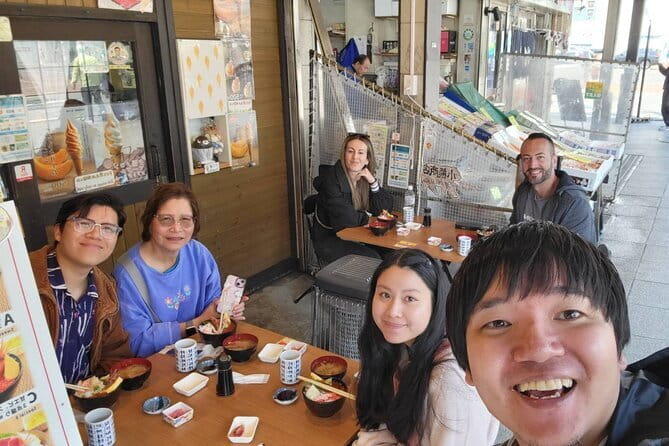
Sapporo’s best local story may be told over a seafood lunch. This 2.5-hour walk links the Clock Tower, Odori Park, Sosei Bridge, and a community shrine before finishing with sushi or donburi at Nijo Market. I like the small group limit of eight and the way the route connects city history to daily life. I also like that the Sapporo TV Tower ticket is included, since the 90-meter view gives you a quick sense of how the city fits together.
In This Article
- Key points at a glance
- Starting at the Clock Tower at 10 a.m.
- City Hall and Odori Park: Sapporo in daily use
- Sapporo TV Tower and the 90-meter view
- Sosei Bridge and the city’s early development
- Hokkaido Jingu Tonguu, a local shrine stop
- Nijo Market and the seafood lunch
- What the two-and-a-half-hour schedule really feels like
- Winter preparation and weather concerns
- Is $63.20 good value?
- Who should book this Sapporo food and history walk?
- Should you book it?
- FAQ
- Where does the Sapporo tour start?
- What time does the tour begin?
- Where does the tour finish?
- How long does the experience last?
- Is lunch included?
- Is admission to Sapporo TV Tower included?
- How large is the group?
- What happens if the weather is poor?
The main drawback is weather. This is a walking tour with several outdoor stops, and snow or slippery streets can make it tiring. A market lunch is included, but your guide may not sit with you, so the final meal feels more like a handoff than a shared dining experience.
Key points at a glance
- Seafood lunch at Nijo Market: Choose sushi or donburi at a local restaurant near the market.
- A compact Sapporo history lesson: The route covers the city’s early development, from the Clock Tower to Sosei Bridge.
- Included TV Tower admission: Go up to the 90-meter observation deck for 360-degree city views.
- Small-group walking: The maximum group size is eight, which leaves room for questions and easier conversation.
- Useful winter warning: Snowy streets can be slippery, so insulated clothing, a hat, sturdy shoes, and an umbrella are sensible.
- English or Japanese guiding: The experience offers a live guide in either language.
Starting at the Clock Tower at 10 a.m.
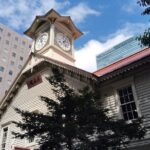
Meet at Sapporo Clock Tower, at 2 Chome Kita 1 Jonishi, at 10 a.m. This is a practical starting point because the building introduces Sapporo’s early years before the route moves into the city center.
The Clock Tower is more than a quick photo stop. Its preserved structure helps explain the period when Sapporo was being developed as a planned city. You spend about 20 minutes here, including time to hear about its role in the city’s beginnings and the bell that still rings as it has since installation.
Admission to the Clock Tower is not included, so plan for an extra ticket if you want to go inside. The tour still works if you remain outside, but history-minded visitors may want to budget for entry.
Your guide sets the tone here. Guides connected with the experience include Tom, Tomoaki, Okie, and IKU, though the person leading your departure can vary. The strongest part of their role is explaining why these familiar city sights matter, rather than simply naming them.
Our other Sapporo reviews may also help you decide


City Hall and Odori Park: Sapporo in daily use
The next stop is Sapporo City Hall, where you spend around 15 minutes learning about a major figure involved in the city’s development. This is a short visit, but it adds a human face to the planning and growth of Sapporo.
From there, the route passes through Odori Park. This long central park is a useful place to watch local life, with people using the open space rather than treating it only as a sightseeing stop. The schedule does not give a separate time for Odori Park, so expect a brief look rather than a full park exploration.
That is one reason the tour works best as an introduction. You get several connected places in a short period, but you will not have time to linger at every one. If you want a slow park walk, long museum visits, or extended shopping, you will need to add those on your own.
Sapporo TV Tower and the 90-meter view
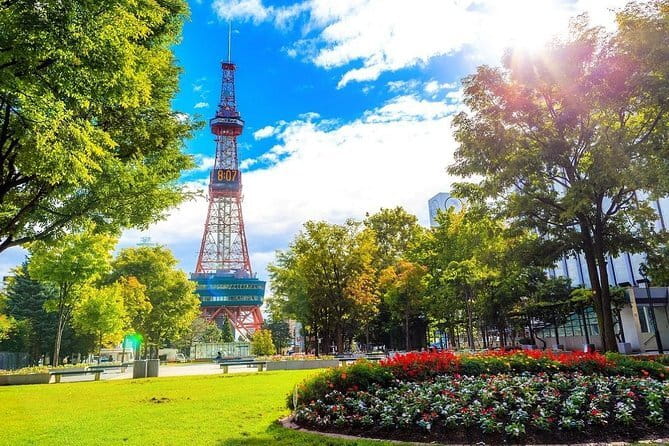
The Sapporo TV Tower is the route’s clearest visual pause. Admission is included, and the tour allows about 30 minutes for the observation deck.
At 90 meters, the deck gives you a 360-degree view over Sapporo. This matters because the earlier stops can feel like separate city fragments. From above, you can better understand the orderly center, the long sweep of Odori Park, and the scale of the surrounding city.
The inclusion of the ticket improves the value of the tour. Many short walking experiences keep to the pavement and leave major entry fees to you. Here, one of the city’s standard paid sights is already covered.
Still, do not treat this as a long observation visit. Thirty minutes is enough for photos and orientation, but not for an unhurried stay. The guide may also keep the group moving so the rest of the route stays on schedule.
Sosei Bridge and the city’s early development
Sosei Bridge is perhaps the most unusual stop because it is less obvious than the city’s headline sights. The bridge is described as the oldest in Sapporo, and the guide uses it to explain the city’s early development.
You spend about 20 minutes here. That gives the stop more weight than a quick photo. It also shows the value of taking a walking tour with a local guide: without context, an old bridge can look like a minor crossing. With the story attached, it becomes part of Sapporo’s first chapter.
The route’s historical thread works well here. The Clock Tower shows an early civic building, City Hall points toward later administration, and Sosei Bridge brings the story back to the physical structure of the growing city.
Do not expect a museum-style presentation or a large collection of exhibits. This is an outdoor explanation, so your experience will depend on the guide’s storytelling and on the weather. In cold or wet conditions, your attention may be divided between the history and your hands.
Hokkaido Jingu Tonguu, a local shrine stop
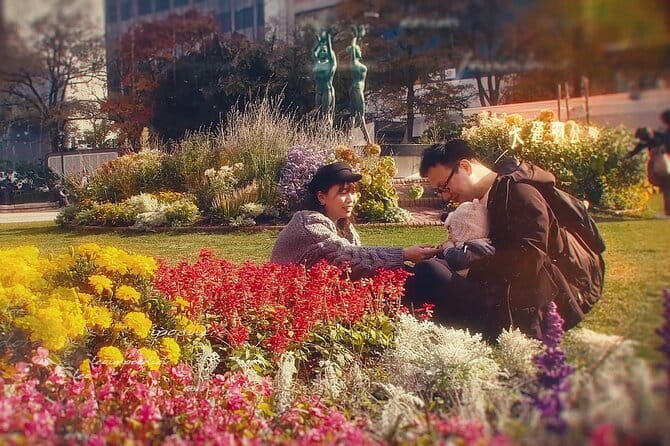
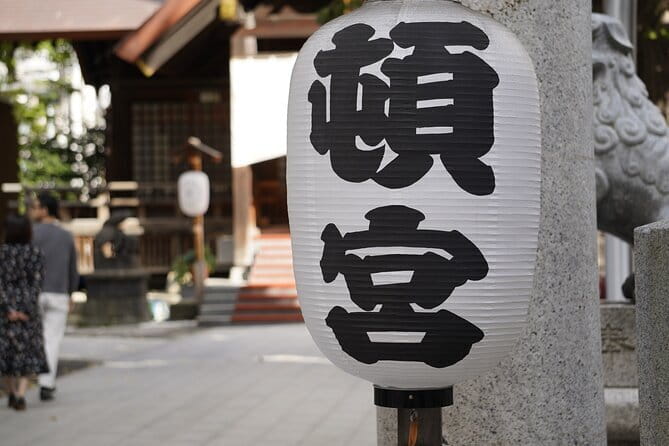
The shrine visit lasts about 15 minutes and introduces the religious side of local life. The tour presents Hokkaido Jingu Tonguu as a shrine used and loved by the community, rather than as a major sightseeing complex designed only for visitors.
That distinction is useful. A short shrine visit can teach you how religious places fit into everyday Japanese culture, especially when the guide explains customs and meaning instead of asking you to rush through for a photo.
Because the stop is brief, you will get an introduction rather than a full study of the shrine. The itinerary also uses the name Hokkaido Jingu Tonguu, so check the exact meeting details on your confirmation if you want to research the site before going.
The shrine adds variety to the walk. You move from civic buildings and public spaces to a quieter place with a different purpose. For first-time visitors, that change helps keep the route from feeling like a string of government landmarks.
You can also read our reviews of more historical tours in Sapporo




Nijo Market and the seafood lunch
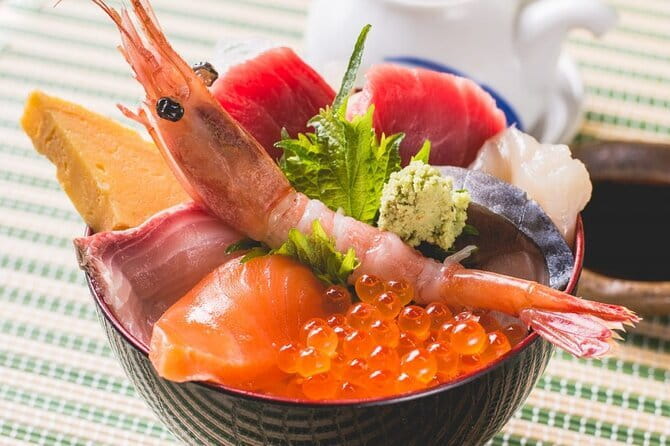
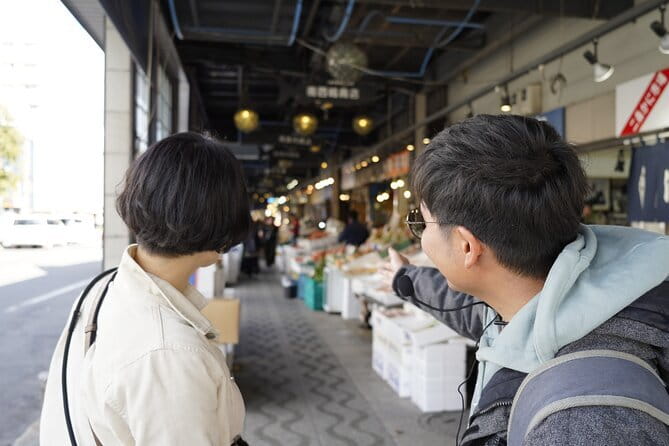
The tour ends at Nijo Market, once known as the People’s Kitchen. This is where the history walk turns into a meal, with seafood lunch included at a local restaurant.
You can expect sushi or donburi, depending on the restaurant arrangement and available choice. Donburi usually means seafood served over rice, while sushi offers a more direct taste of the market’s fish. The supplied details do not promise a fixed menu, so anyone with strict food preferences should ask before booking.
The lunch is the tour’s strongest link between place and food. Nijo Market is not simply a restaurant district on the route. It is a working market with a long connection to Sapporo’s food culture, and eating there gives the morning a clear finish.
Your guide may not join you for lunch. That is worth knowing in advance. You still receive the included meal, but you may eat independently after the walking portion ends. The tour finishes at the market after you arrive at the restaurant, so there is no return transfer or final walk back to the Clock Tower.
Seafood allergies are a serious concern. This experience is not recommended for people with allergies to fish, shellfish, or similar ingredients. Bottled water, coffee, and tea are not included, so buy a drink at a shop or vending machine if you need one.
What the two-and-a-half-hour schedule really feels like
The route is compact but active. The stated duration is about 2 hours and 30 minutes, with roughly 20 minutes at the Clock Tower, 15 minutes at City Hall, 30 minutes at the TV Tower, 20 minutes at Sosei Bridge, 15 minutes at the shrine, and 45 minutes at Nijo Market.
Those stop times add up to most of the tour, but you also need to allow for walking between them. That means the pace is likely steady rather than leisurely. You get a broad introduction to central Sapporo, not a slow examination of each building.
I would choose this tour early in your visit. The TV Tower view helps you get oriented, and the guide’s suggestions may help you plan later meals and sightseeing. Tomoaki, for example, is associated with practical recommendations for other places to visit and eat in Sapporo, while Tom was praised for patiently explaining the route in very cold conditions.
The maximum of eight people is another practical advantage. Small groups make it easier to hear explanations, ask questions, and keep a comfortable pace through city streets. It also reduces the waiting that can make a short walking tour feel inefficient.
Winter preparation and weather concerns
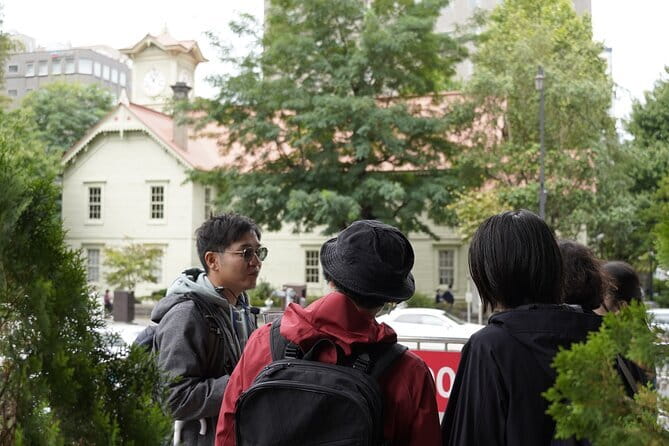
Sapporo can be very cold and snowy, and this experience does not hide the fact that weather matters. One account describes steady snow, slippery roads, and the need for insulated clothing, a hat, sturdy snow shoes, and an umbrella.
Take that advice seriously. Wear warm layers and shoes with reliable grip. An umbrella is useful in wet weather, but it will not replace proper winter clothing. You may find a place to refill a bottle during summer, but the tour does not provide bottled water.
The experience requires good weather. If poor conditions cause cancellation, you are offered another date or a full refund. If you cancel yourself, you need to do so at least 24 hours before the 10 a.m. start for a full refund. Changes or cancellations inside that window are not accepted.
The practical lesson is simple: check the forecast, dress for the season, and avoid scheduling this as your only fixed activity if conditions look uncertain.
Is $63.20 good value?
At $63.20 per person, the price is reasonable if you want both sightseeing and lunch in one short morning. Your fee includes the seafood lunch, Sapporo TV Tower admission, GST, insurance, and a live English or Japanese guide.
The included tower ticket is important to the value calculation. So is the meal, particularly in a market known for seafood. You are also paying for the route design and the guide’s explanations, not merely for access to public streets.
The price is less attractive if you planned to visit the Clock Tower and TV Tower independently and already know where you want to eat. Independent visitors can control their pace and spend more time at each sight. This experience earns its cost through convenience, historical connections, and a small group.
Private transportation is not included. The tour is built around walking and nearby public transportation, so you should be comfortable moving through the city on foot. Most people can take part, but the combination of walking, cold, snow, and slippery roads deserves attention.
Who should book this Sapporo food and history walk?
I would recommend it to a first-time Sapporo visitor who wants a clear introduction without giving up half a day. It suits anyone who enjoys local history, city views, and seafood more than shopping or long museum visits.
It is also a good fit if you prefer a small group and want to ask questions. English and Japanese guiding gives you a choice of language, while the compact route makes the tour easy to fit into a morning schedule.
Food-focused visitors should like the finish at Nijo Market, especially if fresh Hokkaido seafood is high on your list. History fans get a useful outline of Sapporo’s early growth, though they should not expect a specialist lecture or extensive indoor exhibits.
I would hesitate to recommend it to anyone with seafood or shellfish allergies. I would also think twice if you dislike walking in cold weather, want private transport, or prefer to spend a long time at one attraction.
Should you book it?
Book this tour if you want Sapporo explained through its streets, public buildings, shrine life, and food. The strongest combination is the included TV Tower visit followed by seafood at Nijo Market, with the small group keeping the morning personal.
Skip it if you need a fully indoor activity, a private guide at lunch, or complete control over your schedule. For everyone else, $63.20 buys a well-shaped introduction to central Sapporo, with enough history to give your meal more meaning and enough practical guidance to help plan the rest of your stay.
FAQ
Where does the Sapporo tour start?
The tour starts at Sapporo Clock Tower, 2 Chome Kita 1 Jonishi, Chuo Ward, Sapporo, Hokkaido 060-0001, Japan.
What time does the tour begin?
The scheduled start time is 10 a.m.
Where does the tour finish?
The tour finishes at Nijo Market after you arrive at the restaurant for lunch.
How long does the experience last?
The experience lasts approximately 2 hours and 30 minutes.
Is lunch included?
Yes. A seafood lunch at Nijo Market is included. The meal is described as sushi or donburi at a local restaurant.
Is admission to Sapporo TV Tower included?
Yes. The tour includes entry to the Sapporo TV Tower observation deck, which is about 90 meters high and offers 360-degree views.
How large is the group?
The tour has a maximum of eight people.
What happens if the weather is poor?
The experience requires good weather. If it is canceled because of poor weather, you can choose another date or receive a full refund.
More Tours in Sapporo


More Tour Reviews in Sapporo


More Seafood & Market Tours in Sapporo
Other Sapporo tours worth your shortlist

Seafood & Market Tours, side by side.
 ★ 4.8Authentic Sapporo: Nijo Market Seafood Lunch & History TourFrom $6120 reviews
 ★ 5.0Hokkaido Seafood Sushi Rolls Experience with Matcha, in SapporoFrom $97.554 reviews
 ★ 5.0Morning Market Tour with Seafood Tasting OptionsFrom $1251 reviewsFish Markets Half Day with a LocalFrom $1631 reviews
The lists this tour appears in