Hokkaido’s climate swings harder than almost anywhere else in Japan. Pack for Tokyo and you’ll be miserable in February; pack for a beach holiday and you’ll be miserable in August too — Hokkaido summers are warm but not tropical. This guide covers what actually works, season by season, with specific gear recommendations and where to buy anything you’ve forgotten once you land in Sapporo.
For a full picture of what the weather actually does each month, see our Hokkaido climate guide.
Month-by-Month Temperature and Clothing Reference
These are average figures for Sapporo. Coastal areas like Hakodate run slightly warmer; elevated resorts like Niseko and Furano run colder by 5–8°C.
| Month | Avg High | Avg Low | What You Need |
|---|---|---|---|
| January | -1°C (30°F) | -8°C (18°F) | Full winter kit, serious boots, ice grips |
| February | 0°C (32°F) | -8°C (18°F) | Same as January — coldest month |
| March | 4°C (39°F) | -4°C (25°F) | Heavy layers, ice grips still useful |
| April | 12°C (54°F) | 2°C (36°F) | Mid-layer jacket, light thermals |
| May | 18°C (64°F) | 7°C (45°F) | Light jacket, layers for mornings |
| June | 22°C (72°F) | 12°C (54°F) | T-shirts, light cardigan for evenings |
| July | 26°C (79°F) | 17°C (63°F) | Summer clothes, light rain layer |
| August | 27°C (81°F) | 18°C (64°F) | Warmest month, still comfortable |
| September | 22°C (72°F) | 13°C (55°F) | Layers, evenings get cool fast |
| October | 14°C (57°F) | 6°C (43°F) | Proper jacket, mid-layers |
| November | 6°C (43°F) | -1°C (30°F) | Winter jacket, first snow possible |
| December | 1°C (34°F) | -5°C (23°F) | Full winter kit from mid-month |
Winter Packing (December–March)
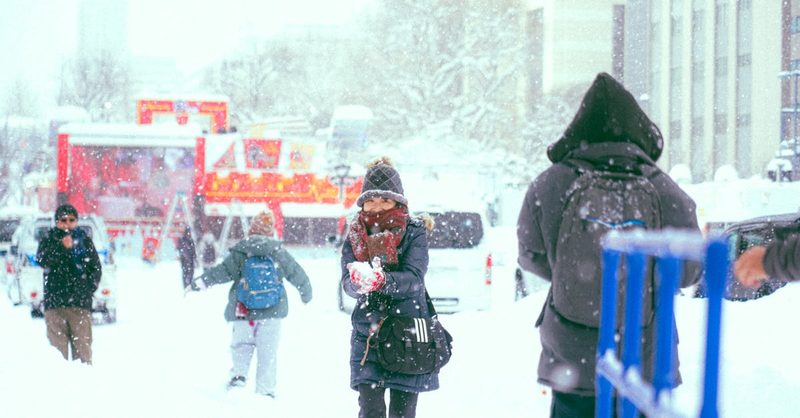
Winter in Hokkaido isn’t just cold — it’s heavy snowfall, persistent wind, and polished ice on every pavement. The gear that works is specific.
Base Layer
Merino wool or a synthetic thermal base is the foundation. Cotton kills warmth the moment it gets damp, so leave it at home. Uniqlo’s HEATTECH Extra Warm is widely available in Sapporo and genuinely works — the standard version (¥990/~$7) covers city days; the Extra Warm (¥1,990/~$14) suits longer outdoor exposure.
Mid-Layer
A fleece or down pullover worn over your base and under your outer shell. Uniqlo’s Ultra Light Down jacket (¥5,990–7,990/~$40–54) is a reasonable budget choice. For serious cold (ski days, eastern Hokkaido), invest in a proper insulated mid-layer — the difference at -15°C is real.
Outer Shell
Waterproof and windproof. Hokkaido snow is dry, but the volume is enormous — Sapporo averages 6 metres per winter. A ski jacket works well for city use too. Workman sells functional waterproof parkas from ¥4,900 (~$33). Not stylish, but effective.
Accessories
Hat, insulated gloves, and a neck gaiter or scarf. Thin liner gloves under heavier mittens give you flexibility when you need to use your phone. Hand warmers (kairo) are sold at every convenience store for ¥30–50 (~$0.20–0.35) per pair — buy these locally, don’t pack them.
Footwear: The One Thing People Get Wrong
More visitors are caught out by footwear than anything else. Sapporo’s pavements in January and February are sheets of polished ice covered in a thin layer of fresh snow — exactly the surface that looks walkable and isn’t. Fashionable winter boots with smooth soles are dangerous. What you need:
- Waterproof construction. Snow works its way into every gap. Seam-sealed or rubber-lower boots keep your feet dry.
- Aggressive grip. Vibram soles, lugged rubber, or purpose-made winter traction outsoles. If they slide on a smooth floor, they’ll fail on ice.
- Ankle support. Hokkaido’s snowpack means uneven surfaces everywhere. Low trainers lead to rolled ankles.
Slip-On Ice Grips
Inexpensive rubber/chain devices that fit over any boot sole. Sold at Sapporo convenience stores, drugstores, and Workman from ¥500–1,500 (~$3.40–10). Keep a pair in your day bag even if your boots are good — the transition zones between indoor marble lobbies and outdoor ice are the most hazardous spots.
If you didn’t bring adequate boots, Workman and AEON malls in Sapporo carry functional winter footwear from ¥3,000–8,000 (~$20–54). See our safety guide for more on winter sidewalk hazards.
Skiing and Snowboarding Gear
Hokkaido’s resorts get exceptional powder — Niseko regularly records over 15 metres per season. See our ski resorts guide for resort specifics.
If Renting at the Resort
Most visitors rent skis, boards, boots, and helmets at the resort. Rental is straightforward (¥5,000–8,000/day/~$34–54 for a full set). What you still need to bring or wear:
- Ski-specific base layers — thicker than everyday thermals
- Technical ski socks — merino wool, not cotton
- Ski gloves or mittens
- Goggles — essential for powder days when visibility drops
- Neck gaiter or balaclava for chairlift exposure
If Bringing Your Own Equipment
Use takkyubin (luggage forwarding — see below) to send your ski bag from Sapporo to your resort accommodation. Carrying a ski bag through Sapporo Station is possible but miserable. The ¥2,500–3,500 (~$17–24) forwarding cost is well spent.
Backcountry Safety Gear
For off-piste or backcountry skiing, carry avalanche safety gear (beacon, probe, shovel). Rentals available at specialist shops in Niseko if you don’t have your own.
Summer Packing (June–August)
Hokkaido summers are genuinely pleasant — warm but rarely humid, with cool evenings even at peak summer. You don’t need to prepare for heat the way you would in Osaka or Tokyo.
- T-shirts and light trousers or shorts for daytime
- A light jacket or cardigan for evenings — temperatures drop to 12–15°C after sunset even in August
- Light rain jacket — August has the most rainfall, usually brief afternoon showers
- Comfortable walking shoes with reasonable grip for hiking trails
- Sun protection — hat and sunscreen. The northern latitude means UV can be strong despite comfortable temperatures
- Insect repellent for rural and forested areas, especially near Shiretoko and Daisetsuzan
Spring and Autumn Packing (April–May, September–November)
These shoulder seasons are tricky because the temperature range within a single day is wide. A morning in Sapporo in October can be 5°C; the afternoon 14°C; back to 6°C by 8pm. Layering is the only approach that works.
- A packable mid-weight jacket that fits in your day bag
- One set of thermal base layers for cold snaps, particularly in April and November
- Waterproof layer — spring and autumn both have unpredictable rain
- Late April and early May can still have snow at elevation — check conditions if hiking
Year-Round Essentials
- Power adapter — Japan uses Type A plugs (flat two-pin, same as North America). European, UK, and Australian plugs need an adapter. Most modern chargers handle 100V automatically; hair dryers and straighteners often don’t — use the hotel’s.
- eSIM or pocket WiFi — set up before departure. Don’t rely on free WiFi. See our WiFi guide.
- Cash — carry ¥10,000–20,000 at all times. Many restaurants and smaller businesses are cash-only. See our money guide.
- Reusable bag — plastic bags cost ¥3–5 at all shops since Japan’s 2020 bag charge.
- Small hand towel — Japanese public restrooms often lack paper towels or hand dryers. Many Japanese carry a small tenugui. Buy one at any 100-yen shop.
- Prescription medication with original packaging. Some ingredients legal elsewhere are restricted in Japan — check the MHLW website before travel.
Photography Gear
Hokkaido is one of Japan’s most photogenic regions. Winter conditions are demanding on gear:
- Batteries drain fast below -5°C. Carry 2–3 spares inside your jacket where body heat keeps them warm.
- Condensation: moving a cold camera into a warm building fogs the lens and can cause internal damage. Seal the camera in a plastic bag before entering warm spaces and let it acclimatise for 10–15 minutes.
- Bring: microfibre cloths (several), a waterproof camera bag or rain cover, and a polarising filter for snow glare.
See our photography guide for location-specific shooting advice.
Where to Buy Gear in Sapporo
- Uniqlo — Multiple locations including Stellar Place (attached to Sapporo Station). HEATTECH thermals, Ultra Light Down, fleece. Open daily 10:00–21:00.
- Workman — Budget outdoor/workwear chain. Waterproof parkas from ¥4,900, winter boots from ¥3,000, ice grips from ¥500. Suburban locations accessible by subway (20–30 minutes from Odori).
- Mont-bell — Japan’s premium outdoor brand. Store near Sapporo Station on Kita 1 Jo Nishi. Down jackets from ¥15,000, technical hiking and ski gear.
- Bic Camera / Yodobashi Camera — Large electronics stores near Sapporo Station. Power adapters, portable chargers, SIM cards, camera accessories. Tax-free for overseas visitors on purchases over ¥5,000 with passport.
- ABC-Mart / Shoe Plaza — Winter boots designed for Hokkaido conditions, ¥3,000–8,000.
Luggage Forwarding (Takkyubin)
Japan’s luggage forwarding service is one of the most useful things most visitors don’t know about. Yamato Transport’s TA-Q-BIN service sends luggage from one hotel to the next, arriving the next day, for about ¥2,000–3,000 (~$14–20) per bag. Your hotel front desk handles the paperwork.
This is particularly useful in Hokkaido because distances are large and train connections aren’t always direct. Send your bags ahead, travel light for the day, and find your luggage waiting at check-in. Works for ski bags too — send to the resort, pick up on arrival. Convenience stores (7-Eleven, Lawson, FamilyMart) also accept drop-offs.
What NOT to Overpack
- Too many clothes — coin laundry (koin randorii) is everywhere. Hotels often have machines; laundromats charge ¥200–300 per wash. Pack for 4–5 days regardless of trip length.
- Toiletries — convenience stores and drugstores sell everything. Japanese brands are high quality.
- Formal clothes — even nice restaurants in Hokkaido are casual. Smart casual is the dressiest you’ll ever need.
- Heavy cotton — takes up space, absorbs moisture, adds no warmth. Leave it home for winter trips.
- An umbrella for snow — awkward in heavy snowfall and wind. A hood works better.
Japan’s convenience stores fill gaps remarkably well. Forgotten hand warmers, a hat, cold medicine, a phone charger cable — most of it is available 24 hours at the 7-Eleven around the corner.