
Sapporo’s story comes into focus on foot, moving from its red-brick government building to its old market and oldest sake brewery. I like the route because it links the city’s main historic sights without wasting time on transfers, and because it ends with food and brewing culture rather than another photo stop. The guide also adds useful context about Japanese culture, which was the most praised part of the experience.
In This Article
- Key points to know before booking
- Why this two-hour route works in Sapporo
- Starting with Sapporo’s red-brick government office
- The Clock Tower and a five-minute history lesson
- Odori Park reveals Sapporo’s city plan
- Nijo Market brings Hokkaido food into the walk
- Chitosetsuru Sake Museum closes the story with brewing
- The guide’s role is central to the experience
- What $31.43 gets you
- Who will enjoy this Sapporo walk
- Should you book the Sapporo History and Gourmet Walking Tour?
- FAQ
- How long does the Sapporo History and Gourmet Walking Tour last?
- Where does the tour start?
- Where does the tour end?
- Which places are visited?
- Is a guide included?
- How many people can join the tour?
- Are admission tickets included?
- Is transportation included?
- Can I cancel for a full refund?
I also like the small maximum group of 12 and the low price of $31.43. The tradeoff is time: two hours goes quickly, and the 30-minute market visit cannot cover every stall or allow a leisurely meal. If you want a broad first look at central Sapporo, this works well. If you prefer long museum visits or a slow food crawl, you may find it brisk.
Key points to know before booking

- Five central Sapporo stops: Visit the Former Hokkaido Government Office, Clock Tower, Odori Park, Nijo Market, and Chitosetsuru Sake Museum.
- A route built for first-time orientation: The walk connects major sights in a direct path and finishes near the sake museum.
- Food and drink are part of the story: Nijo Market brings Hokkaido seafood into the experience, while the final stop introduces sake brewing.
- Small group size: The tour accepts a maximum of 12 people, a useful balance between social energy and personal attention.
- Strong guide focus: The guide explains Sapporo’s growth, local customs, and cultural background, not just building names.
- Good value for a short visit: At $31.43 per person, the tour offers a guided overview with no separate admission charges listed for the stops.
Why this two-hour route works in Sapporo

Sapporo can feel spread out when you first arrive. Its streets are broad, its central parks are large, and its major sights are separated by the city grid. This tour solves that first-day problem with a simple walking line through central Sapporo.
You begin at the Former Hokkaido Government Office and finish at Chitosetsuru Sake Museum. Along the way, the route covers architecture, civic planning, markets, and traditional brewing. That mix gives you a better sense of the city than a string of isolated landmarks would.
The timing is tight but sensible. The listed stops add up to about 85 minutes, leaving the rest of the two-hour session for walking and explanations. You should expect a moving tour rather than a series of long visits inside each site.
That pace suits you if you have only a short stay, want help getting your bearings, or prefer a guide to connect the dots. It is also useful early in a Sapporo visit because the route introduces places you may want to return to later, especially Nijo Market.
You can also read our reviews of more walking tours in Sapporo


Starting with Sapporo’s red-brick government office
The tour starts at the Hokkaido Prefectural Government Red Brick Building, also known as the Former Hokkaido Government Office. Built in 1888, the building is an American Neo-Baroque design with a distinctive red-brick exterior.
You get about 10 minutes here, with no admission charge listed. That is enough time to appreciate the architecture and hear how the building fits into Hokkaido’s early development. The guide’s explanation matters because the building is not just an attractive facade. It reflects the period when Sapporo was being planned and developed as a major center in Japan’s northern region.
The short stop keeps the tour moving, but it also limits what you can do. You should not expect a detailed interior visit or a long architectural lecture. Instead, think of this as the opening chapter of the walk, a quick introduction to the city’s political and administrative roots.
The meeting point is the former main building at Kita 3 Jonishi 6 Chome. Your mobile ticket provides confirmation at booking, so keep it accessible before you arrive.
The Clock Tower and a five-minute history lesson
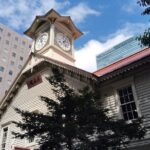
From the red-brick office, the route continues to the Sapporo Clock Tower, or Tokei-dai. The clock tower has been a city marker since 1878 and remains one of Sapporo’s most recognizable sights.
The scheduled stop lasts only five minutes. That may sound brief, but the guide uses the time to explain the mechanical clock, the legacy of Dr. Clark, and the role of Sapporo Agricultural College in the city’s early story.
This is a good example of what the tour does best. You see a compact landmark, then get a cultural and historical explanation that helps it make sense. The clock itself still keeps time, adding a working detail to what might otherwise be a quick photograph.
The drawback is clear: five minutes is not enough for a slow visit. If the clock tower is especially important to you, plan to return on your own. On this tour, it functions as a concise stop within a larger city story.
Odori Park reveals Sapporo’s city plan

The next section takes you along Odori Park, a 1.5-kilometer green strip that forms a central axis through Sapporo. You spend about 15 minutes here, walking through the park and taking in views of the Sapporo TV Tower and nearby modern buildings.
Odori Park is valuable because it helps you read the city. Its long shape shows how Sapporo was laid out around broad streets and open public space. The guide can connect the park to the city’s planning and explain why this central corridor matters to daily life in Sapporo.
You will not walk the full 1.5 kilometers during this stop. The point is to experience the park as an organizing line, not to complete a full park tour. The time is enough for orientation and views, but not for a long rest or a detailed look at every section.
I like this middle stop because it breaks up the architecture with open space. It also prepares you for the change in mood ahead. After government buildings and civic planning, the route turns toward the smells, displays, and human activity of Nijo Market.
Nijo Market brings Hokkaido food into the walk

Nijo Market is the longest stop, with about 30 minutes to explore. The market has served local people since the Meiji era and is presented as one of Sapporo’s food centers.
Here, you can see Hokkaido seafood such as crab, sea urchin, and salmon. The experience is less about sitting down for a full meal and more about seeing the ingredients, learning how the market operates, and understanding why seafood is central to Sapporo’s food culture.
This is where the tour becomes most sensory. You hear the market activity, see the range of seafood, and may have the chance to taste local products. Personal spending is not included, so bring money if you want to buy food or drinks beyond what the guide provides.
The 30-minute limit is both useful and restrictive. It gives you enough time to look around without letting the market take over the entire tour. But if you want to compare stalls, order a substantial seafood meal, or shop for gifts, you will need to return later.
I recommend treating this stop as an introduction. Notice which foods interest you, ask the guide questions, and make a note of the stalls or dishes you want to investigate on your own. That approach turns a quick market visit into a useful plan for the rest of your Sapporo stay.
You can also read our reviews of more historical tours in Sapporo


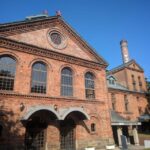

Chitosetsuru Sake Museum closes the story with brewing

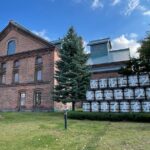
The final stop is Chitosetsuru Sake Museum, located at 5 Chome-2 Minami 3 Johigashi. The brewery dates to 1872 and is described as Sapporo’s oldest sake brewery.
You spend about 25 minutes here, learning about sake production, viewing historic brewing equipment, and seeing displays tied to the brewery’s past. The tour also includes the chance to taste premium sake, adding a fitting finish to a walk that has moved from public institutions to local food traditions.
This stop gives the experience a clear ending. Sapporo’s story is not presented only through famous buildings. You also see how local production, food, and drink form part of the city’s identity.
The museum is the endpoint, so you are free to continue from there after the tour. Private transportation is not included, and the tour itself is a walking experience. If you need a ride afterward, plan that separately.
The brewery visit may be especially appealing if you want cultural detail rather than a standard sightseeing route. You are not simply told that sake is important. You see equipment and learn about the process behind it.
The guide’s role is central to the experience

The tour includes a local guide, and the guide is the main reason to book rather than follow the same route alone. The sights are easy to identify, but the connections between them are less obvious without explanation.
A strong guide can show how the red-brick office relates to Sapporo’s development, why the Clock Tower matters, how Odori Park shapes the city, and why Nijo Market and sake belong in the same introduction to local culture.
The available feedback gives particular weight to the guide’s helpful explanations and cultural knowledge. One five-star account specifically praised learning about Japanese culture while seeing Sapporo’s main sights. That is the right expectation: this is not only a walk between photo opportunities.
Guide quality can vary from one departure to another, and no guide name is provided. Still, the format gives the guide a manageable group, with no more than 12 people. That size should make it easier to hear explanations and ask questions than on a large coach-style outing.
What $31.43 gets you

At $31.43 per person, the tour is priced as an accessible introduction to central Sapporo. You are paying for a local guide, a planned walking route, cultural explanations, and a tasting-oriented visit to the sake museum.
The listed stops do not carry separate admission charges. Personal purchases at Nijo Market are extra, and private transportation is not included. Those exclusions are reasonable for a walking tour, but you should not mistake the price for an all-inclusive food tour.
The value is strongest if you would otherwise spend time finding the landmarks and reading about them separately. In two hours, you get a structure, local context, and a practical sense of where to return. The value is weaker if you already know central Sapporo well or want generous time at each site.
The tour is booked an average of 23 days ahead, so planning early is sensible if the schedule matters to you. Free cancellation is available when you cancel at least 24 hours before the start time. Changes or cancellations inside that window are not accepted for a refund.
Who will enjoy this Sapporo walk
I would recommend this tour to first-time visitors who want a fast but meaningful introduction to the city. It suits people who enjoy history but do not want to spend a full day indoors, and it adds enough food culture to keep the walk from feeling like a standard architecture tour.
It is also a practical choice if you have only a few hours in Sapporo. The route covers major central sights and ends at a location connected to local drink traditions. You can use the tour to decide which places deserve a second visit.
Food-focused visitors should see Nijo Market as a preview, not a full tasting session. You may find the half-hour stop too short if your main goal is a long seafood lunch.
Likewise, serious sake enthusiasts may want more time at the museum than the schedule allows. The 25-minute visit offers an introduction to brewing equipment and history, not an extended brewery study.
Most people can participate, and service animals are allowed. The tour is near public transportation, which helps with reaching the start and continuing from the end, though private transport during the experience is not part of the package.
Should you book the Sapporo History and Gourmet Walking Tour?
Book it if you want Sapporo’s key sights explained in context, especially if this is your first visit or your time is short. The combination of the Former Hokkaido Government Office, Clock Tower, Odori Park, Nijo Market, and Chitosetsuru Sake Museum gives you a well-rounded introduction for a modest price.
Skip it if you want a slow market meal, extensive museum time, or a specialized food tour. The route is brisk, and each stop is designed to contribute one part of a larger story.
For most visitors, the strongest reason to book is the guide. The sights are central and easy to reach, but the cultural explanations turn a simple walk into a clearer picture of how Sapporo grew from a frontier settlement into a modern Japanese city.
FAQ
How long does the Sapporo History and Gourmet Walking Tour last?
The tour lasts approximately two hours.
Where does the tour start?
It starts at the Hokkaido Prefectural Government Red Brick Building, the former main building, at Kita 3 Jonishi 6 Chome in Sapporo’s Chuo Ward.
Where does the tour end?
The tour ends at Chitosetsuru Sake Museum at 5 Chome-2 Minami 3 Johigashi, Chuo Ward, Sapporo.
Which places are visited?
The route includes the Former Hokkaido Government Office Building, Sapporo Clock Tower, Odori Park, Nijo Market, and Chitosetsuru Sake Museum.
Is a guide included?
Yes. A local guide is included.
How many people can join the tour?
The tour has a maximum group size of 12 people.
Are admission tickets included?
The listed stops show no admission ticket charge. Personal expenses are not included.
Is transportation included?
Private transportation is not included. The experience is a walking tour near public transportation.
Can I cancel for a full refund?
Yes, if you cancel at least 24 hours before the experience start time. Cancellations or changes made less than 24 hours before the start time are not accepted for a refund.
More Walking Tours in Sapporo


More Tours in Sapporo


More Tour Reviews in Sapporo


Other Sapporo tours worth your shortlist






Historical Tours, side by side.
 ★ 4.8Authentic Sapporo: Nijo Market Seafood Lunch & History TourFrom $6120 reviews
 ★ 5.0Authentic Sapporo: Nijo Market Seafood Lunch & Local History TourFrom $63.2013 reviews
 ★ 4.44-Hour Cultural and Historical Highlights TourFrom $4165 reviews
 ★ 5.01-Day Sapporo Historical Village and Sapporo Beer Museum TourFrom $180.583 reviews
The lists this tour appears in