History comes alive outside central Sapporo. This full-day outing pairs the open-air Historical Village of Hokkaido with the Sapporo Beer Museum, giving you two very different ways to understand the region. I like the included transport and admission tickets, and I especially like that an English-speaking guide such as Scott can add personal context to buildings and exhibits that might otherwise feel hard to read. The main drawback is the price: at $180.58 per person, this is not a bargain if you are comfortable arranging trains and museum visits yourself.
In This Article
- Key points at a glance
- Meeting at Sapporo Station at 9 a.m.
- Four hours among Hokkaido’s old buildings
- What makes the Historical Village worth your time
- From old Hokkaido to Sapporo’s brewing story
- The tasting and the practical catch
- Is $180.58 a fair price?
- Who will enjoy this day most?
- Booking and cancellation details
- Should you book the Sapporo Historical Village and Beer Museum tour?
- FAQ
- Where does the tour begin?
- What time should I arrive?
- Where does the tour end?
- How long does the experience last?
- Is transportation included?
- Are admission tickets included?
- Is a guide included?
- Is beer tasting included?
- Is lunch included?
- How many people can join the tour?
- Can I cancel for a full refund?
The day runs about eight hours, with roughly four hours at each main stop. You meet at 9 a.m. by Myomu, the circular stone structure inside Sapporo Station near the South Exit, then return to the same place at the end. Lunch is not included, so you need to plan around that gap.
Key points at a glance
- A 54-hectare open-air museum: Hokkaido’s Historical Village spreads across Nopporo Forest Park and contains about 60 buildings.
- Original Meiji and Taisho-era structures: Most buildings date from 1868 to 1926, showing how Hokkaido developed during Japan’s modernizing period.
- A guide adds useful context: Scott has been praised for combining facts with personal touches rather than simply leading you from one sign to the next.
- Transport and admissions are covered: You do not need to arrange the journey from Sapporo Station or buy separate entry tickets.
- A completely different second stop: The beer museum replaces streets and old buildings with displays about brewing, products, and Sapporo’s company story.
- Beer tasting is included: It gives the day a pleasant finish after several hours on foot, though anyone avoiding alcohol should check the tasting arrangements before booking.
Meeting at Sapporo Station at 9 a.m.
The day begins inside Sapporo Station at Myomu, the circular stone structure near the South Exit doors. Be there at exactly 9 a.m. Your guide will meet you at this fixed point, introduce the group, and take care of the transport to the first attraction.
That precise meeting time matters. Sapporo Station is large, and a rushed search for the meeting point can start the morning badly. I would arrive early enough to locate the South Exit and Myomu without relying on a last-minute dash through the station.
Transportation from Sapporo Station to the listed activities is included, as is the return to the meeting point. You still need to arrange your own way to Sapporo Station before the tour and your onward transport after it ends. The group can include up to 15 people, which is small enough for guide interaction without promising a private tour.
The tour is offered in English. That is particularly useful at the Historical Village, where the buildings communicate a lot through layout and objects, but the guide can explain why each place mattered. At the Beer Museum, most main signs are in Japanese, although small laminated cards beside the displays repeat the information in several languages.
Our other Sapporo reviews may also help you decide


Four hours among Hokkaido’s old buildings
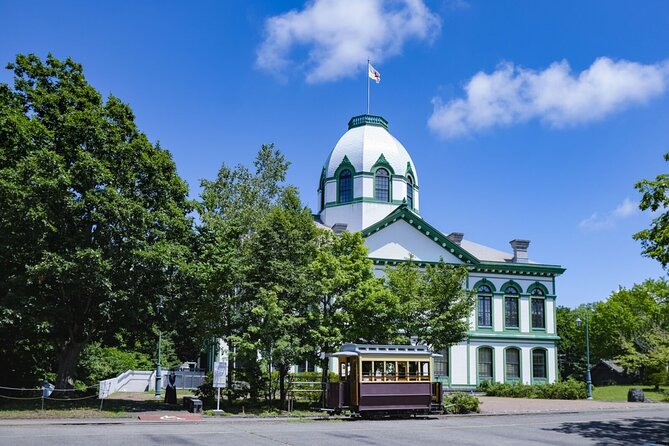
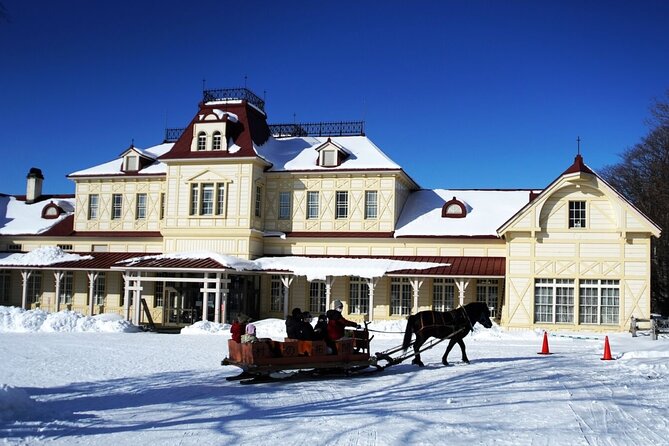
The first stop is the Historical Village of Hokkaido, also called Kaitaku-no Mura. It opened to the public in April 1983 and covers about 54 hectares at Nopporo Forest Park. The setting gives the visit room to breathe, but it also means you should expect substantial walking rather than a compact museum visit.
The village contains about 60 structures, most of them original buildings from the Meiji and Taisho periods, from 1868 to 1926. This time span covers the period when Hokkaido changed rapidly, so the village is useful for seeing more than isolated old houses. The buildings help show how work, trade, public services, and daily life developed during Japan’s modern era.
You can enter some buildings and inspect their interiors. Others are viewable only from the entrance. That difference is worth knowing because the visit is not a uniform walk through every structure. Some buildings also contain dioramas, which help explain how the rooms were used and add human scale to what might otherwise be an empty shell.
Clear signs and a brochure provide basic information, while your guide can connect separate buildings into a larger story. Scott, in particular, has been praised for explaining items carefully and for adding personal touches. That style suits this kind of museum. A building can be impressive from outside, but its purpose becomes easier to understand when someone points out the details that a quick glance misses.
Four hours allows time to move at a steady pace instead of racing from one structure to the next. You can look through interiors, pause at displays, and ask questions. At the same time, the length may feel demanding if you prefer short museum visits or have limited walking stamina.
The open-air format also makes weather important. The supplied details do not specify weather arrangements, so bring clothing suited to the day and comfortable shoes. Even without adding assumptions about the route, a 54-hectare site with around 60 structures clearly calls for more walking than a single indoor gallery.
What makes the Historical Village worth your time
I like this stop because it gives you physical evidence of Hokkaido’s past. Dates and written explanations can tell you when change happened, but stepping through an old building gives you a better sense of scale and use. You are not only looking at objects in cases. You are moving through places designed for work, living, or public activity.
The village also works well for people with different interests. If you enjoy architecture, you can focus on construction and layout. If social history interests you, the interiors and dioramas offer clues about daily routines. If you want a broad introduction to Hokkaido, the collection presents a wide range of structures rather than one preserved house.
Still, you should not expect a tightly scripted attraction where every building is open and fully furnished. Some are viewed only from the entrance, and the size of the site can make the experience feel spread out. I would choose this tour for people who enjoy exploring at a walking pace, not for anyone seeking a quick photo stop.
From old Hokkaido to Sapporo’s brewing story
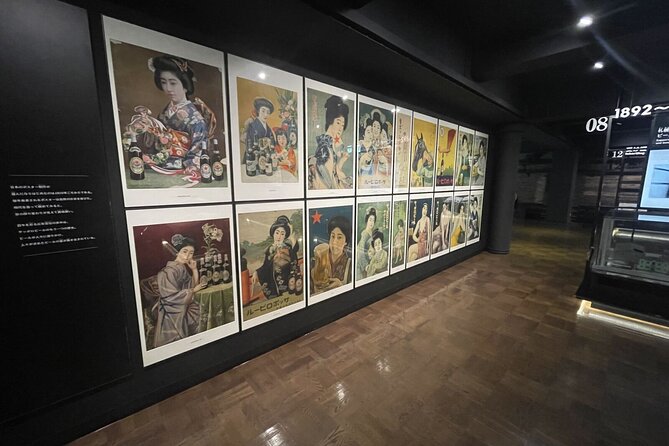
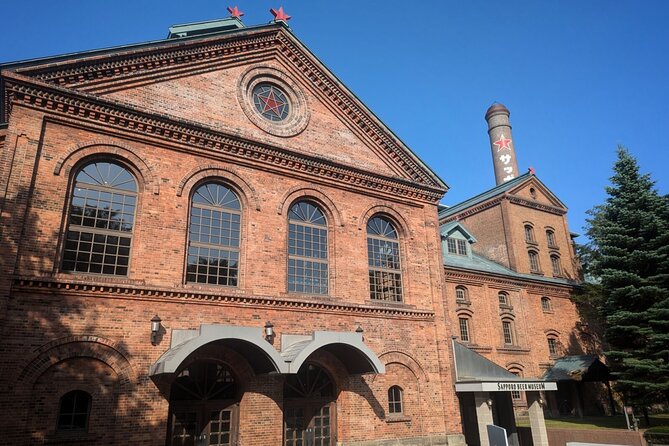
After the Historical Village, the tour heads to the Sapporo Beer Museum. The change of mood is part of the appeal. The first stop is a broad outdoor setting filled with historic structures. The second is a focused museum built around one product and the company behind it.
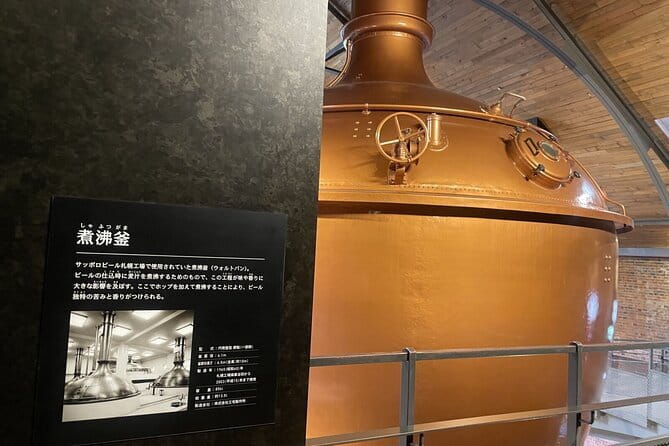
Inside, the displays explain how the brewery began, how it developed, and how its products changed over time. The museum presents a timeline and about 12 well-made displays that carry the story through to the present. You get a look at brewing as an industry, not simply a brand logo and a tasting counter.
Language is less of a barrier than you might expect. The main display text is often in Japanese, but laminated cards beside the exhibits provide the same information in several languages. That makes it possible to follow the story without depending entirely on the guide.
I like the contrast between the two attractions. The Historical Village asks you to read the past through buildings and settings. The Beer Museum gives you a more direct sequence of dates, products, and company developments. Together, they show Hokkaido through both everyday life and industrial growth.
The museum is also a welcome change after several hours outdoors. The timing lets you finish the cultural portion of the day with a beer tasting included in the tour. The tasting gives the stop a clear payoff, especially if you already enjoy Sapporo beer.
The tasting and the practical catch
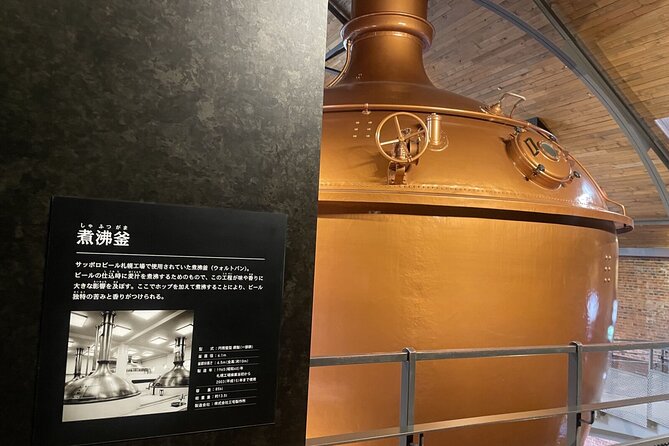
Beer tasting is included, but the available information does not specify the exact beers, serving size, or how many samples you receive. The museum’s tasting room is an important part of the visit, so ask your guide for current details on the day.
A personal favorite among the available choices has been Sapporo Classic. That does not mean it will be your choice, but it is a useful option to keep in mind if it is offered. The tasting is best treated as part of the museum visit, not as a separate pub crawl.
If you do not drink alcohol, the displays still give you a reason to visit, but you should confirm how the included tasting works before booking. The tour description lists beer tasting as included, with no stated nonalcoholic substitute.
Lunch is not included. The supplied details do not identify a scheduled lunch break or restaurant, so do not assume that food is built into the eight-hour plan. Ask the guide how the day is timed, or carry a small snack if that suits you. You should also avoid planning a tight meal reservation immediately after the return, since the duration is approximate.
You can also read our reviews of more food & drink experiences in Sapporo


Is $180.58 a fair price?
At $180.58 per person, this tour sells convenience and interpretation more than low-cost sightseeing. Your payment covers an English-speaking guide, transport between Sapporo Station and both attractions, entry tickets, and beer tasting. If you value a structured day and do not want to work out the route, buy separate admissions, or translate signs, the package can make sense.
The value is strongest for a first visit to Sapporo or for a short stay. You can cover two major sights in one day and keep your planning simple. A guide also helps turn the Historical Village into an organized story instead of a long walk among buildings with limited context.
The value is weaker if you are happy using public transport, reading multilingual museum material independently, and setting your own pace. You might prefer to spend a full day at the Historical Village rather than move on after about four hours. The same applies to the Beer Museum if you want a leisurely visit centered on the displays and tasting room.
The group limit of 15 keeps the cost below a private tour while allowing the guide to manage a manageable group. It does not guarantee that every question will receive unlimited attention, but the maximum is reasonable for a full-day guided outing.
Who will enjoy this day most?
I would recommend this experience to you if you want a clear introduction to Hokkaido’s development and prefer having transportation handled. It suits people who like historic buildings, museum displays, and a tasting at the end rather than a day built around shopping or scenic viewpoints.
It is also a good match if you want English explanations. The multilingual cards at the Beer Museum help, but the guide is especially useful at the Historical Village, where context can make the difference between a meaningful visit and a pleasant but confusing walk.
Families and mixed-interest groups may appreciate the variety. One person can focus on architecture and old interiors, another on industrial development, and another on the beer tasting. Most people can participate, according to the provided activity details, but the large site means comfortable footwear remains a sensible choice.
I would hesitate to recommend it if you need a relaxed lunch, dislike walking, or want to spend the whole day at one attraction. The schedule is full, and the $180.58 cost asks you to place a real value on the guide and included arrangements.
Booking and cancellation details
Confirmation is provided when you book. The activity is near public transportation, begins at 9 a.m., and ends back at the same Sapporo Station meeting point.
Free cancellation is available if you cancel at least 24 hours before the local start time. Cancellations or changes made less than 24 hours ahead are not accepted for a refund.
Should you book the Sapporo Historical Village and Beer Museum tour?
Book it if you want two well-matched but different views of Hokkaido in one organized day. The strongest features are the large open-air village, the chance to see original Meiji and Taisho-era structures, Scott’s personal guiding style, and the simple package of transport, admissions, and tasting.
Skip it if you want the lowest possible cost or a slow, self-directed visit. At $180.58, this is a service-heavy tour, not a cheap ticket bundle. For a short Sapporo stay, though, it offers a practical way to connect Hokkaido’s social past with Sapporo’s industrial and brewing story without spending your precious vacation time on planning.
FAQ
Where does the tour begin?
It begins at Myomu, the circular stone structure inside Sapporo Station near the South Exit doors.
What time should I arrive?
The meeting time is exactly 9 a.m. You should be at Myomu by then so the group can leave on schedule.
Where does the tour end?
The activity ends back at the starting meeting point at Sapporo Station.
How long does the experience last?
The tour lasts approximately eight hours. The Historical Village and Sapporo Beer Museum are each allocated about four hours.
Is transportation included?
Yes. Transportation from Sapporo Station to the listed destinations and activities is included. Transportation before the tour and after it ends is not included.
Are admission tickets included?
Yes. Entry and admission tickets for each listed attraction are included.
Is a guide included?
Yes. An English-speaking tour guide is included. Scott is identified as one of the guides associated with this experience.
Is beer tasting included?
Yes. Beer tasting is listed as included. The available details do not specify the exact number or type of beers served.
Is lunch included?
No. Lunch is not included in the tour price.
How many people can join the tour?
The activity has a maximum group size of 15 participants.
Can I cancel for a full refund?
Yes, if you cancel at least 24 hours before the experience start time. Cancellations or changes made less than 24 hours before the start are not accepted for a refund.
More Tours in Sapporo


More Tour Reviews in Sapporo


More Sapporo City Tours in Sapporo

Other Sapporo tours worth your shortlist



Sapporo City Tours, side by side.
 ★ 4.7Sapporo TV Tower Admission TicketFrom $621 reviews
 ★ 4.9Sapporo Walking TourFrom $5817 reviews
 ★ 5.01 Day Tour to Hill of the Buddha, Sapporo and SakeFrom $165.495 reviews
 ★ 4.5Sapporo TV TowerFrom $6.505 reviews
The lists this tour appears in