Hakodate sits at the southern tip of Hokkaido, where the island narrows to a peninsula between two bays. It was one of the first Japanese ports opened to international trade in 1854 — along with Shimoda and Nagasaki — and the Western influence from that era still shapes the city. Stone warehouses line the waterfront, Orthodox and Catholic churches stand on hillsides, and the streetcar running through town gives it a pace that feels different from anywhere else in Hokkaido. Where Sapporo is modern and gridded, Hakodate is layered and atmospheric.
The city is most famous for three things: the night view from Mt. Hakodate (regularly ranked among Japan’s top three), the morning fish market adjacent to the station, and the star-shaped Goryokaku fort. But Hakodate rewards slower exploration too. The hillside district of Motomachi, the Yunokawa onsen area, the waterfront warehouses, and the local food scene each deserve time. Two days is the right duration; one day is workable but rushed.
Mt. Hakodate Night View
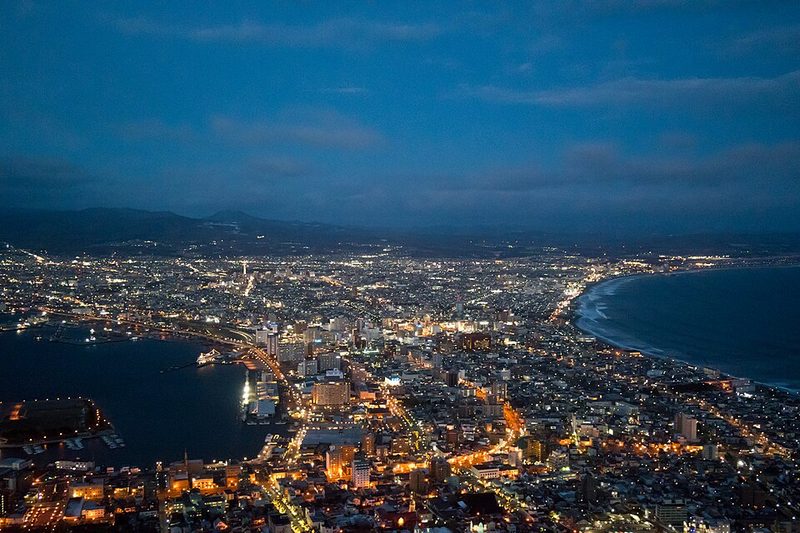
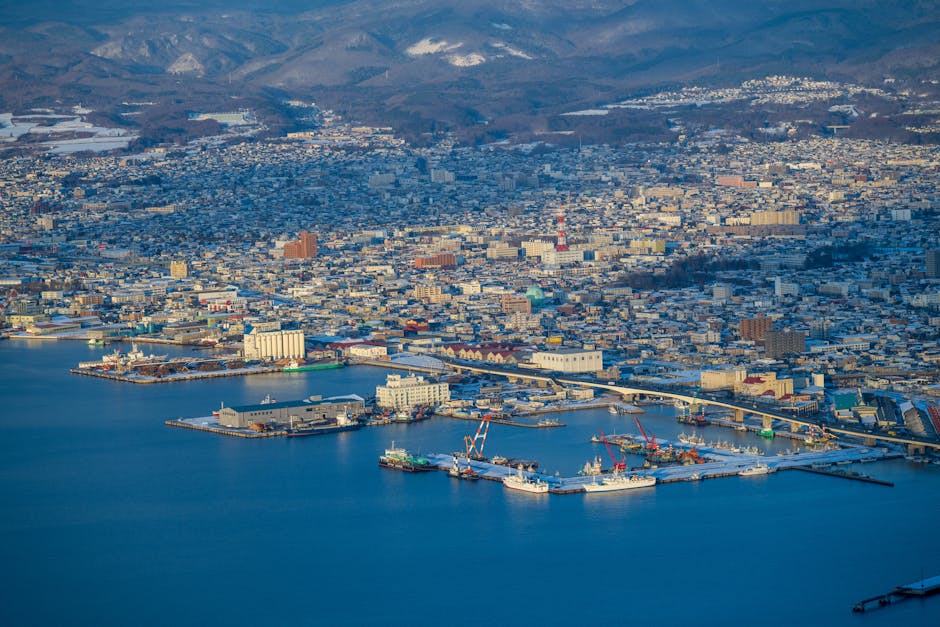
The defining experience of Hakodate and genuinely one of the most spectacular urban panoramas in Japan. A ropeway climbs to the 334m summit where the city spreads below, its lights tracing the narrow peninsula between two dark bays. The hourglass shape of the land — water on both sides squeezing to a narrow isthmus — creates a view that is unlike any other city in the country.
Go at sunset and stay for darkness. The transition from golden hour to city lights is the best part. The ropeway runs every 10 minutes until 22:00 (21:00 in winter). Round trip ¥1,800 (~$12). On clear nights the view is genuinely spectacular — the kind of thing that makes you stand there for 30 minutes without speaking. On foggy nights you see nothing, which happens regularly. Check the weather before committing to the trip.
The summit gets busy, particularly between 18:00 and 20:00 in summer. Arriving just before sunset secures a position at the railing. There is a cafe and restaurant at the top if you want to wait in comfort. An alternative to the ropeway: the bus from Hakodate Station takes about 30 minutes and costs less, though it runs less frequently.
The view is also good during the day, with different qualities — you can see the Tsugaru Strait, the coastline stretching north, and on clear days the outline of Honshu across the water. But the night version is the one that matters.
Hakodate Morning Market (Asaichi)
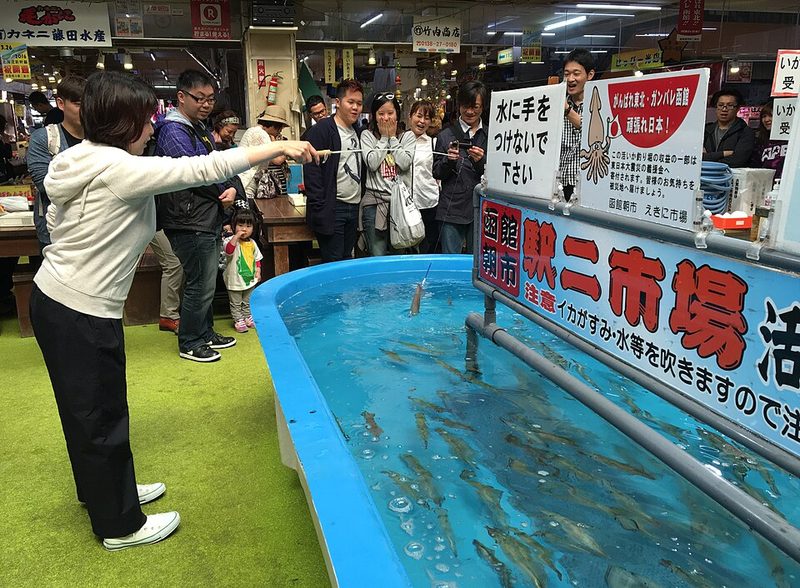
Opens at 5:00 AM adjacent to Hakodate Station. Over 250 stalls selling seafood, produce, dried goods, and prepared food across a compact covered area. The market has been operating since 1945, originally as a post-war black market, and has evolved into one of Hokkaido’s most visited food destinations.
The main draws for visitors are the seafood restaurants serving donburi — rice bowls heaped with uni, ikura, crab, scallops, and other seafood. A loaded bowl runs ¥1,500–4,000 (~$10–27) depending on toppings. The live squid fishing game (¥800–1,500) lets you hook a squid from a tank; the chef prepares it as sashimi immediately while the tentacles are still moving. It is touristy but fun, and the squid is as fresh as it gets.
Go early. By 08:00 the best stalls are busy with tour groups. By noon many are closing. The atmosphere at 06:00 — fishermen arriving, stall owners setting up, locals buying before work — is better than the mid-morning tourist rush.
For better value than the market’s seafood restaurants (which carry a tourist premium), walk one block north to the smaller restaurants on the surrounding streets. The seafood is the same quality — it comes from the same port auction — but the prices are lower and the queues are shorter.
Goryokaku Fort and Tower
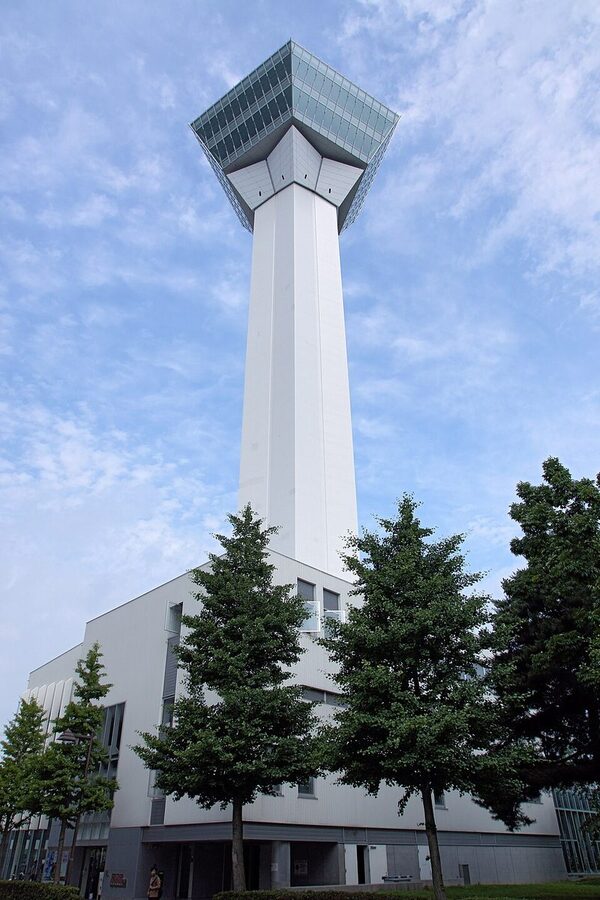
Japan’s first Western-style star fort, built between 1857 and 1864 by the Tokugawa shogunate to defend against potential Russian incursion. The five-pointed star design, modelled on European fortifications, is invisible from ground level — you need the adjacent Goryokaku Tower observation deck (¥900/~$6) to appreciate the geometric shape from above.
The fort played its most dramatic role during the Boshin War in 1869, when the breakaway Ezo Republic made its last stand here against the new Meiji government forces. It was the final battle of the civil war and the last armed resistance to the Meiji Restoration. A small museum inside the tower covers this history.
Today the fort is a public park with walking paths around the moat and through the interior. Cherry blossom season (late April to early May) is the peak time to visit — 1,600 cherry trees line the star outline, and from the tower the pink-traced geometric shape against the spring-green landscape is one of the most distinctive sakura views in Japan. In winter, the fort is illuminated. See our spring itinerary.
Motomachi (Hillside District)
The Western-influenced hillside above the bay area, where the foreign trading community established itself after the port opened in 1854. Three historic churches — the Russian Orthodox Church (1916, with distinctive onion domes and a bell that rings on the hour), the Catholic Motomachi Church, and the Episcopal Church — stand within walking distance of each other on the slope.
The surrounding streets of Western-style wooden buildings, the former British Consulate (now a museum and cafe, ¥300/~$2 entry), and the Old Public Hall (a Meiji-era colonial-style building, ¥300) complete the atmosphere. The 19 historic slopes (zaka) each have a name and a view of the harbour below. Hachiman-zaka is the most photographed — a straight, steep slope with the harbour framed between buildings at the bottom.
Walking from the waterfront up through Motomachi to the ropeway base station takes about 30 minutes and is the best way to absorb the atmosphere. The district feels different from any other city in Hokkaido — the combination of Russian, European, and Japanese architectural influence creates something genuinely distinctive.
Bay Area and Kanemori Warehouses
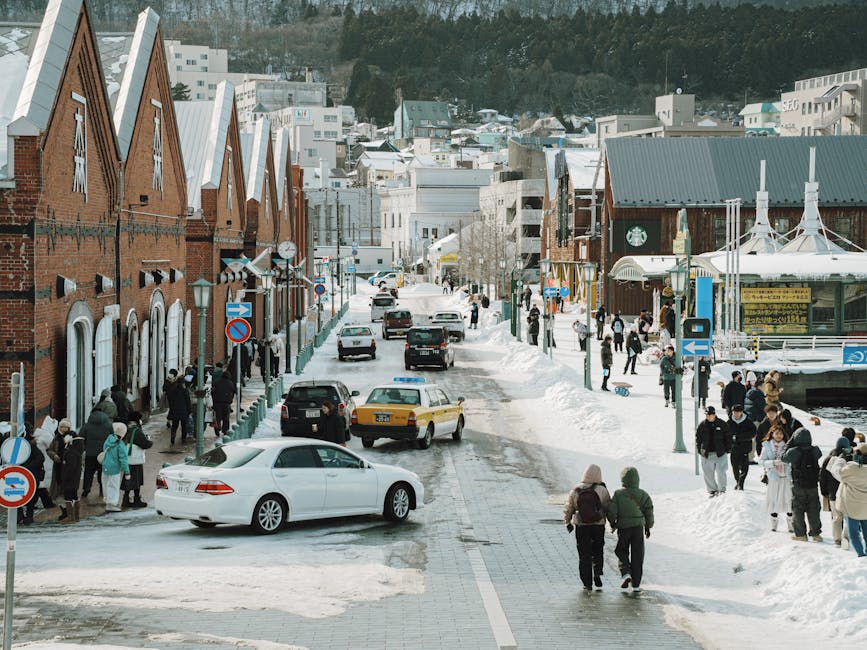
The red-brick Kanemori warehouses along the waterfront date from the 1880s and have been converted into shops, restaurants, and event spaces. The buildings are handsome — red brick with white trim, reflecting the era’s Western commercial architecture — and the area is pleasant for an evening walk when the buildings are lit up and reflected in the harbour water. In winter, a Christmas-themed illumination runs through the waterfront district. A small beer hall in one of the warehouses brews its own ales.
Yunokawa Onsen
Hakodate’s hot spring district on the eastern coast, about 30 minutes by streetcar from the station (¥210 flat fare). The springs are sodium chloride-based — clear and saline — and several ryokans and hotels offer ocean-view outdoor baths looking across the Tsugaru Strait. On a clear winter evening, soaking in a hot outdoor bath with the dark ocean in front of you is one of those quiet Hokkaido moments.
The Hakodate Tropical Botanical Garden within the Yunokawa area is notable for its colony of wild Japanese macaques that bathe in hot springs during winter (December to May). Monkeys soaking in steaming water while snow falls around them — it is charming and genuinely entertaining. Entry ¥300 (~$2).
Yunokawa is a good option for an overnight stay that combines onsen with Hakodate sightseeing — soak in the evening after the Mt. Hakodate night view. Mid-range ryokans with dinner and breakfast start around ¥12,000–18,000 (~$80–120) per person. See our onsen guide.
Food
Hakodate’s food scene reflects both its fishing port heritage and its Western trading history. The combination is unusual in Hokkaido.
- Squid (ika) — Hakodate’s signature ingredient. Ika-somen (squid cut into noodle-thin strips and served like sashimi), grilled squid at the morning market, and fresh sashimi everywhere. The texture of truly fresh squid — firm, sweet, almost crunchy — is unlike anything available more than a few hours from the port.
- Seafood donburi — the morning market specialises in bowls piled with uni, ikura, crab, and scallops. A good uni-ikura don runs ¥2,000–3,500 (~$14–24).
- Shio ramen — Hakodate’s ramen style uses a clear salt-based broth, lighter and more delicate than Sapporo’s rich miso or Asahikawa’s soy. It is the oldest ramen style in Hokkaido, influenced by Chinese noodle soup. Ajisai and Seiryuken are two well-regarded shops. A bowl runs ¥800–1,000 (~$5–7). See our ramen guide.
- Lucky Pierrot — a local fast-food chain found only in Hakodate and the surrounding area. The Chinese chicken burger is the most popular item — fried chicken pieces in a sweet-sour sauce in a soft bun. It shouldn’t work, but it does. Multiple locations around the city, each with different themed decor ranging from circus to Victorian. Locals are fiercely loyal. About ¥400–600 (~$2.70–4) per burger.
- Western-influenced cuisine — the trading port heritage shows up in dishes like Hakodate hamburger steak (hambagu), cream stew, and curry rice prepared with a Western rather than Indian influence. These aren’t tourist recreations — they’re part of the genuine food culture of a city that has been mixing Japanese and Western cooking for 150 years.
See our food guide and sushi guide for more detail.
Getting There
From Sapporo: JR Limited Express Hokuto, approximately 3.5–4 hours, ¥9,440 (~$64) one way. Trains run roughly hourly. Covered by the JR Hokkaido Rail Pass — the Sapporo–Hakodate return trip alone nearly covers the cost of the 5-day pass.
From Tokyo: Hokkaido Shinkansen to Shin-Hakodate-Hokuto (approximately 4 hours, ¥23,000/~$156), then Hakodate Liner local train (20 minutes, ¥440) to Hakodate Station. Covered by the Japan Rail Pass. Alternatively, fly to Hakodate Airport (1 hour 20 minutes from Haneda).
Hakodate Airport: Domestic flights from Tokyo Haneda (JAL, ANA, Air Do). Airport to city centre by shuttle bus (20 minutes, ¥450/~$3).
By ferry: Tsugaru Kaikyo Ferry from Aomori takes 3.5–4 hours (¥2,500–5,000/~$17–34). Practical if travelling from northern Honshu or bringing a car.
See our getting to Hokkaido guide for all options.
Getting Around
- Streetcar: Two lines covering the main tourist areas. Flat fare ¥210 per ride; one-day pass ¥600 (pays for itself after 3 rides). The streetcar is the most practical way to travel between the station, bay area, Motomachi, Goryokaku, and Yunokawa.
- Walking: The station, bay area, and Motomachi are walkable within 30 minutes. Hakodate is a compact, walkable city for the central sights.
- Mt. Hakodate Ropeway: From the Motomachi base station to the summit. ¥1,800 round trip.
- Buses: Cover areas the streetcar doesn’t reach. IC cards (Kitaca/Suica) work on both streetcars and buses.
Where to Stay
- Station area — convenient for the morning market and transport connections. Business hotels from ¥5,000/night.
- Bay area / Motomachi — atmospheric, close to sightseeing, slightly higher prices.
- Goryokaku area — quieter, local neighbourhood feel, good value.
- Yunokawa Onsen — hot spring ryokans with ocean views. Best for a combined onsen and sightseeing experience. From ¥12,000/person with dinner and breakfast.
See our where to stay in Hakodate guide for detailed hotel recommendations.
How Long to Stay
1 day: Morning market (early), Motomachi walk, Mt. Hakodate night view. Tight but covers the essentials if you start at dawn and end late.
2 days (recommended): Adds Goryokaku at a relaxed pace, Yunokawa onsen soak, time to eat properly without rushing between sights. This is the right duration for most visitors.
3+ days: Day trip to Onuma Quasi-National Park (30 minutes by train, volcanic lake with island trails and Mt. Komagatake views). Deeper food exploration — the Lucky Pierrot crawl across multiple locations, a shio ramen tasting comparison, evening in the Daimon yokocho alley of small bars. A relaxed ryokan stay at Yunokawa with morning and evening bathing.
Day Trip: Onuma Park
Onuma Quasi-National Park sits 30 minutes north of Hakodate by JR local train (¥640/~$4). A volcanic lake surrounded by over 100 small islands connected by walking bridges, with Mt. Komagatake (1,131m) as a backdrop. Walking trails loop the lake and cross the islands (1–3 hours depending on route). Canoeing, cycling, and horseback riding are available in summer. In autumn (mid-October), the foliage reflected in the still lake water is excellent. In winter, the frozen lake hosts ice-fishing for wakasagi smelt. A natural complement to a Hakodate stay.
Seasonal Highlights
| Season | Highlights |
|---|---|
| Winter (Dec–Mar) | Christmas illumination at the warehouses, snow on Motomachi slopes, quiet atmospheric streets, Yunokawa monkey bathing |
| Spring (Apr–May) | Cherry blossoms at Goryokaku (late April — Hokkaido’s earliest), Matsumae castle cherry festival (30 min south) |
| Summer (Jun–Aug) | Hakodate Port Festival (early August, squid dance parade), comfortable temperatures, fresh squid peak season |
| Autumn (Sep–Nov) | Foliage at Onuma Park (mid-October), quieter than summer, good value accommodation |
See our itineraries for routes that include Hakodate, and our best time to visit guide for seasonal planning.