Getting online in Hokkaido isn’t complicated, but it does require some planning before you land. Unlike Tokyo, where free WiFi is almost unavoidable, Hokkaido’s infrastructure spreads across a large, rural island. You’ll move through mountain towns, national park trailheads, ski resort bases, and fishing villages where the nearest cell tower might be several kilometres away. Having a reliable connection — or knowing when you won’t have one — makes a real difference.
The practical reasons stack up fast. Navigation in Hokkaido means driving or taking local buses between places that aren’t well signposted in English. Google Translate’s camera mode is genuinely useful at izakayas with handwritten menus. Train timetables for the JR Hokkaido network change seasonally, and you’ll want to check them in real time. And if you’re travelling in winter, road closures and weather alerts come through apps and websites, not physical notices.
Connectivity Options at a Glance
| Option | Best For | Approximate Cost | Data | Shares With Others |
|---|---|---|---|---|
| eSIM | Solo travellers, modern phones | ¥1,500–4,000 for 7–15 days | 3GB–unlimited | No |
| Pocket WiFi | Families, groups, older devices | ¥500–900/day | Unlimited (throttled after 10GB/day on some plans) | Up to 10 devices |
| Physical SIM | Budget travellers, longer stays | ¥1,200–3,500 for 7–30 days | 3GB–20GB | No |
eSIM (Recommended for Most Visitors)
An eSIM is a digital SIM you install on your phone before you travel. No physical card, no waiting at the airport. If your phone supports eSIM (most flagships released after 2019 — iPhone XS onward, Samsung Galaxy S20 onward, Google Pixel 3a onward), it’s usually the most convenient option.
For Hokkaido, the networks that matter are NTT Docomo and au/KDDI — they have the widest rural coverage on the island. Several eSIM providers resell access on these networks:
- IIJmio — runs on Docomo and au infrastructure. 15GB/30 days for around ¥2,200 (~$15). Good rural coverage.
- Airalo — plans from ¥1,500 for 1GB (7 days) up to ¥3,800 for 10GB (30 days). Uses Softbank, which is slightly thinner in rural Hokkaido but fine for cities and main tourist areas.
- Ubigi — 10GB/30 days for around ¥2,900 (~$20). Runs on NTT Docomo, which gives better coverage on Hokkaido’s eastern and northern reaches.
- Mobal — unlimited data eSIMs from around ¥3,500 (~$24) for 8 days. Good for heavy users.
Setup tip: Install the eSIM profile at home before you leave — you need a stable internet connection and sometimes a QR code scan to activate. Don’t try to do this at the airport on arrival. Once installed, keep it off until you land in Japan, then switch it on. Test it at New Chitose Airport before heading to the train — a quick Google Maps search to confirm location data is working takes 30 seconds and saves discovering a problem on the highway.
Most eSIM plans are data-only (no phone number). That’s fine for all normal travel uses — you won’t need a Japanese phone number unless making hotel reservations by phone.
Pocket WiFi
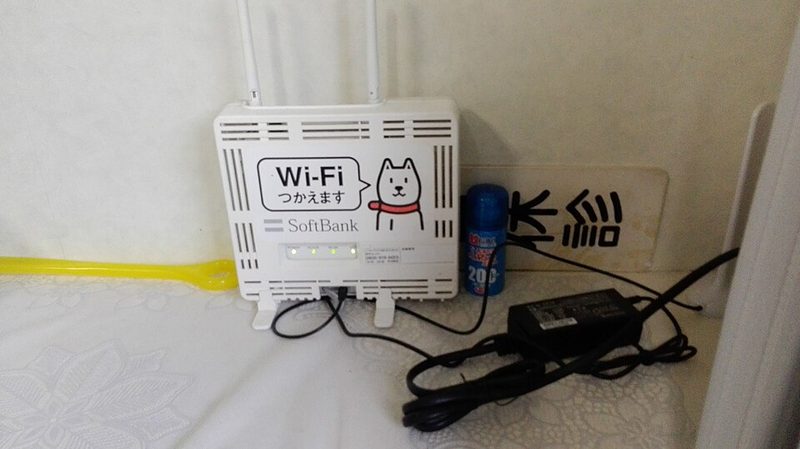
A small battery-powered device that creates a personal WiFi hotspot. Your phone, tablet, and laptop all connect to it. The right choice when travelling with family or a group — one device, one daily cost, multiple connections.
Two providers with counters at New Chitose Airport:
- Global WiFi — the largest rental network in Japan. Hokkaido plans run ¥700–900/day (~$5–6) depending on the device tier. Counter in the arrivals hall at New Chitose. Returns via prepaid envelope at airports or convenience stores.
- WiFi Rental Japan — slightly cheaper at ¥490–650/day (~$3.30–4.40), with unlimited data on Docomo’s network. Pickup at New Chitose arrivals. Returns via Japan Post prepaid envelope.
Reserve online before you travel — airport counters can run low during peak season (ski season January–February, flower season June–July). Budget 20 minutes on arrival to collect the device.
The downside: another device to carry and charge daily (battery lasts 8–12 hours). If you forget it at the hotel, everyone’s offline. If the group splits up, whoever doesn’t have the device has no connection.
Physical SIM Card
For phones that don’t support eSIM. Available at New Chitose Airport vending machines and staffed counters, plus electronics retailers (Bic Camera, Yodobashi Camera) in Sapporo. IIJmio and Docomo offer tourist SIMs.
Prices: IIJmio 7-day/3GB data SIM runs ¥1,200–1,500 (~$8–10). A 30-day/20GB SIM is ¥3,000–3,500 (~$20–24). Data-only unless specified. Make sure your phone is unlocked before purchasing — carrier-locked phones won’t work with a Japanese SIM.
Free WiFi
Exists but not reliable enough to depend on:
- New Chitose Airport — solid coverage throughout terminals.
- Sapporo City WiFi — covers parts of the Odori area and some public buildings. Requires registration. Connection drops frequently.
- Convenience stores (7-Eleven, Lawson, Seicomart) — free WiFi inside stores, sessions capped at 30–60 minutes with registration.
- Hotels — virtually all hotels include free WiFi in rooms and lobbies.
- JR stations — some larger stations (Sapporo, Hakodate, Asahikawa) have free WiFi.
- Cafes — Starbucks, Doutor, and some independent cafes with purchase.
Outside Sapporo, free WiFi drops off sharply. Eastern Hokkaido and rural areas have very limited coverage. Don’t plan your itinerary around finding free WiFi.
Coverage: Where Signal Drops in Hokkaido
4G LTE coverage is excellent in Sapporo, Hakodate, Asahikawa, Kushiro, Otaru, and along main highways. Signal becomes unreliable or disappears in specific areas you’re likely to visit:
- Daisetsuzan National Park — coverage exists in Asahidake Onsen and Sounkyo Gorge township, but trails above the ropeway have no signal. This includes the Grand Traverse routes between peaks.
- Shiretoko Peninsula — Utoro and Rausu have coverage. The road between them (Shiretoko Pass, Route 334) loses signal for most of its length. The Five Lakes area has weak-to-no coverage.
- Shakotan Peninsula — coverage drops significantly past Yoichi along the coastal route. The cape areas are effectively dead zones.
- Kushiro Wetlands interior — coverage near the visitor centre is reasonable, but canoe routes through the wetland have minimal signal.
- Northern coast (Rumoi to Wakkanai) — long stretches of highway with intermittent signal.
- Mountain roads in winter — heavy snowfall can cause unexpected outages on towers that normally function.
The practical implication: download what you need before you go off-grid.
Offline Maps and Navigation
Google Maps works well in Japan but requires a live connection unless you’ve downloaded offline maps. To download: open the app, search for “Hokkaido,” tap the three-dot menu, select “Download offline map.” The full Hokkaido download is large (1.5–2GB) — do it over hotel WiFi. Offline maps don’t include transit schedules or live traffic, but roads, place names, and points of interest are all there.
Maps.me is a useful backup using OpenStreetMap data. Downloads are smaller (~300–400MB for Hokkaido) and the offline mode works well for hiking trails and rural roads that Google sometimes underrepresents. Doesn’t do transit routing but for driving and walking it’s solid.
Google Translate offline: Download the Japanese language pack (~40MB) for offline use. Camera translation works offline once the pack is downloaded. Do this on hotel WiFi your first night.
For transport planning, see our getting around Hokkaido guide.
Data Usage Estimates
If you’re on a capped plan, knowing what each app uses helps you avoid mid-trip surprises:
- Google Maps navigation: ~5–10MB per hour of turn-by-turn. Very light.
- Google Translate camera: ~1–3MB per session. Not a major drain.
- Web browsing / restaurant searches: ~50–100MB per hour.
- Social media with photos: ~100–300MB per hour.
- Music streaming: ~40–150MB per hour depending on quality. This is where plans disappear fast.
- Video calls (Zoom, FaceTime): ~500MB–1GB per hour. Avoid on capped plans.
A 3GB plan comfortably covers a week-long trip if you’re not streaming. 5–10GB gives room for a two-week trip with moderate social media use. Download offline maps and the Translate language pack on hotel WiFi rather than burning mobile data.
Charging on the Go
Battery management matters more in cold weather. Temperatures in Hokkaido drop below -15°C in winter, and lithium batteries lose charge capacity significantly in the cold. A phone that lasts 14 hours in Tokyo might last 8 hours on a Daisetsuzan ski slope.
A portable battery (10,000mAh, about ¥2,000–3,000/~$14–20 at electronics stores or convenience stores) provides 2–3 full phone charges and weighs about 200g. Keep it in an inner jacket pocket in cold weather — body warmth maintains its output.
Some JR Hokkaido limited express trains have USB-A charging outlets (Limited Express Ozora, Hokuto). The Rapid Airport service typically doesn’t. Convenience stores sell portable chargers from ¥1,500 if you arrive without one.
VPN
Japan doesn’t block international services — Google, WhatsApp, Instagram, and similar platforms work without workarounds. You won’t need a VPN for normal use. Two situations where one is worth having: accessing work systems over public WiFi (hotel lobbies, convenience stores), and watching geo-restricted streaming content from your home country’s library. Most commercial VPNs work fine from Japan. Set it up before you travel.
See our getting to Hokkaido guide for airport arrival logistics and connectivity setup on landing.