Hokkaido’s past comes alive in old homes, shops, farms, and public buildings at the Historical Village of Hokkaido, an open-air museum spread across 54 hectares. You also visit the Hokkaido Museum and trace Sapporo Beer from its early days to today.
In This Article
- Key points to know before booking
- Why this tour gives you a better view of Hokkaido
- Meeting your guide at Sapporo Station
- Walking through the Historical Village of Hokkaido
- Putting the island into context at Hokkaido Museum
- Following Sapporo Beer from brewery to brand
- Comparing three beers in Star Hall
- How the eight-and-a-half-hour schedule feels
- What the $188 price really buys
- Who should book this Sapporo day tour
- FAQ
- How long does the tour last?
- Where do I meet the guide?
- Is the tour conducted in English?
- Which attractions are included?
- What beers are included in the tasting?
- Is lunch included?
- What should I bring?
- Can I cancel the tour?
- Should you book it?
I like the mix of living-size historic buildings and museum displays, which gives you both atmosphere and useful context. I also like the final beer tasting, where you can compare Sapporo Black Label, Hokkaido-only Sapporo Classic, and Kaitakushi Pilsner. The main drawback is that some signs are in Japanese, so you may rely on your guide or a phone translation app.
Key points to know before booking
- Three very different stops: You visit the Historical Village of Hokkaido, Hokkaido Museum, and Sapporo Beer Museum in one long day.
- A 54-hectare open-air museum: About 60 buildings from the Meiji and Taisho periods show village, farm, and city life.
- English-speaking guidance: Guide Scott has led this tour and is available to explain Japanese culture and answer questions.
- A useful beer finish: The tasting compares three Sapporo beers, including Sapporo Classic, sold only in Hokkaido.
- Full-day timing: The tour lasts 510 minutes, or eight and a half hours, so wear comfortable shoes.
- Language can be uneven: Some exhibit text is Japanese, with multilingual cards or phone translation helping at certain displays.
Why this tour gives you a better view of Hokkaido
Many visitors see Sapporo as a modern city with broad streets, snowy winters, and a famous beer brand. This tour shows the older story behind that image.
You begin at Sapporo Station and travel to the eastern edge of the city, where the Historical Village of Hokkaido presents life from the Meiji and Taisho periods, roughly 1868 to 1926. Then you visit the Hokkaido Museum for wider context about the island’s people, wildlife, and development. The day ends at the Sapporo Beer Museum, tying local industry to one of Japan’s best-known names.
I like this order. The open-air village gives you a sense of place first. The museum adds facts and background. Beer then offers an easy, enjoyable way to finish the day.
At $188 per person, this is not a cheap sightseeing outing. The price makes more sense if you value guided transport, admission to all listed attractions, and a full day arranged from Sapporo Station. If you prefer to move quickly or choose only one museum, independent visits will likely cost less and give you more control.
Our other Sapporo reviews may also help you decide


Meeting your guide at Sapporo Station
The meeting point is easy to miss if you rush. After leaving the main JR gates at Sapporo Station, turn left and walk toward the South Exits, marked 南出口. Look for MYOMU, a circular white stone structure. Your guide waits there at 9 a.m. wearing a Snow Monkey Resorts tour tag.
Build in a few extra minutes to find the spot. Sapporo Station is large, and the instruction to use the South Exits matters. Once the group meets, transportation to the listed attractions is provided.
The tour is conducted in English. Scott has served as the guide for this outing and is described as friendly, easy to talk with, and ready to answer questions about Japanese culture and daily life. That matters here because several displays do not offer full English explanations.
Walking through the Historical Village of Hokkaido
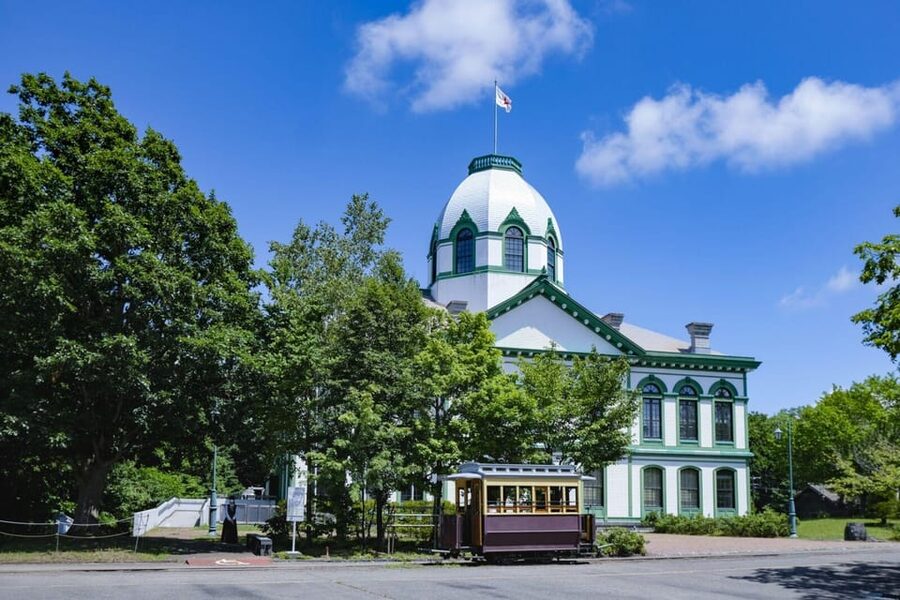
The first major stop is the Historical Village of Hokkaido in Nopporo Forest Park, outside central Sapporo. This is not a single reconstructed street. It covers 54 hectares and contains about 60 structures from the Meiji and Taisho periods.
The buildings represent different parts of Hokkaido life. You might enter a village home, a barber shop, a farm building, or a town property. Each structure helps explain how people lived and worked during a period when Hokkaido was changing quickly.
I like the scale of this place. A small indoor exhibit can show you an old tool or photograph, but a full building gives you a better sense of space. You can look at the layout, construction, and relationship between rooms rather than viewing an isolated object behind glass.
Your guide takes you from building to building and explains each one’s purpose. That guidance is useful because the village is large, and it would be easy to walk past a building without understanding what made it important.
The setting also changes the pace of the day. Instead of moving from one indoor gallery to another, you walk between structures and see the village as a collection of homes, workplaces, and public spaces. Comfortable shoes are essential.
The trade-off is time. With dozens of structures across a large area, you will not study every room at length during a scheduled tour. Think of this stop as a guided introduction to Hokkaido’s older built environment, not a slow private visit to every building.
Some information is presented in Japanese. Your guide can add context, and your phone’s translation tool can help with labels. If you enjoy reading every plaque, this may feel less smooth than a museum with full English text.
Putting the island into context at Hokkaido Museum
Near the open-air village, the Hokkaido Museum broadens the story. Its displays cover the early history, culture, and wildlife of Hokkaido.
This stop is valuable because buildings alone cannot explain the full story of the island. At the museum, you can connect daily life with the people, animals, and natural conditions that shaped Hokkaido.
I would pay close attention to the parts that explain early Hokkaido and local culture. The visit helps you see that the island’s story is not only about Japanese settlement and modern development. It also includes the people and traditions already connected to Hokkaido.
The amount of English support may vary by display. One recent account of the tour found that some plaques were not in English, so much of the visit involved looking at exhibits, asking Scott questions, or using a phone to translate. That is a practical point, not a reason to skip the museum. Just set your expectations correctly.
This is also where a good guide can make a real difference. Scott is noted for being well informed about Japan and willing to discuss cultural questions. You can get more from the displays if you ask about a term, object, or custom that is not clear.
Following Sapporo Beer from brewery to brand
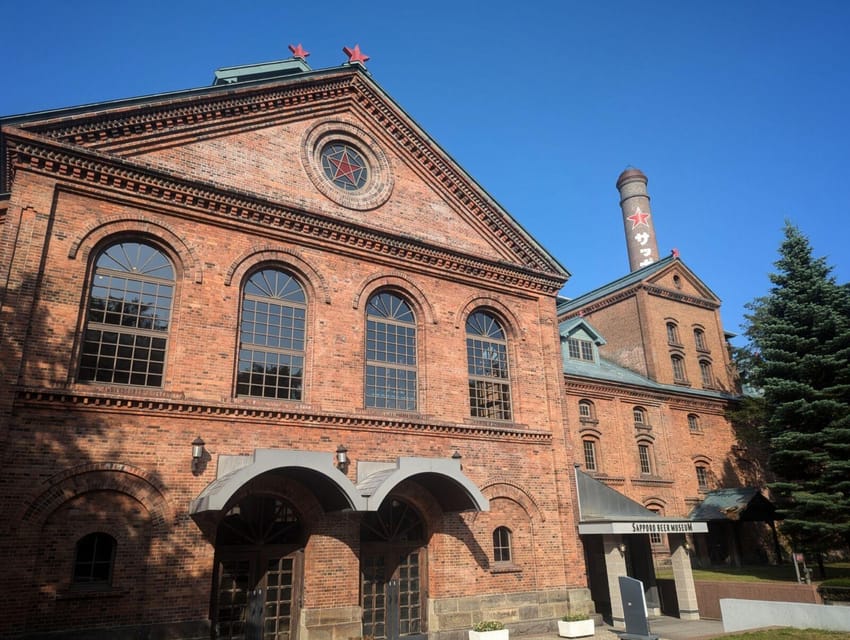
After the historical museums, you head to the Sapporo Beer Museum. The mood changes here. Instead of homes and community buildings, you follow the development of a major brewery and its products.
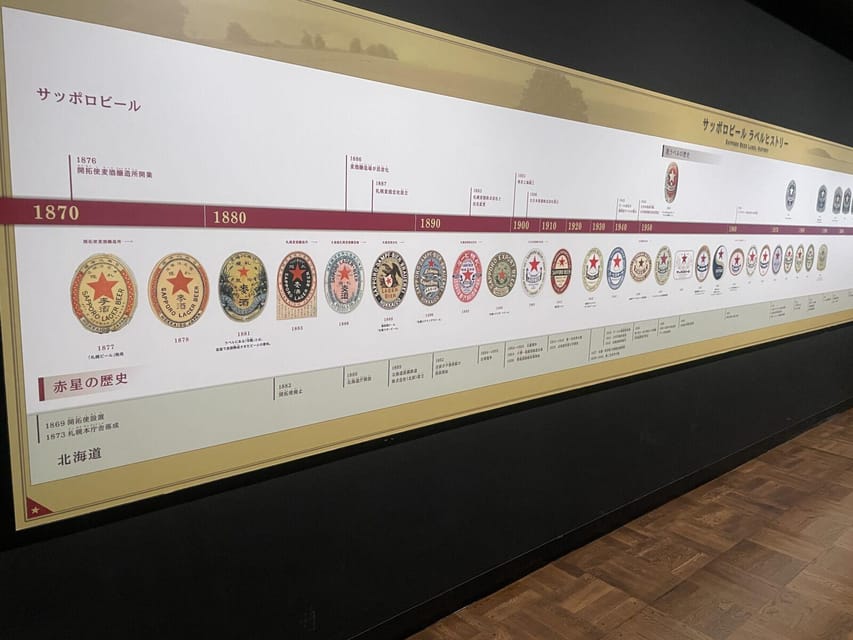
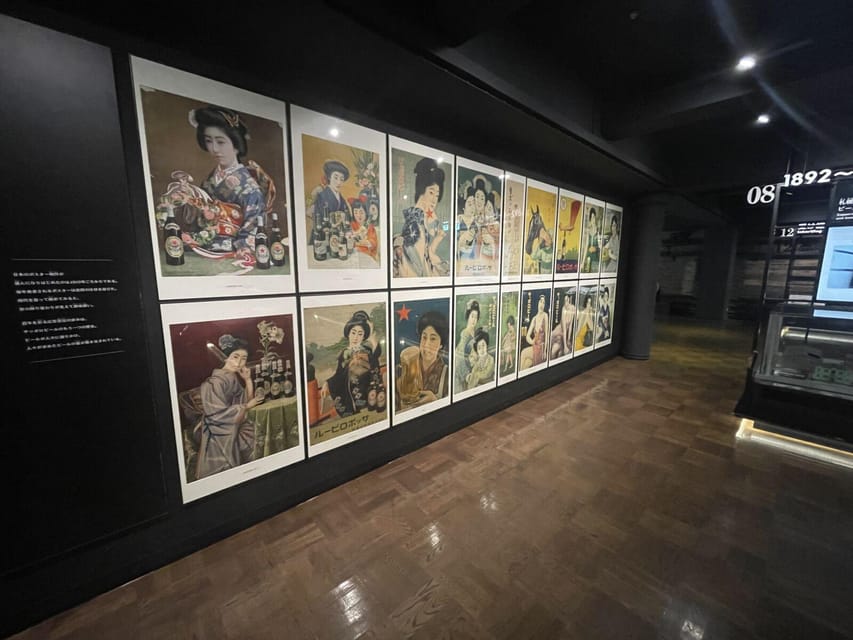
The museum presents a timeline from the company’s beginning to the present. You see products from different periods and advertising from the brewery’s long commercial life. Bottle labels and printed advertisements show how the brand changed over time.
I enjoy this part because it treats beer as more than a drink. Packaging, advertising, and product names reveal how a company presented itself to the public. You get a look at changing design and marketing along with the basic brewery story.
Most of the main signage is in Japanese. Small laminated cards beside the displays provide the same information in several languages, which makes the visit easier. Still, you may want your phone ready if you hope to read every detail.
The museum visit is guided, but the exhibits themselves are largely self-guided. In practice, your guide leads you through the displays and helps explain them, while you read, examine the objects, and ask questions. That format gives you some freedom, though it is not the same as a continuous English lecture at every display.
You can also read our reviews of more food & drink experiences in Sapporo


Comparing three beers in Star Hall
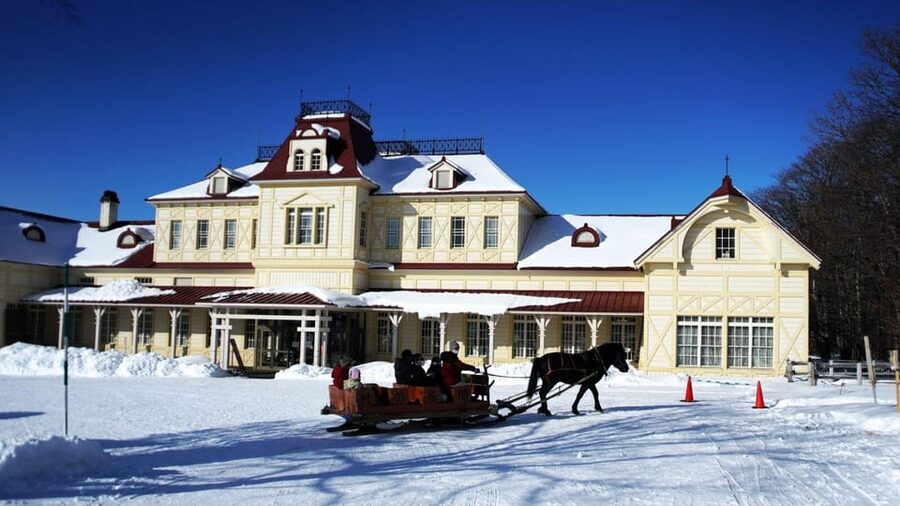
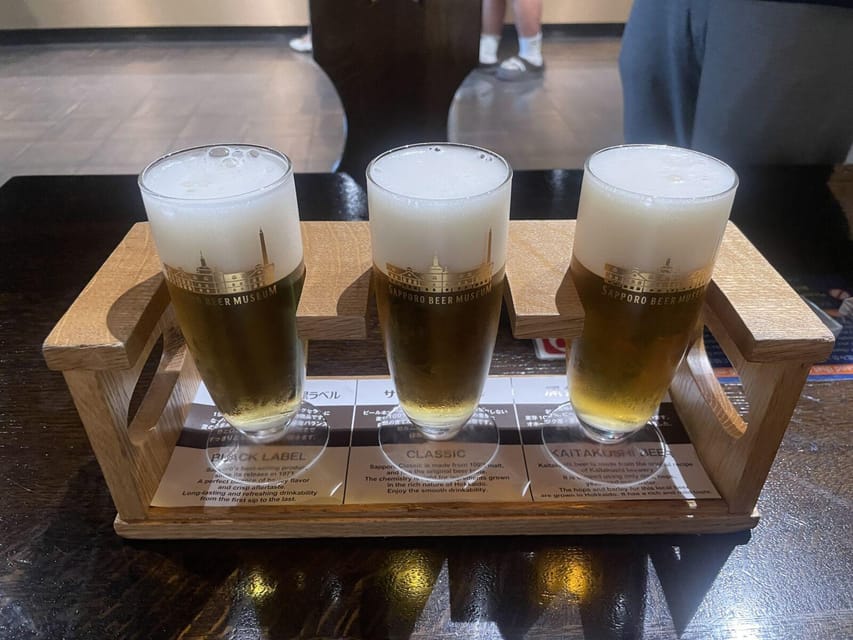
The final treat is the Star Hall Tasting Corner. The tasting is built around three beers:
- Sapporo Black Label
- Sapporo Classic, sold only in Hokkaido
- Sapporo Kaitakushi Pilsner
This is a better tasting lineup than simply receiving three versions of the same familiar lager. Sapporo Classic gives you a regional beer you cannot buy everywhere in Japan, while Kaitakushi Pilsner connects the tasting to the brewery’s early identity.
The supplied tour details describe the tasting as included, but they also state that the three-beer flight costs 800 yen at the tasting corner. Because those details conflict, check the current booking conditions before you go. You should also confirm whether the tasting is served as part of the tour price or paid separately on site.
The tasting is a pleasant ending after a day of museums and walking. It also gives you something concrete to compare. Notice which beer tastes lighter, sharper, or more familiar to you, rather than treating the flight as just a quick drink.
This is not a brewery production tour based on the information provided. The focus is the museum, its displays, and the tasting corner. If you want to see active brewing equipment or a working production line, confirm what is currently open before booking.
How the eight-and-a-half-hour schedule feels
The total duration is 510 minutes, or eight and a half hours. That is a serious portion of your day, but the three stops are far enough apart in subject and setting to keep the program varied.
You begin at 9 a.m. and spend much of the morning with Hokkaido’s older buildings and museum collections. The beer museum comes later, providing a lighter finish. Transportation between the listed destinations is covered, so you do not need to plan the route yourself.
Lunch is not included. You should plan for that gap with your guide or tour operator, since no specific meal arrangement is provided. The tour also does not include accommodation, which is not an issue for a day trip but is worth noting if you are comparing packages.
Bring comfortable shoes. The Historical Village covers a wide area, and you should expect walking between buildings. Smoking is not allowed during the activity.
The tour is not suitable for people with mobility impairments according to the supplied conditions. The information also lists non-swimmers as unsuitable, though swimming is not part of the described schedule. If that point affects your booking, ask the operator to clarify it before paying.
What the $188 price really buys
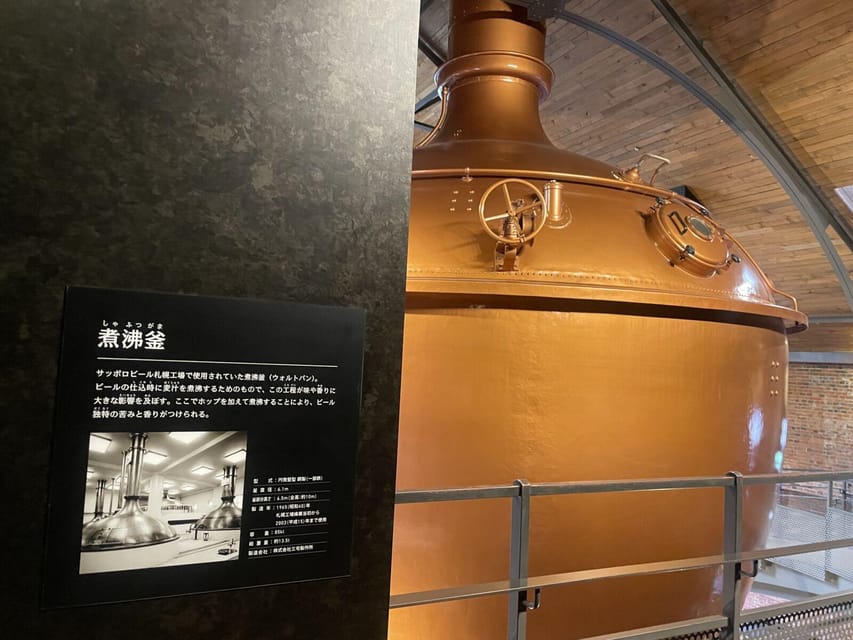
The $188 cost per person pays for more than entry to three attractions. It also covers an English-speaking guide and transportation from Sapporo Station to the listed stops.
That can be useful in Hokkaido, where an out-of-town attraction may take more planning than a central Sapporo museum. You are paying for one arranged day rather than piecing together tickets, directions, and timing yourself.
The value is strongest for you if:
- You want historical context rather than quick photo stops.
- You prefer an English-speaking guide to explain Japanese displays.
- You want to combine the open-air village and both museums in one day.
- You are comfortable with a long schedule and a fair amount of walking.
- You like finishing cultural sightseeing with a beer comparison.
The value is weaker if you already understand Japanese museum signage, want to spend a whole day at only one attraction, or prefer to choose your own lunch and departure times. The language issue also matters. English support exists, but not every plaque is translated.
Free cancellation up to 24 hours before the activity and a reserve-now, pay-later option give you some flexibility. Check the current terms when booking, especially because the beer tasting description contains a separate 800-yen charge while the inclusions list says beer tasting is covered.
Who should book this Sapporo day tour
I would recommend this tour to first-time visitors who want a broad introduction to Hokkaido’s past and do not want to manage the transport themselves. Families with older children may also like the open-air buildings and beer museum, although the tasting is for adults.
It suits curious museum-goers, people interested in architecture, and anyone who wants to see more than central Sapporo. The Historical Village is the heart of the day, while the Hokkaido Museum supplies context and the beer museum adds a distinctly local finish.
I would think twice if you have limited mobility, dislike long museum days, or need full English text at every exhibit. You should also skip it if your main goal is a working brewery tour, since the listed program focuses on the museum and tasting corner.
FAQ
How long does the tour last?
The tour lasts 510 minutes, which is eight and a half hours.
Where do I meet the guide?
Meet at Sapporo Station at 9 a.m. After leaving the main JR gates, turn left toward the South Exits, marked 南出口. The meeting point is MYOMU, the circular white stone structure. The guide wears a Snow Monkey Resorts tour tag.
Is the tour conducted in English?
Yes. The activity includes an English-speaking live guide.
Which attractions are included?
The tour visits the Historical Village of Hokkaido, the Hokkaido Museum, and the Sapporo Beer Museum.
What beers are included in the tasting?
The tasting features Sapporo Black Label, Sapporo Classic, and Sapporo Kaitakushi Pilsner.
Is lunch included?
No. Lunch is not included in the tour price.
What should I bring?
Bring comfortable shoes. You may also find a phone translation app useful because some exhibit signs are in Japanese.
Can I cancel the tour?
You can cancel up to 24 hours in advance for a full refund, according to the supplied booking terms. A reserve-now, pay-later option is also available.
Should you book it?
Book this tour if you want one well-planned day covering Hokkaido’s old buildings, regional culture, and Sapporo’s beer story. The combination is unusual, and the three stops give you more context than a beer visit alone.
The main reasons to choose it are the large Historical Village, the chance to ask an English-speaking guide questions, and the three-beer tasting that includes Hokkaido-only Sapporo Classic. Go in ready for walking, uneven English signage, no included lunch, and a long day. If that sounds like your kind of sightseeing, the $188 price can be fair for the transport, admissions, guide, and full itinerary.
More Tours in Sapporo


More Tour Reviews in Sapporo


More Sapporo City Tours in Sapporo


Other Sapporo tours worth your shortlist


Sapporo City Tours, side by side.
 ★ 4.7Sapporo TV Tower Admission TicketFrom $621 reviews
 ★ 4.9Sapporo Walking TourFrom $5817 reviews
 ★ 5.01 Day Tour to Hill of the Buddha, Sapporo and SakeFrom $165.495 reviews
 ★ 4.5Sapporo TV TowerFrom $6.505 reviews
The lists this tour appears in