Sapporo’s fish markets are the heart of this private half-day outing. With Emilio, you can compare Jogai Market near the Central Wholesale Market with Nijo Market, taste seafood at your own cost, and see parts of the city that a standard sightseeing loop may skip. The route can also include Hokkaido Shrine, Tanukikoji Shopping Street, and the view from JR Tower T38.
In This Article
- Key points to know before booking
- Why Sapporo’s markets make a good morning start
- Jogai Market and the Central Wholesale Market area
- Nijo Market for central seafood and local bites
- Hokkaido Shrine and a forested break
- Tanukikoji Shopping Street adds a city-center stop
- Nakajima Park or the Japanese Garden, depending on the season
- JR Tower T38 for a high view of the city
- A private half-day that can follow your interests
- What Emilio adds to the morning
- Who will get the most from this tour
- Should you book this Sapporo market tour?
- FAQ
- How long is the Sapporo fish market tour?
- How many people can join one booking?
- Who guides the experience?
- Which languages are available?
- Are food and drinks included?
- Is public transportation included?
- Can I cancel for a full refund?
I like the private format, since Emilio can adjust the pace for a family, a food-focused morning, or a group that wants more city sights. I also like the chance to reach the wholesale market area, which can feel less arranged for tourists than the central shopping streets. The main consideration is cost: at $163 per group of up to three, this makes the most sense when shared by two or three people, and food and transportation cost extra.
Key points to know before booking
- Two market stops: Compare Jogai Market near Sapporo Central Wholesale Market with Nijo Market in the city center.
- A local guide named Emilio: He has lived in Hokkaido since 2017 and leads the tour in English, Spanish, or Italian.
- More than seafood: The route can include Hokkaido Shrine, Tanukikoji Shopping Street, Nakajima Park or the Japanese Garden seasonally, and JR Tower T38.
- A flexible private route: You can place more weight on sashimi, local culture, shopping, or photography.
- Food is not included: You choose and pay for your own seafood, sweets, drinks, and other purchases.
- Best shared by a small group: The $163 price covers up to three people, making the per-person cost more reasonable when you fill the group.
Why Sapporo’s markets make a good morning start
Sapporo is often introduced through its wide streets, mountain views, parks, and winter attractions. Yet the markets give you a more immediate sense of daily Hokkaido life. Fish, shellfish, fruit, prepared foods, and local specialties come together in a setting where eating is part of the visit, not an afterthought.
Jogai Market sits near Sapporo Central Wholesale Market. That location matters. It gives you access to a part of the city’s food trade rather than only a polished restaurant district. You might see stalls aimed at home cooks, restaurant buyers, and shoppers looking for Hokkaido products.
This is the market to favor if you want the tour’s more local-feeling side. The wholesale area can be a little away from the usual tourist path, so a guide is useful for context and for helping you make sense of what you are seeing. You will need to pay for anything you eat, and the tour price does not cover food or drinks.
Nijo Market offers a different mood. It is easier to pair with central Sapporo sights, and it is a natural place to look for seafood meals and local delicacies. Visiting both markets gives you a useful comparison instead of treating one market as the whole story.
Our other Sapporo reviews may also help you decide


Jogai Market and the Central Wholesale Market area
Jogai Market is the strongest reason to choose this experience over a basic Sapporo city tour. The attraction is not only the chance to eat sashimi. It is the setting near the wholesale market, where seafood feels connected to the city’s working food system.
For food-focused visitors, this stop can shape the entire morning. You can ask Emilio about local specialties, choose a meal, or spend time taking photographs. If you are unsure what to order, a private guide can help you understand your choices without forcing the entire group to follow a fixed menu.
The tradeoff is that markets work best when you accept a little noise, movement, and uncertainty. This is not a quiet museum visit, and the tour does not include a food allowance. Set aside extra money if tasting seafood is one of your main goals.
The supplied experience information does not give a fixed menu or guaranteed tasting. That is useful to know. Your food choices remain your own, and the exact meal will depend on what you want, what is available, and how much time you wish to spend there.
Nijo Market for central seafood and local bites
Nijo Market gives the tour a second look at Sapporo’s seafood culture. Instead of stopping after one market, you can compare its location and feel with Jogai Market near the wholesale district.
I would treat Nijo as a flexible food and sightseeing stop rather than assume it is a formal tasting session. You can ask Emilio about local delicacies, browse stalls, and decide where to spend your food budget. Since meals and drinks are not included, you are not paying for dishes you may not want.
The two markets also help you understand Sapporo’s layout. Jogai connects more closely with wholesale activity, while Nijo fits naturally into a central-city route that may also include Tanukikoji and other attractions. That contrast gives the half-day more shape than a single market visit.
Hokkaido Shrine and a forested break
Hokkaido Shrine adds a cultural pause after the food stops. The shrine is one of the city’s important sights, and it gives you a chance to shift from seafood stalls to Japanese religious architecture and quiet paths.
The route may also include a forest walk around this part of the city. That detail matters if you want your morning to have some open-air time rather than consist entirely of shopping and eating. A walk can also be welcome after a market meal.
Do not think of the shrine as a long guided history lecture based on the information provided. Emilio’s role is to share cultural context and adapt the visit to your interests. If you care about customs, photography, or the setting, tell him early so the shrine receives enough time.
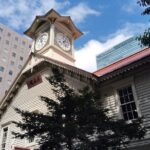
One reported outing also included a temple bakery with especially well-liked sweets. Since this is not listed as a guaranteed stop, treat it as a possible extra rather than a promised part of every route. The same applies to an older Sapporo building that may appear on a customized city route.
Tanukikoji Shopping Street adds a city-center stop
Tanukikoji Shopping Street gives you a change of pace from the markets. It is a useful stop if you want snacks, small purchases, or a look at one of Sapporo’s best-known shopping areas.
This part of the experience suits mixed groups. One person can focus on food, another on souvenirs, and another on photographs. Emilio can help keep the group moving, though the more shopping you do, the less time remains for the other sights.
The street is also a practical link between the food-focused parts of the tour and the city’s central attractions. It helps prevent the outing from feeling like a single-purpose seafood trip. Still, shoppers should keep expectations sensible: the tour does not include purchases, and no shopping budget is built into the price.


Nakajima Park or the Japanese Garden, depending on the season
Nakajima Park or the Japanese Garden may be included seasonally. This is one of the clearest signs that the route is not locked into one identical schedule all year.
A park or garden stop gives you room to slow down, take pictures, and see another side of Sapporo. If you have already spent time in markets, this can provide a welcome break. It also suits families and anyone who prefers a mix of food, culture, and outdoor scenery.
Because this stop is seasonal, you should not book the tour expecting it as a guaranteed feature. Ask Emilio about the likely route for your date if the park or garden is a priority. The experience is strongest when you see the itinerary as a set of possible stops shaped around your interests and the season.
JR Tower T38 for a high view of the city
JR Tower Observation Deck T38 provides the clearest finish to the tour. From the top of Sapporo Station’s tower, you can look out over the city after seeing its streets at ground level.
The value here is perspective. Markets show you Sapporo through food and commerce. The shrine shows you a cultural setting. T38 lets you connect those pieces and see the city as a whole.
A reported outing included the top of the train station tower, and it was one of the memorable parts of that route. The observation deck is especially useful for photographers or first-time visitors who want to get their bearings. The supplied information does not state that admission is included, so confirm the arrangement and expect attraction costs to be separate unless otherwise agreed.
A private half-day that can follow your interests
The private format is the key difference between this tour and a fixed group excursion. You can tell Emilio if sashimi matters most, if you want more local culture, or if photographs are your main goal.
That flexibility is also valuable for families. You are not tied to strangers’ meal choices or forced to spend equal time at every stop. A small group can pause when something catches its attention, then move on when the energy starts to fade.
The tour is designed for up to three people per booking. At $163 for the group, one person pays the full amount if traveling alone, but three people can bring the price down to about $54 per person before food, transport, and admissions. For a couple, it works out to about $81.50 each before those extras.
That price is fair if you want personal guidance and a route built around your priorities. It is less attractive if you only want to buy seafood and can comfortably visit the markets alone. In that case, the private guide is the product, not the market admission.
Public transportation is not included. You should also budget for meals, drinks, shopping, and any attraction fees that apply. The booking terms allow you to reserve and pay later, and cancellation is fully refundable up to 24 hours in advance, which helps if your Sapporo plans are still shifting.
What Emilio adds to the morning
Emilio has lived in Hokkaido since 2017 and offers the tour in English, Spanish, and Italian. The useful part of a local guide is not simply translation. It is having someone who can explain why a market matters, help you weigh food choices, and adjust the day when your interests become clear.
His route has covered more than the core list of markets and landmarks. It has included the wholesale fish market, a forest walk, a temple bakery, one of Sapporo’s older buildings, and the station tower. These additions show how the experience can stretch beyond a checklist, though you should confirm which stops are planned for your date.
The personal approach seems to be the tour’s strongest feature. Emilio is described as personable, and that fits the format: a half-day with one guide and a maximum of three guests can feel more like exploring with a well-informed local than joining a large bus group.
Who will get the most from this tour
I would recommend this experience to you if food is a major reason for visiting Hokkaido, but you also want shrines, parks, shopping streets, and a city view. It works particularly well for couples, families, and small groups who prefer to set their own pace.
It is also a good match if you are visiting Sapporo for the first time and want several neighborhoods connected in one morning. The guide can help you see how the markets fit with the rest of the city instead of leaving you to arrange separate trips.
You may want to skip it if you dislike spending extra on meals and transport, or if you prefer a strict itinerary with guaranteed stops and fixed admission costs. The seasonal garden option and possible extra stops mean you should view the route as flexible rather than exact.
Should you book this Sapporo market tour?
Book it if you want seafood with context, not just a quick market photo. The strongest reasons are the visit to the wholesale market area, the chance to compare Jogai and Nijo, and Emilio’s ability to shape the morning around your group.
The $163 group price is easiest to justify with two or three people. Add a food budget and transport costs, then decide if the private guidance is worth more to you than exploring independently.
If you want a relaxed introduction to Sapporo that mixes local food, Hokkaido culture, a possible forest or garden walk, and a high city view, this is a well-rounded choice. If seafood alone is your goal, save the money and visit a market on your own.
FAQ
How long is the Sapporo fish market tour?
It is a half-day tour.
How many people can join one booking?
The price covers a private group of up to three people.
Who guides the experience?
The guide is Emilio, a Hokkaido local since 2017.
Which languages are available?
The tour is offered in English, Spanish, and Italian.
Are food and drinks included?
No. You pay separately for seafood, meals, drinks, and other food purchases.
Is public transportation included?
No. Public transportation is not included in the tour price.
Can I cancel for a full refund?
Yes. You can cancel up to 24 hours in advance for a full refund.
More Tour Reviews in Sapporo
More Seafood & Market Tours in Sapporo

Other Sapporo tours worth your shortlist



Seafood & Market Tours, side by side.
 ★ 4.8Authentic Sapporo: Nijo Market Seafood Lunch & History TourFrom $6120 reviews
 ★ 5.0Authentic Sapporo: Nijo Market Seafood Lunch & Local History TourFrom $63.2013 reviews
 ★ 5.0Hokkaido Seafood Sushi Rolls Experience with Matcha, in SapporoFrom $97.554 reviews
 ★ 5.0Morning Market Tour with Seafood Tasting OptionsFrom $1251 reviews
The lists this tour appears in