Hokkaido’s festival calendar runs differently from the rest of Japan. On Honshu, matsuri tend to be rooted in centuries of shrine ritual and agricultural tradition. Hokkaido has some of that, but the island was settled primarily in the late nineteenth century, which means its festival culture is younger, more eclectic, and in many ways more inventive. The winters pushed communities to find ways of celebrating together rather than retreating indoors. The result is a festival scene that leans heavily into snow and ice in the cold months, and into movement, music, and the sheer relief of summer when the warmth finally arrives.
The scale many of these events have reached in a relatively short time is striking. The Sapporo Snow Festival has been running since 1950 and now draws over two million visitors in a single week. The Yosakoi Soran Festival launched in 1992 with ten teams and already attracts thirty thousand dancers. These aren’t festivals that evolved slowly over centuries — they were built deliberately, and they keep growing.
Sapporo Snow Festival (Sapporo Yuki Matsuri) — Early February
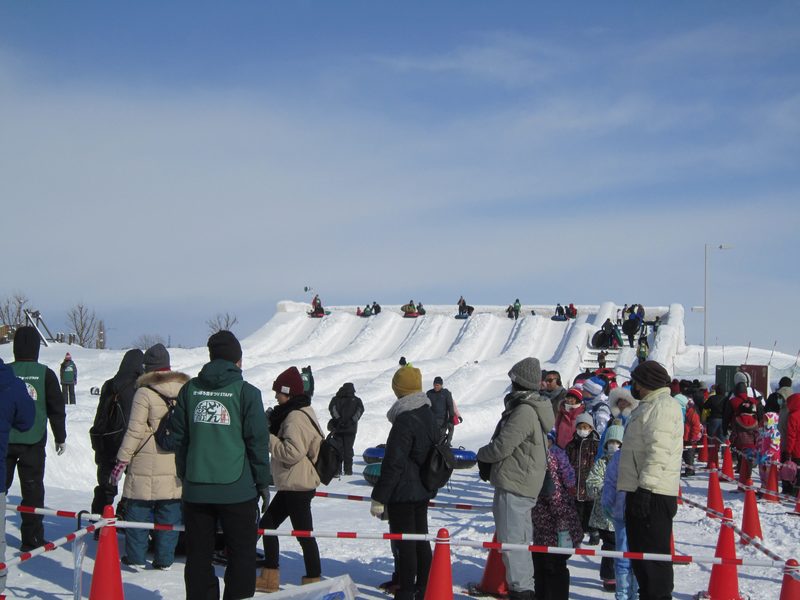
The largest winter event in Japan, running roughly a week in early February across three sites in the city.
Odori Park is the main venue. The park stretches 1.5km through central Sapporo, and during the festival that entire length is occupied by snow sculptures — from room-sized pieces by school groups to monumental structures built by the Japan Self-Defense Forces and international teams. The large sculptures recreate famous buildings at remarkable scale and accuracy. They’re lit from sundown until 22:00 each night, and the evening hours are when the atmosphere is strongest. Arriving around 16:00 gives you the best combination of natural and artificial light with more manageable crowds.
Susukino hosts an ice sculpture competition. Clear ice rather than packed snow gives these pieces a completely different quality — translucent, sharp-edged, and lit from within at night. More compact and less overwhelming than Odori. An ice bar operates here during the festival.
Tsudome is the family site on the eastern edge of the city (shuttle bus from Sapporo Station). Giant snow slides, snow rafting, and indoor events. Less photogenic but genuinely useful with children or when temperatures drop below -15°C.
Accommodation: Sapporo hotels during festival week book out months in advance and prices double or triple. Book 3–6 months ahead. Otaru (35 minutes by train) is a viable base if Sapporo is full — and has its own Snow Light Path festival running simultaneously.
Otaru Snow Light Path — Mid-February
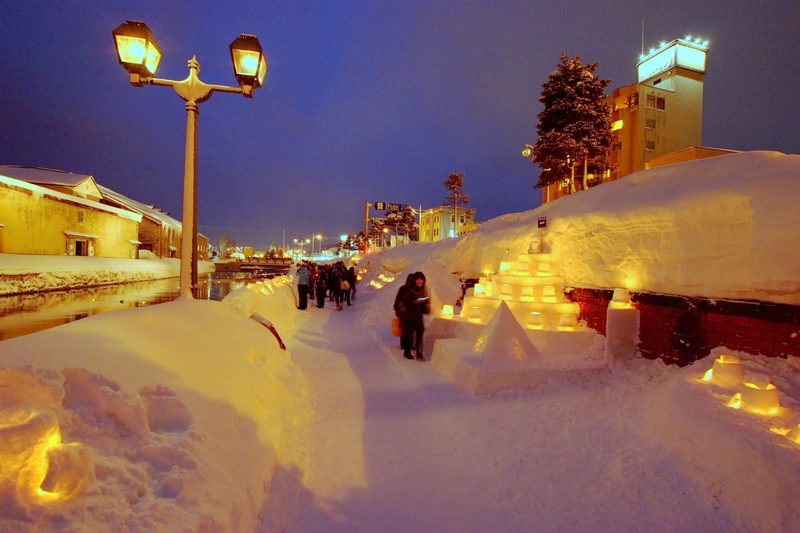
Runs for about ten days in mid-February, overlapping with the tail end of the Snow Festival. Where the Snow Festival is spectacular and crowd-heavy, the Snow Light Path is quiet, intimate, and genuinely beautiful in a way that doesn’t require a photograph to explain.
Small snow vessels holding tea lights are placed along the streets of Otaru’s historic warehouse district and along 300 metres of the canal. About 200 floating ball candles bob on the canal surface while gas lamps reflect in the water. Illumination runs 17:00–21:00 each evening. The combination of restored Meiji-era brick warehouses, the canal, and the candles produces something that feels genuinely considered rather than assembled for tourists.
February temperatures in Otaru regularly drop below -10°C. Dress properly and the canal walk is one of the more memorable evenings in Hokkaido. Dress poorly and it’s brief and miserable.
Asahikawa Winter Festival — Early February
Japan’s second-largest snow festival, running concurrently with Sapporo’s. The centrepiece is typically one of the largest snow sculptures in the world — recent editions have reached ten metres in height. The festival includes food stalls, ice sculptures, and evening illuminations. Because it runs alongside the Sapporo Snow Festival, many visitors combine both — Asahikawa is 85 minutes from Sapporo by Limited Express train.
Asahikawa in February is consistently colder than Sapporo — temperatures of -20°C are not unusual. The city is also the gateway to Daisetsuzan, useful if combining the festival with skiing or snowshoeing.
Lake Shikotsu Ice Festival — Late January to Late February
The clarity of Lake Shikotsu’s water — one of the clearest lakes in Japan — means the ice formations take on an unusual blue tint you won’t see elsewhere. Sculptures are built from lake ice and continuously misted with lake water, allowing them to grow throughout the festival. Illumination runs 16:30–20:00. The site is compact — works well as an afternoon/evening trip from Sapporo or New Chitose Airport. Free entry.
Sounkyo Ice Waterfall Festival — Late January to Mid-March
Frozen waterfalls and ice structures lit up at night in the dramatic columnar basalt gorge of Sounkyo. The natural setting — high cliff walls, frozen river, genuine cold (often -20°C at night) — makes this one of the more atmospheric winter festivals. An ice shrine and ice bar add to the experience. Combine with a stay at Sounkyo Onsen.
Hokkaido Shrine Festival (Sapporo Matsuri) — June 14–16
The event that comes closest to traditional Honshu matsuri in feel. On June 16, over a thousand participants in Heian-period costumes walk 12.5km from Hokkaido Shrine in the Maruyama district into central Sapporo. Four mikoshi (portable shrines) are carried through the city, accompanied by nine festival floats with taiko and Japanese flute. It’s one of the few occasions in Sapporo when the city feels tied to historical ritual rather than modern celebration.
Festival stalls fill the approaches to Hokkaido Shrine and Nakajima Park — standard Japanese festival food and games. Good timing since June weather in Hokkaido is at its most agreeable. See our climate guide.
Sapporo Yosakoi Soran Festival — Early June
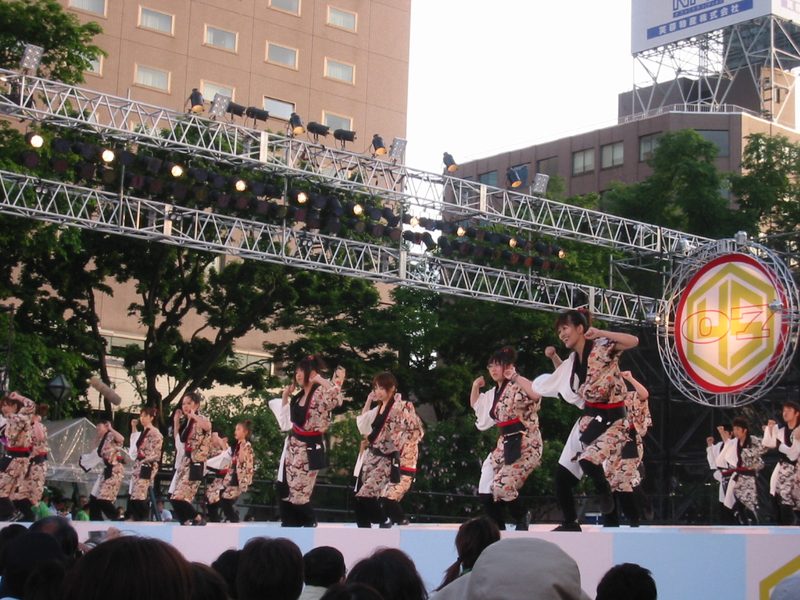
Five days in early June. Started in 1992 by a Hokkaido University student who wanted to blend Kochi Prefecture’s Yosakoi dance tradition with Hokkaido’s soran bushi fishing song. From ten teams in its first year to roughly thirty thousand dancers performing across seventeen stages throughout Sapporo, watched by around two million over five days.
The dance form is deliberately non-traditional — teams design their own costumes and choreography, keeping only the naruko (wooden clappers) as a mandatory element. Some teams lean into traditional Japanese aesthetics; others go for contemporary street performance. Watching several teams back-to-back makes the variety obvious. Main stages centred on Odori Park. Grand finale performances on the last day draw the largest crowds.
Furano Lavender and Flower Festivals — July
A cluster of summer festivals aligned with the lavender bloom in the Furano area. Flowers peak between mid-July and early August. The Nakafurano Lavender Festival (July 20) and Kamifurano Lavender Festival (July 21) are single-day events centred on the flower farms, culminating in fireworks at 20:00.
Walking through purple lavender fields on a clear July evening, with the Daisetsuzan mountains visible to the east, doesn’t need much supplementing with organised entertainment. Farm Tomita is free entry and the most visited farm — arrive before 09:00 or in early evening to avoid the midday tour bus crush. Shikisai no Oka in Kamifurano offers a broader palette of flowers and tends to feel less crowded. See our photography guide for shooting advice.
Hakodate Port Festival — August 1–5
Hakodate’s largest summer event, running since 1935 (created to help the city recover from a devastating fire in 1934). Opening night fireworks over the harbour. On August 2–3, the main parade — the Wasshoi Hakodate — moves through the city with around twenty thousand participants.
The signature element is the Ika Odori (Squid Dance), invented in 1980, which has become regional choreography that locals perform with casual fluency. The dance involves clapping and waving fans, and spectators are genuinely invited to join in — it’s deliberately easy to learn. August temperatures in Hakodate are typically 25°C, making the outdoor evening events comfortable.
Festival Calendar
| Month | Festival | Location | Typical Dates |
|---|---|---|---|
| Late Jan–Feb | Lake Shikotsu Ice Festival | Lake Shikotsu | Late Jan – late Feb |
| Late Jan–Mar | Sounkyo Ice Waterfall Festival | Sounkyo / Daisetsuzan | Late Jan – mid-Mar |
| Early Feb | Sapporo Snow Festival | Sapporo | ~Feb 4–11 |
| Early Feb | Asahikawa Winter Festival | Asahikawa | ~Feb 6–11 |
| Mid-Feb | Otaru Snow Light Path | Otaru | ~Feb 8–15 |
| Early Jun | Yosakoi Soran Festival | Sapporo | ~Jun 3–7 |
| Mid-Jun | Hokkaido Shrine Festival | Sapporo | Jun 14–16 |
| Mid-Jul | Lavender Festivals | Furano / Kamifurano | Jul 20–21 |
| Early Aug | Hakodate Port Festival | Hakodate | Aug 1–5 |
| Late Sep–Oct | Autumn colour season | Island-wide | Late Sep (alpine) – late Oct (lowland) |
Practical Tips
- Book accommodation early for Snow Festival week (February) and Yosakoi (June). These are the two events that cause genuine booking pressure in Sapporo. Other festivals rarely affect availability.
- Dress for the cold at winter festivals. You’ll stand outdoors for 1–3 hours, often below -5°C. Full winter gear, hand warmers, and insulated boots are essential. See our packing guide.
- Combine winter festivals: Snow Festival + Otaru Snow Light Path is natural (same week, 35 minutes apart). Add Asahikawa Winter Festival with an extra day.
- Festival food is part of the experience. Snow Festival stalls serve hot soup curry, grilled seafood, and Hokkaido specialties. Budget ¥1,000–2,000 for grazing.
- Dates vary slightly year to year. Most festivals publish confirmed dates 4–6 months in advance. Check official tourism sites before booking.
See our best time to visit guide for how festivals fit into the broader seasonal calendar.