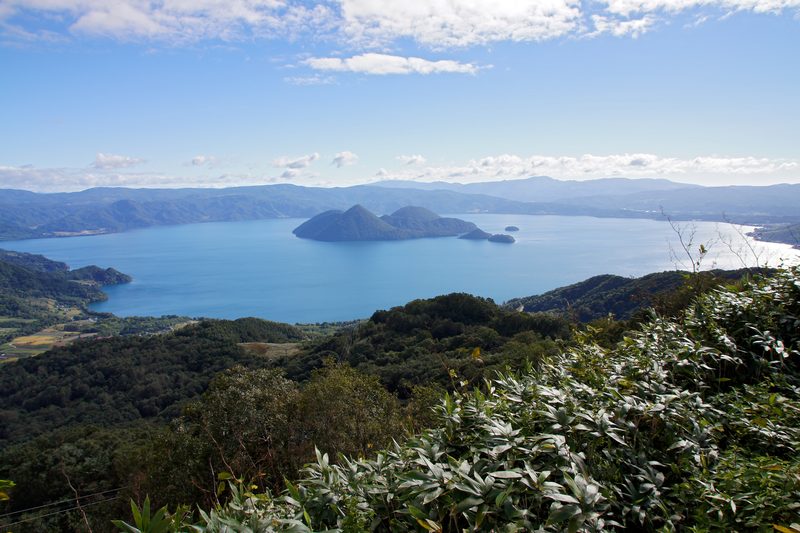
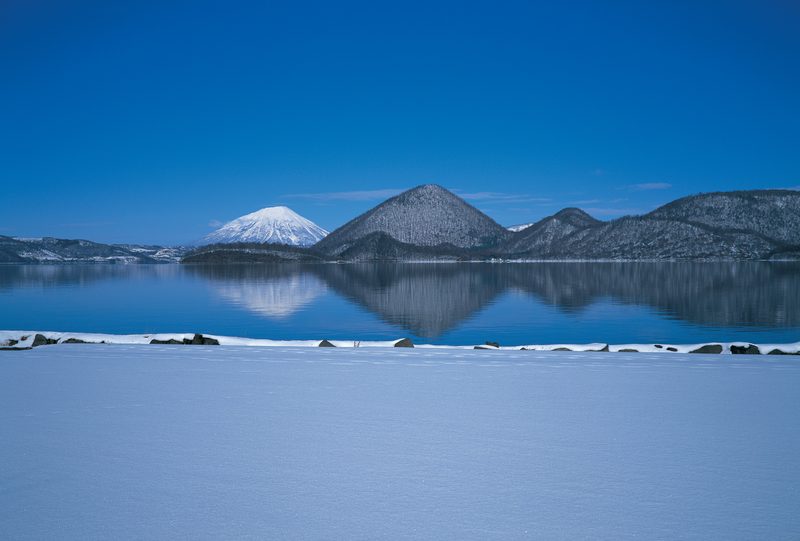
Lake Toya is a volcanic caldera lake south of Sapporo, formed by an eruption roughly 110,000 years ago. The near-perfect circle of water surrounded by mountains, with a forested island in the centre, is one of Hokkaido’s most scenic landscapes. The lake never freezes — geothermal activity from the active Mt. Usu keeps the water warm enough year-round — and the onsen town on the southern shore has been drawing bathers for over a century. In 2008, Lake Toya hosted the G8 Summit, which brought international attention and a burst of infrastructure investment that the town still benefits from.
The combination of volcanic scenery, hot springs, and easy access from Sapporo makes Lake Toya one of the more rewarding day trips or overnight stops in Hokkaido. It pairs naturally with Noboribetsu, just 40 minutes away, for a two-day southern Hokkaido loop.
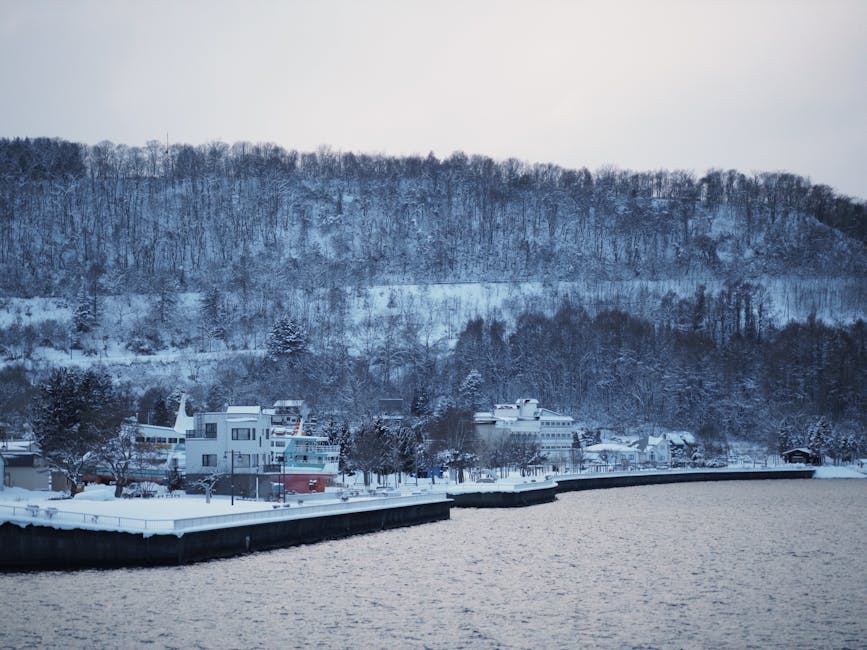
Mt. Usu Ropeway
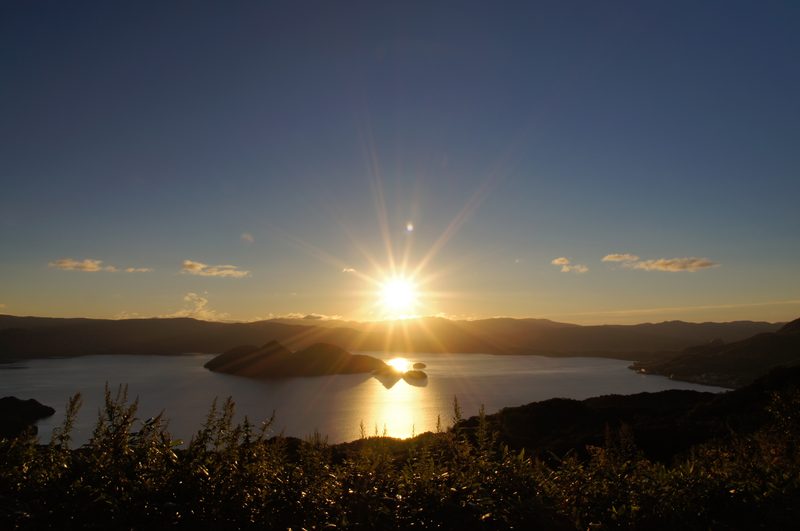
The main attraction beyond the lake itself. A ropeway climbs to a viewpoint on the flank of Mt. Usu (733m), an active volcano that has erupted four times in the last century — most recently in 2000. From the upper station, a network of walkways leads to two observation decks. The first overlooks Lake Toya, Nakajima island, and the surrounding caldera rim. The second faces the 2000 eruption crater, which is still steaming and visibly raw — collapsed ground, buried buildings, tilted roads, and new fumaroles venting gas.
The eruption damage is not cleaned up or hidden. You can see the rooftops of houses that were buried under volcanic debris, and the interpretive signs describe the evacuation and aftermath with a directness that is unusual for a tourist attraction. It is a sobering reminder that Toyako Onsen sits on an active volcanic zone, and that the next eruption is not a question of if but when. The Hokkaido University research centre monitors Mt. Usu continuously.
Round trip ropeway tickets cost approximately ¥1,800 (~$12) for adults. The ride takes about 6 minutes each way. Allow 60-90 minutes for the ropeway and both viewpoints. On clear days, you can see the Pacific Ocean to the south and the Niseko mountains to the north. Early morning tends to have the best visibility.
Toyako Onsen Town
A compact hot spring town on the lake’s southern shore, with about a dozen hotels and ryokans stretched along the waterfront. The town is walkable end to end in about 20 minutes. The lakefront promenade is lined with 58 bronze sculptures (donated after the G8 Summit) and makes for a pleasant walk at any time of year.
The main draw is the onsen itself. Toyako’s hot spring water is sodium chloride type, clear and mildly saline, considered good for muscle recovery, joint pain, and skin conditions. Most lakefront hotels have outdoor baths (rotenburo) facing the lake — soaking in hot water with a view of the caldera and Nakajima island is the experience people come here for.
Day-Use Bathing
Several hotels open their baths to non-staying visitors for day-use (higaeri). Prices range from ¥500 to ¥1,500 (~$3.40-$10) depending on the hotel. Toya Sun Palace has one of the larger bath complexes with a lake-view rotenburo. The Toyako Manseikaku Hotel Lakeside Terrace offers a more upscale experience. Check current hours before going — day-use availability changes seasonally. See our onsen guide for bathing etiquette and tips.
Fireworks
From late April through the end of October, fireworks launch over the lake every single evening at 20:45. The display lasts about 20 minutes, launched from a boat that moves across the lake surface so the show is visible from the entire promenade and most hotel rooms on the lakefront. It is free to watch from anywhere along the shore. The consistency is remarkable — over 170 consecutive nights of fireworks each year, cancelled only in genuinely severe weather.
The fireworks are not a major pyrotechnic show — this is a small-town display, not Sumida River — but watching them from an outdoor onsen or from the lakeshore promenade on a warm summer evening is one of those quietly perfect Hokkaido moments.
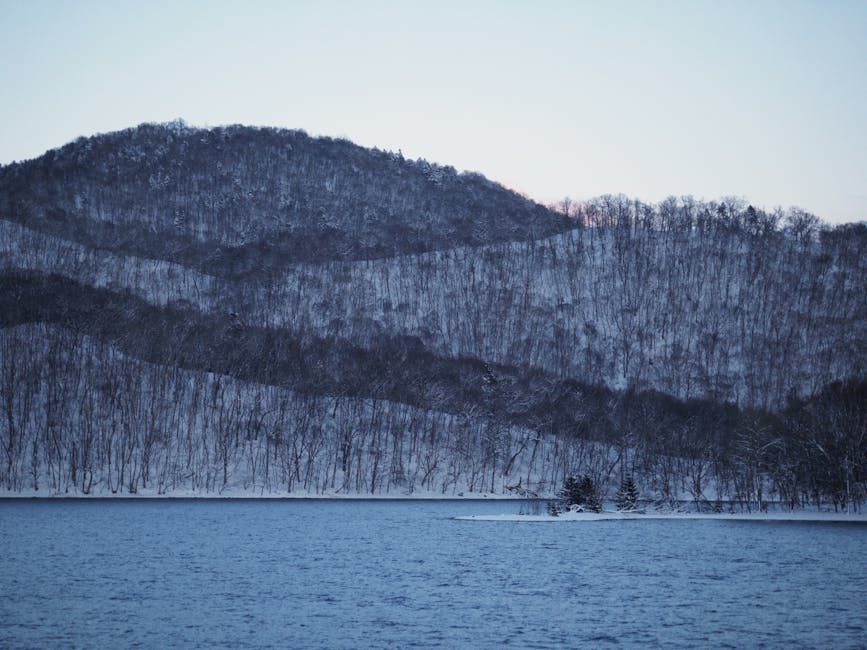
Showa Shinzan
A lava dome that literally grew from a wheat field during volcanic eruptions between 1943 and 1945. A local postmaster named Mimatsu Masao documented the dome’s growth day by day from his living room window, producing detailed sketches that became an important scientific record. The reddish dome, about 400m high, still vents steam and is warm to the touch at its base.
Showa Shinzan sits adjacent to the Mt. Usu ropeway base station, so most visitors see both on the same stop. There is a small park around the dome with information boards, and a bear park nearby (Showa Shinzan Bear Park, ¥850/~$5.75) that is popular with families but not to everyone’s taste — the enclosures are dated. The Mimatsu Masao Memorial Museum near the ropeway base is free and worth a quick look for the original eruption sketches.
Nakajima (Central Island)
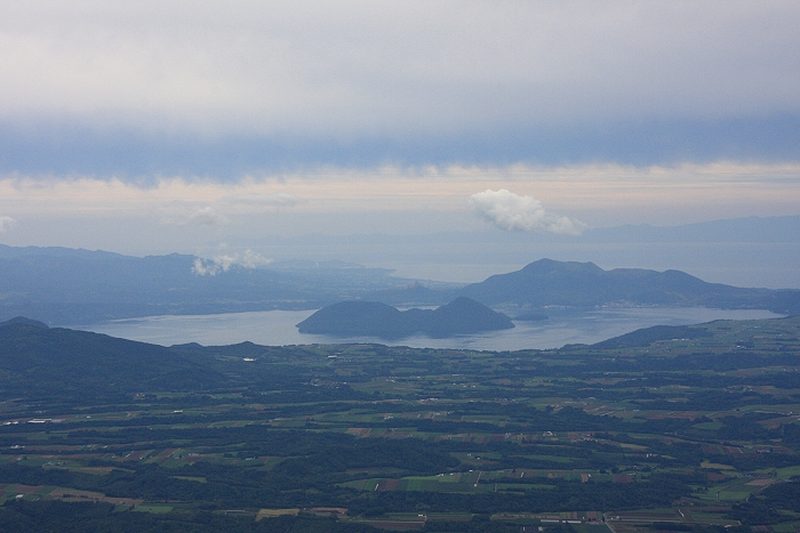
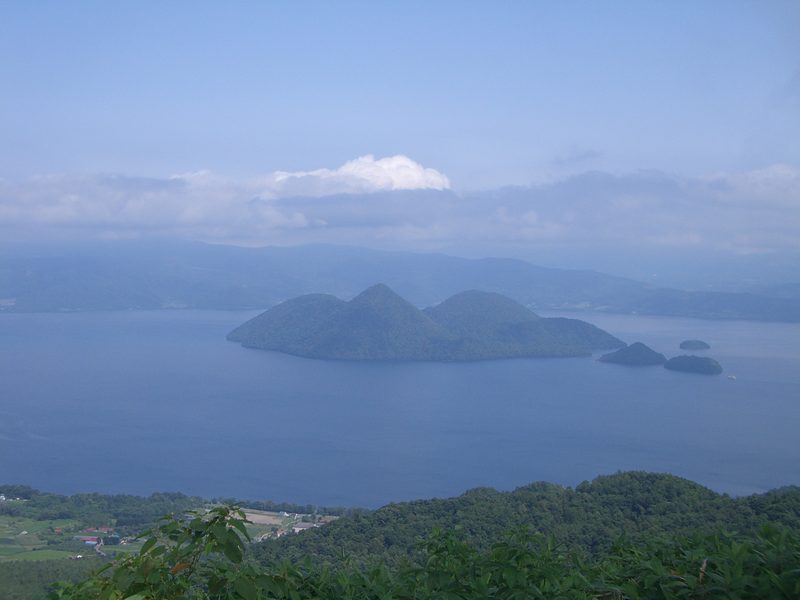
A forested island in the centre of the lake, reachable by sightseeing boat from the Toyako Onsen pier. The round trip takes about 50 minutes and costs approximately ¥1,420 (~$9.60) for adults. The boat stops at the island for about 30 minutes, long enough to visit the small Forest Museum (free entry) and walk a short trail through old-growth forest. Sika deer roam the island and are easy to spot.
The boat ride itself is arguably the best part. Seeing the caldera from water level, with the forested island ahead and the mountains of the rim surrounding you, gives a sense of the geological scale that the shore viewpoints don’t quite capture. Boats run roughly hourly from late April through early November; winter service is limited.
2000 Eruption Sites
The Konpira Crater walking trail near Toyako Onsen lets you walk through the aftermath of the 2000 eruption at ground level. The trail passes apartment buildings half-buried in volcanic debris, roads buckled and split by subsidence, and a public bath house swallowed by the earth. The site has been left as-is, not restored or demolished, as an educational monument. It is free to visit, open year-round, and takes about 30 minutes to walk.
The Toyako Volcano Science Museum (¥600/~$4, near the bus terminal) covers the history of Mt. Usu’s eruptions with a simulation theatre and displays on volcanic monitoring. It is more informative than flashy, but gives good context before visiting the ropeway and crater sites.
Food
Toyako Onsen is a small town and the dining options reflect that — most visitors eat at their hotel, and the independent restaurants are limited. Wakasaimo Honpo, a confectionery on the main road, has been making its signature sweet potato cake (wakasaimo) since 1927. It is a good souvenir and better than most tourist-town sweets. For lunch, Boyotei near the ropeway base serves Hokkaido beef hamburg steak at reasonable prices (¥1,200-1,800/~$8-12).
The local speciality is Toyako’s “white” curry — a white sauce curry developed as a promotional dish. Several restaurants serve it. It is mildly interesting but not a must-eat. The better food strategy is to eat sashimi and local seafood at your hotel dinner, which most ryokans include in the room rate.
Getting There
By train: JR Limited Express Super Hokuto from Sapporo to Toya Station takes about 1 hour 45 minutes (¥5,700/~$39). From Toya Station, a Donan Bus runs to Toyako Onsen (20 minutes, ¥340/~$2.30). Covered by the JR Hokkaido Rail Pass.
By car: About 2 hours from Sapporo via the expressway. Parking is free at most hotels and at the ropeway base. The drive from Sapporo passes through the Nakayama Pass with good views of Mt. Yotei on clear days.
By bus: Direct highway buses from Sapporo to Toyako Onsen run several times daily (about 2 hours 45 minutes, approximately ¥2,830/~$19). See our bus guide.
Combine With
Lake Toya and Noboribetsu are 40 minutes apart by car or bus, making a natural 2-day combination: volcanic scenery and lakeside onsen at Toya, then serious hot spring bathing and Hell Valley at Noboribetsu. If you have a car, Niseko is about 1 hour north of Lake Toya, adding a third option for a multi-day southern Hokkaido circuit.
Day Trip or Overnight
Day trip: Works if you have a car. Ropeway, Showa Shinzan, a lakeside walk, and lunch can be covered in 4-5 hours. By public transport, the bus connections from Toya Station make it tight but possible.
Overnight (recommended): An evening at a lakefront ryokan — dinner, onsen, fireworks from the rotenburo — is the full Lake Toya experience. The day-trippers leave by late afternoon, and the evening atmosphere is calmer and more atmospheric. Rates at mid-range ryokans with dinner and breakfast included start around ¥12,000-18,000 (~$80-120) per person.