Hokkaido sits far enough north that its wildlife doesn’t much resemble the rest of Japan. The island’s subarctic climate, vast wetlands, mountain ranges, and proximity to Russia’s Far East have produced an ecosystem that feels closer to Siberia than to Honshu. Brown bears roam the forests. Red-crowned cranes dance in the snow. Steller’s sea eagles — one of the largest birds of prey on Earth — ride the winter drift ice offshore. If you care about wildlife at all, Hokkaido deserves serious attention.
Brown Bears
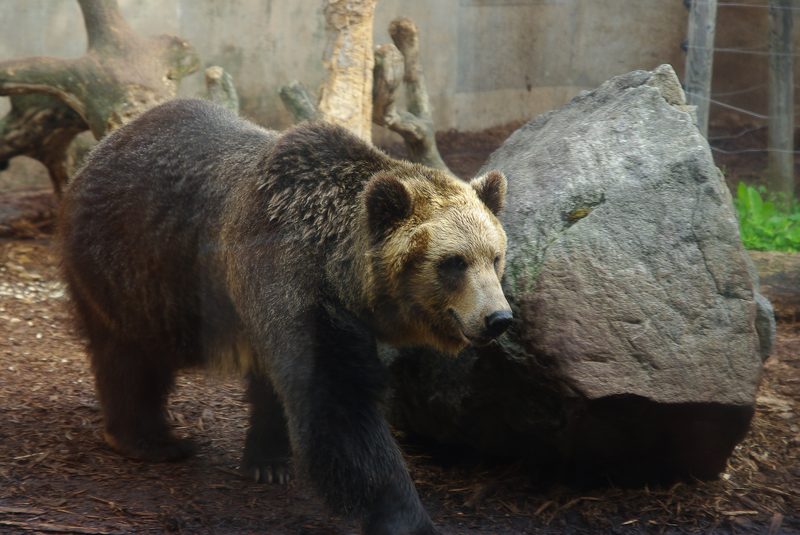
Hokkaido is home to the Ussuri brown bear, the same subspecies found across the Russian Far East. The island’s population sits at roughly 10,000–12,000 animals, concentrated in the eastern and central highlands. They’re not endangered — the population has grown steadily since the 1990s, which has created genuine tension with agriculture and backcountry hikers.
The best place to watch bears in the wild is Shiretoko, the UNESCO World Heritage peninsula in eastern Hokkaido. From late June through September, boat tours departing Utoro and Rausu run close to the coastline where bears come down to feed on salmon and graze on coastal vegetation. You’ll often see three or four bears on a single two-hour cruise, sometimes within 50 metres of the water. The bears are genuinely wild and habituated to boats rather than to humans on land — the dynamic is completely different from a zoo.
For guaranteed viewing, Noboribetsu Bear Park keeps a large population of rescued and captive-bred brown bears. It’s a legitimate facility with conservation education, though the experience is nothing like Shiretoko. Sahoro Bear Mountain in Tokachi offers a more ethical alternative — bears roam a forested hillside observed from elevated glass walkways.
If you’re hiking in bear country — Daisetsuzan, Shiretoko, the Hidaka Mountains — carry bear bells and bear spray. Don’t hike alone in dense forest. Most encounters involve surprised animals at close range, not predatory behaviour, but the outcomes can be severe. See our hiking guide for detailed bear safety.
Red-Crowned Cranes
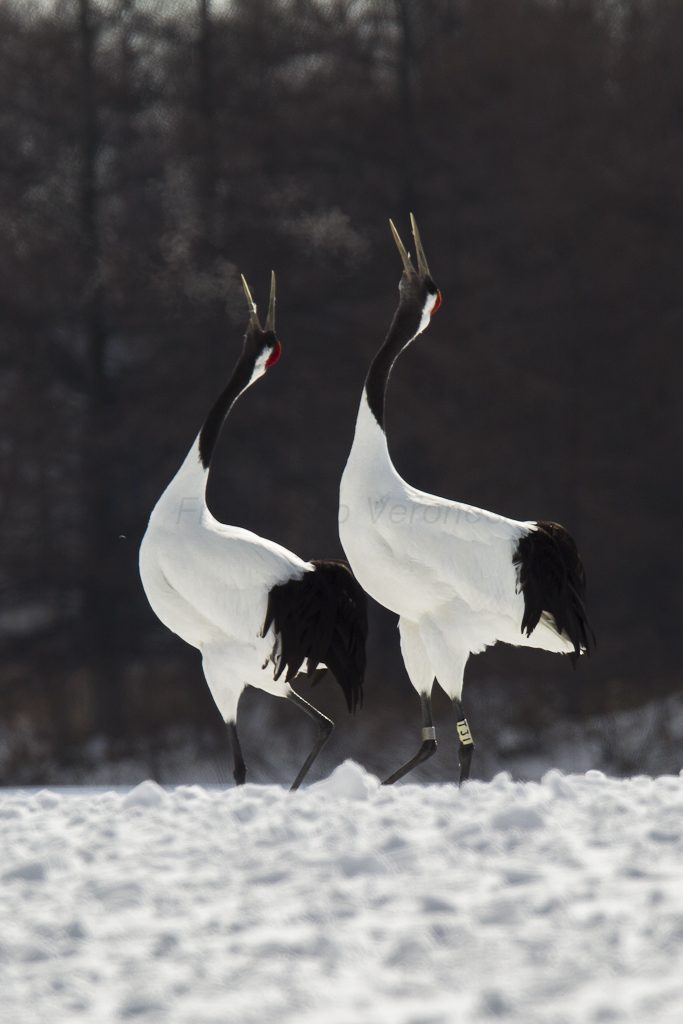
Japan’s national bird breeds almost exclusively in Hokkaido, with the Kushiro Wetlands holding the highest concentrations. The population hovered near extinction in the mid-20th century — around 30 birds remained in the 1950s — and has recovered to roughly 1,800 through habitat protection and winter feeding stations.
Those feeding stations are now the main attraction. Between December and March, stations at Tsurui village draw hundreds of cranes each morning. The birds arrive in pairs and family groups, their crimson caps vivid against the white landscape. Early morning is best — the light is better and the cranes are most active before crowds build.
Where to See Cranes
- Tsurui-Ito Tancho Sanctuary (Tsurui village) — the most popular site. Cranes at 20–30 metres distance. The backdrop of snow, mist, and birch trees makes this a world-class wildlife photography location. Free entry. Best at dawn when mist rises from the river.
- Akan International Crane Centre (near Lake Akan) — research centre with feeding grounds. Fewer cranes but more educational context. Entry approximately ¥480 (~$3.30).
- Otowa Bridge (Tsurui) — cranes roost in the river below the bridge at night. At dawn they wake and begin calling and stretching — photographers line up from 05:00 in winter for the mist-and-crane shots.
In summer, cranes are dispersed across the wetlands. Canoe tours on the Kushiro River (approximately ¥8,000–10,000/~$54–68, 2 hours) offer a chance to spot them from the water.
Steller’s Sea Eagles and White-Tailed Eagles
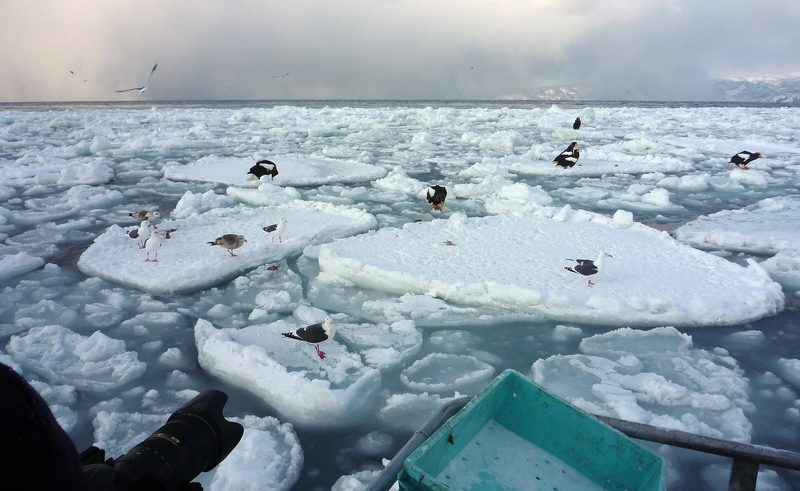
Two of the world’s largest eagles winter in Hokkaido, drawn south from Russia by the drift ice that forms along the coast each January. Steller’s sea eagles have a global population of around 3,700 — a significant portion end up in Hokkaido each winter. With a wingspan up to 2.5 metres and striking black-and-white plumage with an orange beak, they’re among the most visually dramatic raptors in the world.
Rausu, on the eastern side of the Shiretoko Peninsula, is the main base for eagle watching. Small heated boats cruise the drift ice from late January through March while both species hunt fish at close range. The proximity is extraordinary — eagles pass within metres. A good morning might produce 30–40 individual eagles. Tours approximately ¥8,000 (~$54). Book ahead; tours fill up on weekends. Dress for extreme cold and bring the longest lens you own.
Marine Wildlife
Whales and Dolphins
Rausu doubles as a whale-watching base in summer. Killer whales (orcas) move through the Nemuro Strait from June through July, hunting salmon — pods of 5–15 individuals, sometimes with calves. Seeing orcas against the Shiretoko mountains on a clear morning is genuinely extraordinary. Sperm whales appear in deeper waters from August through September. Tours approximately ¥8,000 (~$54).
On the Pacific side, Muroran runs dolphin watching tours in summer, targeting Pacific white-sided dolphins and occasionally minke whales. Less dramatic than Rausu but closer to Sapporo (1.5 hours by car).
Seals
Spotted seals haul out on the rocky shores of Cape Erimo at the southern tip of the Hidaka Mountains, with peak numbers February through May. The cape is battered by some of the strongest winds in Japan — the seals are entirely unbothered. During drift ice season, seals use ice floes along the Shiretoko and Abashiri coasts as resting platforms — visible from icebreaker tours.
Small Mammals
Ezo Red Fox
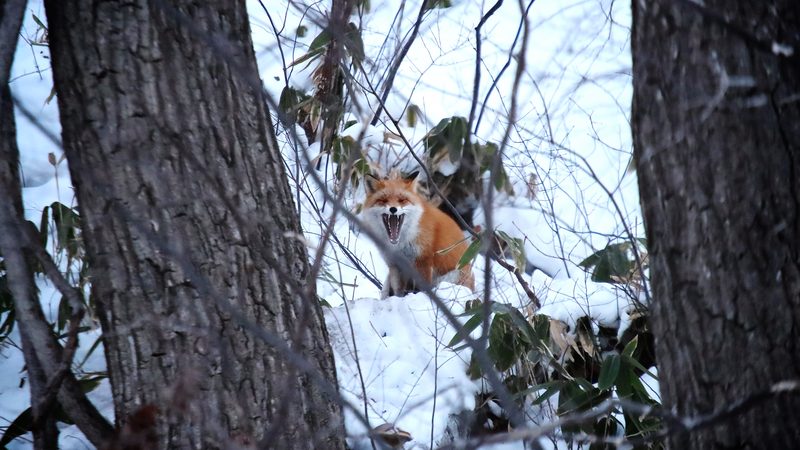
You will see foxes in Hokkaido without trying. They’re everywhere — roadsides, car parks, ski resort villages, hiking trails. Beautiful, photogenic, and they’ll approach hoping for food. Do not feed them. Feeding habituates foxes to humans, leading to road kills and aggressive behaviour. They also carry Echinococcus (a parasitic tapeworm) — don’t touch them.
Ezo Pika (Naki-usagi)
A small, round mammal found only in the alpine boulder fields of Daisetsuzan. Named “naki-usagi” (crying rabbit) for its high-pitched call. Famously difficult to photograph — small, fast, and well-camouflaged against volcanic rock. They don’t hibernate, spending autumn frantically caching vegetation under boulders. Best spotted in boulder fields above the Asahi-dake ropeway station, July–September. Listen for the call; keep still and they’ll pause to stare back.
Ezo Momonga (Flying Squirrel)
Japan’s unofficial cutest animal. These tiny flying squirrels (15cm body length) glide between trees at dusk using a membrane between their legs. Nocturnal and genuinely difficult to see in the wild, but around Obihiro and in Daisetsuzan there are guides who run evening sessions at known nest holes. The squirrels emerge at dusk and glide between trees — remarkable to watch in motion. They’ve become a cultural phenomenon — featured on train IC cards, plush toys, and tourism materials throughout Hokkaido.
Sika Deer
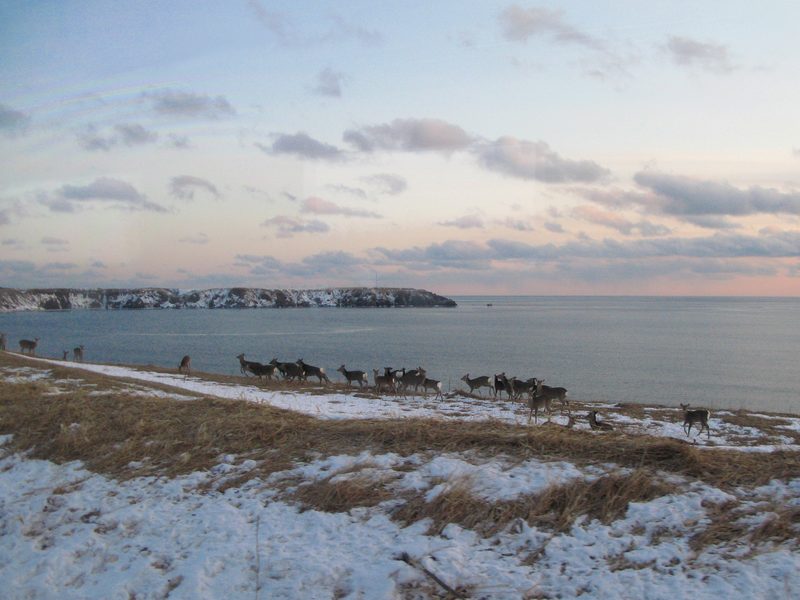
Eastern Hokkaido has enormous deer populations — estimates above 600,000 — causing significant damage to forests and agriculture. You’ll see them from the road, particularly at dawn and dusk. They’re a genuine driving hazard — hitting a deer at highway speed causes serious damage. See our road trip guide for driving precautions.
Blakiston’s Fish Owl
The world’s largest owl species and a Hokkaido speciality. Nocturnal, found along forested rivers in eastern Hokkaido — Rausu and the Shiretoko area have a handful of known territories. Some guesthouses and ryokans in the area offer guided night outings to known perching sites. Sightings are not guaranteed but the experience of standing in a frozen forest at midnight watching for a 70cm owl is memorable regardless of outcome.
Birdwatching Beyond the Headlines
Hokkaido is one of East Asia’s most productive birdwatching destinations. Beyond the eagles and cranes:
- Hazel grouse and Siberian grouse — common in mixed and conifer forest, usually heard before seen
- Japanese waxwing — irregular winter visitor, sometimes in large flocks in urban park berry trees
- Common kingfisher and crested kingfisher — along clear rivers across the island
- Siberian migrants — Hokkaido’s position makes it reliable landfall for species that rarely appear further south in Japan
The Kushiro Wetlands, Kiritappu Wetland, and Lake Furen shores in eastern Hokkaido are the most consistently productive sites.
When to See What
| Season | What to See | Where |
|---|---|---|
| Dec–Mar | Crane dancing, eagle fishing, seals on drift ice, Blakiston’s fish owl | Kushiro/Tsurui, Rausu, Abashiri |
| Apr–May | Seals at Erimo, spring migrant birds, bears emerging | Cape Erimo, wetlands |
| Jun–Jul | Bears on Shiretoko coast, orcas, flying squirrels (guided evenings) | Shiretoko, Rausu, Obihiro forests |
| Aug–Sep | Sperm whales, pika, deer rut beginning | Rausu, Daisetsuzan, eastern Hokkaido |
| Oct–Nov | Salmon run (bears feeding), waterfowl arriving, peak deer rut | Shiretoko rivers, Lake Kussharo |
Ethical Wildlife Viewing
- Do not feed wild animals. Foxes, deer, cranes, birds — feeding changes behaviour and creates dangerous situations.
- Keep distance. At least 50m from bears. Use telephoto lenses rather than approaching.
- At crane feeding stations, stay behind rope lines. Don’t make sudden movements. The birds tolerate humans because generations have learned to — disruptive behaviour undoes that trust.
- On boat tours, follow the guide’s instructions about noise and movement around sensitive species.
- Choose responsible operators for whale and eagle tours. Established companies in Rausu and Utoro follow approach distance guidelines.