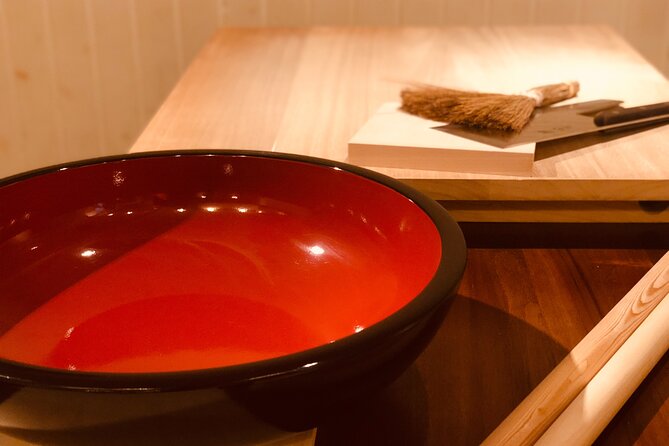
Turning buckwheat flour and water into dinner is the heart of this Sapporo experience. At Mondo, Taku guides you through mixing, stretching, and cutting soba, then the shop cooks your noodles and serves them with tempura.
In This Article
- Key points to know before booking
- Why making soba is a good Sapporo food experience
- Starting at Mondo near Miyanosawa Station
- Mixing buckwheat flour and water
- Stretching the dough into a thin sheet
- Cutting the noodles with a traditional knife
- Eating your noodles with Hokkaido tempura
- Learning the Japanese way to eat soba
- Hokkaido buckwheat and local flavor
- Who will get the most from this activity
- Practical details that affect your decision
- Should you book Mondo’s soba experience?
- FAQ
- How long does the soba-making experience take?
- Where does the experience start and end?
- How do I reach Mondo by public transportation?
- Is parking available?
- Is the experience conducted in English?
- Do I make the tempura?
- What steps are included in making the soba?
- Are children allowed to participate?
- Can halal or vegan meals be arranged?
- What is the cancellation policy?
I like the hands-on work and the small, personal setting. I also like the meal at the end, with two soba sauces, artisan-made tempura, and soba-yu, the warm buckwheat cooking water traditionally served after the noodles.
The main thing to clarify is the tempura. You make the soba, but the restaurant prepares the tempura for you. The shop can accommodate halal and vegan needs if you contact it in advance, yet you should confirm the details before booking.
Key points to know before booking
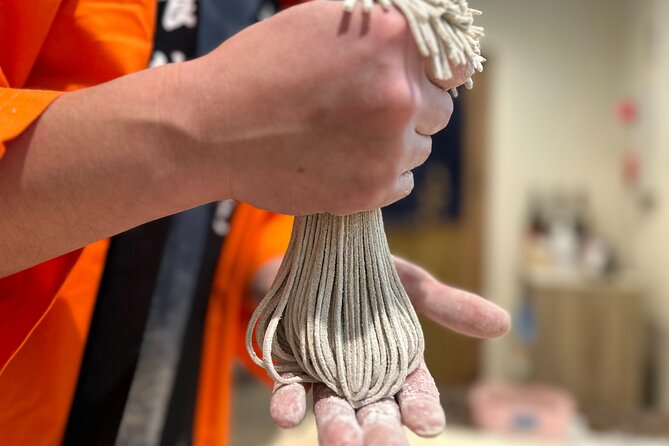
- Mix, stretch, and cut the noodles yourself: The practical work takes about 30 minutes and is suitable for children.
- Taku leads the English session: Instruction covers both the noodle-making process and Japanese table manners for soba.
- Tempura comes with the meal, but you do not make it: Expect artisan-prepared shrimp, vegetables, scallops, or other seasonal ingredients, depending on the meal.
- Plan on about 1 hour and 15 minutes: The noodle session is followed by cooking, eating, and soba-yu.
- The shop is five minutes from Miyanosawa Station: Four parking spaces are available in front of the restaurant.
- This is a private activity for your group: The booking requires at least two participants, and children under two are free.
Why making soba is a good Sapporo food experience
Sushi gets most of the international attention, but soba and tempura are just as central to Japanese food culture. Soba has been made in Japan for centuries, and the process is simple on paper: buckwheat flour, water, rolling, cutting, and boiling.
The skill lies in the details. Buckwheat dough is less forgiving than wheat dough, so the texture and thickness of the noodles depend on how you handle it. When you mix and shape the dough yourself, you gain a practical sense of why handmade soba is valued.
This is not a broad Japanese cooking class. You will not prepare a full menu or learn several dishes. Instead, you spend your time on one traditional food, then sit down to eat the result with tempura made by the restaurant’s cook.
I think that narrow focus works well for a short activity. You get enough explanation to understand the craft without spending half a day in a kitchen. It also gives you a meal that feels tied to the place rather than a generic cooking demonstration.
We have reviewed more tours and experiences across Sapporo; these are worth comparing before you book.


Starting at Mondo near Miyanosawa Station
Mondo is at 9-chōme-17-28 Hassamu 6 Jō in Sapporo’s Nishi Ward. The restaurant is about a five-minute walk from Miyanosawa Station on the Sapporo Subway Tozai Line, making the subway the clearest option if you are staying in central Sapporo.
The shop operates as a handmade soba restaurant during lunch. Your experience takes place after lunch, which helps explain why the timing matters. Arrive before the scheduled start, since a late arrival can disrupt the next group and may be treated as a no-show.
If you drive, four parking spaces are available in front of the shop. That is useful, but spaces are limited, so do not assume parking is guaranteed if you arrive with a larger party or at a busy time.
The location is not a major sightseeing stop, and the entrance may take a little finding. I would allow extra time, especially if you are walking from the station or using a map app for the first time in Japan.
Mixing buckwheat flour and water
The first step is mixing the buckwheat flour. This sounds easy until you begin working the water through the flour evenly. The instructor guides you through the texture, helping you bring the mixture together into dough.
This is a good point for children to take part. The activity is not built around sitting quietly and watching someone else cook. Kids can handle the dough, follow the steps, and see a direct result from their work.
The session is conducted in English, and the instructions are intended to be clear and practical. Still, the setting is a working soba shop rather than a large classroom. You should expect a personal lesson with hands-on guidance, not a formal lecture on Japanese food history.
One limitation is worth noting. The supplied information promises instruction in how Japanese people eat soba, but the amount of historical or culinary background may vary. If your main goal is a detailed lesson on Japanese food traditions, this may feel brief. If you want to make something with your hands, the format is better suited.
Stretching the dough into a thin sheet
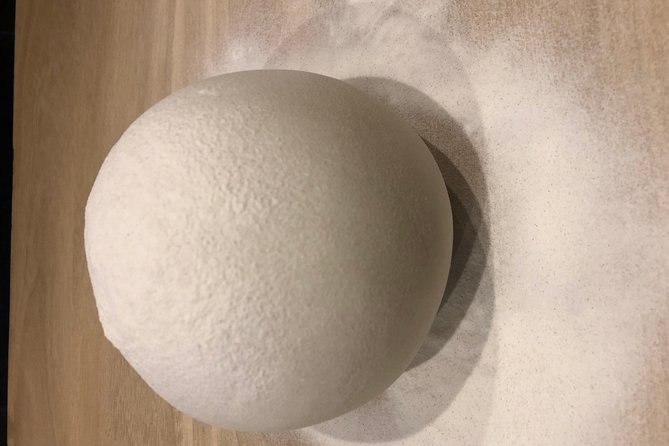
Once the dough is ready, you stretch it. This is where the process starts to look like traditional soba making rather than ordinary noodle preparation. The dough must be worked and rolled into a sheet that can be cut into noodles.
You may find this stage more difficult than expected. Handmade soba depends on even handling, and first attempts may not produce perfectly uniform noodles. That is part of the appeal. The point is not to leave with professional technique after 30 minutes. It is to understand the movement and effort behind a bowl of handmade soba.
Taku’s role matters here. He keeps the instruction active and friendly, using humor and patience while participants work through the steps. That tone is particularly helpful for families and anyone worried about making a mess or getting the technique wrong.
The private format also helps. Only your group participates, so the pace can feel more relaxed than a large shared class. A small group of three or five people can give the session an intimate, almost home-kitchen quality, while still taking place inside a real restaurant.
Cutting the noodles with a traditional knife
Cutting is the most distinctive part of the activity. After stretching the dough, you slice it into soba noodles using the traditional method. This requires care, since the noodles need to be reasonably even to cook at the same rate.
I like this step because it makes the final meal personal. You are not simply told that the noodles are handmade. You have handled the dough and made the cuts yourself. Even imperfect noodles can taste especially satisfying when they arrive at the table.
The information supplied for this experience does not promise that every participant will cook the noodles personally. The restaurant prepares your soba for the tasting portion. One past participant expected to make both soba and tempura, so keep the division clear: you make the noodles, and the staff make the tempura.
That distinction affects value. At $85.79 per person, this is not the cheapest meal in Sapporo. You are paying for instruction, ingredients, private use of the activity, preparation, and a meal. If you want a full tempura lesson too, the price may feel high. If you want a focused soba lesson with a proper lunch or dinner afterward, the package makes more sense.


Eating your noodles with Hokkaido tempura
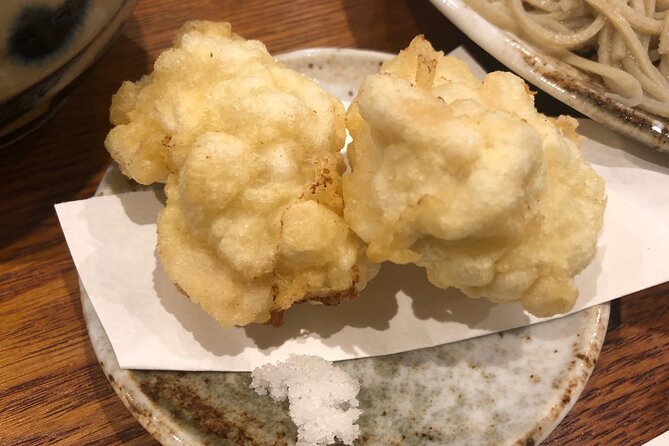
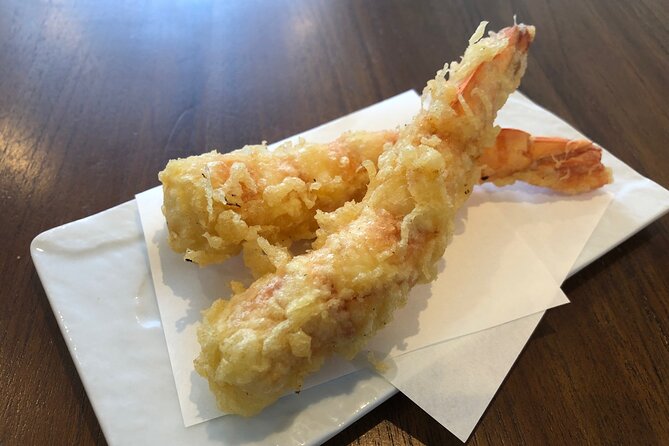
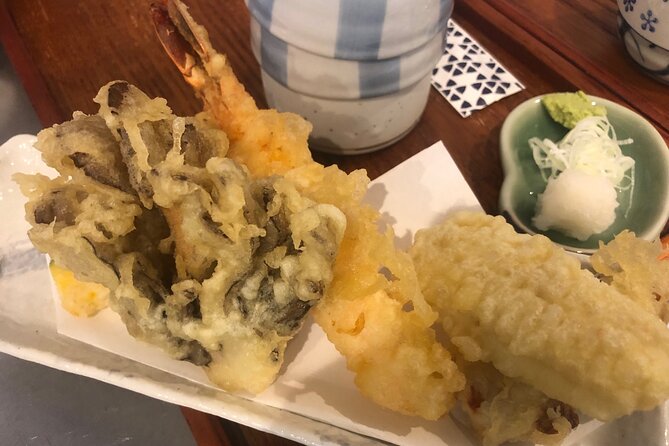
After the practical work, the restaurant cooks your soba and serves it with tempura prepared by a Japanese food craftsman. The tempura may include shrimp, vegetables, scallops, and seasonal or local ingredients. Exact items can vary, so do not book expecting a fixed menu.
The pairing is traditional for a reason. Cold soba has a clean, earthy taste, while tempura adds crisp batter and richer fried flavor. You can alternate between the two, or add tempura to the meal as a side dish.
Two soba sauces are available, one cold and one warm. This gives you two ways to enjoy the noodles and helps explain a basic part of Japanese soba service. The meal is not simply a reward after class. It is also the practical lesson in how the finished food is served.
The tempura has been a strong part of the experience for many participants, especially when made with fresh local ingredients. But it is important to repeat the boundary: the restaurant makes it, and the class does not teach you how to batter or fry it.
That can be a positive for families. Deep-frying is hot and potentially awkward in a small kitchen, while children can focus on the safer and more tactile noodle work. Adults who came specifically to learn tempura technique should choose a different cooking class.
Learning the Japanese way to eat soba
Mondo also explains how to eat soba in a Japanese manner. This includes guidance on using the sauces and finishing with soba-yu.
Soba-yu is the water left after cooking the noodles. In Japan, it is commonly served at the end of a soba meal, often mixed with remaining dipping sauce. It is a small custom, but it gives the meal a proper finish and connects the class to the habits of a soba restaurant.
I appreciate this kind of table instruction because it removes uncertainty. You do not have to guess how the cold and warm sauces are meant to be used, or what to do with the final pot of cooking water. The lesson stays informal and useful rather than turning into a strict lesson in manners.
The full visit is described as about one hour and 15 minutes. The soba-making portion takes around 30 minutes, with the remaining time used for cooking, tempura, eating, and soba-yu. The shorter one-hour estimate sometimes shown for the activity should not be treated as a firm end time.
Hokkaido buckwheat and local flavor
Hokkaido is Japan’s leading soba-producing region. Its climate and soil support buckwheat farming, and areas such as Tokachi and Furano are known for soba production.
That regional connection gives this activity more context than a basic noodle class. You are making a food linked to Hokkaido agriculture, then eating it in a handmade soba restaurant in Sapporo.
The noodles are described as savory and chewy, qualities that many people associate with good Hokkaido soba. You should not expect a lecture on farming or a field visit, but the ingredients still connect the meal to northern Japan.
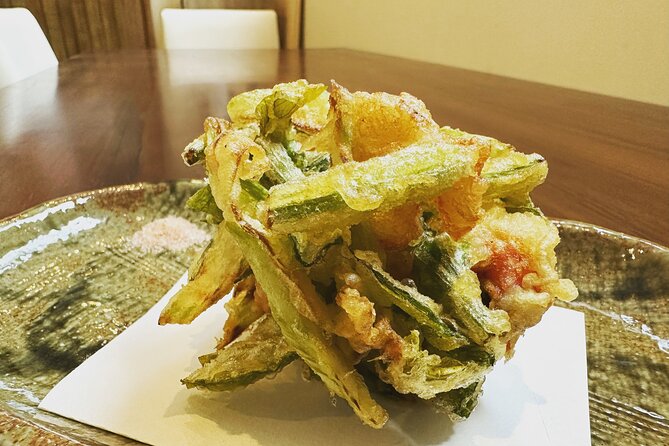
Tempura adds another local angle. The restaurant uses vegetables, seafood, and seasonal ingredients, and the menu can include regional produce. The exact selection is not guaranteed, so think of this as a chance to taste what the kitchen chooses rather than a fixed Hokkaido tasting menu.
Who will get the most from this activity
Families are a strong match. Children can help mix, stretch, and cut the dough, and a 10-year-old can take part in the full process with guidance. Children under two are free, although the activity requires at least two participants.
Small groups also suit the format. Since this is a private activity, your party does not share the lesson with unrelated participants. That makes it a good choice for friends or relatives who want a shared food project rather than a standard restaurant meal.
I would also recommend it to you if you have already seen Sapporo’s major sights and want something rooted in everyday Japanese food culture. The restaurant setting gives you a look at how a small handmade noodle shop works.
It is less suitable for someone seeking a long cooking school session. You will not make tempura, and the total visit is fairly short. It may also disappoint if your priority is a detailed history of soba, since the emphasis is on doing the work and eating.
Dietary needs require planning. Halal and vegan arrangements can be accommodated with advance contact, but the experience details do not specify the exact substitutions or preparation method. Email through VIRTOR before booking and get the arrangement confirmed.
Practical details that affect your decision
The listed cost is $85.79 per person. For that amount, you receive the soba-making activity, the cooked noodles you produce, tempura, two sauce options, instruction, and soba-yu. The private setting adds value for a family or small group, particularly when everyone wants to participate.
The price is harder to justify if only one member of your party cares about cooking, or if you mainly want to eat soba. A regular handmade soba meal will cost less. Here, the value comes from the activity and the personal attention.
The booking pattern suggests that people often reserve about 33 days ahead. That is useful planning advice, especially if your Sapporo dates are fixed. The experience has a 96 percent recommendation rate and a 4.8 rating from 71 reviews, which points to a consistently strong experience, though the occasional complaint about value and unclear tempura expectations should be taken seriously.
Free cancellation is available until 24 hours before the local start time. Within 24 hours, the payment is not refunded, and changes are not accepted. Confirmation arrives at booking, and service animals are allowed.
The restaurant cannot provide English support by phone or other direct phone assistance. For questions, use email through VIRTOR. That is a minor inconvenience, but it matters if you need to clarify food allergies, halal preparation, vegan ingredients, group arrangements, or directions.
Should you book Mondo’s soba experience?
Book it if you want a short, personal food activity where you make one traditional Japanese dish from scratch and then eat it with well-prepared tempura. The best parts are the hands-on noodle work, Taku’s patient English instruction, the private group setting, and the proper soba meal at the end.
Think twice if you expect to make tempura too, or if you want an extended cooking course with detailed culinary history. You are paying for a focused soba lesson and a restaurant meal, not a full Japanese cooking workshop.
For families, couples, and small groups with about 75 minutes to spare, this is a practical way to add local food culture to a Sapporo visit. Confirm dietary arrangements in advance, allow extra time to find the shop, and arrive before the start time. If those conditions suit you, Mondo offers a memorable taste of Hokkaido through the simple pleasure of making your own noodles.
FAQ
How long does the soba-making experience take?
The hands-on soba-making portion takes about 30 minutes. With tasting, tempura, sauces, and soba-yu, the entire activity takes around 1 hour and 15 minutes.
Where does the experience start and end?
It starts at 9-chōme-17-28 Hassamu 6 Jō, Nishi Ward, Sapporo, Hokkaido 063-0826. The activity ends back at the same meeting point.
How do I reach Mondo by public transportation?
The shop is about a five-minute walk from Miyanosawa Station on the Sapporo Subway Tozai Line.
Is parking available?
Yes. The restaurant has four parking spaces in front of the shop.
Is the experience conducted in English?
Yes. The experience is conducted in English. The shop cannot provide English support by phone or other means, so questions should be sent by email through VIRTOR.
Do I make the tempura?
No. You make the soba noodles. The restaurant prepares the tempura, which is served with your noodles.
What steps are included in making the soba?
You mix the buckwheat flour, stretch the dough, and cut the noodles. The restaurant then cooks the noodles for the tasting portion.
Are children allowed to participate?
Yes. Even small children can enjoy the soba-making activity. Children under two years old are free.
Can halal or vegan meals be arranged?
Yes, halal, vegan, and similar dietary arrangements can be accommodated if you contact the restaurant in advance. Confirm the exact meal details before booking.
What is the cancellation policy?
You can cancel at least 24 hours before the local start time for a full refund. Cancellations or changes made within 24 hours are not accepted, and the payment is not refunded.
More Tour Reviews in Sapporo
Other Sapporo tours worth your shortlist


Soba & Ramen Making, side by side.
 ★ 5.0Popular in SapporoExperience authentic hand-made soba at a real soba shop!From $72.6777 reviews
 ★ 5.0in Sapporo! Hand-made soba experience and shabu-shabu experience plan of Yezo deer meat (Gibier meat) from HokkaidoFrom $85.6629 reviews
 ★ 4.8Authentic Handmade Soba Experience!From $7011 reviews
 ★ 5.0Gluten-free only.Soba making experience plan!From $84.709 reviews
The lists this tour appears in