Eastern Hokkaido is the part most visitors skip, and most visitors are wrong to do so. The Shiretoko Peninsula is a UNESCO World Heritage site. Akan, Mashu, and Kussharo are volcanic crater lakes with water clarity that rivals anything in the Alps. Kushiro Wetlands is the largest in Japan, home to red-crowned cranes that dance in the snow. The Sea of Okhotsk brings drift ice to the coast every winter. This is Hokkaido at its wildest, and there is nothing else like it in Japan.
The trade-off is distance. Eastern Hokkaido starts roughly four hours from Sapporo by car, and the key destinations are spread across a large area. A rental car is essential — public transport exists but is infrequent and slow. The reward for the effort is a landscape that feels closer to Alaska or Kamchatka than to the rest of Japan, with a fraction of the visitors you will encounter in Sapporo or Niseko.
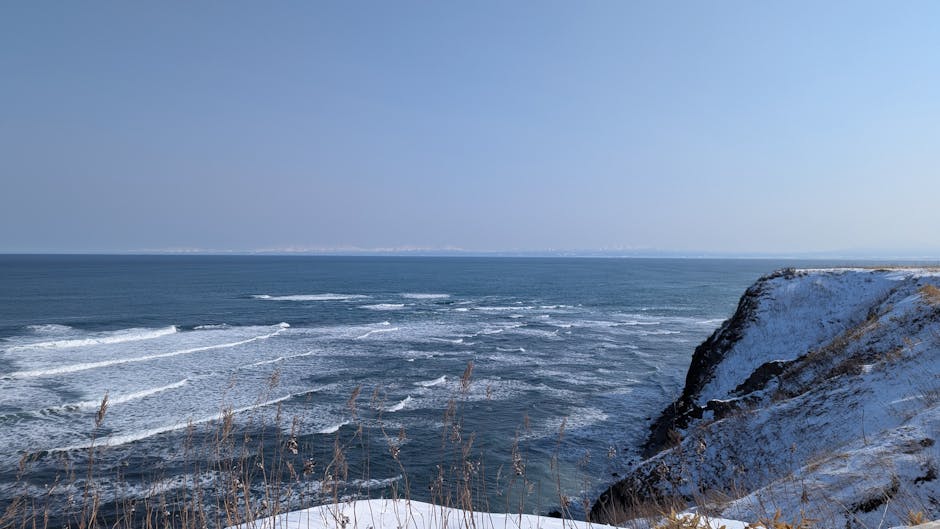
Shiretoko Peninsula
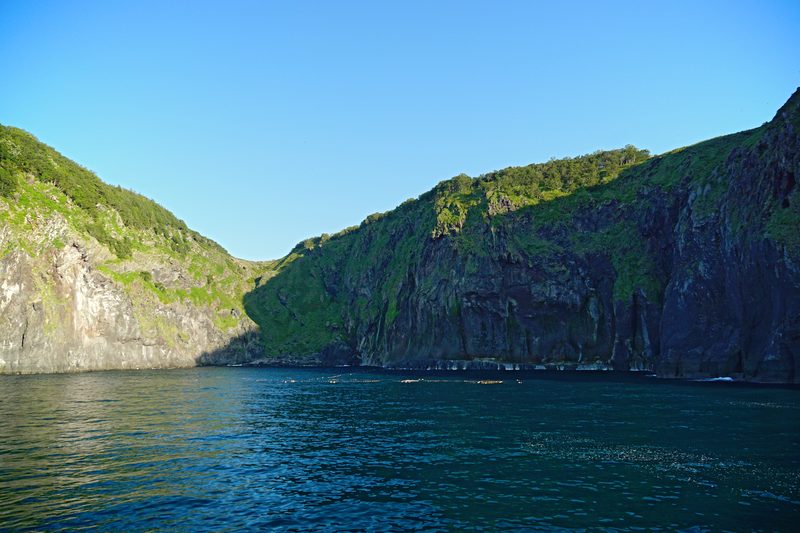
Shiretoko was inscribed as a UNESCO World Heritage site in 2005 for the interaction between its marine and terrestrial ecosystems — sea ice brings nutrients that feed plankton, which feeds fish, which feeds the bears and eagles on the peninsula. It is one of the most intact temperate ecosystems left in the Northern Hemisphere.
The name comes from the Ainu word “sir etok,” meaning the end of the earth. That description still feels accurate. The peninsula extends northeast into the Sea of Okhotsk, accessible only along its western coast. Beyond the Shiretoko Five Lakes area, the terrain is roadless forest, volcanic peaks, and coastline reachable only by boat.
Shiretoko Five Lakes
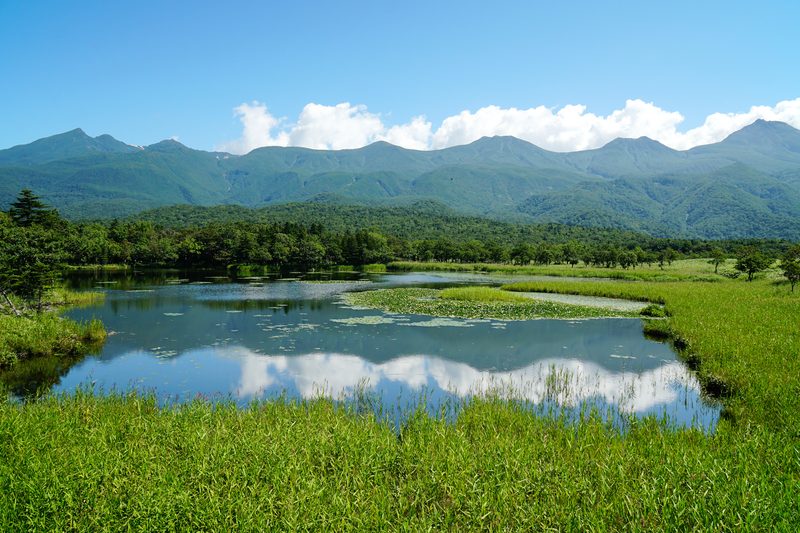
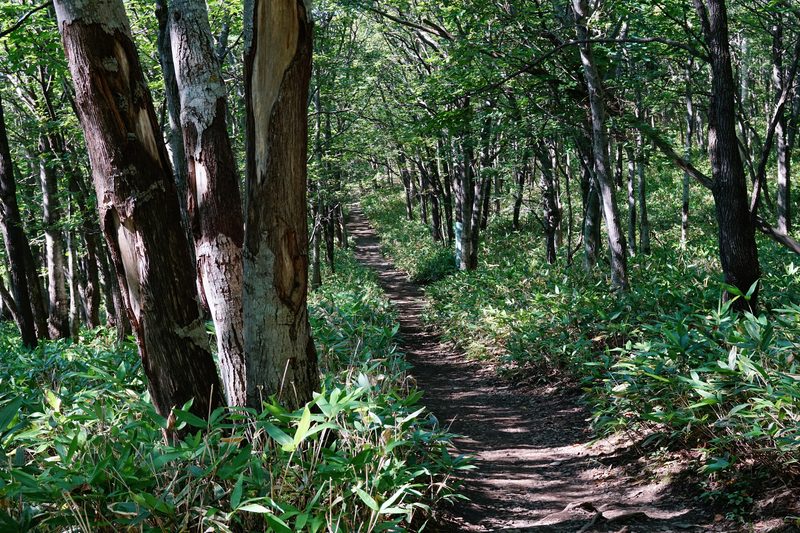
The main experience for most visitors. Five small lakes sit on a plateau above the coast, reflecting the Shiretoko mountain range on calm days. Two access routes exist: a free elevated boardwalk (800m, wheelchair accessible, about 40 minutes) and a ground-level trail that loops all five lakes (3km, about 90 minutes). During bear activity season (May to July), the ground trail requires a guided tour (¥5,100/~$35, advance booking recommended). From August to October you can walk it freely after a 10-minute safety lecture.
The ground trail is worth the extra effort. The boardwalk gives you lake views, but the trail puts you at water level, walking through forest that feels genuinely wild. Bears are regularly spotted — this is not a theoretical risk, it is a routine occurrence — and the guides handle encounters calmly.
Shiretoko Sightseeing Boats
Boat tours run along the western coast from Utoro harbour, passing waterfalls that drop directly into the sea, volcanic rock formations, and bear-inhabited beaches. Two main options: a shorter cruise to Kamuiwakka Falls (about 1 hour, ¥3,300/~$22) and a longer cruise to the tip of the peninsula at Cape Shiretoko (about 3 hours, ¥6,800/~$46). The longer cruise is weather-dependent and cancels frequently due to rough seas. On a calm day, it is extraordinary — vertical cliffs, sea caves, and the kind of coastline that makes you understand why UNESCO cared.
Several operators run the tours. Smaller boats get closer to shore and are better for bear spotting. Larger boats are more comfortable but keep their distance. Book ahead in July and August.
Kamuiwakka Hot Falls
A river heated by the active volcano Io-zan cascades down a series of rock pools in the forest. You wade upstream in warm water to reach the bathing pools — it is a hot spring waterfall, and there is nothing quite like it anywhere else. Access by car is restricted in peak season (August); shuttle buses run from Utoro and the Five Lakes area. Bring water shoes with grip — the rocks are slippery. The walk upstream takes about 15 minutes.
Practical Information
Base yourself in Utoro on the western coast. It has the hotels, restaurants, and boat tour departures. Rausu on the eastern side is smaller and mainly for fishing and whale watching. Utoro has several onsen hotels with ocean views — Kitakobushi is one of the better options, with outdoor baths facing the Sea of Okhotsk.
The road between Utoro and Rausu (Shiretoko Pass, Route 334) opens late April to early November, weather permitting. It is one of the most scenic mountain roads in Hokkaido, climbing through forest to a high pass with views in both directions.
Akan, Mashu, and Kussharo Lakes
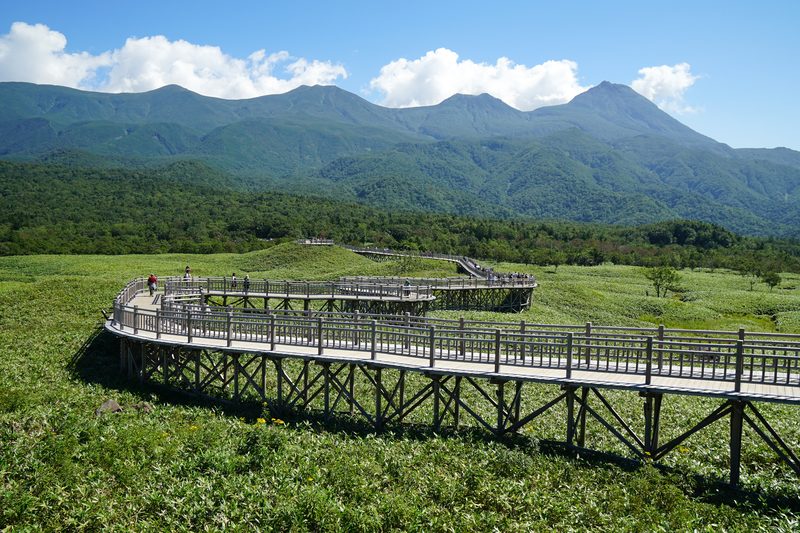
Three volcanic crater lakes sit within an hour of each other in Akan-Mashu National Park, each with a different character. Together they make one of the most rewarding driving circuits in Hokkaido.
Lake Mashu
One of the clearest lakes in the world, with visibility measured at over 40 metres. The lake sits in a steep-walled caldera with no inflowing rivers — the water comes entirely from rain and snowmelt, which is why it stays so transparent. There is no access to the water surface; you view it from lookout points on the caldera rim. The most popular viewpoint is Mashu Daiichi Tenbodai (parking ¥500/~$3.40).
Lake Mashu is famously often obscured by fog, especially in summer. The Japanese say that seeing the lake clearly means you won’t get married (or alternatively, won’t get promoted). Clear mornings in autumn offer the best chances. Even in fog, the caldera rim walk is atmospheric.
Lake Akan
Best known for marimo — spherical moss balls found naturally in only a handful of lakes worldwide. Akan is the only place where they grow to the size of baseballs. The Marimo Exhibition Centre on Churui Island (reached by sightseeing boat, ¥1,900/~$13 including island stop) displays them in underwater tanks. The boat tour itself takes about 85 minutes.
Akanko Onsen, the small hot spring town on the lake’s southern shore, is the main base for this area. The town has a notable Ainu cultural centre — the Ainu Kotan — with craft shops, a small museum, and traditional dance performances. This is one of the most accessible places in Hokkaido to learn about Ainu culture and buy authentic woodcarving. See our Ainu culture guide.
Lake Kussharo
The largest caldera lake in Japan and one of the least visited of the three. The eastern shore has free lakeside hot springs — pools where geothermally heated water seeps up through sand at the water’s edge. Kotan Onsen is the most atmospheric: an outdoor bath right on the lakeshore, free, mixed bathing (swimwear acceptable), with views across the lake to the mountains. Sunayu is another option, where you can dig your own hot spring pool in the sand.
In winter, whooper swans gather on the geothermally warmed sections of the lake that don’t freeze. The combination of steam, swans, snow, and volcanic mountains is one of eastern Hokkaido’s defining images.
Kushiro
The largest city in eastern Hokkaido (population ~165,000) and the practical gateway to the region. Kushiro itself won’t detain most visitors for long, but two things make it worth a stop.
Kushiro Wetlands
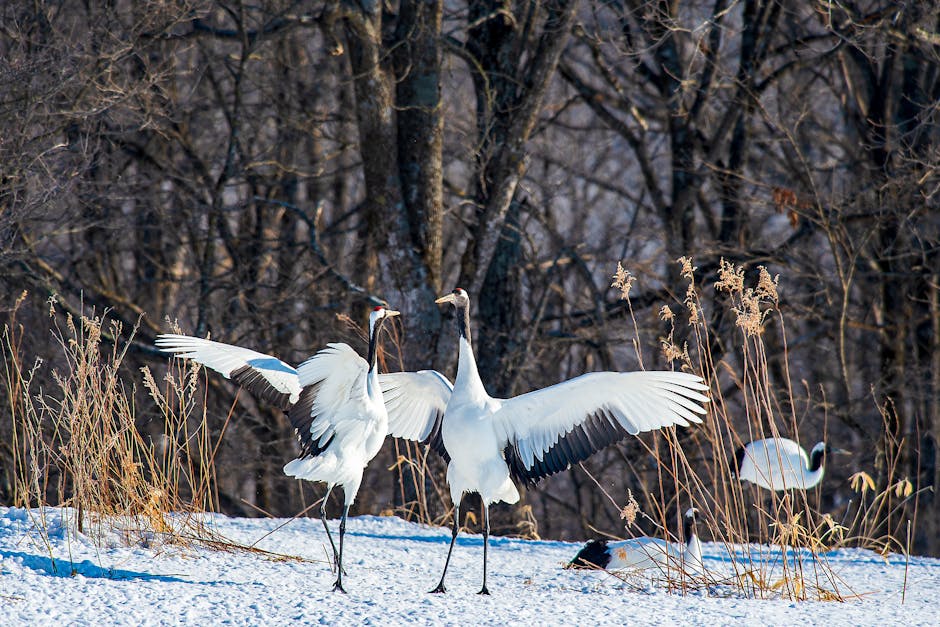
Japan’s largest wetland, designated as a Ramsar site, and the primary habitat for the Japanese red-crowned crane — a species that was thought to be extinct until a small population was rediscovered here in 1924. Today roughly 1,900 cranes live in Hokkaido year-round, and the wetlands are the best place to see them.
In winter (December to March), cranes gather at feeding stations where they perform their famous mating dances — elaborate courtship displays involving leaping, wing-spreading, and calling. The Tsurui-Ito Tancho Crane Sanctuary and the Akan International Crane Centre are the two main viewing sites. Both are free or low-cost, and the cranes are remarkably close — 20-30 metres in good conditions.
In summer, the wetlands are quieter but canoe tours along the Kushiro River offer a chance to see cranes, deer, and eagles from the water. Tours run from Toro and take about 2 hours (¥8,000-10,000/~$54-68 per person).
Kushiro Food
Robata-yaki — charcoal-grilled seafood — originated in Kushiro. The most famous restaurant is Robata, in business since 1952, where the chef passes dishes across the counter on a long wooden paddle. It is a performance as much as a meal. Expect to spend ¥3,000-5,000 per person.
Washo Market, near Kushiro Station, is a working fish market where you can build your own seafood donburi (rice bowl). Buy a bowl of plain rice at a stall inside the market (¥250), then walk from stall to stall choosing toppings — salmon roe, uni, crab, scallop — each priced individually. A loaded bowl runs ¥1,500-3,000 depending on your choices. See our food guide.
Abashiri
A small coastal city on the Sea of Okhotsk, Abashiri is the gateway for two distinct experiences: drift ice in winter and the sobering history of the Abashiri Prison Museum.
Drift Ice
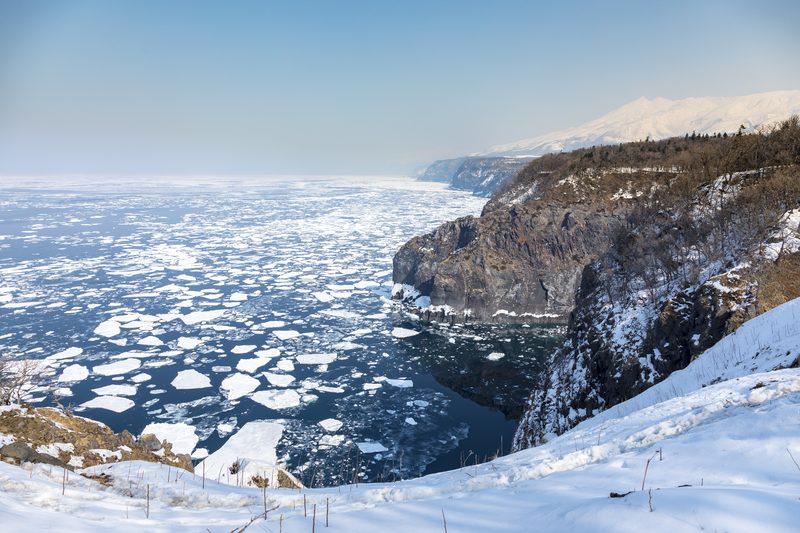
From late January to early March, sea ice from the Sea of Okhotsk reaches the Abashiri coast. The Aurora icebreaker ship cruises through the pack ice for about an hour (¥3,500/~$24 for adults). Watching the ship push through the ice, with chunks rolling up alongside the hull, is unlike anything else in Japan. Seals and white-tailed eagles are sometimes spotted on the ice floes. See our drift ice guide for full details.
Abashiri Prison Museum
A well-preserved former prison that operated from 1890, where convicts were used as forced labour to build roads through Hokkaido’s wilderness. The museum is honest about the harsh conditions and death toll, and the restored buildings give a stark picture of what development in Hokkaido actually cost. It is one of the most thought-provoking museums in Hokkaido and well worth the ¥1,100 (~$7.50) entry.
The horsehair crab (kegani) season in Abashiri runs from spring through early summer, and the crab here is considered among the best in Hokkaido. Several restaurants near the harbour serve it fresh.
Suggested Routes
Three-Day Eastern Hokkaido Circuit (by Car)
Day 1: Fly or drive to Kushiro. Kushiro Wetlands (cranes in winter), Washo Market for lunch, drive to Akanko Onsen (1.5 hours). Evening onsen.
Day 2: Morning at Lake Akan (boat tour, Ainu Kotan). Drive to Lake Mashu and Lake Kussharo (Kotan Onsen). Continue to Utoro (2.5 hours). Evening at onsen hotel.
Day 3: Shiretoko Five Lakes (morning, fewer people). Sightseeing boat if weather permits. Drive to Abashiri (1.5 hours) or fly out from Memanbetsu Airport.
Winter Variation
Add drift ice in Abashiri and crane dancing in Kushiro. The lakes are frozen and quiet. Shiretoko has limited access in winter (Five Lakes boardwalk only, no boats), but the ice-covered landscape is dramatic and the Shiretoko Nature Cruise from Rausu offers drift ice and eagle watching.
Getting There
By air: Memanbetsu Airport (near Abashiri) has flights from Tokyo Haneda and Sapporo. Kushiro Airport has flights from Tokyo and Sapporo. Both airports are served by budget carriers.
By train: JR from Sapporo to Kushiro takes 4 hours by Limited Express Super Ozora. Sapporo to Abashiri takes 5.5 hours via the Limited Express Okhotsk, one of Japan’s great scenic train routes crossing the Kitami Pass. Both are covered by the JR Hokkaido Rail Pass.
By car: Sapporo to Kushiro is about 4.5 hours via expressway. Sapporo to Abashiri is about 4.5 hours. A rental car is the most practical way to explore the region — distances between attractions are large and buses are infrequent. See our car rental guide.
When to Go
Winter (January–March): Drift ice on the Sea of Okhotsk, red-crowned crane dancing at feeding stations, frozen lakes, and Shiretoko’s ice-covered coastline. Roads can be icy but are well-maintained. This is the most dramatic season.
Summer (June–August): Shiretoko hiking at its best, whale watching from Rausu, wildflowers in the wetlands, canoe tours on the Kushiro River. Long days give you more driving time.
Autumn (September–October): Foliage around the crater lakes is excellent and the crowds are thin. Weather is stable. Arguably the best time for the driving circuit if you don’t need drift ice or cranes.
Spring (April–May): Quietest season. Snow is melting, some roads are still closed, and it can feel between-seasons. The Shiretoko Pass typically opens in late April.