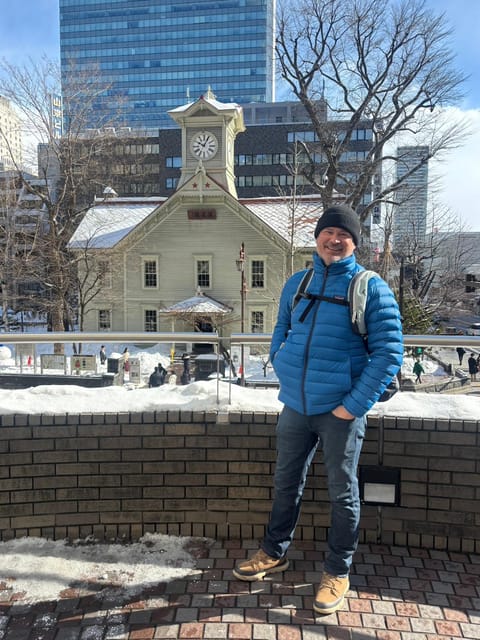
Sapporo’s story comes together nicely on this compact walk: city landmarks lead into the Sosei River, a local shrine, and a seafood lunch at Nijo Market. The best part is the connection between place and food, as your guide explains how the young city grew while taking you toward its old market district.
In This Article
- Key points at a glance
- Why this Sapporo walk works so well
- Meeting at the Sapporo Clock Tower
- City Hall and the TV Tower viewpoint
- Following the Sosei River into early Sapporo
- Hokkaido Jingu Tongu and the Sosei East Area
- Arriving at Nijo Market for lunch
- The recommended coffee stop
- Is $61 a fair price?
- Who should book this experience?
- Practical tips for a smoother morning
- Should you book the Nijo Market history tour?
- FAQ
- How long does the Sapporo tour last?
- Where does the tour start?
- Where does the tour finish?
- Is lunch included?
- Does the tour include Sapporo TV Tower admission?
- What languages does the guide speak?
- How many people are in the group?
- Is the tour suitable for people with food allergies?
- Can I cancel the booking?
I like the small group limit of eight, which leaves room for questions and personal attention. I also like the lunch choice of sushi or donburi, served at Nijo Market rather than in a generic restaurant. The main caution is the pace: you’ll walk for much of the 150 minutes, and the seafood-focused meal does not suit vegans or people with serious food allergies.
Key points at a glance
- Seafood lunch at Nijo Market: Finish with fresh sushi or a seafood rice bowl in Sapporo’s long-established market district.
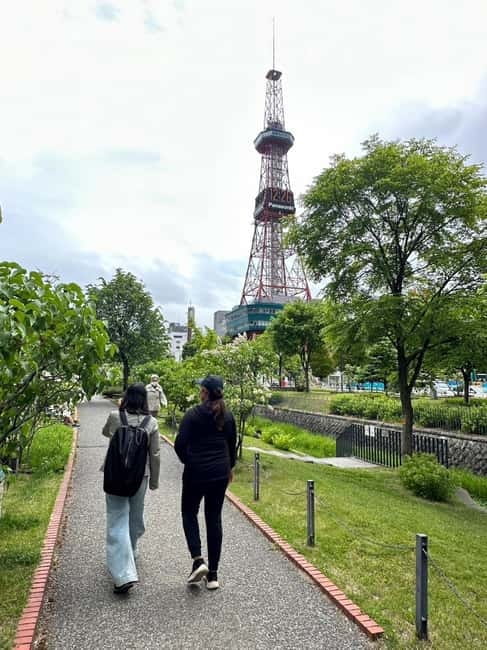
- A useful first look at central Sapporo: The route links the Clock Tower, City Hall, TV Tower, Sosei River, and Nijo Market.
- Hokkaido Jingu Tongu: Visit a shrine used and loved by the local community, not only a photo stop for tourists.
- Sosei East Area: Walk through a part of central Sapporo that receives less attention from short-stay visitors.
- Personal guiding: English-speaking guides including Tom and Iku have led warm, informative walks with plenty of local suggestions.
- Good value for a short city tour: The $61 price includes the guide, insurance, TV Tower admission, and lunch.
Why this Sapporo walk works so well
This is not simply a string of famous stops. It is a short introduction to how Sapporo developed around government planning, the Sosei River, local religious life, and Hokkaido’s seafood trade.
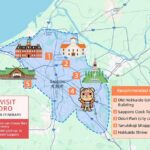
You start at the Sapporo Clock Tower, one of the city’s best-known symbols, then move through central streets toward the TV Tower. From there, the route shifts away from the standard landmark circuit. You walk beside the Sosei River, cross the Sosei Bridge, visit Hokkaido Jingu Tongu, and finish in Nijo Market.
That change of mood is the tour’s real strength. The Clock Tower and TV Tower give you quick orientation. The river walk and shrine offer a more local view. Lunch then gives the whole morning a practical finish. You do not just hear about Sapporo’s connection to Hokkaido’s food culture. You sit down and eat it.
The tour lasts 150 minutes, from 10:00 in the morning until lunch at about 12:30. That timing is useful if you want a guided introduction without giving up the rest of your day.
Our other Sapporo reviews may also help you decide


Meeting at the Sapporo Clock Tower
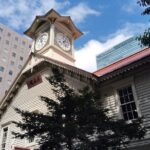
Meet your guide at the entrance to the Sapporo Clock Tower. Look for a guide holding a board marked KAPPO SAPPORO. The guide may also have a microphone, which should help you identify the group in a busy central area.
The Clock Tower is a sensible starting point. It is easy to locate, close to other central sights, and tied to Sapporo’s early development. You have about 15 minutes here for a photo stop, a short guided visit, and a walk around the area.
Do not expect a long museum visit at this stage. The value is in getting the basic city story in place before you move on. Your guide can also help with the practical side of Sapporo, such as orienting you to the central grid and nearby sights.
Guides Tom and Iku have received particularly warm praise for their easy conversation, local tips, and ability to make the past understandable. Iku has also helped visitors with a few Japanese words and useful food suggestions. Tom has been praised for explaining Sapporo in an engaging, personal way.
City Hall and the TV Tower viewpoint
After roughly five minutes on foot, you stop at Sapporo City Hall for around 10 minutes. This is a brief visit, but it helps show the civic center of the city and gives your guide another place to explain Sapporo’s early years.
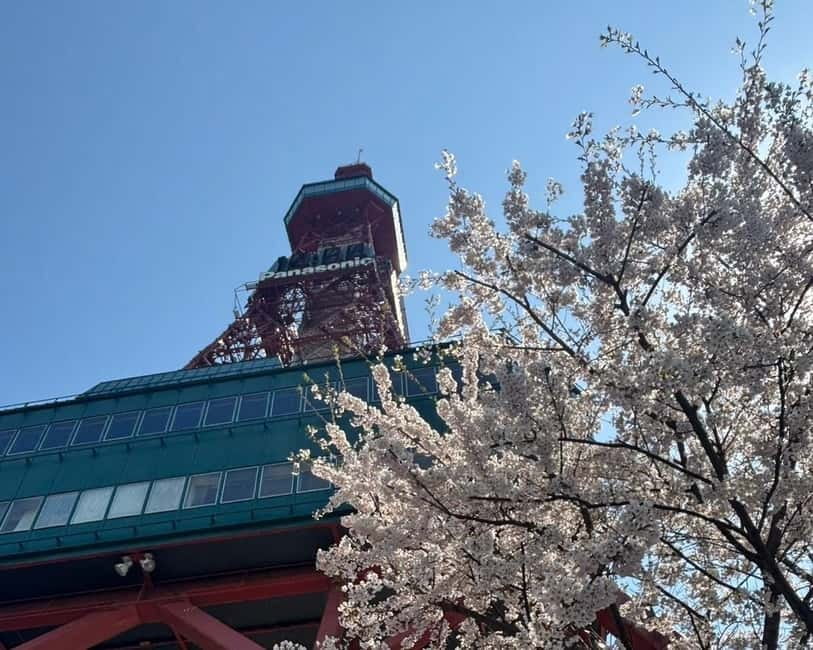
The next walk takes about five minutes and leads to the Sapporo TV Tower. The tower visit lasts about 35 minutes, including a guided visit, free time, photo opportunities, and views from above.
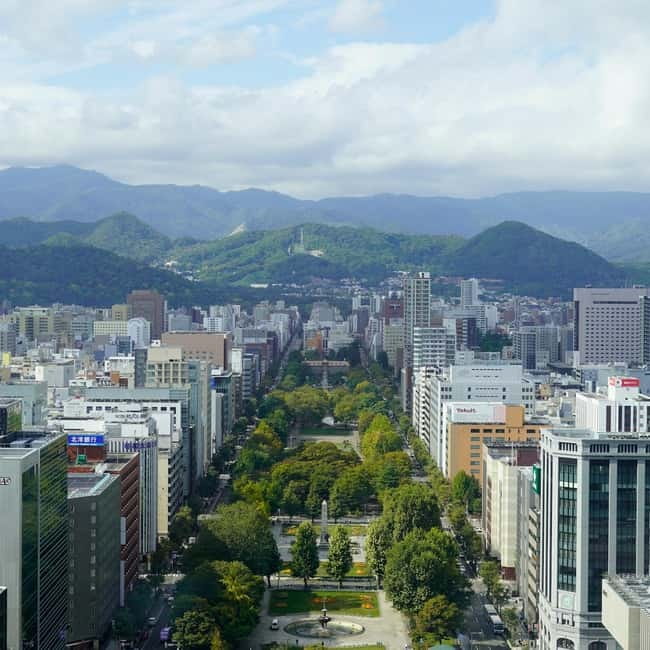
This is the one paid sight built into the tour, and the admission is included in the $61 price. The view matters because Sapporo is a planned city with broad, orderly streets. From the tower, you can better understand how the central area fits together than you can from street level.
Bring your camera, but also use the free time to get your bearings. If you are visiting Sapporo at the start of your stay, this view can make later independent walks much easier.
The TV Tower stop is also the most conventional part of the tour. It is a familiar Sapporo attraction, and you could visit it on your own. Its advantage here is that your guide places it in context and handles the visit as part of a larger route.
Following the Sosei River into early Sapporo
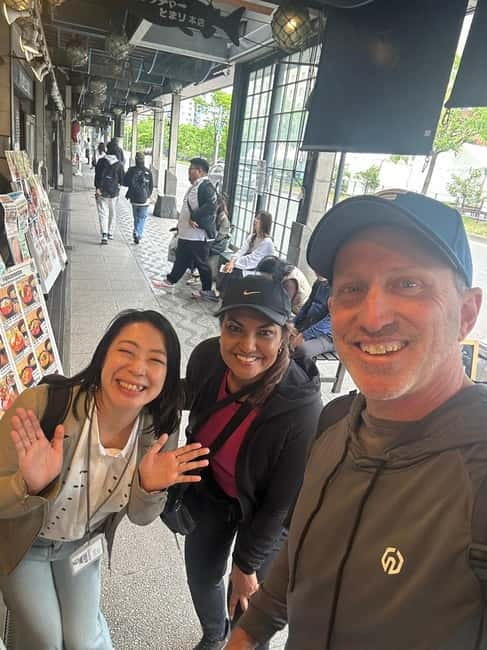
After the tower, you walk for about 10 minutes to the Sosei River. The river section lasts around 10 minutes and is where the tour begins to feel less like a checklist of sights.
Your guide explains Sapporo’s early age as you walk along the water. This is useful because the river is not only scenery. It helps explain the city’s growth and the way early Sapporo took shape around planned development and water routes.
You then continue on foot for about 10 minutes before reaching another stop, followed by the Sosei Bridge and Hokkaido Jingu Tongu. The total walking time between major stops is manageable, but you should still wear comfortable closed-toe shoes.
In good weather, this section should be one of the easiest parts of the morning. In rain, snow, or strong winter cold, it becomes more demanding. Sapporo’s weather can change quickly, so wear suitable clothing and carry water. The tour asks you to avoid sandals and flip flops, a sensible rule for a walking route with several outdoor sections.
Hokkaido Jingu Tongu and the Sosei East Area
Hokkaido Jingu Tongu is a small but meaningful change of pace after the city views. You spend about 15 minutes here on a guided visit and photo stop.
The shrine is loved by the local community, which gives it a different character from a sight visited only for its postcard value. Your guide can explain its cultural role and local connections, adding a human side to Sapporo’s story.
This is also the point where you move through the Sosei East Area, a part of central Sapporo that has not yet become a standard stop on every short city visit. The tour does not promise an exhaustive neighborhood walk, and it does not need to. Even a brief passage can show you a quieter side of the city and help you see how Sapporo extends beyond its headline attractions.
The shrine visit is short, so set your expectations correctly. You are getting an introduction rather than a detailed religious tour. Its value comes from the guide’s explanation and its place in the morning’s flow.
You can also read our reviews of more historical tours in Sapporo



Arriving at Nijo Market for lunch
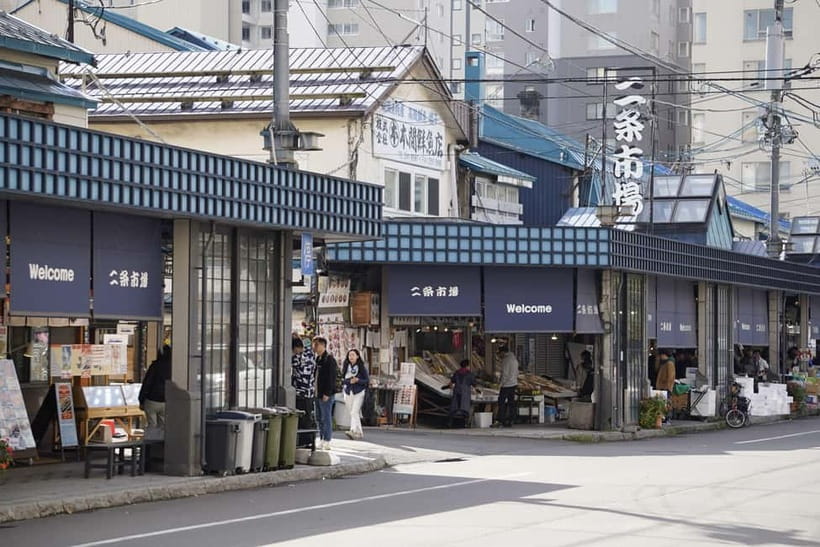
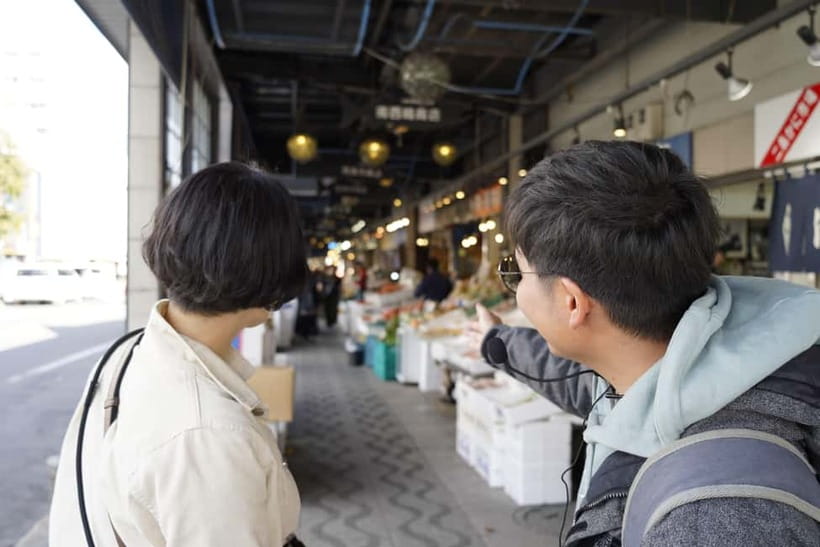
You reach Nijo Market at about 12:20, with lunch beginning around 12:30. The market portion lasts about 40 minutes and includes a visit, guided time, free time, and your meal.
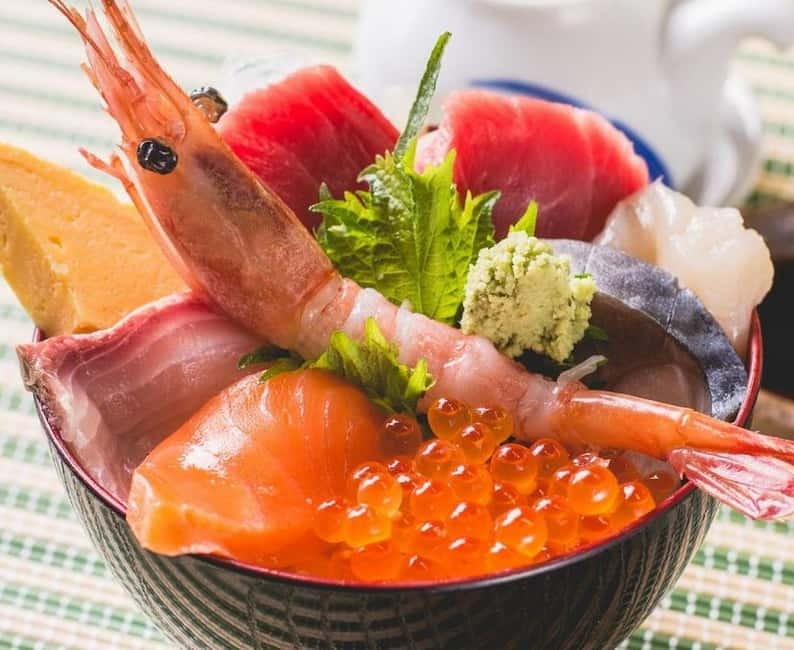
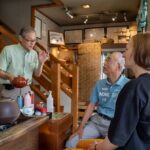
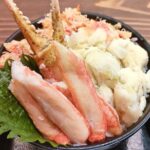
Nijo Market is often called the Citizens’ Kitchen, and it is the natural finish for a tour built around Sapporo’s local food culture. The included meal is seafood, with a choice of sushi or donburi. A donburi is a rice bowl topped with seafood, making it a filling and straightforward Japanese lunch.
The food is the strongest reason to choose this tour over a basic city walk. You are not merely being shown the market and then left to make your own choice. The lunch is included, and the route has already explained why seafood matters in Hokkaido.
The guide may not join you for lunch. That is worth knowing in advance. You may have a more independent meal at the end, rather than a long guided dining session. For some people, that is ideal. You can focus on the food without having to keep up a conversation. If you hoped for detailed help throughout the meal, ask about the arrangement when you meet.
The meal is also the tour’s main limitation. Vegans should not book this experience, and the activity is listed as unsuitable for people with food allergies. If you have any allergy, tell the provider before the tour. Alternative options may be possible, but they are not guaranteed, so you should not assume the standard sushi or donburi can be changed safely.
The recommended coffee stop
The tour also introduces Kotobuki Coffee as a recommended cafe. It is not listed as an included stop or included expense, so think of it as a useful suggestion for after the market rather than part of the paid experience.
That recommendation fits the tour’s practical style. You finish near Nijo Market, with the rest of the day open for coffee, more shopping, or independent sightseeing. If you want to continue at a slower pace, ask your guide for the best way to reach the cafe and for other local food ideas.
I would also pay attention to the personal suggestions you receive from the guide. Iku has given strong ramen recommendations, and several guides have left visitors with ideas for places to eat and see after the tour. Those tips may be as useful as the formal sightseeing, especially if this is your first day in Sapporo.
Is $61 a fair price?
At $61 per person, this tour offers solid value if you want both a guided walk and a proper meal. The price includes an English-speaking local guide, insurance, admission to the Sapporo TV Tower, and fresh seafood lunch at a local restaurant in Nijo Market.
The math works best for someone who would otherwise pay separately for the tower and lunch, then spend time finding the market and understanding the city’s early story. You are also paying for a small group, limited to eight people. If the group is smaller, the experience can feel close to a private walk. Some scheduled departures may even operate with only one or two participants, though you should not book assuming that will happen.
The value is weaker if you only want a quick meal or already know central Sapporo well. The famous landmarks are easy to reach independently, and the 150-minute route covers them fairly quickly. You are paying for the links between places, the local explanations, and the convenience of having lunch arranged.
Free cancellation up to 24 hours before the start and a reserve-now, pay-later option make the booking fairly flexible. Personal spending and transport costs are not included, although this central route is designed around walking.
Who should book this experience?
I would recommend it to first-time visitors who want a clear introduction to central Sapporo without spending an entire day on a formal tour. It also suits food-focused visitors who want a market lunch with some context rather than a meal chosen at random.
History fans should enjoy the Sosei River and Sosei East Area, especially if they prefer city stories over a long list of museum rooms. Photographers will get several useful stops, including the Clock Tower, TV Tower views, the river, shrine, and market.
The small group is a good match for solo visitors and couples. It gives you a better chance to ask questions and get restaurant suggestions from Tom, Iku, or another local guide.
This is not a good fit if you have low fitness, limited mobility, or need a wheelchair. It is also unsuitable for babies under one year, pregnant women, people with a cold, vegans, and people with food allergies according to the stated restrictions. Large bags, luggage, baby strollers, non-folding strollers, pets, alcohol, and drugs are not allowed.
Practical tips for a smoother morning
Wear comfortable clothes and closed-toe walking shoes. You will walk between each stop, and the outdoor sections can feel very different in summer rain, winter cold, or wet conditions.
Bring water and a camera. The TV Tower is the main formal viewpoint, but the route also offers photo stops at the Clock Tower, river, bridge, shrine, and market.
Arrive at the Clock Tower entrance with enough time to find the guide. Look for the KAPPO SAPPORO board and possibly a microphone.
Tell the provider about seafood allergies before booking or as early as possible. Do not rely on being able to change the meal after arriving at the market.
Keep the afternoon free for your own plans. The tour ends at Nijo Market, not back at the Clock Tower, so you can continue exploring from the market area once lunch is finished.
Should you book the Nijo Market history tour?
Book it if you want a friendly, compact introduction to Sapporo that combines city history, a local shrine, a river walk, a tower view, and seafood lunch. At $61, the included TV Tower ticket and market meal make the price reasonable, especially with a group capped at eight.
Skip it if you want a slow, in-depth visit to each landmark, need full accessibility, or cannot eat seafood. For most first visits, though, this is a smart way to get oriented. You leave with a basic map of central Sapporo, a better sense of its early story, and a meal that gives the city’s food culture a place on your plate.
FAQ
How long does the Sapporo tour last?
The tour lasts 150 minutes. It begins at 10:00 and ends at Nijo Market after lunch, at about 12:30.
Where does the tour start?
Meet your guide at the entrance of the Sapporo Clock Tower. The guide will hold a board marked KAPPO SAPPORO and may have a microphone.
Where does the tour finish?
The tour ends at Nijo Market after the included lunch.
Is lunch included?
Yes. The price includes a fresh seafood lunch at a local restaurant in Nijo Market. You can choose between sushi and donburi.
Does the tour include Sapporo TV Tower admission?
Yes. Entry to the Sapporo TV Tower is included in the price.
What languages does the guide speak?
The tour is available with a live guide in English or Japanese.
How many people are in the group?
The group is limited to eight participants. Some departures may operate as a private or nearly private experience, depending on bookings.
Is the tour suitable for people with food allergies?
The meal is seafood focused. You must inform the provider about any allergies in advance, and an alternative may be possible. The activity is listed as unsuitable for people with food allergies, so you should confirm arrangements before booking.
Can I cancel the booking?
You can cancel up to 24 hours in advance for a full refund. A reserve-now, pay-later option is also available.
More Tours in Sapporo


More Tour Reviews in Sapporo


More Seafood & Market Tours in Sapporo
Other Sapporo tours worth your shortlist

Seafood & Market Tours, side by side.
 ★ 5.0Authentic Sapporo: Nijo Market Seafood Lunch & Local History TourFrom $63.2013 reviews
 ★ 5.0Hokkaido Seafood Sushi Rolls Experience with Matcha, in SapporoFrom $97.554 reviews
 ★ 5.0Morning Market Tour with Seafood Tasting OptionsFrom $1251 reviewsFish Markets Half Day with a LocalFrom $1631 reviews
The lists this tour appears in