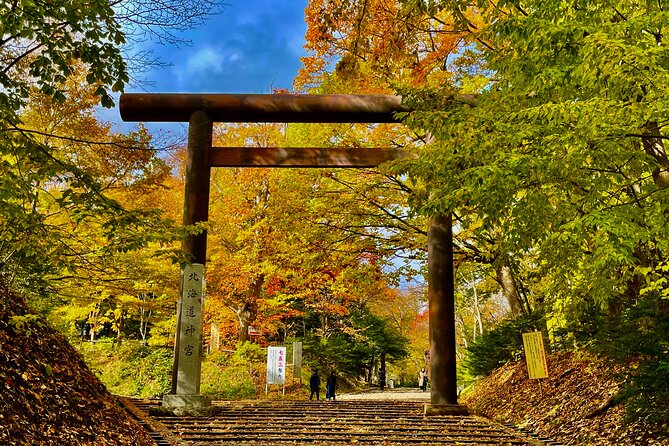
The best part of this Sapporo tour is its clear sense of place. You enter through Maruyama Park, leave the city behind, and reach Hokkaido Shrine, where local spirituality, pioneering history, and a few tasty traditions come together in a compact one-hour visit. The temizu purification ritual gives the walk a hands-on purpose, while the Ezo Squirrel Omikuji adds a distinctly Hokkaido touch.
In This Article
- From Maruyama Park to the Shrine Gate
- Hokkaido Shrine and Hokkaido’s Pioneering Story
- Trying the Temizu Purification Ritual
- Drawing the Ezo Squirrel Omikuji
- Fuku-Rei Mochi at Jingu Chaya
- What the One-Hour Format Really Gives You
- Is $52.57 a Fair Price?
- Who Will Get the Most From This Shrine Visit?
- Booking, Timing, and Cancellation Details
- Should You Book Sapporo’s Hokkaido Shrine Tour?
- FAQ
- Where does the Hokkaido Shrine tour begin?
- Where does the activity end?
- How long does the tour last?
- Is admission to Maruyama Park included?
- Is the tour private?
- What is included in the price?
- Is transportation included?
- Are mobile tickets available?
- Can I cancel for a full refund?
I like two things here. First, the tour goes beyond simply looking at shrine buildings by explaining the role of Hokkaido Shrine and Kaitaku Shrine. Second, the stop at Jingu Chaya for Fuku-Rei Mochi gives you a pleasant local taste in a peaceful setting. The main consideration is time: one hour is enough for an introduction, but not for a slow, detailed visit to every corner of the shrine grounds.
- Maruyama Park entrance: Begin among trees, birds, squirrels, and one of Sapporo’s best-known shrine approaches.
- Hokkaido’s pioneering story: Learn why Hokkaido Shrine is connected to the island’s development and early settlers.
- Hands-on purification: Take part in the temizu ritual rather than only watching a guide explain it.
- Ezo Squirrel Omikuji: Draw a small fortune tied to a local animal symbol.
- Fuku-Rei Mochi at Jingu Chaya: Finish with a traditional rice cake associated with good fortune.
- Private one-hour format: Only your group participates, making the pace more personal, though the short duration limits depth.
From Maruyama Park to the Shrine Gate
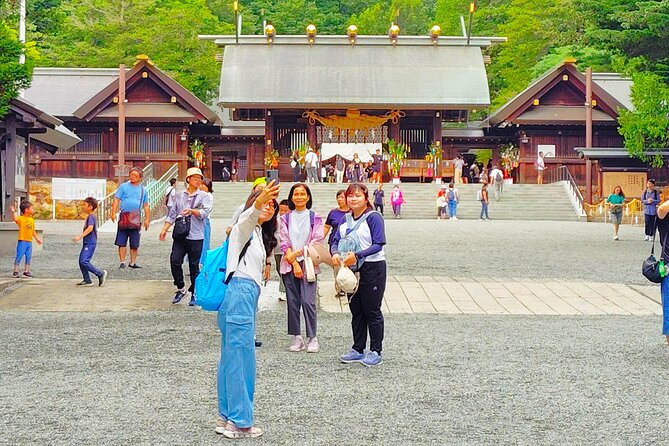
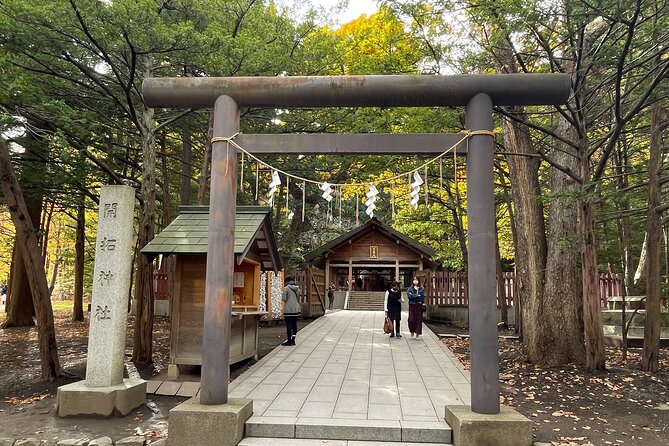
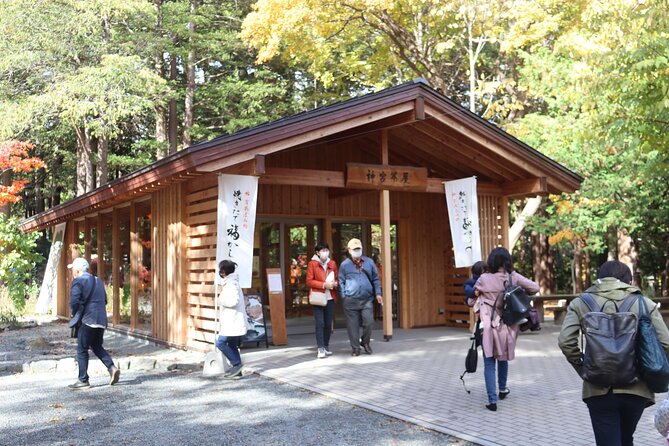
Your meeting point is Maruyama Park Center, at 3 Chome Miyagaoka in Chuo Ward. The park forms a natural approach to Hokkaido Shrine, so the tour starts with more than a standard street meeting and a quick transfer. You walk into a leafy setting first, then pass through the large torii gate toward the shrine.
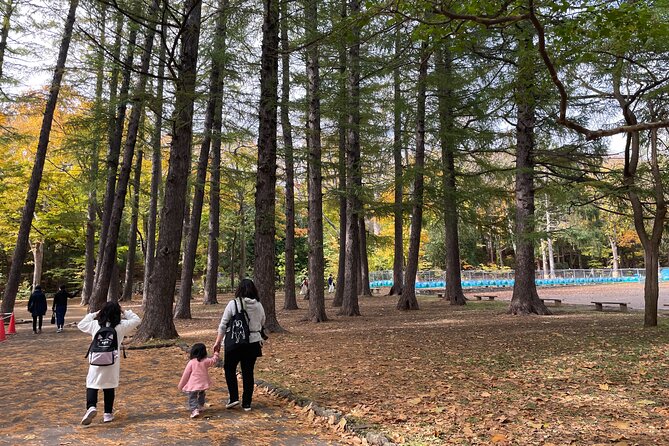
That change of mood is central to the visit. Sapporo is a modern city, but Maruyama Park offers a quieter beginning, with native trees, birds, and squirrels. The park is also a favorite local spot during cherry blossom season, adding seasonal appeal if your visit falls in spring.
The park portion lasts about 15 minutes and has no admission charge. That makes it a gentle start, but you should not expect a separate nature walk. The purpose is to set the scene and explain how Maruyama Park connects to the shrine.
I like this arrangement because the approach gives the shrine some meaning before you reach its main grounds. You are not simply arriving at a building by transport, taking a photograph, and leaving. The torii marks a change from ordinary city movement to a place designed for quiet attention.
Hokkaido Shrine and Hokkaido’s Pioneering Story
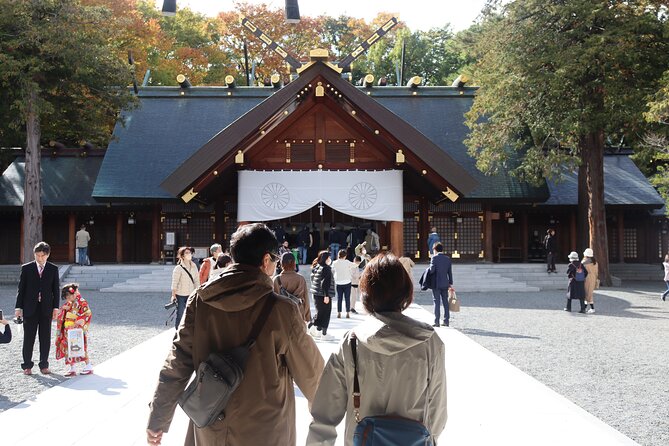
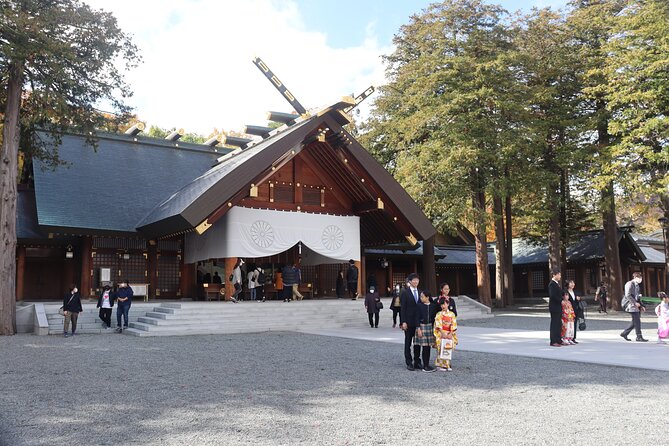
Hokkaido Shrine was founded in 1869 and enshrines deities linked to the development of Hokkaido, along with Emperor Meiji. The site therefore connects religious practice with the island’s modern settlement and national history.
That context matters. A shrine visit can feel mysterious if you do not know what you are looking at or why the site is important. Here, your guide explains the shrine’s role in Hokkaido’s story, giving the buildings and rituals a clearer setting.
The main shrine visit takes about 45 minutes. That time includes the tour, the ritual experience, the fortune drawing, and the sweet tasting. You should think of it as a focused introduction rather than an extended study of Shinto architecture or Hokkaido history.
Within the grounds, you also visit Kaitaku Shrine. It honors the early settlers and brings the pioneering theme into sharper focus. The name and purpose provide a useful link between the shrine’s religious role and the people who helped shape Hokkaido.
I find this pairing of Hokkaido Shrine and Kaitaku Shrine especially useful for first-time visitors. You receive both the wider regional story and a more specific reminder of the people connected with Hokkaido’s early development.
You can also read our reviews of more historical tours in Sapporo


Trying the Temizu Purification Ritual
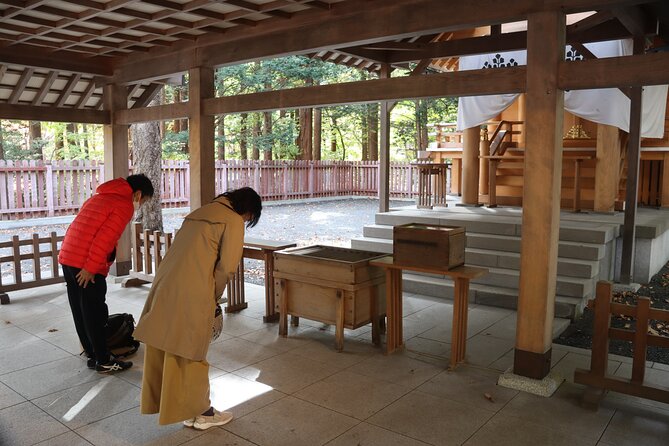
One of the tour’s strongest features is the chance to take part in the temizu water purification ritual. At a shrine, purification is not just a decorative custom for tourists. It prepares you to enter the sacred space with a more respectful frame of mind.
Your guide can explain the process as you participate. The information provided does not specify every step or the exact tools used, so you should follow the guide’s instructions on the day rather than rely on a general shrine routine.
This is a small activity, but it changes the visit. Instead of standing at the edge while someone talks about Shinto customs, you perform one of them. I like that the experience remains simple and practical, with no pressure to make the ritual feel theatrical.
The water ritual also helps you notice the difference between seeing a shrine and using it as a religious place. Even a short visit feels more connected to local practice when you understand why visitors purify themselves before proceeding.
If you prefer a tour packed with major monuments, this part may seem modest. If you want a respectful introduction to Japanese shrine customs, it offers real value. The guide’s explanation is important here, since the meaning behind the action is more useful than simply copying movements.
Drawing the Ezo Squirrel Omikuji
The Ezo Squirrel Omikuji is one of the most distinctive elements of the visit. Omikuji are fortunes drawn at Japanese shrines, but this version uses an Ezo squirrel, giving the activity a local character that fits the Maruyama Park setting.
The squirrel is a natural symbol for the park experience, where native wildlife forms part of the setting. That connection makes the fortune drawing feel less like a generic souvenir and more like a small detail tied to this particular corner of Sapporo.
The tour includes the omikuji experience, but the supplied details do not state the exact wording, design, or process for drawing it. Your guide will show you how it works. Treat it as a cultural activity and keepsake, not as a prediction that needs to guide your trip.
I like this feature for families, first-time shrine visitors, and anyone who enjoys small local traditions. It adds a light moment after the more serious historical and religious discussion. The result is a visit with a little humor and personality, without losing its connection to the shrine.
The omikuji also gives you something to remember beyond photographs. A large shrine can blur together after several days in Japan. A fortune linked to an Ezo squirrel is easier to associate with Hokkaido.
Fuku-Rei Mochi at Jingu Chaya
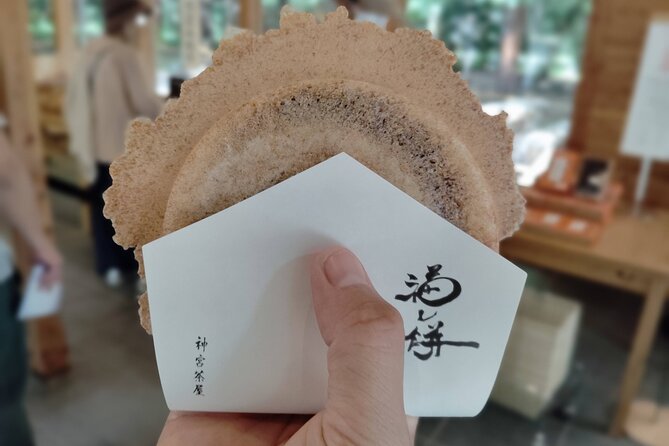
The tour finishes with Fuku-Rei Mochi at Jingu Chaya, a traditional rice cake associated with good fortune. This tasting is included in the price, so you do not need to budget separately for it during the activity.
Food is often the most direct way to make a short cultural visit memorable. The mochi gives you a chance to pause, enjoy a local sweet, and reflect on what you have just learned. The setting at Jingu Chaya also keeps the ending connected to the shrine rather than sending you immediately back into the city.
The information does not specify the flavor, filling, portion size, or drink pairing. I would therefore treat this as a small tasting, not a full snack stop or meal replacement. If you are hungry, plan another meal separately.
The sweet also completes the tour’s pattern nicely: nature in Maruyama Park, history at the shrines, ritual through temizu, luck through omikuji, and food at Jingu Chaya. Each element is modest, but together they create a well-shaped introduction to the site.
What the One-Hour Format Really Gives You
At approximately one hour, this is a compact experience. The timing suits you if Hokkaido Shrine is one stop within a fuller Sapporo day and you want a guide to explain the place without committing half a day.
The schedule divides roughly into 15 minutes in Maruyama Park and 45 minutes at Hokkaido Shrine. The park segment helps with orientation, while the shrine segment carries the main content and activities.
The short format also keeps the visit manageable for families and people who do not want a long walking tour. Most travelers can participate, and the tour is near public transportation. Private transportation is not included, so you are responsible for reaching the meeting point and returning from there after the activity ends.
The tradeoff is depth. You will learn the shrine’s basic historical importance and try several customs, but there is limited time for lingering, extended questions, or a slow look at the grounds. If you already know Hokkaido Shrine well, this may feel more like a refresher than a study tour.
The private format helps offset that limit. Only your group participates, so the guide can keep the pace suited to your party. The supplied details do not provide a guide’s name, so you should not book expecting a particular named guide. The quality of the conversation may depend on the guide assigned to your date.
Our other Sapporo reviews may also help you decide

Is $52.57 a Fair Price?
The listed price is $52.57 per person. For a one-hour activity, that is not the cheapest way to visit Hokkaido Shrine, especially since entrance to Maruyama Park is free and the shrine visit itself is centered on public grounds and included activities.
The value comes from the private guiding, the explanation of Hokkaido Shrine’s history, the temizu ritual, the Ezo Squirrel Omikuji, and the Fuku-Rei Mochi tasting. If you would otherwise walk through the shrine without knowing what the rituals mean, the guide may make the visit considerably more rewarding.
Group discounts are available, which could improve the price for a larger party. Since this is a private activity, the exact value depends on how many people are in your group and how much you want personal guidance.
I would consider the price reasonable for someone who values interpretation and a planned cultural introduction. I would consider it less appealing if you only want to see the grounds, take photographs, and move on. The included sweet and fortune are pleasant extras, but the guide’s context is the main reason to pay for the tour.
Who Will Get the Most From This Shrine Visit?
This tour fits first-time visitors to Sapporo who want a simple introduction to Shinto customs and Hokkaido’s development. It also suits history enthusiasts who want to understand why the shrine is linked to the island’s pioneering era.
Families may appreciate the short length and the Ezo Squirrel Omikuji. The fortune drawing and mochi tasting offer concrete activities for children, while the park provides a less formal opening than beginning inside the shrine grounds.
It is also a good choice for spiritual seekers who want to take part in a purification ritual respectfully. The experience does not present itself as a long religious retreat. It gives you a brief, guided encounter with specific practices.
You might skip it if your schedule is extremely tight, if you have already had several guided shrine visits, or if you prefer independent exploration. Hokkaido Shrine can still be visited without this activity, and the tour does not include private transportation or a longer city tour.
Service animals are allowed, and most travelers can participate. The activity ends back at the meeting point, so plan your next Sapporo stop from Maruyama Park rather than expecting a hotel drop-off.
Booking, Timing, and Cancellation Details
You receive confirmation at the time of booking, and mobile tickets are supported. The experience offers free cancellation when you cancel at least 24 hours before the local start time.
Cancellations made less than 24 hours before the start time are not refunded, and changes within that period are not accepted. Keep the local cut-off time in mind if you are booking across time zones.
Because the experience is only about an hour, arriving at the meeting point with enough time to orient yourself is sensible. The supplied information does not provide a recommended arrival buffer, so allow time to find Maruyama Park Center before the scheduled start.
Should You Book Sapporo’s Hokkaido Shrine Tour?
Book this tour if you want more than a quick shrine photograph. For $52.57 per person, you receive a private, guided introduction that connects Maruyama Park, Hokkaido’s pioneering past, Shinto purification, a local-style fortune, and Fuku-Rei Mochi in one hour.
The strongest reason to choose it is the combination of explanation and participation. You learn why the shrine matters, then take part in small traditions instead of only watching from the side.
Skip it if you want a long historical tour, private transport, or a full meal. But if you have a spare hour in Sapporo and prefer a clear, friendly introduction to one of the city’s most important cultural sites, this is a practical choice with enough local detail to make the visit stick.
FAQ
Where does the Hokkaido Shrine tour begin?
The tour begins at Maruyama Park Center, 3 Chome Miyagaoka, Chuo Ward, Sapporo, Hokkaido 064-0959, Japan.
Where does the activity end?
The activity ends back at the meeting point in Maruyama Park.
How long does the tour last?
The tour lasts approximately one hour. About 15 minutes are spent in Maruyama Park and about 45 minutes at Hokkaido Shrine.
Is admission to Maruyama Park included?
Maruyama Park has free admission. The tour includes the guided visit to Hokkaido Shrine.
Is the tour private?
Yes. Only your group participates in this private activity.
What is included in the price?
The price includes a guided tour of Hokkaido Shrine, an Omikuji experience, and a tasting of mochi sweets.
Is transportation included?
No. Private transportation is not included. The meeting point is near public transportation.
Are mobile tickets available?
Yes. The experience offers mobile tickets, and confirmation is received at the time of booking.
Can I cancel for a full refund?
Yes, if you cancel at least 24 hours before the experience’s local start time. Cancellations made less than 24 hours before the start time are not refunded.
More Historical Tours in Sapporo



More Tours in Sapporo


More Tour Reviews in Sapporo


Other Sapporo tours worth your shortlist







Historical Tours, side by side.
 ★ 4.8Authentic Sapporo: Nijo Market Seafood Lunch & History TourFrom $6120 reviews
 ★ 5.0Authentic Sapporo: Nijo Market Seafood Lunch & Local History TourFrom $63.2013 reviews
 ★ 4.44-Hour Cultural and Historical Highlights TourFrom $4165 reviews
 ★ 5.01-Day Sapporo Historical Village and Sapporo Beer Museum TourFrom $180.583 reviews
The lists this tour appears in