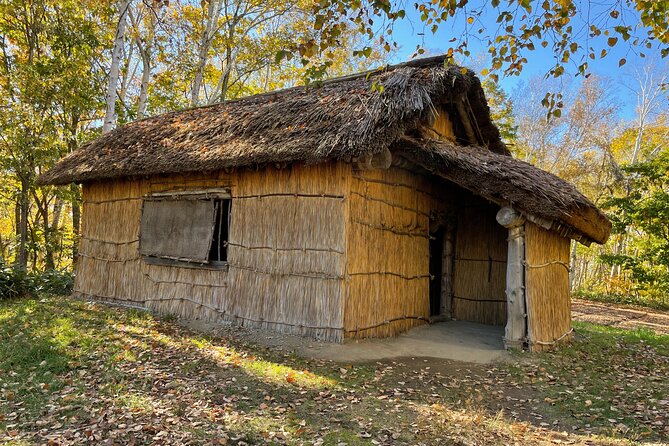
Hokkaido’s frontier story comes alive at the Historical Village of Hokkaido, where more than 50 relocated or reconstructed buildings form an old-style town of offices, shops, schools, farmhouses, and log huts. A guide leads you through the setting, explaining how the Meiji government developed Japan’s northern island and how those changes affected the Ainu people.
In This Article
- Key points for your two hours in Hokkaido’s frontier town
- Entering the Historical Village of Hokkaido
- What the 50-plus buildings reveal
- The guide’s role in making the visit meaningful
- A difficult story, not just a charming old town
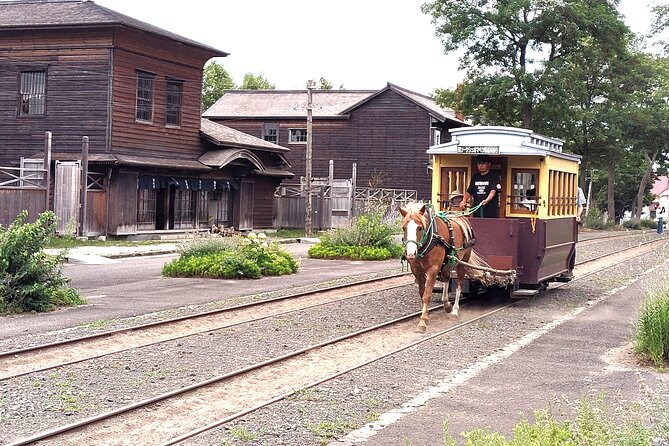
- The horse-drawn railway and the feel of movement
- Why two hours can work, and where it may fall short
- Meeting options and getting there
- Is $99.64 a fair price?
- Who will enjoy this experience most?
- Cancellation and booking points to remember
- Should you book the Historical Village tour?
- FAQ
- Where does this experience take place?
- How long does the tour last?
- Is admission included?
- Is transportation included?
- Where can I meet the guide?
- Is this a private tour?
- Can I use a mobile ticket?
- What is the cancellation policy?
I like the private format, since your group can set the pace and ask questions without being folded into a large crowd. I also like the horse-drawn railway and the careful mix of public buildings, businesses, and homes, which helps you picture daily life instead of seeing only a row of museum displays.
The main drawback is timing. Two hours gives you a useful guided introduction, but the village is expansive, so you may need to return on your own if you want to inspect every building. The $99.64 price is also easier to justify for a small private group than for one person traveling alone.
Key points for your two hours in Hokkaido’s frontier town
- More than 50 period buildings: Walk among government offices, schools, shops, farmhouses, and log huts relocated or rebuilt to show Hokkaido’s early development.
- A private guided visit: Only your group participates, giving you room to ask questions and focus on the parts of the site that interest you most.
- A horse-drawn railway: This unusual feature helps explain how people and goods moved through the developing island.
- Ainu history included: The tour addresses the experiences of the Ainu during the major changes brought by Meiji-era settlement.
- Two flexible meeting choices: You can arrange to meet at Sapporo Station or directly at the Historical Village.
- Mobile ticket and free cancellation: Booking confirmation arrives at once, and you can cancel for a full refund up to 24 hours before the start time.
Entering the Historical Village of Hokkaido
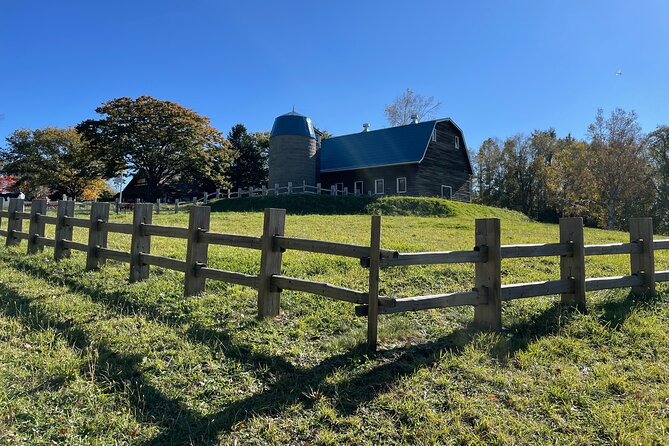
The Historical Village of Hokkaido, also called Kaitaku-no-Mura, is an open-air museum built around the story of Hokkaido’s development in the late 19th and early 20th centuries. Instead of placing isolated objects in display cases, it lays out a full town where you walk from building to building.
That arrangement matters. A government office tells one part of the story, while a shop, school, or farmhouse shows how those policies affected ordinary life. The result feels closer to a set you can walk through than a conventional museum, though the subject is serious and the buildings are meant to preserve a difficult period as well as an ambitious one.
You will see a town shaped by the Meiji government’s effort to develop Hokkaido as Japan’s northern frontier. The buildings reflect work, administration, education, trade, and farming. Together, they show that settlement was not just a matter of putting up houses. It required roads, public services, schools, commercial spaces, and systems for moving people and supplies.
The setting is often described as a Japanese Western, but the comparison is most useful as a quick visual clue. You are not entering an American frontier town. You are seeing Japanese construction, Japanese institutions, and Hokkaido’s particular climate and settlement story arranged in a frontier-style town plan.
Our other Sapporo reviews may also help you decide


What the 50-plus buildings reveal
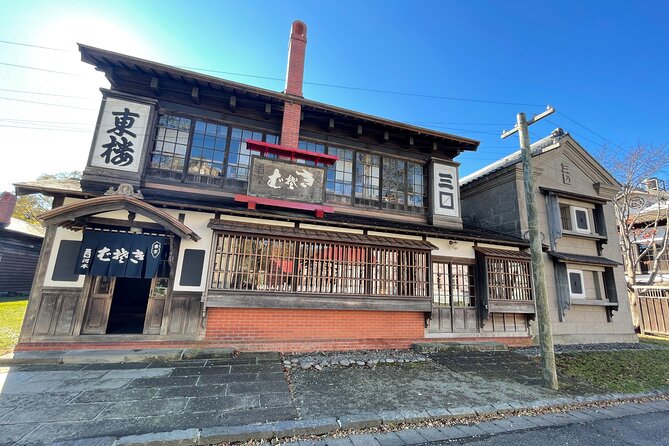
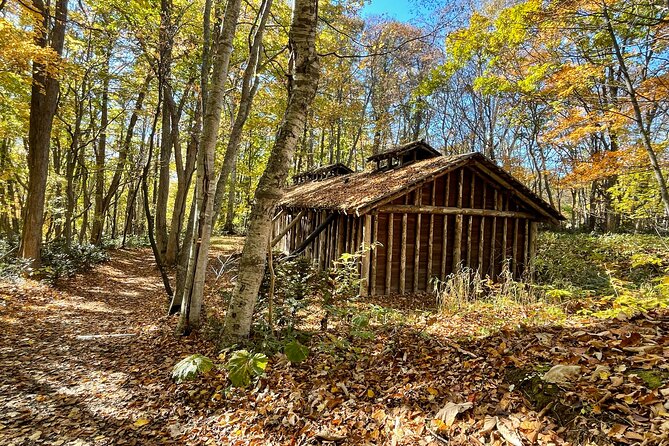
The strongest feature is the range of buildings. Government offices give you a sense of official control and planning. Merchant shops point to trade and local business. Schools show the role of education in the new settlement program. Farmhouses and log huts bring the story down to food, shelter, weather, and work.
Because the buildings are relocated or reconstructed, you should treat the village as a carefully made historical presentation rather than an untouched settlement. That is not a weakness by itself. It lets the museum protect examples from across Hokkaido and place them together in a setting that is easy to explore.
I find this useful for first-time visitors because the village gives you a broad introduction without requiring a long journey around the island. You can compare different building types in one visit and see how public and private life fit together.
The buildings also offer a practical way to understand social change. A government office can suggest how authority reached the new settlements. A shop shows the need for goods and services. A farmhouse reveals the demands placed on people working the land. The guide’s job is important here, since the buildings alone cannot explain every connection.
The guide’s role in making the visit meaningful
This is not simply an admission ticket with a stroll attached. The guided element is the main reason to choose this experience instead of visiting independently. Your guide provides the stories behind Hokkaido’s development and helps connect one building to the next.
Ask questions as you walk. A private tour gives you that freedom, and it is especially useful at a site with several layers of history. You can ask about the Meiji government, the settlers’ hardships, the function of a particular building, or the Ainu experience during this period.
The tour description does not provide a guide’s name, so you should not expect to book a particular named guide. What you can count on is a guide-led visit focused on Hokkaido’s frontier days, with the chance to shape the conversation around your interests.
For history enthusiasts, that personal attention may be the best part of the booking. For someone who prefers to wander silently and read every sign alone, the guided format may feel more structured. The private setup helps soften that concern because your group is not tied to a large public tour.
A difficult story, not just a charming old town
The museum’s setting can look inviting, but the subject is not only nostalgic. Hokkaido’s development brought major changes under the Meiji government, and those changes affected the Ainu people. Including Ainu experiences makes the visit more responsible and more useful than a simple celebration of settlement.
You should pay close attention when the guide discusses this part of the story. Frontier development often gets reduced to a tale of hard work and progress. Here, the stated focus includes both the struggles and successes of early settlers and the consequences for the Ainu.
The available details do not specify which individual Ainu sites, objects, or stories you will see. I would not book this expecting a separate, detailed Ainu museum visit. Instead, think of Ainu history as an important part of the guided explanation of this period.
That balance is valuable. You can appreciate the effort involved in building communities in Hokkaido while also recognizing that development changed existing lives and cultures. A good question for your guide is how the village presents those two sides together.
The horse-drawn railway and the feel of movement
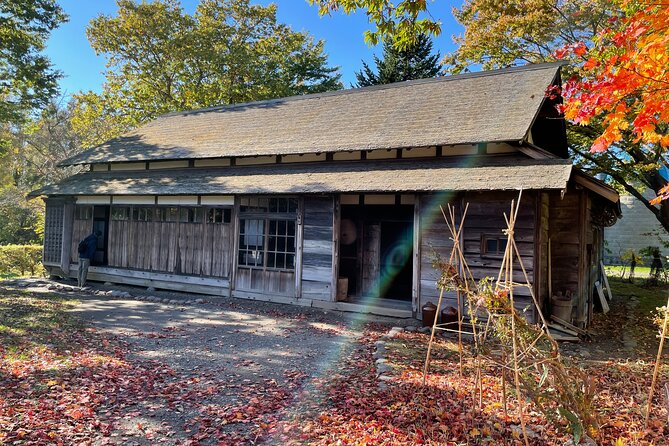
The horse-drawn railway is one of the most memorable details in the village. It shows that transportation was part of the development story from the start. Roads and buildings are easy to notice, but a railway suggests the wider system needed to connect settlements and move goods.
You may not want to think of this feature as a guaranteed ride unless your booking details say so. The tour information identifies the railway as part of the village, but it does not promise a scheduled journey or operating hours. Its presence still adds an important sense of how the town functioned.
For children and visitors who tire of formal historical displays, the railway gives the site a clear visual hook. It also helps explain why the village includes more than homes and official buildings. A developing community needs links between farms, shops, offices, and transport points.
You can also read our reviews of more historical tours in Sapporo




Why two hours can work, and where it may fall short
The planned duration is about two hours. That is enough for a guided orientation through the main areas, with time to hear the central story and see several building types. It also fits neatly into a day based in Sapporo.
The tradeoff is coverage. The grounds are described as expansive, and more than 50 buildings create plenty to examine. If you stop to read every detail or want to enter many structures, two hours may feel short.
I would use this tour as a focused introduction. Let the guide explain the broad story first, then note which buildings deserve a slower second look. If you have extra time and the admission arrangements allow it, you can explore further after the guided portion, but that additional time is not included in the stated two-hour duration.
The private format makes the short schedule more practical. A small group does not have to wait for a large party, and you can spend more time on the subjects that matter to you. Still, do not expect a full-day museum visit compressed into two hours.
Meeting options and getting there
You can arrange to meet at Sapporo Station or directly at the Historical Village. That flexibility is helpful if you are already moving around central Sapporo or prefer to go straight to the site.
Transportation to the meeting point is not included. You need to plan that part yourself, and the experience is near public transportation. The practical advantage is that you are not paying for a bundled transfer you may not need. The practical disadvantage is that the $99.64 price does not cover your ride from the station or hotel.
The mobile ticket and booking confirmation make the meeting process easier, but you should still check the exact meeting instructions after booking. If you choose the station option, allow time to find the guide. If you choose the site, make sure you know which entrance or meeting area has been designated.
A flexible start point is particularly useful for a private activity. You can fit the visit around another Sapporo plan rather than spending part of the day on a fixed group departure. The supplied information does not give a specific start schedule, so confirm the available time when you reserve.
Is $99.64 a fair price?
At $99.64 per person, this is not the cheapest way to see the museum. The value depends heavily on group size and on how much you want a guide.
For one person, the price may feel high for a two-hour museum visit, especially since transportation is extra. For two or more people, the private format becomes easier to defend because you are paying for personal attention, flexible meeting arrangements, and a guided interpretation rather than admission alone.
The admission ticket is included, so you do not need to buy that separately. You are also getting a guide’s explanation of Hokkaido’s frontier history and Ainu experiences, which can make the site much easier to understand than a self-guided walk.
Group discounts may improve the value, though the available details do not state the discount amount. Check the final price for your party before booking. If your main goal is simply to photograph old buildings, an independent visit may suit your budget better. If you want context and the ability to ask questions, this private booking has a stronger case.
Who will enjoy this experience most?
I would recommend it first to people who enjoy social history, historic buildings, and cultural heritage. You do not need to be an expert. The guide-led format gives you the basic framework, then lets you focus on the details that catch your interest.
It also suits families and mixed-interest groups. The horse-drawn railway, old shops, and town streets offer visual variety, while the guide can explain the harder historical themes in clear terms. The private setup means you can pause for questions without worrying about holding up a large party.
It may be less suitable if you want modern entertainment, a long ride, or a tightly packed list of Sapporo attractions. The experience is centered on walking, buildings, and explanation. It is also not a transportation tour, since getting to the meeting point is your responsibility.
Most people can participate, and service animals are allowed. The information does not provide detailed mobility notes for every path or building, so contact the provider if you need specific access information before booking.
Cancellation and booking points to remember
Confirmation is provided at the time of booking, and the ticket is available by mobile device. Free cancellation applies when you cancel at least 24 hours before the experience start time.
If you cancel less than 24 hours before the start, you will not receive a refund. Changes made inside that 24-hour window are not accepted, and the cut-off follows local time in Japan.
Those terms are reasonable for a scheduled private activity, but I would check your Sapporo plans before committing. The provider is DeepExperience, and the activity is private, so only your group participates.
Should you book the Historical Village tour?
Book it if you want Hokkaido’s development explained through real places, not just dates and names. The combination of relocated and reconstructed Meiji-era buildings, a horse-drawn railway, private guiding, and attention to Ainu experiences gives you a useful two-hour introduction to the island’s frontier story.
Think twice if you are traveling alone on a tight budget or want enough time to explore every building. At $99.64 per person, the cost makes the most sense for a small group that values a private guide and flexible meeting point.
My practical choice would be to book this as a focused Sapporo history outing, then allow extra time only if your schedule permits. It is best for understanding the village, not for rushing through it.
FAQ
Where does this experience take place?
The tour takes place at the Historical Village of Hokkaido, also called Kaitaku-no-Mura, in Sapporo, Japan.
How long does the tour last?
The guided experience lasts approximately two hours.
Is admission included?
Yes. The admission ticket to the Historical Village of Hokkaido is included.
Is transportation included?
No. Transportation to the meeting point is not included.
Where can I meet the guide?
Flexible meeting options are available at Sapporo Station or directly at the Historical Village of Hokkaido.
Is this a private tour?
Yes. Only your group participates in the activity.
Can I use a mobile ticket?
Yes. A mobile ticket is available, and confirmation is provided at the time of booking.
What is the cancellation policy?
You can cancel for a full refund up to 24 hours before the experience start time. Cancellations or changes made less than 24 hours before the start are not accepted for a refund.
More Historical Tours in Sapporo
More Tour Reviews in Sapporo


More Sapporo City Tours in Sapporo

Other Sapporo tours worth your shortlist





Sapporo City Tours, side by side.
 ★ 4.7Sapporo TV Tower Admission TicketFrom $621 reviews
 ★ 4.9Sapporo Walking TourFrom $5817 reviews
 ★ 5.01 Day Tour to Hill of the Buddha, Sapporo and SakeFrom $165.495 reviews
 ★ 4.5Sapporo TV TowerFrom $6.505 reviews
The lists this tour appears in