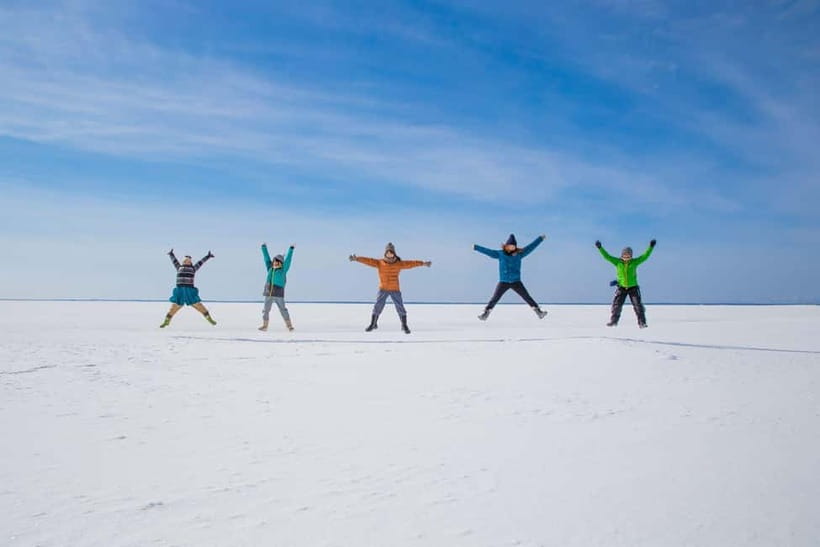
The remarkable thing here is the Hyōheisen, a flat sheet of sea ice that makes the line between ocean and sky almost disappear. From the narrow Notsuke Peninsula, you look across open white and blue with very little to interrupt the view. It is a rare winter sight, created when Notsuke Bay freezes from January to mid-March.
In This Article
- Key points to know before you go
- Why Hyōheisen feels unlike an ordinary snow walk
- Starting at the Notsuke Peninsula Nature Center
- The one-hour Mini Ice Horizon Walk
- The Todowara route and its 3-kilometer walk
- Photography on the frozen bay
- What to wear for an exposed sea-ice walk
- Why you should not walk onto the ice alone
- Is $32 good value for one hour?
- Who will enjoy this most
- A practical plan for your visit
- Should you book the Hyōheisen walk?
- FAQ
- Where does the Frozen Sea Walking Adventure begin?
- How long does the activity last?
- How much does the experience cost?
- Is an English-speaking guide available?
- Are snowshoes included?
- Is insurance included?
- What should I wear?
- Can I walk on the ice by myself?
- Can I cancel or pay later?
I like two things right away: the walk is short enough to fit into a Hokkaido road trip, and the guide adds safety and useful context to a place you should never explore alone. The small group, limited to eight people, also gives you room for photos and questions.
The main caution is the cold. Wind off the sea can be severe, and the ice is not a public footpath. You need serious winter clothing, and you must stay with the guide rather than testing the ice on your own.
Key points to know before you go
- The frozen sea is the star: Hyōheisen creates a rare, almost abstract view of ice, sky, and horizon.
- The one-hour mini walk is easy to fit in: It begins and ends at the Notsuke Peninsula Nature Center.
- Snowshoes and insurance are included: That makes the $32 price more useful than a simple photo stop.
- The group stays small: A maximum of eight people keeps the outing personal and easier to manage.
- Todowara adds a longer option: The winter route covers 3 kilometers and reaches the dead Sakhalin fir trees of Todowara.
- Dress for exposure, not just snow: A heavy down jacket, thermal layers, gloves, hat, scarf, and winter boots are essential.
Why Hyōheisen feels unlike an ordinary snow walk
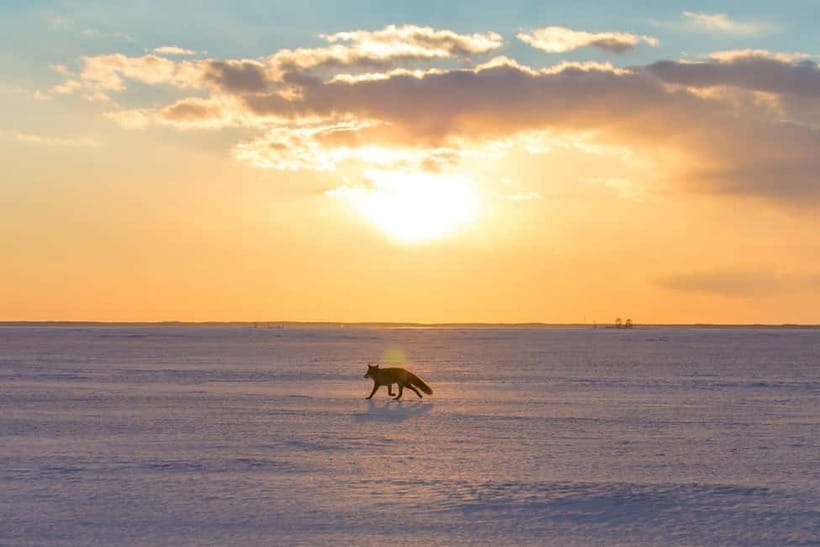
Notsuke Peninsula is a long, narrow sand spit reaching into eastern Hokkaido. Its shape leaves you with broad, unobstructed views. When the bay freezes, the result is not a forest trail or a mountain lookout. It is a wide, level sheet of ice that can make the sea feel like a continuation of the sky.
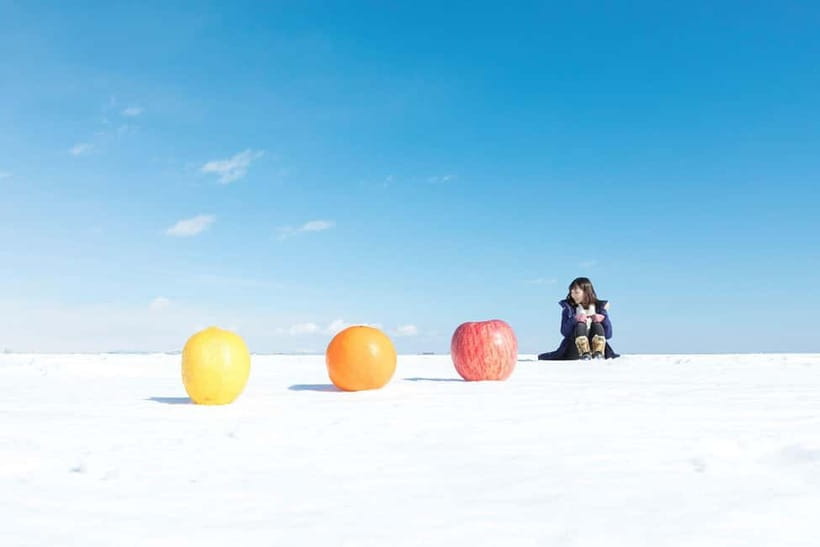
That visual trick is the reason to come. The horizon becomes hard to read, and photographs can look almost staged even though the setting is entirely natural. The experience is especially appealing if you have already seen Hokkaido’s forests and powder snow and want a different side of winter.
The ice forms during the harshest part of the season, generally from January through mid-March. Exact conditions depend on weather and ice safety, so you should think of the Hyōheisen as a seasonal event rather than a guaranteed permanent attraction.
I like that the experience focuses on the place itself. There is no long list of unrelated stops. You walk onto the frozen bay, pause for views, take photos, and learn how this unusual setting forms. For a short outing, that clear purpose works well.
You can also read our reviews of more walking tours in Hokkaido

Starting at the Notsuke Peninsula Nature Center
Your meeting point is the Notsuke Peninsula Nature Center, which also serves as the start and finish for the walk. This makes the logistics simple once you arrive. You do not need to meet a guide in a distant town or arrange a second transfer during the activity.
The center is also useful for a meal or a warm drink, although winter hours can change. The restaurant generally operates from 10:00 a.m. to 3:00 p.m. in February, with final orders at 2:30 p.m., and irregular closures are expected. The listed regular information also notes Tuesday closures, so check the current schedule before planning lunch around it.
A shop and vending machines provide drinks and other items. Still, I would not count on the center as your only food stop. Dining facilities in remote winter areas can have limited hours, and the walk itself is the reason to visit, not a full-day base with a wide range of services.
The closest airport is Nemuro Nakashibetsu Airport. From there, you need a taxi or rental car to reach the peninsula. Nearby places to stay include Odaitō Onsen, Shibetsu, and Nakashibetsu, with hotels and traditional inns available. Because public transport details are not provided for this activity, a car or prearranged taxi is the practical choice.
The one-hour Mini Ice Horizon Walk
The mini plan is the simplest way to experience Hyōheisen. You meet at the Nature Center, receive your equipment and safety guidance, then walk out toward the frozen bay with the group. The activity lasts one hour and returns to the same starting point.
This short format suits you if the Notsuke Peninsula is one stop on a larger eastern Hokkaido itinerary. It also works well if you are unsure how much cold you can handle. One hour outside on an exposed frozen bay can feel much longer than one hour on a sheltered snowy path.
Snowshoes are included, as is insurance. The snowshoes help you move across winter conditions, but they do not remove the need for care. Sea ice varies in thickness, and the guide decides where the group can safely walk. Do not wander ahead for a better photograph or step away from the marked route.
The English-speaking guide is included with the mini-walk plan. The guide explains how the bay freezes, points out features of the local ecosystem, and helps you understand why the view looks so unusual. This turns a quick walk into more than a scenic photo stop.
The small group limit of eight matters here. On a broad sheet of ice, a large crowd would dilute the quiet feeling and make photo timing awkward. With fewer people, you have a better chance to ask questions, hear instructions, and take pictures without constantly placing strangers in the frame.
The Todowara route and its 3-kilometer walk
A longer option leads toward Todowara, an area of dead Sakhalin fir trees that becomes accessible in winter. The trees give the outing a different mood from the open Hyōheisen. Instead of only seeing a broad frozen sea, you also encounter stark remains of a former forest against the winter setting.
The Todowara Ice Horizon course covers 3 kilometers. That distance is not extreme for a regular walker, but snow, wind, and cold can make it demanding. If you are bringing children, take the distance seriously. A child who is comfortable on a short snowy walk may not enjoy several kilometers in exposed winter conditions.
The supplied details specify that an English-speaking guide is included with the mini-walk plan only. If you are choosing the Todowara course, confirm the guide and language arrangements before booking. The activity information lists English as the tour language, but the inclusion note makes the mini plan distinction important.
I would choose Todowara if the dead trees appeal to you and you want a longer outing. I would choose the mini walk if the frozen horizon is your main goal, especially in difficult weather or on a tight schedule.
Photography on the frozen bay
This is an excellent place for wide panoramic photos. The open ice provides clean lines, strong contrast, and a huge amount of sky. You can capture the scale with a phone, but a camera with a wide lens will give you more control over the horizon and the empty space.
The guides can also help with trick photography. These playful images use perspective to make people appear unusually large, small, or positioned in surprising ways. Bring your own smartphone or camera, and consider packing a few simple props if you want to experiment.
Cold weather creates two problems for electronics. Batteries lose power quickly, and handling a phone with gloves is awkward. Hand warmers are recommended not only for you but also for protecting electronic devices. Keep your camera or phone accessible enough to use, but protected from wind and freezing temperatures.
Do not let the photo session distract you from the safety rules. The best image is not worth stepping onto uncertain ice. Let the guide choose the safe area, then work within it. The flat setting gives you plenty of photographic options without risky movement.


What to wear for an exposed sea-ice walk
The clothing advice here is not an optional suggestion. You should dress for strong wind and prolonged exposure, not simply for a snowy city stroll.
Wear a heavy down jacket over sweaters or a fleece layer. Thermal base layers will help retain warmth without making your clothing too bulky. Thick fleece-lined pants or waterproof outer pants are useful because you may kneel or sit briefly for photos.
Your footwear should be proper winter boots, preferably high-top snow boots. Hiking gaiters are also recommended. Thick socks matter, but boots that are too tight can reduce insulation, so leave enough room for warm socks without compressing your feet.
Bring a knit hat, scarf, and gloves. Hand warmers are worth carrying. A scarf or neck covering is especially useful when wind comes across the open ice. The basic bring list is warm clothing, a hat, and gloves, but the detailed advice makes clear that you should prepare far beyond those three items.
If your wardrobe is mostly designed for city sightseeing, reconsider this outing. The sea is unforgiving in bad weather. You may find the cold manageable on a calm day, but conditions can change quickly, and there is little shelter once you leave the Nature Center.
Why you should not walk onto the ice alone
The ice can look smooth, solid, and inviting. That appearance is misleading. Because it forms on the sea, thickness varies, and safe walking areas depend on current conditions.
The guide is not just there to point out scenery. Following the guide is the central safety feature of the outing. Stay with the group, follow the route, and do not attempt an independent walk before or after the scheduled activity.
Insurance is included, which adds some reassurance, but it does not make careless behavior safe. The sensible approach is simple: wear the right clothing, listen to instructions, and treat the frozen bay as a natural surface with risks rather than as a paved attraction.
Is $32 good value for one hour?
At $32 per person, this is not the cheapest way to take a winter photograph. You can often see snow and ice at no cost elsewhere in Hokkaido. The value comes from access, equipment, guidance, and the chance to experience a rare frozen bay in a controlled way.
Snowshoe rental and insurance are included. You also receive a guided walk in a small group, with an English-speaking guide on the mini plan. That combination makes the price reasonable for you if the Hyōheisen is a main reason for driving to Notsuke Peninsula.
The short duration keeps the cost and time commitment manageable, but it also limits what the tour can offer. This is not a full-day nature program with extensive wildlife viewing or several major stops. You are paying for a focused winter encounter.
The price makes the most sense as part of a wider eastern Hokkaido trip. If you are already staying near Shibetsu, Nakashibetsu, or Odaitō Onsen, the outing can add something distinctive to your route. If reaching the peninsula requires a major detour solely for a one-hour walk, you should weigh the drive against your interest in the frozen sea.
Who will enjoy this most
I would recommend the mini walk to photographers, winter scenery fans, and people who want a memorable stop without committing to a long expedition. It is also a good fit for you if you prefer a guide in an exposed environment and want explanations along with your photos.
The small group should appeal to anyone who dislikes crowded tours. The one-hour schedule works for couples, solo visitors, and families who can manage serious cold. Families should think carefully about the weather and, for Todowara, the full 3-kilometer distance.
This is less suitable if you dislike cold, have limited winter clothing, or want a flexible stroll where you can set your own route. It is also a poor match for anyone who expects to walk onto the ice independently. The activity depends on following safety instructions.
Free cancellation is available up to 24 hours before the start time, and you can reserve now and pay later. Those terms help if your Hokkaido route depends on weather, but they do not guarantee that conditions will be ideal on the day.
A practical plan for your visit
Build extra time around the one-hour activity. The scheduled walk is short, but you may need time to reach the peninsula, change into winter gear, use the Nature Center, and warm up afterward. Starting times vary, so check availability before arranging the rest of your day.
If you are driving from Nemuro Nakashibetsu Airport or a nearby town, allow for winter road conditions. The exact driving time is not provided, so check a current map and local weather rather than relying on a summer route estimate.
Plan food carefully. The Nature Center restaurant may operate during the day, with February hours listed as 10:00 a.m. to 3:00 p.m. and final orders at 2:30 p.m., but irregular closures are expected. Carry water and a small snack if you will be out for several hours, and do not assume Tuesday service.
Take photos before your fingers become numb. Set up your camera settings in advance, use hand warmers, and keep spare batteries protected from the cold. You will enjoy the view more if you are not trying to operate every camera control with frozen hands.
Should you book the Hyōheisen walk?
Book it if you want a rare, highly focused winter sight and you are prepared for genuine cold. The frozen bay, broad views, guided access, included snowshoes, and small group give this short activity a clear purpose and fair value at $32.
Choose the mini walk if you want the easiest version, have limited time, or mainly want the ice horizon and photography. Consider Todowara if you are ready for a 3-kilometer walk and want the added sight of the dead Sakhalin fir trees.
Skip it if you lack proper winter gear, dislike exposed weather, or are hoping for a casual unsupervised walk. Notsuke Peninsula rewards preparation. Arrive dressed for the sea, stay with the guide, and you will have a much better chance of enjoying one of Hokkaido’s most unusual winter views.
FAQ
Where does the Frozen Sea Walking Adventure begin?
The activity begins at the Notsuke Peninsula Nature Center, written in Japanese as 野付半島ネイチャーセンター. The walk also returns to the Nature Center.
How long does the activity last?
The mini walk lasts one hour. The Todowara Ice Horizon course covers 3 kilometers, so allow for a longer physical outing if you select that route.
How much does the experience cost?
The listed price is $32 per person.
Is an English-speaking guide available?
An English-speaking guide is included with the mini-walk plan. The activity information also lists English as the tour language, so confirm the language arrangement if you choose the Todowara course.
Are snowshoes included?
Yes. Snowshoe rental is included.
Is insurance included?
Yes. Insurance is included in the activity.
What should I wear?
Wear warm clothing, a hat, and gloves. More detailed advice calls for a heavy down jacket, thermal base layers, thick fleece-lined pants, winter boots, thick socks, a scarf, and hand warmers. High-top snow boots or hiking gaiters are recommended.
Can I walk on the ice by myself?
No. You should not attempt to walk on the Ice Horizon independently because sea ice can vary in thickness. Stay with the guide and follow the safety instructions.
Can I cancel or pay later?
You can cancel up to 24 hours in advance for a full refund. You can also reserve now and pay later.
More Walking Tours in Hokkaido
More Tour Reviews in Hokkaido
Other Hokkaido tours worth your shortlist



Walking Tours, side by side.
 ★ 4.9The Indigenous Ainu People & Jozankei walking tourFrom $17025 reviews
 ★ 4.9Sapporo Walking TourFrom $5817 reviews
 ★ 4.9Sapporo Highlights: Golden Route Morning Guided Walking TourFrom $3616 reviews
 ★ 4.5Sapporo Highlights: Golden Route Morning Walking TourFrom $37.2314 reviews
The lists this tour appears in