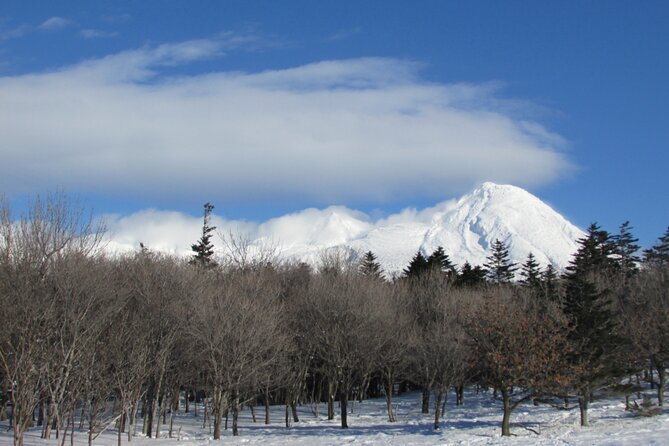
Shiretoko’s winter forest feels most special when you leave the marked route and follow paths first made by wild animals. This 3.5-hour snowshoe hike heads toward the frozen Tears of Man waterfall, with chances to spot Ezo Sika Deer, Ezo Red Foxes, and their tracks in fresh snow.
In This Article
- Key points at a glance
- Why this Shiretoko winter walk feels different
- Starting at Utoro-Shiretoku roadside rest area
- Following routes made by wild animals
- Reaching the frozen Tears of Man waterfall
- Watching the Okhotsk Sea turn to ice
- What snowshoes add to the outing
- Wildlife watching without false promises
- Fitness, age, and weather limits
- How the three and a half hours are best spent
- Who will get the most from this tour
- Is $55.52 a fair price?
- Should you book the Shiretoko snowshoe hike?
- FAQ
- Where does the snowshoe tour start?
- Where does the activity end?
- Is pickup available?
- How long does the tour last?
- What age can join the tour?
- How many people can join?
- What happens if the weather is poor?
- Can I cancel for a full refund?
I like the small maximum group of eight, which suits a quiet wilderness outing, and I like the chance to see the Sea of Okhotsk covered in winter ice beneath the snow-covered Shiretoko Mountains. The main consideration is physical effort: you need moderate fitness, and poor weather can force a date change or cancellation.
Key points at a glance
- Animal-made routes: Leave ordinary paths behind and follow tracks through Shiretoko’s primeval forest.
- Frozen Tears of Man: Reach a winter waterfall that freezes into a striking natural feature.
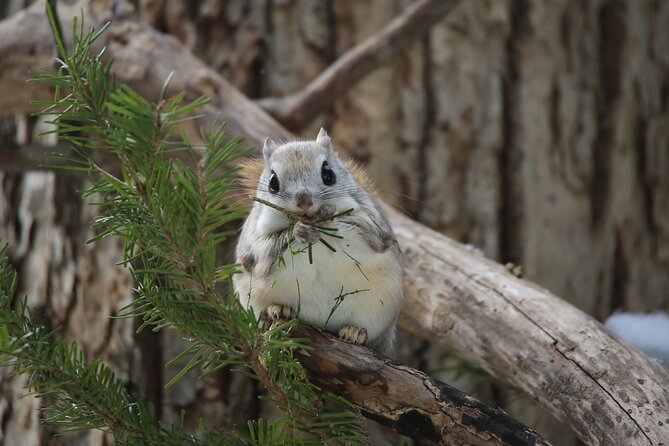
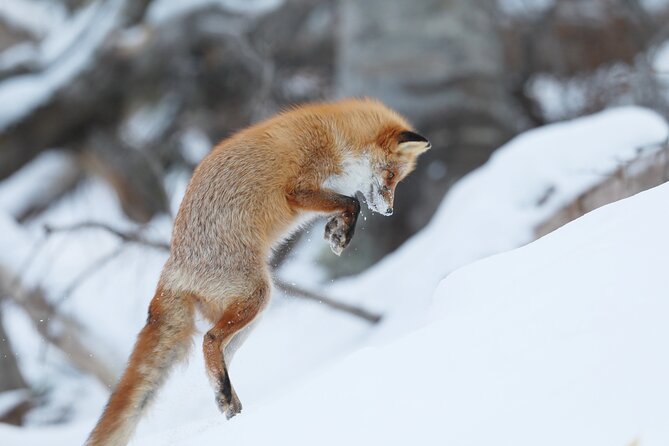
- Wildlife watching: Keep your eyes open for Ezo Sika Deer, Ezo Red Foxes, and footprints pressed into the snow.
- Sea ice scenery: When ice reaches the coast, the Okhotsk Sea becomes a broad field of white and blue.
- Small groups: No more than eight people join the activity, making the walk easier to manage.
- Simple logistics: Pickup is offered, the tour starts and ends at the Utoro-Shiretoku roadside rest area, and cancellation is free up to 24 hours before departure.
Why this Shiretoko winter walk feels different
Many winter outings keep you on prepared trails. This one focuses on the less formal side of Shiretoko, where animal routes lead through the forest and snow gives you clues about what passed by earlier.
That difference matters. You are not simply walking through a pretty stand of trees. You are watching for movement, reading footprints, and noticing how the forest changes once snow covers the usual routes. The guide’s job is to help you understand those signs and keep the group moving safely through uneven winter ground.
The experience is also shaped by the season. If enough snow has fallen, you use snowshoes that let you walk across the snow rather than sink into it with every step. If snow conditions do not support snowshoes, the exact walking method may differ, so I would treat the equipment as dependent on the weather rather than as an absolute promise.
The tour is run by Picchio Shiretoko, and the group size is limited to eight people. That is a useful limit for a forest walk. A smaller group is less likely to feel noisy or crowded, and it gives the guide a better chance to point out tracks and answer questions.
Our other Hokkaido reviews may also help you decide


Starting at Utoro-Shiretoku roadside rest area
The meeting point is Roadside Rest Area Utoro-Shiretoku at 186-8 Utoronishi, Shari, Shari District, Hokkaido 099-4354. The activity finishes back at this same point, so you do not need to arrange a separate end-of-tour transfer.
Pickup is offered, and the meeting point is near public transportation. Since pickup may involve collecting people from different nearby locations, be ready about 10 minutes before your agreed pickup time. This is one of those small practical details that can make the start much calmer, especially in winter when standing outside in the cold is no fun.
The confirmation arrives within 48 hours of booking, subject to availability. I would avoid building a tightly timed connection around this outing until your booking is confirmed, since the activity also depends on suitable weather.
The tour lasts about three and a half hours. That is long enough to get beyond the roadside and into the forest, but short enough to fit into a day of exploring Utoro and the wider Shiretoko area.
Following routes made by wild animals
The central idea is simple: follow paths created by animals rather than staying only on regular walking routes. These narrow passages offer a closer look at how wildlife moves through the forest.
Fresh snow can make the forest easier to read. Footprints may appear on the surface, showing where an animal crossed, paused, or changed direction. You may also see tracks that are less obvious once wind or fresh snowfall covers them, so the experience depends partly on timing and conditions.
Wildlife is never guaranteed, but the area offers a good chance of seeing Ezo Sika Deer and Ezo Red Foxes. Even without a direct sighting, animal tracks add a real purpose to the walk. You are not just hoping for a photograph. You are looking for evidence that the forest is active around you.
I like this format for people who prefer observation to a fixed sightseeing checklist. There is no promise that an animal will appear at a particular minute. Instead, you spend time moving quietly and watching the ground, trees, and open spaces.
The guide will lead you along the route, but you should expect a natural environment rather than a polished attraction. Snow, changing visibility, and animal behavior all affect what you see. That uncertainty is part of the appeal, but it also means you should not book this solely for a guaranteed wildlife photograph.
Reaching the frozen Tears of Man waterfall
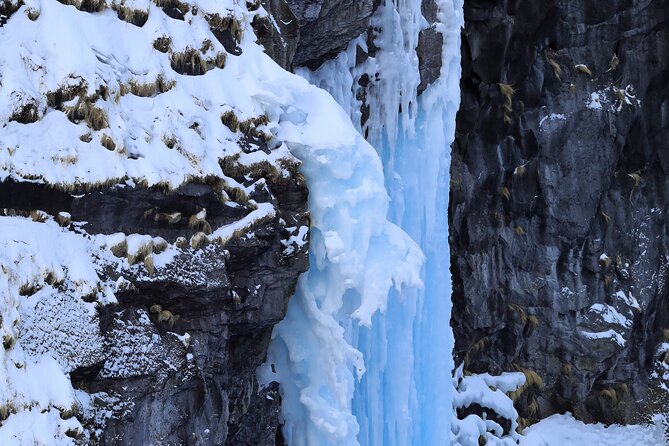
One of the main goals is a hidden waterfall known as Tears of Man. In winter, the falling water freezes, creating a very different sight from the warmer-season version of a waterfall.
The frozen formation gives the walk a clear destination. You are not simply wandering through the trees for three and a half hours, yet the route still leaves room for wildlife watching and changing views along the way.
The word hidden should be understood in a practical sense. This is not described as a major roadside stop with a large viewing area. Reaching it involves the forest walk, snow, and physical movement, so the waterfall is best suited to people comfortable with an active outdoor excursion.
The frozen water may look different depending on temperature and recent weather. The forest route can also feel more demanding if snow is deep or conditions are slippery. That is why the moderate fitness requirement deserves attention. You do not need to treat this as an extreme expedition, but you should be ready for several hours outdoors on winter ground.
Watching the Okhotsk Sea turn to ice
Shiretoko’s winter scenery extends beyond the forest. When sea ice reaches the coast, the Sea of Okhotsk can appear as a huge field of ice, set against the snow-covered Shiretoko Mountains.
This is one of the strongest reasons to choose a winter departure. The coastal ice creates a broad, open view that contrasts with the close, enclosed feeling of the forest. One moment you are looking for tracks beneath trees. Later, you may be looking across an icy sea toward silver-white mountains.
The exact sea ice display depends on the season and current conditions. It should be treated as a possible part of the winter setting, not a guaranteed sight on every date. Still, when the ice has arrived, it adds a powerful sense of place that a standard forest walk cannot provide.
For photographers, the contrast should be appealing: white snow, frozen water, dark forest, and mountain ridges. For everyone else, it provides a strong visual reward after the more attentive work of following animal paths.
You can also read our reviews of more hiking tours in Hokkaido


What snowshoes add to the outing
Snowshoes are used when there is enough snow. Their main benefit is practical: they spread your weight across a larger surface, allowing you to walk in places where ordinary footwear would sink.
That makes the route more flexible. Instead of staying on a compacted trail, the group can move across snowy ground and follow routes that would otherwise be difficult to reach. This is central to the tour’s off-route character.
Snowshoe walking is not entirely effortless. The equipment adds weight, and walking across soft or uneven snow requires more energy than strolling on pavement. If you have never used snowshoes, the first part may feel awkward. A moderate level of fitness is the sensible baseline.
Dress and prepare for a proper winter activity, although the supplied details do not specify rental equipment, clothing, or footwear. Ask Picchio Shiretoko what is included before booking if you need snowshoes or cold-weather gear supplied. Do not assume that the $55.52 price covers every item you might need.
The price is reasonable for a guided three-and-a-half-hour experience, particularly because it combines route finding, wildlife interpretation, a waterfall destination, and possible pickup. Its value depends on what you want from Hokkaido. If you only want easy viewpoints and minimal exertion, this is not the best use of your money. If you want access to a wilder setting with a small group, the cost is attractive.
Wildlife watching without false promises
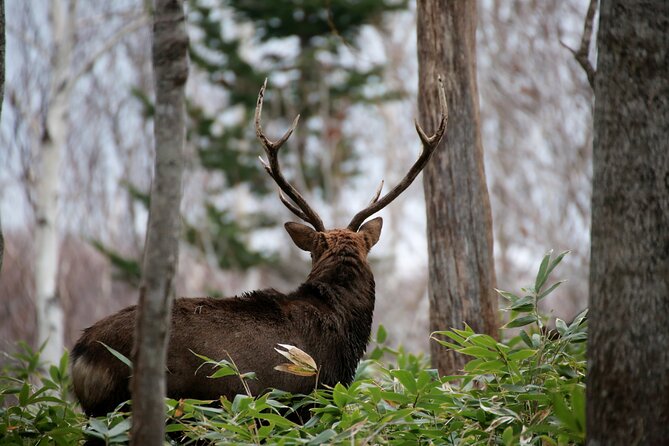
The tour has a high likelihood of wildlife encounters according to its description, with Ezo Sika Deer and Ezo Red Foxes named as common possibilities. That gives you a clear idea of what to watch for, but it does not guarantee close sightings.
Winter can help you notice animals in another way. Tracks are often easier to spot against snow than on a forest floor covered with leaves and vegetation. A line of prints may tell you that wildlife passed through even if the animal itself is long gone.
I would choose this outing if you enjoy patient observation. You may have to pause, scan the trees, and accept that a quiet stretch of forest can be the main event. If you need constant action, the pace may feel slow.
The maximum group of eight is important here. A smaller party is better suited to listening for movement and stopping to examine prints. It also gives the guide more control if the group needs to move carefully through snow.
Fitness, age, and weather limits
The minimum age is six, which makes the tour open to families with older children. That does not mean every six-year-old will find it easy. Snowshoeing and walking through a primeval forest for three and a half hours can be tiring, so parents should consider stamina, cold tolerance, and comfort with uneven ground.
The stated requirement is moderate physical fitness. You should be able to walk outdoors for several hours in winter conditions. If snow is deep, the effort may feel greater than the distance suggests.
Weather is a real factor in Shiretoko. If poor conditions make the activity unsafe or impractical, the operator may cancel it and offer another date or a full refund. Keep your schedule flexible if this experience is important to your trip.
Free cancellation is available when you cancel at least 24 hours before the start time. Cancellations made inside that window are not refunded, and late changes are not accepted. The cutoff follows local time, so check the clock in Hokkaido rather than relying on your home time zone.
How the three and a half hours are best spent
The outing begins at the Utoro-Shiretoku meeting point, with pickup available. From there, the guide leads the group into the primeval forest and explains how to follow animal-made routes.
The first part is likely to set the tone for the day: careful walking, attention to the snow, and an introduction to the forest paths. This is where you should settle into a slower pace and learn to look down for tracks as well as ahead for wildlife.
As the group continues, snowshoes may be used if conditions allow. The route takes you toward Tears of Man, the frozen waterfall that gives the walk a clear focal point.
Wildlife watching continues throughout rather than being confined to one scheduled stop. You may see Ezo Sika Deer or Ezo Red Foxes, or you may find their tracks instead. The return brings the group back to the original meeting point, keeping the transportation plan simple.
The exact order and timing can change with snow, weather, and animal activity. That flexibility is sensible for a wilderness tour. It also means you should not expect a minute-by-minute sightseeing schedule.
Who will get the most from this tour
I would recommend this experience to you if you want:
- A small-group winter activity in Shiretoko
- A chance to use snowshoes in a natural setting
- Wildlife watching based on tracks and forest signs
- A frozen waterfall reached on foot
- Possible views of Okhotsk Sea ice and the Shiretoko Mountains
- A guided outing that lasts half a day rather than a full day
It is less suitable if you want guaranteed animal sightings, an easy paved walk, or a warm indoor activity. It is also a poor fit if you have very limited time and cannot handle a possible weather-related change.
Families can consider it because children from age six may join, but the moderate fitness requirement still matters. Couples, photographers, and anyone with an interest in winter ecology may find the combination of forest, snow, ice, and wildlife especially rewarding.
Is $55.52 a fair price?
At $55.52 per person, this is a good-value half-day outing if the listed elements matter to you. You get about three and a half hours with a guide, access to less-used forest routes, a chance to reach a frozen waterfall, and possible wildlife sightings.
The value is not based on transport alone. Pickup is offered, but the main benefit is having someone lead you through winter terrain and help interpret what you see. That is difficult to arrange on your own, especially if you are unfamiliar with Shiretoko’s snow conditions.
The price feels less attractive if you view the tour as a guaranteed wildlife safari. No responsible nature outing can promise that an animal will appear, and the sea ice depends on the season. Book it for the quality of the setting and the guided walk, with wildlife and coastal ice as possible bonuses.
Should you book the Shiretoko snowshoe hike?
Book this tour if you want a close look at Shiretoko in winter and enjoy the idea of following animal routes rather than sticking to ordinary paths. The frozen Tears of Man waterfall, possible Ezo deer and fox sightings, and Okhotsk Sea ice give the outing several strong points.
I would book early enough to allow for confirmation and keep some flexibility around the date. Be ready before pickup, dress for serious winter conditions, and ask about equipment if you need snowshoes or clothing provided.
Skip it if you need a guaranteed itinerary, dislike cold-weather exercise, or want only a quick viewpoint stop. For an active visitor with moderate fitness, this is a reasonably priced way to see a quieter, more natural side of Shiretoko.
FAQ
Where does the snowshoe tour start?
The tour starts at Roadside Rest Area Utoro-Shiretoku, 186-8 Utoronishi, Shari, Shari District, Hokkaido 099-4354, Japan.
Where does the activity end?
The activity ends back at the same meeting point, Roadside Rest Area Utoro-Shiretoku.
Is pickup available?
Yes. Pickup is offered, and the meeting point is near public transportation.
How long does the tour last?
The experience lasts approximately 3 hours and 30 minutes.
What age can join the tour?
The minimum age is 6 years old.
How many people can join?
The tour has a maximum group size of 8 travelers.
What happens if the weather is poor?
Because the experience requires good weather, it may be canceled in poor conditions. You will be offered a different date or a full refund.
Can I cancel for a full refund?
Yes, if you cancel at least 24 hours before the experience start time. Cancellations made less than 24 hours before departure are not refunded.
More Tours in Hokkaido


More Tour Reviews in Hokkaido


More Snowshoe Tours in Hokkaido
Other Hokkaido tours worth your shortlist




Snowshoe Tours, side by side.
 ★ 5.0Snowshoeing and Onsen Adventures in a Winter Wonderland -Sapporo.From $224.0230 reviews
 ★ 5.0Snowshoe Hike Tour from Sapporo include hotel p/up & drop offFrom $308.7316 reviews
 ★ 5.0Snowshoe Adventures and Onsen Bliss Winter Escape in FuranoFrom $78.3812 reviews
 ★ 5.03 hours Snowshoe hike to “Furepe fall” and Wildlife WatchingFrom $44.309 reviews
The lists this tour appears in