Beneath the frozen surface of Lake Nukabira, you fish for wakasagi, small Japanese smelt, from inside a heated tent. Your guide supplies nearly everything, then cooks your catch as tempura. The setting is special: Daisetsuzan National Park surrounds the lake, and winter may reveal bubbles frozen under the ice.
In This Article
- Key points at a glance
- Fishing for wakasagi on frozen Lake Nukabira
- What happens inside the private tent
- From fishing hole to hot tempura
- Ice bubbles and the Daisetsuzan view
- Why the private format matters
- Is $150.28 a fair price?
- Staying warm at -20°C
- Who will enjoy this outing most
- Booking, confirmation, and cancellation details
- Should you book Lake Nukabira smelt fishing?
- FAQ
- Where does the Lake Nukabira smelt fishing tour begin?
- What time does the tour start?
- How long does the activity last?
- Is the tour private?
- What equipment is included?
- Is the fish included in the meal?
- What should I bring?
I like the private format, with only your group sharing one tent, and I like the simple reward at the end: fish you caught yourself, served hot with Tokachi sake and wine. The catch is the cold. This activity takes place in conditions that can reach -20°C, so ordinary winter clothes will not do.
Key points at a glance
- Fish inside a heated tent: A tent and stove give you shelter from Hokkaido’s severe winter cold.
- Catch your own tempura: Guides cook the wakasagi you catch, turning the activity into lunch as well as an outing.
- Private group setting: Only your party takes part, with one tent reserved for the group.
- Possible ice bubbles: When conditions are right, frozen gas beneath the lake ice creates a striking natural sight.
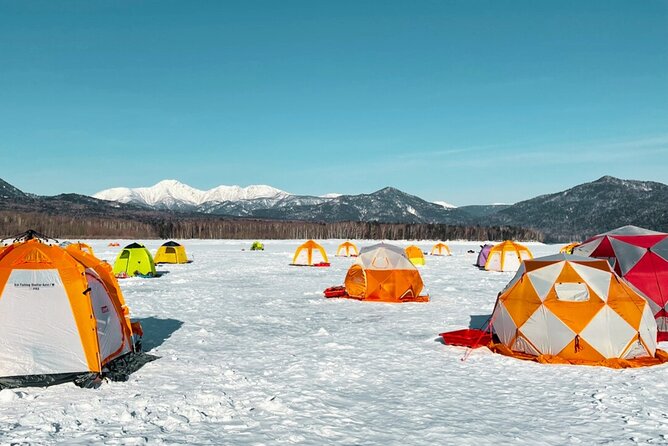
- Daisetsuzan views: The frozen lake offers wide views toward Daisetsuzan National Park and nearby Tausubetsu River Bridge.
- Bring full winter gear: Ski wear, snow boots, gloves, a hat, and warm layers are essential, not optional.
Fishing for wakasagi on frozen Lake Nukabira
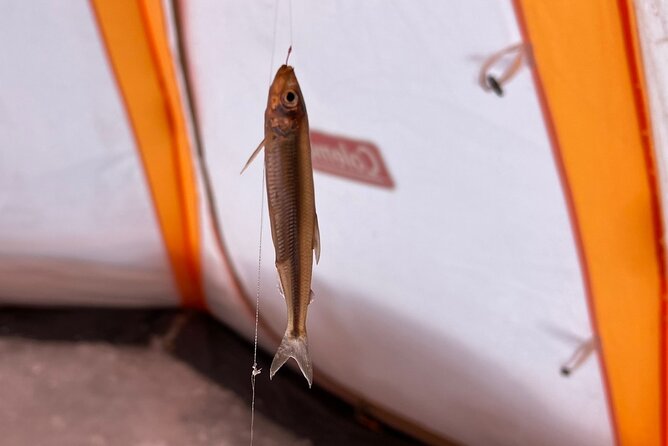
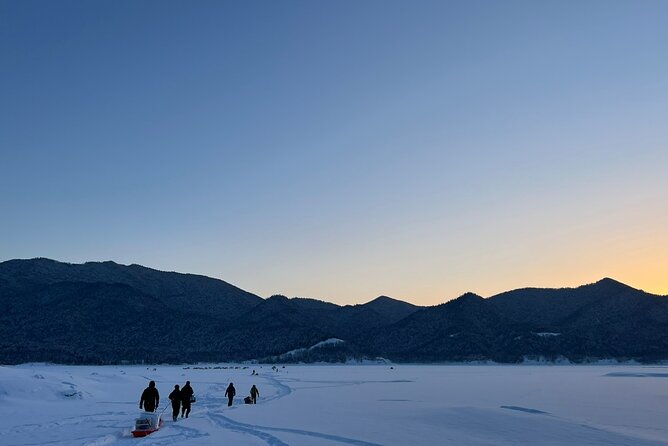
Lake Nukabira becomes a broad sheet of ice in winter, creating the setting for one of the area’s best-known cold-weather activities. You fish through a hole in the ice for wakasagi, a small fish prized for its delicate flavor and commonly eaten fried.
The appeal is not speed or spectacle. This is a quiet, hands-on activity. You wait for a bite, manage the fishing gear, and see what you can bring up from beneath the lake. The simple rhythm suits you if you enjoy outdoor activities that give you time to notice the weather, the silence, and the mountain views.
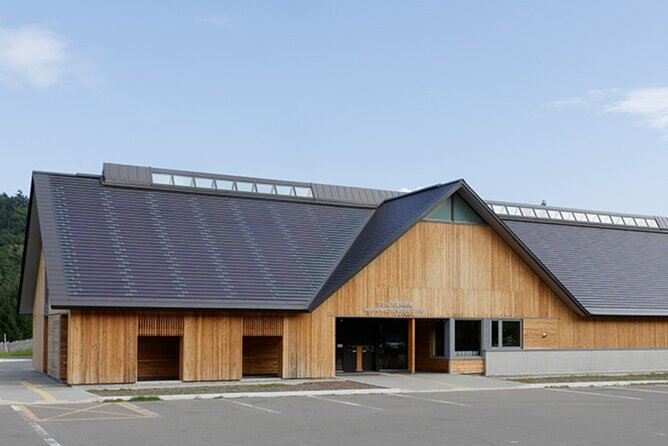
The outing lasts about four hours, long enough to feel like a proper winter activity without taking up an entire day. It begins at 8:45 am at the Higashitaisetsu Nature Centre, located at 48-2 Nukabiragensenkyō, Kamishihoro, Kato District, Hokkaido. The activity finishes at the same meeting point.
That fixed start and end point is useful when planning a day around the tour. You should still allow extra time for reaching the nature centre, since no transportation service is listed as part of the experience.
Our other Hokkaido reviews may also help you decide


What happens inside the private tent
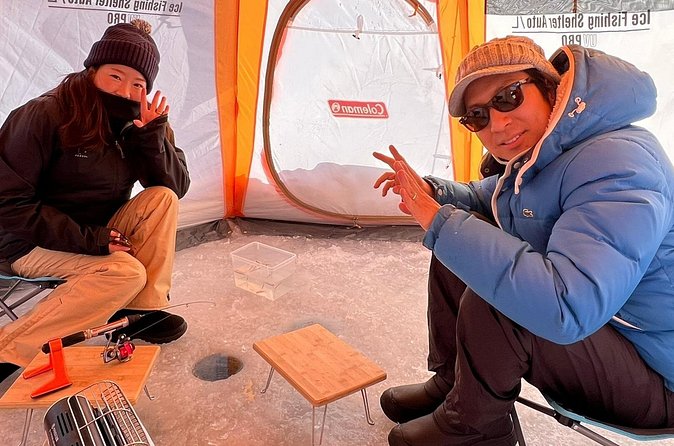
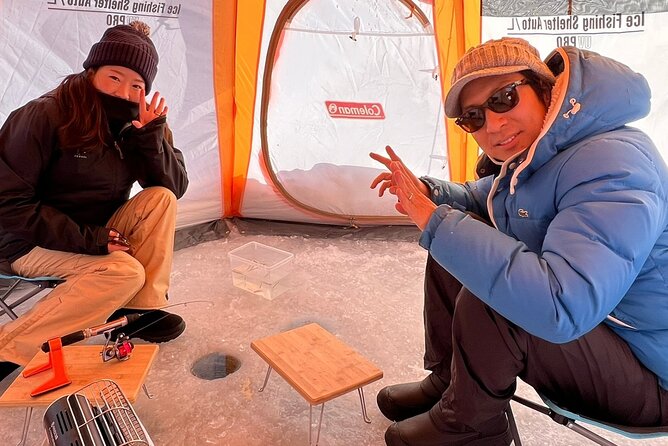
The private setup is one of the strongest features. Your group receives one tent, and the staff provide a stove, fishing rods, reels, traps, bait, and the other required equipment. You do not need to buy or transport specialized ice-fishing supplies.
The tent matters. Fishing on frozen water in Hokkaido is not the same as sitting beside a summer lake. The air may reach -20°C, and exposed fingers can become uncomfortable quickly. A stove gives you a warmer place to work and makes the outing more manageable, particularly if someone in your group is new to winter activities.
The tent does not mean you can ignore the cold. You still need thick, windproof clothing from head to toe. Bring ski wear or similar outer layers, snow boots, gloves, a hat, and other warm clothing. The information for this activity is clear about the conditions, and I would treat that warning seriously.
You should also expect practical rather than luxurious comfort. The tent is provided for warmth and shelter while you fish. It is not described as a heated lounge or a place with changing facilities, so arrive dressed and ready to spend time outdoors.
From fishing hole to hot tempura
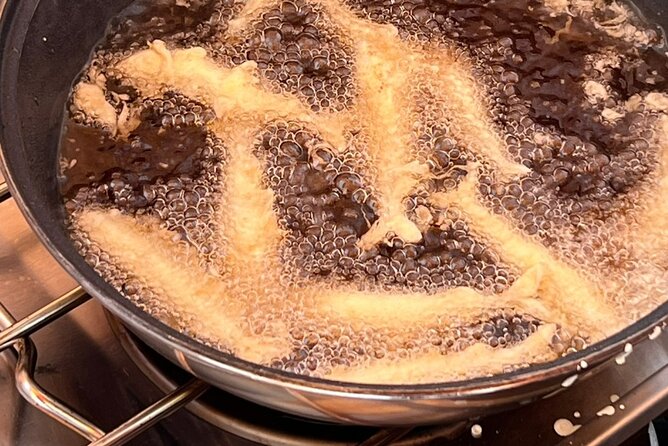
The most satisfying part of the outing comes after the waiting. The wakasagi you catch are cooked by the guides as tempura, so your own fishing becomes the basis for a hot meal.
That detail adds real value. You are not simply looking at a frozen lake while someone else prepares a standard snack. You take part in catching the fish, then eat the result. The meal connects the activity to Hokkaido’s winter environment in a direct, uncomplicated way.
The included drink fee also helps round out the experience. The activity description specifically refers to famous sake and wine from the Tokachi area, served with the tempura. The exact drink selection is not given, so you should not book this expecting a particular bottle or pairing. Still, a warm meal and regional drinks are a fitting finish after time on the ice.
Fish are not guaranteed in any fishing activity, and the supplied details do not promise a particular catch or amount of tempura. The value here comes from the complete outing, including equipment, shelter, preparation, drinks, and the chance to catch wakasagi yourself.
Ice bubbles and the Daisetsuzan view
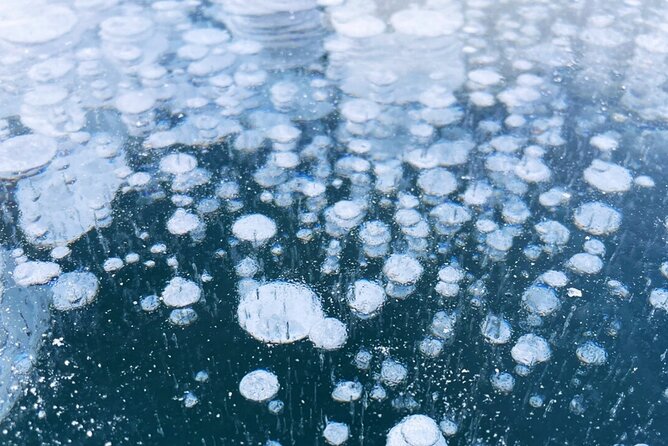
Winter can offer more than fishing. When Lake Nukabira is fully frozen, you may see ice bubbles, a natural effect caused by gas from the bottom of the lake freezing in the water and appearing beneath the surface.
This is a seasonal sight, not a guaranteed part of every departure. Weather, ice conditions, and visibility will affect what you can see. If the bubbles are present, they give you a reason to look closely at the ice instead of treating it as a plain white platform for fishing.
The wider setting adds another layer. Lake Nukabira sits beside Daisetsuzan National Park, and the activity includes panoramic views of the park. The nearby Tausubetsu River Bridge may also be visible. These sights are especially useful for anyone who wants a nature outing rather than a stand-alone fishing lesson.
Keep your expectations sensible. The focus remains on fishing, and the supplied details do not promise a dedicated sightseeing stop or a separate guided walk to the bridge. You may be able to see it from the activity area, depending on conditions and visibility.
Why the private format matters
A private tour is valuable here because cold-weather activities are easier when the pace fits your own group. Only your party participates, and one tent is provided for the group. You do not have to share the fishing space with unrelated people or adjust your time around a large crowd.
That can help families, couples, and small groups who want a quieter outing. It may also make the activity less intimidating for first-time ice fishers. The equipment is supplied, and staff handle the practical setup, so your attention can stay on learning the fishing method and enjoying the setting.
The private arrangement does not mean the activity is fully customized. There is one listed start time, 8:45 am, and the tour remains about four hours. No guide names are provided, and no special fishing technique or personal itinerary is described. You get privacy and support, but not a made-to-order expedition.
You can also read our reviews of more private tours in Hokkaido

Is $150.28 a fair price?
At $150.28 per person, this is not a bargain-priced casual fishing session. It can still offer fair value if you want a complete, private winter activity and would otherwise need to rent equipment, arrange shelter, organize cooking, and find drinks separately.
The price includes the guide fee, tent, fishing rods, reels, traps, bait, and other fishing equipment. It also includes tempura made from the fish caught by participants, drinks, accident insurance, and consumption tax. Those inclusions remove several small costs that can quickly add up in a remote winter setting.
The private format is the main factor in the value calculation. For a larger group, the cost buys exclusive use of the tent and guide attention for your party. For one or two people, the per-person price may feel high, especially if you are unsure how much fish you will catch.
I would book it for the complete package, not for the food alone. The draw is the combination of frozen Lake Nukabira, a heated tent, hands-on fishing, possible ice bubbles, mountain views, and a meal prepared from your catch. If you only want to sample tempura or take lake photographs, there are less expensive ways to spend a morning.
Staying warm at -20°C
Your clothing may determine how much you enjoy this tour. The required list includes windproof and thick top and bottom wear, ski wear, snow boots, gloves, a hat, and other warm clothing.
Use layers that let you adjust your comfort inside the tent. The outer layer should block wind and snow, while your boots should be suitable for frozen outdoor ground. Gloves matter because you will need to handle fishing equipment, but your hands will also be exposed to the cold when working near the fishing hole.
The activity provides the fishing equipment, not personal clothing. You should not assume that ordinary walking shoes, jeans, a light coat, or thin gloves will be enough. The operating conditions are specifically described as reaching -20°C, which is a serious warning for anyone unused to Hokkaido winters.
This is also a good reason to avoid overpacking the schedule on the same morning. The tour takes about four hours, and you will want time to dress properly before the 8:45 am start rather than rushing from another activity.
Who will enjoy this outing most
I would choose this tour if you want an outdoor Hokkaido activity with a clear local connection. It suits you if you like trying regional food, enjoy quiet nature settings, and do not mind spending several hours in severe winter conditions.
It is a strong match for:
- Couples looking for a private cold-weather activity
- Families whose members can handle the required temperatures
- Small groups wanting exclusive use of a tent
- Food-focused visitors who like catching and eating their own meal
- Nature lovers interested in Daisetsuzan views and possible ice bubbles
- First-time ice fishers who prefer supplied equipment and staff assistance
You should think twice if you dislike cold, want a highly active outing, or expect a guaranteed large catch. Fishing involves waiting, and the available information does not promise a specific number of fish. The tent makes the outing easier, but it does not turn winter into mild weather.
The activity is listed as suitable for most participants, but no detailed accessibility information is provided. If you have concerns about mobility, cold sensitivity, or managing the equipment, ask the provider before booking.
Booking, confirmation, and cancellation details
JTB Hokkaido provides the experience, and confirmation is sent within 48 hours of booking if space is available. Reservations cannot be confirmed on weekends and holidays because of holidays, so allow extra time if your travel dates include those periods.
The ticket is mobile, which means you can keep the booking on your phone. The meeting point is the Higashitaisetsu Nature Centre, and the tour returns there at the end.
The experience is non-refundable and cannot be changed for any reason after booking. That makes weather and scheduling important. If poor weather forces a cancellation, you are offered another date or a full refund. If the minimum number of participants is not met, you are offered another date or experience, or a full refund.
Those terms are stricter than many day tours. I would wait until your Hokkaido plans are firm before paying, while also remembering that weather-related cancellation is handled differently from a personal change of plans.
Should you book Lake Nukabira smelt fishing?
Book this tour if you want a private, well-equipped winter activity that combines fishing, scenery, and food. The heated tent and supplied gear make it far easier than arranging independent ice fishing, while the tempura gives the morning a satisfying purpose.
Skip it if you are not prepared for temperatures near -20°C, need flexible cancellation, or want guaranteed sightseeing and a guaranteed catch. For the right group, though, this is a distinctive way to experience Lake Nukabira: quiet ice, mountain views, possible ice bubbles, and wakasagi cooked soon after you catch them.
FAQ
Where does the Lake Nukabira smelt fishing tour begin?
It begins at Higashitaisetsu Nature Centre, 48-2 Nukabiragensenkyō, Kamishihoro, Kato District, Hokkaido 080-1403, Japan.
What time does the tour start?
The scheduled start time is 8:45 am.
How long does the activity last?
The activity lasts approximately four hours.
Is the tour private?
Yes. Only your group participates, and one tent is provided for the group.
What equipment is included?
The tour includes a tent, stove, fishing rod, reel, traps, bait, and other necessary fishing equipment.
Is the fish included in the meal?
Yes. Fish caught by participants are cooked by the guides as tempura. The drink fee is also included.
What should I bring?
Bring windproof, thick clothing such as ski wear, snow boots, gloves, a hat, and other warm clothing. The activity takes place in conditions that can reach -20°C.
More Tours in Hokkaido


More Tour Reviews in Hokkaido


More Private Tours in Hokkaido
Other Hokkaido tours worth your shortlist


Hokkaido, side by side.
 ★ 5.03hours Primeval Forest and Stunning Views of Cliff Trekking TourFrom $53.7320 reviews
 ★ 5.03.5hours Primeval Forest Snowshoe hike and Wildlife Watching TourFrom $55.5214 reviews
 ★ 5.0Half Day – Snow View Rafting in NisekoFrom $111.0513 reviews
 ★ 5.0Snowshoe Adventures and Onsen Bliss Winter Escape in FuranoFrom $78.3812 reviews
The lists this tour appears in