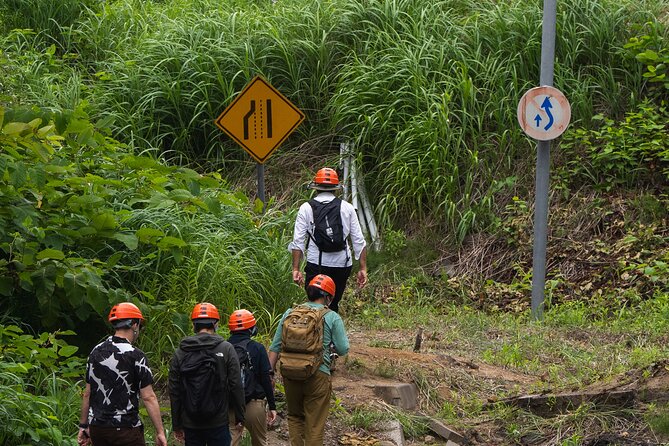
Mt. Usu is not a sleeping mountain dressed up for sightseeing. It is an active volcano, and this three-and-a-half-hour hike takes you into areas shaped by its 2000 eruption. You will see crater sites, damaged facilities, and places where local life still continues beside an unpredictable force.
In This Article
- Key points to know before you book
- Why Mt. Usu makes such a strong subject for a hike
- The morning start at Toyako Onsen
- Entering Mt. Usu’s regulated area
- Yu-kun crater and the visible force of the 2000 eruption
- Nishi-yama foot root and the meaning of restricted access
- The former Toyako Kindergarten
- Konpira-yama Crater Observatory
- Returning to Toyako Onsen after three and a half hours
- How the $321.62 price makes sense
- Who should book this Mt. Usu experience
- Booking, weather, and cancellation details
- Should you book the Mt. Usu hike?
- FAQ
- Where does the Mt. Usu hike begin?
- What time does the activity start?
- Where does the hike finish?
- How long does the activity last?
- Is this a private tour?
- Do I need to be physically fit?
- What should I bring?
- What should I wear?
- Are hiking shoes and water included?
- What happens if bad weather cancels the activity?
I like the rare access to restricted areas with special permission, and I like that the walk connects geology with the people who live around Toya Lake. The main caution is the price: at $321.62 per person, this is a serious spend, especially since hiking shoes, water, and insect repellent are not included.
Key points to know before you book
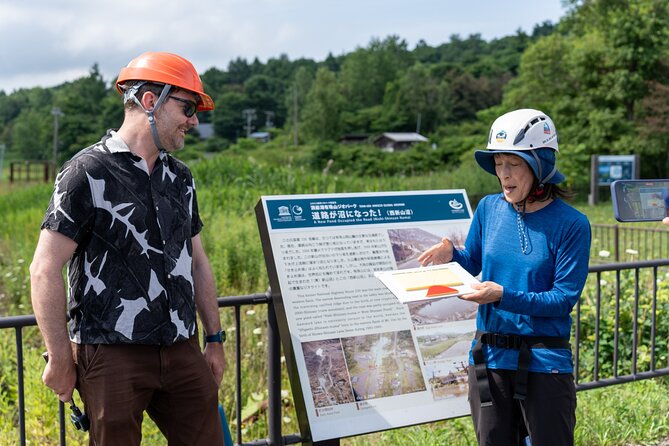
- Special access to Mt. Usu’s regulated areas: You enter places that are not part of an ordinary self-guided walk.
- The 2000 eruption is central to the tour: Craters, damaged buildings, and disaster-prevention measures make the event tangible.
- A private activity for your group: You are not placed with a larger tour party, though group discounts are listed.
- A real hike, not a sightseeing stroll: You need to walk for at least three hours and manage about 100 meters of elevation change.
- The route begins and ends at Toyako Onsen: The guide provides activity transfers, a helmet, and the guiding service.
- Weather can change the plan: Poor weather may lead to a new date or a full refund, but ordinary cancellations are non-refundable.
Why Mt. Usu makes such a strong subject for a hike
Many volcano tours focus on dramatic scenery. This one has a more useful question at its center: how do people live beside a volcano that has erupted repeatedly?
Mt. Usu has shaped the communities around Toya Lake through both destruction and preparation. The 2000 eruption left physical evidence along the route, but the guide also explains the decisions made by residents and officials. You are not just looking at a crater. You are seeing how roads, buildings, restricted zones, and evacuation planning respond to an active mountain.
That human side gives the walk its purpose. You will learn about the lives of people who continue to live in coexistence with Mt. Usu, along with the disaster-mitigation measures designed to reduce harm during a future eruption.
The setting is the Toya-Usu UNESCO Global Geopark, where volcanic activity is treated as part of the area’s identity and educational value. The designation matters here because the experience is built around geology, local history, and community life rather than a quick photo stop.
You can also read our reviews of more guided tours in Hokkaido


The morning start at Toyako Onsen
The activity begins at 8:30 am at the Toyako Onsen Tourist Association bus terminal, located at 142 Tōyakoonsen in Toyako, Hokkaido. Starting here makes the meeting point fairly easy to identify if you are staying in the hot-spring town.
You should arrive ready to walk. The guide handles transfers during the activity, but the supplied information does not describe a separate sightseeing vehicle or a long ride between stops. Treat the morning as a guided walking experience with transportation support, not as a coach tour.
The early start has practical value. You have the main route ahead before the day gets too far along, and you return to the same place after roughly three hours and 30 minutes. That leaves the rest of your day open for Toya Onsen or other Hokkaido plans.
This is a private activity, so only your own group participates. That can make a real difference on a technical subject such as eruption history. You can ask questions at your pace rather than trying to hear a guide over a large crowd. Group discounts are listed, but the exact terms are not provided, so check the price shown for your party before booking.
Entering Mt. Usu’s regulated area
The first major part of the route leads from the bus terminal toward the Mt. Usu regulated area. This is where the tour gains its special character.
Access is provided with special permission, allowing the group to enter an area that is restricted under normal conditions. That does not mean the volcano is safe or dormant. It means the route is managed, and the guide leads you through approved sections while explaining the risks and safeguards.
You should expect the guide to set the pace and explain where you can walk. Follow those instructions closely. An active-volcano visit is not the place to wander off for a better photograph.
The route includes some elevation change, but the stated requirement is modest by mountain standards: you should be able to walk for three hours or more and handle about 100 meters of elevation gain. Still, uneven ground, weather, and the need to keep moving can make the hike feel more demanding than the number suggests.
Yu-kun crater and the visible force of the 2000 eruption
Yu-kun crater is one of the named stops on the route. It gives the hike a clear geological focus, allowing you to see a volcanic feature rather than hearing about one only in a visitor center.
The larger point is the connection between the crater and the 2000 disaster. Mt. Usu’s eruption is not presented as a distant event from a textbook. The route is designed to show the physical remains and explain how the eruption affected nearby communities.
You will want to give yourself time to look closely and listen. The value of this stop comes from the guide’s interpretation: what happened, how the area changed, and how people responded. A crater by itself can become just another hole in the ground. With the local story attached, it becomes evidence of a real event that changed homes, roads, and daily routines.
You should also remember that volcanic sites can feel stark and exposed. Do not expect a polished attraction with extensive facilities at every stop. Bring water and rain gear, and wear shoes with firm, non-slip soles.
Nishi-yama foot root and the meaning of restricted access
The route continues to the Nishi-yama foot root, described as another regulated-area entry. This section reinforces one of the tour’s strongest features: you are not viewing the volcano only from a distant public lookout.
Special access also carries responsibility. The area is restricted for a reason, and conditions can be affected by weather or volcanic risk. Your guide controls the route and the timing, so the exact experience may change if conditions require it.
For you, the practical benefit is a more direct look at the relationship between hazard and public safety. You can see how an active volcano is divided into areas with different levels of access, rather than treating the mountain as a simple hiking trail.
This part may be less satisfying if you want a fast, dramatic summit walk. The activity is not advertised as a climb to Mt. Usu’s highest point. It is a guided route through eruption-related sites, with emphasis on safety, history, and local response.
You can also read our reviews of more hiking tours in Hokkaido


The former Toyako Kindergarten
The former Toyako Kindergarten is one of the most powerful stops because it brings the 2000 eruption down to a human scale. A crater is impressive, but a school building connects the disaster to children, families, and ordinary routines.
The site helps explain why evacuation planning matters. It also shows how volcanic hazards are not limited to lava or ash. Buildings, roads, schools, and neighborhoods all become part of the story when an eruption occurs near a settled area.
I would pay close attention here, even if you are mainly interested in geology. This is where the tour’s cultural purpose becomes clear. You are learning how a community remembers a disaster and how residents continue to make decisions while living near Mt. Usu.
The former kindergarten may also feel more sobering than scenic. That is part of its value. This is not a theme-park version of volcanic activity. It asks you to think about the cost of living beside a mountain that can change quickly.
Konpira-yama Crater Observatory
The final named viewpoint is the Konpira-yama Crater Observatory. An observatory provides a useful way to pull together what you have seen along the route.
From a crater viewpoint, you can better understand the physical pattern of the eruption sites and the surrounding area. The guide can connect the visible terrain to the sequence of events and to the safety measures discussed earlier.
Expect the best views to depend on weather. The tour requires suitable conditions, and poor weather can lead to a different date or a full refund, but even acceptable weather may not guarantee perfect visibility. Rain gear is essential, and umbrellas are not allowed for this activity.
The observatory is also a natural place to pause and absorb the scale of the volcano. The walk is not simply a series of stops. It moves from regulated zones, to eruption remains, to community evidence, and finally to a viewpoint that helps you see the wider setting.
Returning to Toyako Onsen after three and a half hours
The route finishes back at the Toyako Onsen Tourist Association bus terminal. This simple ending is useful. You do not need to arrange a second pickup point or work out how to return from a remote trailhead.
The total duration is approximately three hours and 30 minutes. That is long enough for a meaningful route without taking up an entire day, though you should not schedule a tight connection immediately afterward. Weather, walking pace, and explanations at each stop can affect the timing.
The guide provides transfers during the activity, a helmet, the guide fee, and the experience fee. You provide your own hiking shoes, water, rain gear, hat, and insect repellent.
Bring at least one liter of drink. That amount is specifically recommended, and it is a good rule for a walk where you may not have an easy place to refill. Wear long sleeves and long pants. They offer protection from sun, brush, and insects, while firm-soled trekking or non-slip shoes help on uneven ground.
How the $321.62 price makes sense
At $321.62 per person, this is not a budget hike. The cost needs to be judged against what you are actually buying.
The price covers a private guided experience, special permission to enter regulated areas, a helmet, guide transfers during the activity, and access to a route built around Mt. Usu’s 2000 eruption. Those are meaningful inclusions, especially if you want interpretation rather than a self-guided walk.
The private format is another part of the value. If your group is interested in volcanoes, disaster planning, or local culture, you can focus on those topics and ask questions without being part of a large mixed group.
Still, the price may be hard to justify for casual sightseers. You must also supply footwear, water, rain protection, and insect repellent. There is no public rating available at present, so you are making the decision based on the route, access, and educational focus rather than a long record of guest feedback.
I would consider it strongest value for a small group with a specific interest in active volcanoes. A group discount could improve the calculation, but the discount amount is not stated and should be confirmed before you commit.
Who should book this Mt. Usu experience
You are a good match if you enjoy walking, geology, local history, and the practical side of natural disasters. The hike suits people who want to understand how a community adapts to risk, not just stand near a volcano for a photograph.
It also works well for a private group with mixed interests. One person may care about crater formation, another about evacuation planning, and another about the former kindergarten. The route gives the guide several ways to connect the subject to what you care about.
You should think twice if you dislike uneven outdoor routes, need a completely predictable schedule, or want a gentle sightseeing outing with no preparation. You need moderate fitness, long walking ability, and shoes with reliable grip.
The activity is not described as suitable for wheelchairs, people with limited walking ability, or anyone unable to manage three hours of walking and 100 meters of elevation change. Since the route enters a regulated area, you should also be comfortable following safety instructions without debate.
Booking, weather, and cancellation details
Confirmation is sent within 48 hours of booking, subject to availability. Weekend and holiday reservations cannot be confirmed because of holidays, so plan ahead if those are your only possible dates.
The experience is non-refundable and cannot be changed for personal reasons. If you cancel or request an amendment, the amount paid is not refunded.
Weather is treated differently. If poor weather forces cancellation, you are offered another date or a full refund. The same applies if the minimum number of participants is not met, with the option of a different date or experience, or a full refund.
That policy makes travel insurance worth considering if your Hokkaido schedule is costly. It also means you should avoid booking this as a last-minute add-on unless your plans are flexible.
Should you book the Mt. Usu hike?
Book it if you want a serious, guided look at an active volcano and the people who live beside it. The special access, 2000 eruption sites, former kindergarten, and crater observatory give the route more substance than a standard viewpoint visit.
Skip it if the price feels too high for a three-and-a-half-hour walk, or if you are mainly seeking an easy scenic outing. You will need to prepare properly, accept a strict cancellation policy, and meet the fitness requirement.
For the right person, this is a rare chance to see volcanic danger as part of daily life. You leave with more than a crater photograph. You gain a clearer sense of how Mt. Usu has shaped the ground, the buildings, and the decisions of the community around it.
FAQ
Where does the Mt. Usu hike begin?
The activity begins at the Toyako Onsen Tourist Association bus terminal at 142 Tōyakoonsen, Toyako, Abuta District, Hokkaido 049-5721, Japan.
What time does the activity start?
The scheduled start time is 8:30 am.
Where does the hike finish?
The route returns to the Toyako Onsen Tourist Association bus terminal, the same place where it begins.
How long does the activity last?
The hike lasts approximately three hours and 30 minutes.
Is this a private tour?
Yes. Only your group participates in this private activity.
Do I need to be physically fit?
You need moderate physical fitness. Participants should be able to walk for three hours or more and manage about 100 meters of elevation change.
What should I bring?
Bring rain gear, a hat, one liter of drink, and insect repellent. Umbrellas are not allowed.
What should I wear?
Wear long sleeves, long pants, and trekking shoes or other non-slip shoes with firm soles.
Are hiking shoes and water included?
No. Hiking shoes and bottled water are not included.
What happens if bad weather cancels the activity?
You will be offered a different date or a full refund if the activity is canceled because of poor weather.
More Hiking & Trekking Tours in Hokkaido
More Guided Tours in Hokkaido

More Tour Reviews in Hokkaido


Other Hokkaido tours worth your shortlist




Hiking & Trekking, side by side.
 ★ 5.03hours Primeval Forest and Stunning Views of Cliff Trekking TourFrom $53.7320 reviews
 ★ 5.0Snowshoe Hike Tour from Sapporo include hotel p/up & drop offFrom $308.7316 reviews
 ★ 5.03.5hours Primeval Forest Snowshoe hike and Wildlife Watching TourFrom $55.5214 reviews
 ★ 5.03 hours Snowshoe hike to “Furepe fall” and Wildlife WatchingFrom $44.309 reviews
The lists this tour appears in