Shiretoko’s appeal is easiest to grasp on foot, where animal tracks lead you through old forest toward sea cliffs more than 100 meters high and a waterfall. This is not a standard park stroll. It is a guided walk into a wilder part of Shiretoko National Park, with bears, deer, birds, and changing ground underfoot.
In This Article
- Key points to know before booking
- Entering Shiretoko’s primeval forest
- Wildlife watching with a safety-minded guide
- The cliff view and waterfall payoff
- What the guides add to the walk
- Rainwear, boots, and the mud question
- How the three-hour route feels
- Price and overall value at $53.73
- Who should book this Shiretoko walk
- Booking, weather, and cancellation details
- Is this forest trek worth booking?
- FAQ
- Where does the tour start?
- Where does the tour end?
- How long does the tour last?
- How many people can join?
- What equipment is provided?
- What level of fitness do I need?
- Can I see bears or other wildlife?
- What happens if the weather is bad?
I like the way Picchio Shiretoko keeps the group small, with no more than eight people, and I like that rainwear, rubber boots, and binoculars are included. Guides such as Makoto, Yuki, Kato, and Yusuke have been praised for clear English, humor, careful wildlife handling, and strong knowledge of the forest.
The main consideration is the terrain. You need moderate fitness, and wet ground or mud can make the three-hour walk slower and less comfortable. The tour also depends on good weather, so flexible plans matter.
Key points to know before booking
- Follow wildlife tracks through primeval forest: The route uses paths made by native animals, giving you a look at Shiretoko beyond its main viewpoints.
- See towering cliffs and a waterfall: The sea-facing view includes cliffs rising over 100 meters, a memorable reward after the forest section.
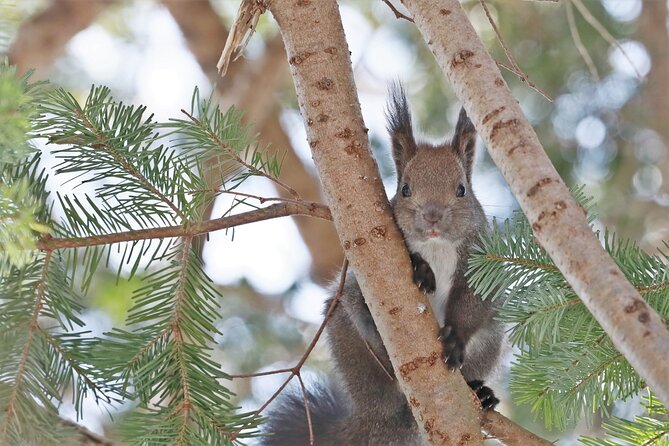
- Expect a guide-led wildlife walk: Deer, birds, bear tracks, and possibly a bear may appear, but wildlife sightings are never guaranteed.
- Gear is supplied: Rainwear, rubber boots, and binoculars are included, so you do not need to bring specialist equipment.
- Small groups make a difference: The maximum is eight people, and some departures may feel almost private.
- Allow about three and a half hours: The walk itself is described as about three hours, with the full experience lasting approximately 3 hours 30 minutes.
Entering Shiretoko’s primeval forest
You meet at the Shiretoko National Park Nature Center at 531 Onnebetsumura, Shari, in Hokkaido. The activity ends at the same place, which makes the tour easy to fit around other visits in the park. Pickup is offered, but confirm the exact arrangement when booking rather than assuming transport is included from your hotel.
The walk follows animal tracks through forest that feels far removed from ordinary sightseeing. Your guide helps you read the ground and vegetation, explaining how wildlife uses the area and what signs to watch for. A fallen branch, track, or feeding mark can become part of the story instead of something you simply pass by.
That is the real value here. Without a guide, you could walk through the trees and enjoy the quiet, but miss most of the clues around you. Guides have pointed out deer, birds, bear tracks, and smaller signs of animal activity that are easy to overlook.
The pace appears to be steady rather than athletic. Still, this is not a paved nature-center walk. You should be ready for uneven and possibly muddy ground, and you need a moderate level of fitness for roughly three hours on foot.
You can also read our reviews of more hiking tours in Hokkaido


Wildlife watching with a safety-minded guide
Shiretoko is bear country, and the presence of bears gives the walk an edge that a normal woodland outing lacks. The guide’s job is not only to identify wildlife but also to manage distance and keep the group safe.
One account describes a guide spotting a bear and directing the group to safety quickly. That detail matters more than the promise of a close sighting. You are not being taken into the forest to chase animals or get a dramatic photograph. You are there to observe signs and wildlife responsibly, with someone who understands the area.
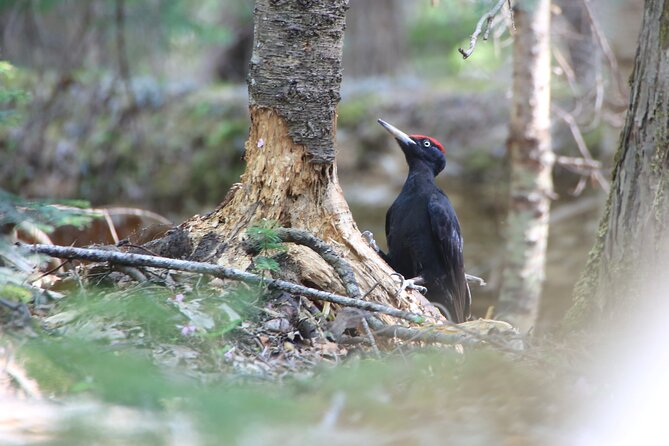
You might see deer or birds. A winter outing produced sightings of deer, eagles, and a black woodpecker, along with many bear tracks in the snow. Other departures have included deer and birds, but conditions and animal activity change from day to day.
Binoculars are provided, which is useful for scanning the forest edge or distant areas without moving closer. You should treat a sighting as a bonus, not the main measure of success. Even a walk with no large animal can be worthwhile if the guide explains how the forest works.
The cliff view and waterfall payoff
The forest section leads to a broad view of the cliff line and a waterfall. The cliffs rise more than 100 meters, giving the route a strong sense of scale after the enclosed trees.
This is where the tour differs from a forest lesson alone. You get both the small details of tracks and plants and the open sweep of the coast. Several guides have been praised for helping people see the park from a different angle, away from the better-known Furepe waterfall and Shiretoko Five Lakes areas.
The exact quality of the view depends on weather. Rain, mist, or low cloud can soften the cliffs and reduce visibility, though wet conditions may also make the forest feel especially atmospheric. The operator may offer a different date or a full refund if poor weather forces cancellation.
Bring your expectations into line with the season. Summer can offer greener forest and easier walking, while spring and winter may reveal tracks in snow or a quieter side of the park. An April departure, for example, took place in cold conditions after the drift ice had gone. Winter outings can be rewarding, but they require more attention to weather and footing.
What the guides add to the walk
The guide can make or break a nature outing, and this tour has several names worth noting. Makoto, also called Mark in some English-language settings, has been praised for humor, strong English, and an ability to explain forest ecology without making the walk feel like a classroom.
Yuki has guided visitors in both rainy summer conditions and the colder April shoulder season. Her English has been described as excellent, and she has been praised for answering questions clearly and taking good care of the group.
Kato has been described as energetic and enthusiastic, with a gift for explaining small details about nature and local history in both Japanese and English. Yusuke has also been praised for very good English, animation, and a willingness to take time with a small group.
You may not get to choose your guide, so think of these names as an indication of the guiding style rather than a guarantee. The consistent theme is personal attention, clear explanations, and a serious approach to wildlife safety. Some departures have had only one booking, turning the outing into an almost private walk.
Rainwear, boots, and the mud question
Included gear is one of the tour’s strongest practical features. Rainwear, rubber boots, and binoculars are supplied, reducing the need to pack specialist outdoor equipment for a single activity.
Rubber boots are especially useful after rain. The ground can be muddy, and the operator warns you to expect wet terrain. One outdoor tip from a dry-weather outing suggested that boots might not be essential if there had been no recent rain, but you should not plan around that exception. The supplied boots remove a lot of guesswork.
You should still wear comfortable clothing suitable for walking and bring layers. The supplied rainwear helps with wet weather, but it does not replace sensible personal clothing. Hokkaido conditions can shift, and the cold April and winter outings show why a warm layer is useful outside the height of summer.
The gear is not a luxury extra. At $53.73 per person, having boots, rainwear, and binoculars included improves the value, especially if you are visiting Japan with limited luggage or do not normally carry hiking equipment.


How the three-hour route feels
The full experience lasts about 3 hours 30 minutes, while the walking portion is described as about three hours. That makes this a substantial half-day activity rather than a quick photo stop.
Expect the route to unfold in stages:
- You meet at the Nature Center and receive the equipment needed for the conditions.
- The guide leads you into the forest and explains the animal tracks and signs along the way.
- The group pauses for wildlife watching and short explanations about forest life, bears, and the area’s natural setting.
- The route reaches views of the high cliffs and waterfall.
- You return to the Nature Center, finishing where you started.
The pace will be shaped by the group and by wildlife conditions. If the guide stops to identify tracks or watch an animal, the schedule may stretch. One guide extended a tour to cover more, but you should treat that as a personal touch, not something promised on every departure.
The small group limit of eight is important. A guide can answer more questions, keep the group together more easily, and adjust explanations to the people present. If you prefer a large, fast-moving excursion, this may feel slow. If you want time to notice things, the size is a plus.
Price and overall value at $53.73
At $53.73, this is reasonably priced for a guided nature outing that lasts most of a morning or afternoon and includes rainwear, rubber boots, and binoculars. You are paying for access to a less obvious part of Shiretoko, but the guide is the bigger value.
A self-guided walk may cost less in direct terms, yet it will not provide the same help with animal tracks, bear awareness, or the forest’s natural history. You may see the cliffs on your own, but you could miss the small details that give the forest meaning.
The price is strongest for visitors who lack outdoor gear or who have only a short time in Shiretoko. It is also useful for international visitors who want English-language explanations. Guides including Makoto, Yuki, Kato, and Yusuke have been praised for communicating well in English, though the exact guide is not fixed.
The value is less clear if you already have extensive hiking experience, your own equipment, and plenty of time to explore independently. Even then, bear country is a good reason to consider a professional guide. The point is not simply finding a path. It is knowing how to behave when the path belongs to wildlife.
The experience is booked, on average, about 30 days ahead. That suggests you should reserve early if your Hokkaido schedule is tight, especially since the maximum group size is eight.
Who should book this Shiretoko walk
I would choose this tour if you want a close look at Shiretoko’s forest rather than a quick stop at a famous viewpoint. It suits couples, families with a reasonable fitness level, and solo visitors who want company and guidance in bear country.
It also suits photographers and nature fans, though you should value observation over guaranteed animal photographs. The binoculars help, and the guide’s eye is likely to find more than you would alone.
You may want a different activity if you dislike mud, rain, uneven ground, or a slower pace. The tour requires moderate fitness, and the weather can affect both comfort and views. This is a guided wilderness walk, not an indoor attraction with a fixed outcome.
English-speaking visitors have a practical reason to consider it. Multiple guides have been praised for clear English, and the explanations cover wildlife, forest ecology, and local history. If you speak Japanese, you may also appreciate the chance to ask detailed questions in a natural setting.
Booking, weather, and cancellation details
Confirmation is sent within 48 hours, subject to availability. You receive a mobile ticket, and the tour returns to the Nature Center.
Free cancellation is available until 24 hours before the start time for a full refund. Changes or cancellations made less than 24 hours before the start time are not accepted and are not refunded. Cut-off times follow local time in Hokkaido.
Because the experience requires good weather, a cancellation caused by poor conditions gives you the choice of another date or a full refund. If your itinerary is packed, keep some flexibility around the booking.
Is this forest trek worth booking?
Yes, if you want a well-guided look at Shiretoko’s wilder side and can handle three hours of outdoor walking. The combination of animal tracks, possible wildlife sightings, high cliffs, and a waterfall gives the tour more substance than a simple viewpoint visit.
Book it for the guide’s interpretation and safety, not because a bear or deer is guaranteed. The included gear, small groups, and $53.73 price make it a strong choice for most visitors who want an authentic forest experience without bringing specialist equipment.
I would skip it only if your fitness is limited, your schedule cannot tolerate weather changes, or muddy ground sounds miserable. For everyone else, this is one of the more useful ways to understand why Shiretoko feels so wild.
FAQ
Where does the tour start?
The tour starts at the Shiretoko National Park Nature Center, 531 Onnebetsumura, Shari, Shari District, Hokkaido 099-4356, Japan.
Where does the tour end?
The activity ends back at the meeting point at the Shiretoko National Park Nature Center.
How long does the tour last?
The full experience lasts approximately 3 hours 30 minutes. The walking portion is described as about three hours.
How many people can join?
The tour has a maximum of eight travelers.
What equipment is provided?
Complimentary rainwear, rubber boots, and binoculars are provided.
What level of fitness do I need?
You should have a moderate level of physical fitness because the activity includes about three hours of walking through the forest.
Can I see bears or other wildlife?
Wildlife sightings are possible, but they are not guaranteed. The walk follows animal tracks, and sightings have included deer, birds, eagles, and bear tracks. Guides also manage safety in bear country.
What happens if the weather is bad?
If poor weather causes the tour to be canceled, you will be offered a different date or a full refund. You can also cancel for a full refund up to 24 hours before the start time.
More Hiking & Trekking Tours in Hokkaido

More Tours in Hokkaido


More Tour Reviews in Hokkaido
Other Hokkaido tours worth your shortlist





Hiking & Trekking, side by side.
 ★ 5.0Snowshoe Hike Tour from Sapporo include hotel p/up & drop offFrom $308.7316 reviews
 ★ 5.03.5hours Primeval Forest Snowshoe hike and Wildlife Watching TourFrom $55.5214 reviews
 ★ 5.03 hours Snowshoe hike to “Furepe fall” and Wildlife WatchingFrom $44.309 reviews
 ★ 5.0Hike Mt. Usu and visit Lake Toya Day TourFrom $156.379 reviews
The lists this tour appears in