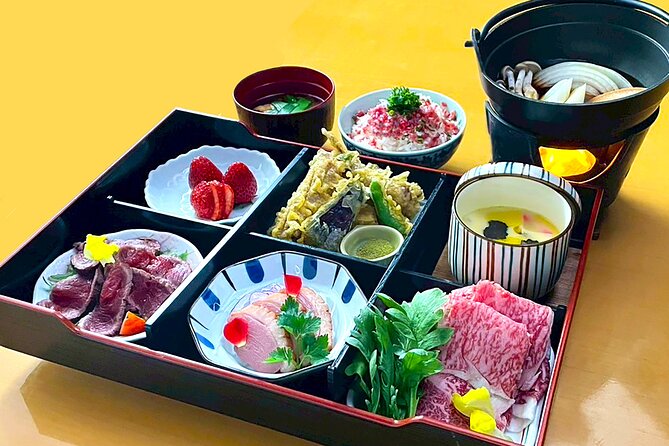
The best part of this Sapporo evening is the chance to see retired sumo wrestlers up close, not from the distant seats of a tournament hall. You’ll learn the rules, watch training movements and techniques, then see a playful but athletic best-of-three match while a host keeps the room involved. A few people can even challenge a wrestler in the ring.
In This Article
- Key points at a glance
- A close look at sumo in central Sapporo
- Asa geiko and the rules behind the movement
- The best-of-three match
- Stepping into the dohyo
- Food, drinks, and the sumo connection
- Seats, front row, and the small group size
- The framed photo and souvenir bag
- What the $79.07 price gets you
- Who will enjoy this Sapporo experience
- Booking details worth knowing
- Should you book the Sapporo Sumo Show?
- FAQ
- Where does the Sapporo Sumo Show Experience begin?
- Where does the experience end?
- How long does the sumo show last?
- Is transportation included?
- How many people can join the activity?
- What food is included?
- Can I request vegetarian food?
- Can I participate in a sumo match?
- Are the wrestlers professional competitors?
- What do I receive at the end?
I especially like the small six-person maximum, which keeps the view of the dohyo personal, and the meal prepared around sumo food traditions. The framed photo with the former rikishi is another fine touch. The main consideration is that this is an entertainment show by retired wrestlers, not an official professional bout, and the meal details depend on the plan you select.
Key points at a glance
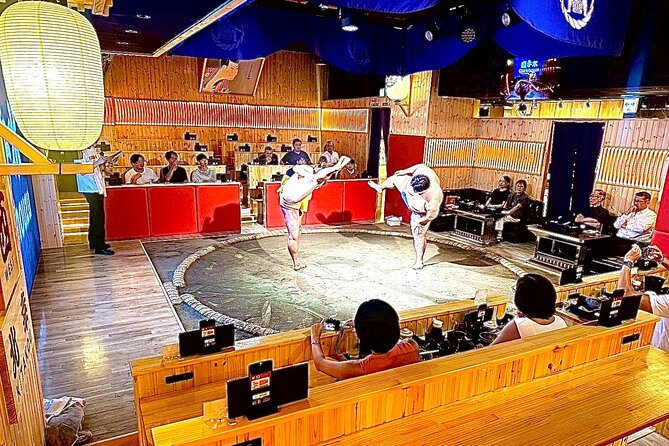
- Retired rikishi explain and demonstrate sumo: Learn the basic rules, morning exercises, and winning techniques before the match.
- Audience participation is part of the show: A limited number of people may challenge the wrestlers, with a lottery used if too many apply.
- The dohyo is visible from every seat: Front-row upgrades are available if you want the closest possible view.
- Japanese food is built into the meal plan: Expect a set meal, one drink, and sumo-style chanko-nabe, with wagyu beef sukiyaki and tempura also listed for meal-inclusive plans.
- You leave with more than a memory: A gift bag and framed group photo with the former wrestlers are included.
- Central Sapporo location: The meeting point is at 2-chōme-10-1 Minami 4 Jōnishi, near public transportation.
A close look at sumo in central Sapporo
This experience gives you a compact introduction to sumo without asking you to plan around a tournament schedule. It takes place at Sapporo’s first sumo show restaurant, where the dohyo sits at the center of the room and the meal and entertainment happen together.
That setting changes the feel of the event. In a large arena, you may see the bout but miss the small rituals and explanations. Here, you can watch the movements at close range and follow the host’s explanation of what is happening.
The show lasts about two hours. That is long enough to include instruction, demonstrations, food, a competition, audience participation, and photographs, but short enough to fit neatly into an evening in Sapporo. Since the group is capped at six people, you should expect a more personal format than a large staged dinner show.
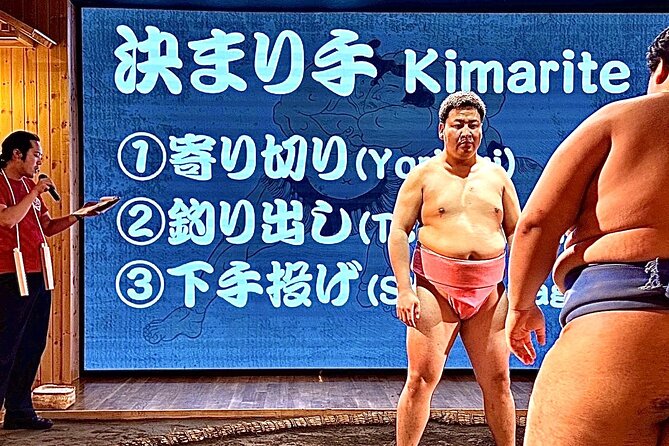
The exact running order may vary, but the main parts are clear. You begin with an introduction to sumo and its long development in Japan. Then come demonstrations of asa geiko, or morning exercises, followed by explanations of kimarite, the recognized techniques used to win a bout.
This is useful for first-time viewers. Sumo can look simple until you try to understand why one wrestler wins. The demonstrations give you a basic vocabulary for reading the action, from the initial charge to the move that sends an opponent out of the ring or onto the ground.
You can also read our reviews of more food & drink experiences in Sapporo


Asa geiko and the rules behind the movement
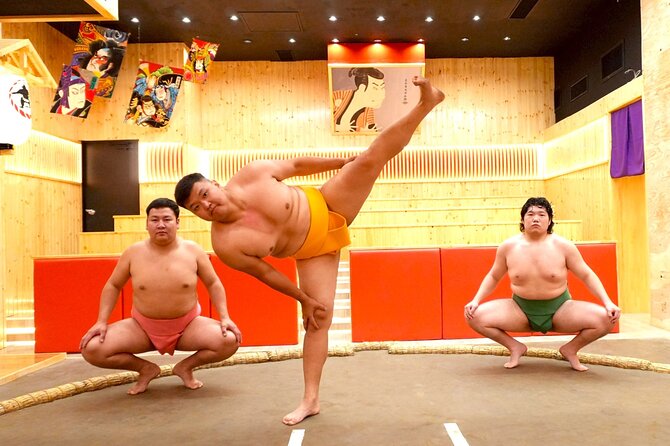
The morning exercise demonstration gives you a glimpse of the discipline behind sumo. You will not simply watch two large athletes push each other around. The show explains how wrestlers prepare their bodies and how the customs of sumo shape what happens inside the ring.
The introduction also covers the do’s and don’ts of sumo. That matters because the sport is wrapped in ceremony and rules that may not be obvious to someone seeing it for the first time. The explanation helps you understand why a pause, gesture, or movement has a place in the performance.
The wrestlers are retired from competition, but they are still capable athletes. The program makes that distinction clear: this is a show for entertainment, not a professional tournament. You can enjoy the power and humor of the matches while keeping your expectations in the right place.
The techniques section is one of the strongest reasons to choose this experience over a generic cultural dinner. You see how a bout can be won through balance, timing, force, or positioning, rather than assuming that the heaviest wrestler always wins.
The best-of-three match
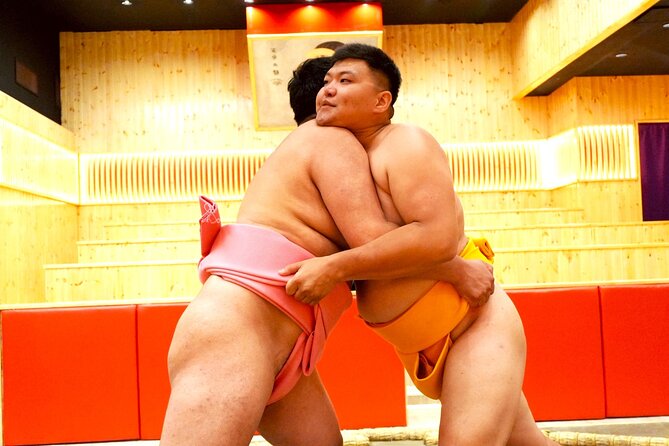
After the instruction, the former rikishi face each other in a best-of-three tachiai competition. Tachiai refers to the explosive initial charge that begins a sumo bout, and seeing it after the earlier lesson gives the match more meaning.
The contest is designed for fun and audience connection, but it still has physical force. The contrast between the playful hosting and the wrestlers’ strength is part of the appeal. The show gives you a taste of the sport’s intensity without pretending you are watching a live championship match.
I like this structure because it avoids making the meal the whole event. The food gives you something to enjoy while the show unfolds, yet the explanations and bouts remain the center of the evening.
A traditional dancer may also appear as part of the program. Some descriptions refer to a geiko or geisha-style dance, adding another piece of Japanese performing culture to the sumo presentation. Since the exact entertainment lineup is not fully detailed, you should treat the dance as part of the possible program rather than the main reason to book.
Stepping into the dohyo
The audience challenge is the most memorable feature for people who want to participate rather than only watch. A limited number of people can enter the ring and take on one of the retired wrestlers.
There is an important practical catch: if too many people want to participate, the challengers are chosen by lottery. So you can put your name forward, but you cannot count on getting a match.
That uncertainty is fair. The ring can accommodate only a few challengers, and giving everyone a turn would make the two-hour format unwieldy. Even if you do not get selected, you can watch the other participants and see how the wrestlers keep the activity safe and entertaining.
This part suits families and outgoing couples especially well. It also works for teenagers who might be less interested in a straight lecture about Japanese culture. The audience involvement gives the evening a comic, social edge, while the rule demonstrations provide substance.
If you are shy, there is no need to feel pressured. The show includes plenty to watch, and the staff are there to guide participation. The central point is that the ring is open to a few people, not that every person must wrestle.
Food, drinks, and the sumo connection
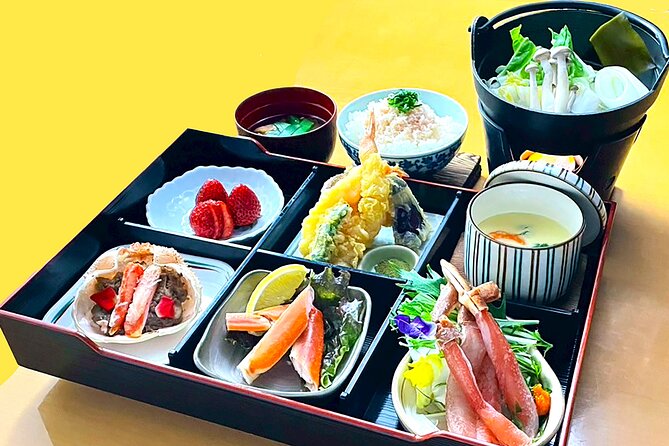
The meal plan includes a set of Japanese cuisine and one drink. Chanko-nabe, the hearty hot pot associated with sumo wrestlers, is included in the description, while meal-inclusive plans also specify wagyu beef sukiyaki and tempura.
Because the wording lists both chanko-nabe and a wagyu sukiyaki and tempura set, I would check the precise menu attached to your selected plan before booking. The food appears to be a substantial part of the experience, but the meal format may differ by option.
A vegetarian meal is available if you request it in advance by message. Do not wait until you arrive. The advance request is the important detail here.
The food helps place sumo in daily life rather than treating it as a museum subject. Chanko-nabe is particularly fitting because it is linked with the communal meals of sumo training stables. The menu also gives the experience enough weight to function as dinner, not just a short demonstration with snacks.
The meal received some of the strongest praise for flavor and presentation, and the staff were often singled out for being helpful and warm. You should still remember that this is a show restaurant, so the meal is part of a timed program. It is not a long, quiet restaurant dinner where you control the pace from course to course.
Our other Sapporo reviews may also help you decide





Seats, front row, and the small group size
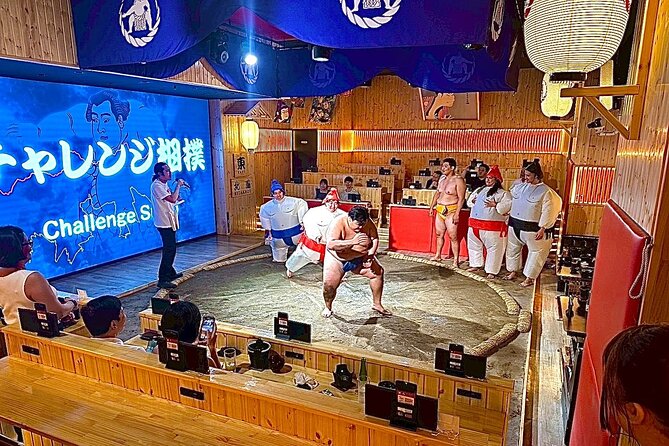
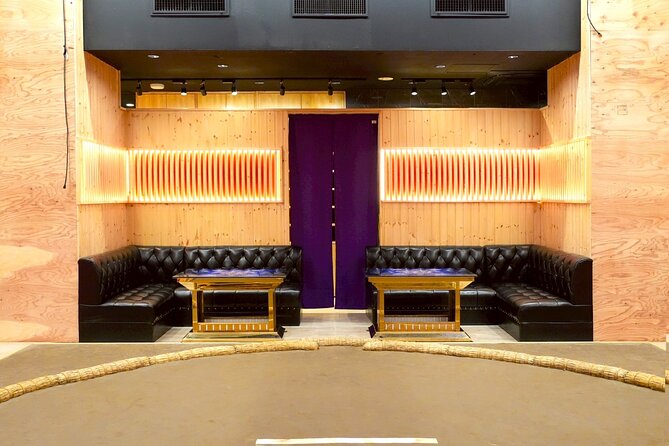
All seats have an intimate view of the dohyo. That is a major advantage, especially for anyone comparing this with a large sumo venue where distance can make the wrestlers seem small.
You can upgrade to front-row seating if you want the closest view. The upgrade is most useful if photography matters to you or if you want to feel directly connected to the bouts. Standard seating should still work well because the room is designed around the ring.
The maximum group size is six people. A small audience gives the host more room to involve individuals and makes the challenge portion feel less like a mass activity. It also means the experience may feel more like a hosted cultural event than a theater performance.
The tradeoff is that a small group has less anonymity. If you prefer to sit quietly in the back and avoid any chance of being asked to participate, this format may feel more personal than you want. For most people, that personal scale is the point.
The framed photo and souvenir bag
At the end, you receive a commemorative photo with the former rikishi, along with a gift bag of souvenirs. The photo is framed, which makes it more useful than a quick digital snapshot that gets lost in your phone.
The photograph also gives the evening a clear final moment. You do not simply eat, watch a show, and walk out. You leave with a physical reminder of the ring and the people who hosted the event.
For families, the photo can be especially worthwhile. It records the shared activity, not just the meal. For sumo fans, standing beside a retired rikishi adds a personal connection that is difficult to get from reading about the sport or watching a broadcast.
If you are booking for a group, note that the photo is described as being of you and your group with the wrestlers. It is a useful keepsake for couples and small parties, although the supplied details do not specify the exact photo format beyond it being framed.
What the $79.07 price gets you
At $79.07 per person, this is not the cheapest dinner in Sapporo. You are paying for a two-hour hosted cultural program, close seating, a meal and drink on the meal plan, audience participation, a souvenir bag, and a framed photo.
The value improves if you want several activities in one booking. Instead of arranging a meal, a cultural performance, and a photo opportunity separately, you receive all three in one central location. The sumo explanation also gives the evening more depth than a simple staged wrestling act.
The price is less compelling if you mainly want an authentic professional sumo match. You will not see current tournament competitors, and this show cannot replace visiting a major tournament when one is taking place. It is best understood as an accessible introduction led by retired athletes.
I would also compare the selected food option carefully. Since the meal descriptions mention both chanko-nabe and wagyu beef sukiyaki with tempura, confirm what your booking includes before judging the price. A hearty meal, one drink, and the framed photo make the package easier to justify than a show-only ticket.
Who will enjoy this Sapporo experience
I would recommend it to first-time visitors who want a clear, entertaining introduction to sumo. You do not need prior knowledge, and the explanations come before the main match.
It is also a strong choice for families. The demonstrations, dance, food, comedy, and possible audience challenge give the evening several ways to hold a young person’s attention. A teenager who would resist a formal cultural lecture may respond better once the ring and participation are involved.
Sumo fans have a different reason to come. Meeting a former grand sumo rikishi may be possible, and standing close to retired wrestlers adds a personal element. Still, serious fans should book with realistic expectations: the bouts are for entertainment.
The experience suits people who value convenience and a compact schedule. It lasts roughly two hours, ends where it begins, and is near public transportation. You do not need private transportation, which makes it easy to fit into a day in central Sapporo.
I would hesitate to recommend it to someone seeking a quiet meal, a formal theater production, or an official competition. The show is interactive, and the staff make a real effort to involve the room. That energy is a strength for most people, but it may not suit everyone.
Booking details worth knowing
The meeting point is 2-chōme-10-1 Minami 4 Jōnishi in Chuo Ward, Sapporo, Hokkaido. The activity returns to that same meeting point, and it is located near public transportation.
A mobile ticket is provided. Confirmation arrives at booking, and most people can participate. The small maximum of six makes advance booking sensible if your dates are fixed.
Free cancellation is available up to 24 hours before the start time for a full refund. Inside that 24-hour window, the amount paid is not refunded, and changes are not accepted. The cut-off follows local Sapporo time.
If you need a vegetarian meal, send the request in advance. That is also the right time to clarify the precise meal selection and ask about front-row seating if the upgrade matters to you.
Should you book the Sapporo Sumo Show?
Book it if you want a friendly, compact cultural evening that combines sumo instruction, live demonstrations, Japanese food, and a chance to join the action. The small group, clear explanations, and framed photo give it more personal value than a show viewed from a distant seat.
Skip it if you are looking for official competition or a quiet restaurant dinner. This is a staged entertainment experience with retired wrestlers, but the combination of real athletic skill, cultural context, good food, and audience participation makes the $79.07 price reasonable for many visitors to Sapporo.
FAQ
Where does the Sapporo Sumo Show Experience begin?
It begins at 2-chōme-10-1 Minami 4 Jōnishi, Chuo Ward, Sapporo, Hokkaido 064-0804, Japan.
Where does the experience end?
The activity ends back at the meeting point.
How long does the sumo show last?
The experience lasts approximately two hours.
Is transportation included?
Private transportation is not included. The meeting point is near public transportation.
How many people can join the activity?
The maximum group size is six people.
What food is included?
The meal plan includes a set of Japanese cuisine and one drink. The details also list chanko-nabe, wagyu beef sukiyaki, and tempura. Check the exact menu for the plan you select.
Can I request vegetarian food?
Yes. You must request a vegetarian meal in advance by message.
Can I participate in a sumo match?
You can apply to challenge one of the retired wrestlers. Participation is limited, and a lottery decides the challengers if too many people apply.
Are the wrestlers professional competitors?
The wrestlers are retired from competition. The event is an entertainment show, not an official professional sumo bout.
What do I receive at the end?
You receive a gift bag of souvenirs and a commemorative framed photo with the former rikishi.
More Food Experiences in Sapporo
More Food & Drink Experiences in Sapporo


More Tour Reviews in Sapporo


Other Sapporo tours worth your shortlist






Food, side by side.
 ★ 5.0Sapporo Bar Hopping Food TourFrom $108.11232 reviews
 ★ 4.9Sumo Show Experience with Japanese food & PhotoFrom $7781 reviews
 ★ 4.8Eat Like a Local in Sapporo – Private & Custom Food TourFrom $18811 reviews
 ★ 5.0A plan to try soba-noodle making and eat with 4 kinds of Japanese favorite condiments!From $120.042 reviews
The lists this tour appears in