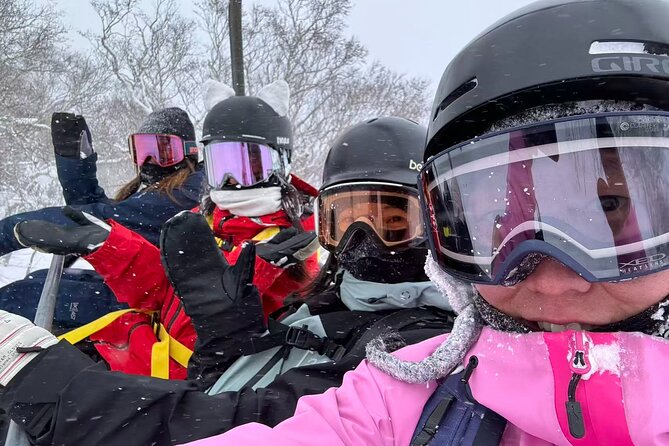
Niseko’s famous powder is wonderful, but it can also expose weak technique fast. This private lesson puts a coach beside you for a full day, with instruction shaped around your level at Grand Hirafu, Hanazono, Village, Annupuri, or Moiwa.
In This Article
- Key points at a glance
- Why private coaching makes sense in Niseko
- Choosing among five Niseko resorts
- The first hour: equipment, safety, and a level check
- Morning instruction matched to your ability
- Five hours on snow, with a real lunch break
- What beginners can realistically learn
- What intermediates and advanced riders gain
- The real value of the $316.89 price
- Equipment, passes, and preparation
- Who should book this lesson
- Cancellation and booking details
- Should you book it?
- FAQ
- How long is the full-day Niseko lesson?
- Which Niseko resorts are available?
- Is the lesson private?
- Is equipment included?
- Is the resort lift pass included?
- What languages are available?
I like the small-group format, since you are not lost in a crowded ski-school class. I also like the clear progression from stance and stopping for beginners to carving and powder line choice for advanced riders. The main catch is cost: at $316.89 per person, you still pay separately for your lift pass, equipment rental, insurance, and your own food.
Key points at a glance
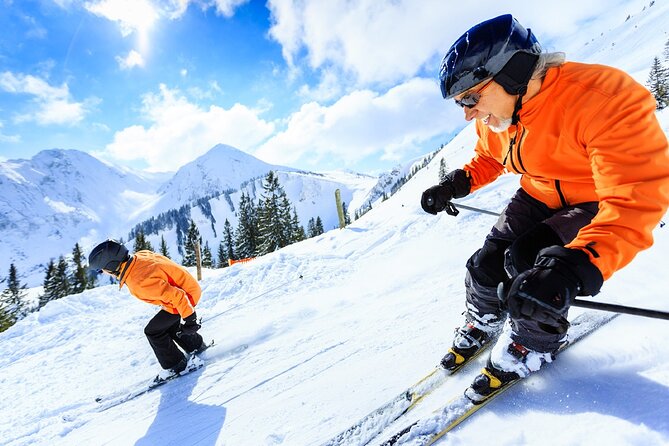
- Five hours of skiing plus a one-hour lunch break: The full-day format gives you time to work on skills without rushing from one drill to the next.
- Five Niseko resort choices: Meet at Grand Hirafu, Hanazono, Niseko Village, Annupuri, or Moiwa, depending on where you are skiing.
- Instruction for one discipline: Choose skiing or snowboarding for the session, with coaching for beginners through advanced riders.
- English, Chinese, or Japanese instruction: Language choice can make technical feedback much easier to follow.
- Private coaching for your group: Your coach can adjust terrain, drills, and pace as you improve.
- Important extra costs: You arrange your own resort pass, gear rental, insurance, and personal meals or refreshments.
Why private coaching makes sense in Niseko
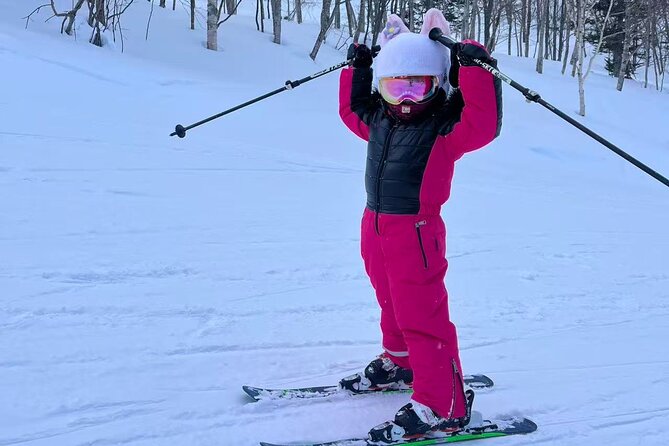
Niseko is best known for deep, soft snow. That reputation attracts strong skiers, but powder is not always the easy, floating ride beginners expect. It can slow you down, pull your skis apart, and make turning harder if your balance is not ready.
A private lesson gives you a better way to deal with that learning curve. Instead of following a fixed class plan, you begin with an assessment on gentle terrain. The coach checks your stance, balance, stopping, and turning, then chooses the next useful exercise.
That personal approach matters most if your group has mixed ability. One person might be learning the basics, while another is ready for blue runs or more refined edge control. The coach can adjust the pace and terrain rather than forcing everyone through the same routine.
The activity is private, but it is not necessarily a one-person lesson. Your own group participates, making it a good choice for a family, couple, or set of friends who want to learn together. Ask about the maximum group size when booking if that detail affects your decision.
Our other Hokkaido reviews may also help you decide


Choosing among five Niseko resorts
You can arrange the lesson at Grand Hirafu, Hanazono, Niseko Village, Annupuri, or Moiwa. The best choice is usually the resort where you already have accommodation, equipment, and a lift pass. Moving across the Niseko area just for a lesson could add needless travel and complicate the meeting time.
The meeting point is generally the base lodge or gondola entrance of your chosen resort. Pickup is offered, and the activity is near public transportation, but you should confirm the exact meeting arrangement before the day. The information gives both pickup availability and a base-area meeting point, so do not assume that door-to-door transport is included for you.
Your resort choice also affects the sort of practice you get. The coach may use gentle beginner terrain, green runs, blue runs, or more advanced resort terrain according to your ability. The lesson stays within resort boundaries, including when advanced skiers work on powder technique.
Grand Hirafu, Hanazono, Village, Annupuri, and Moiwa are all included in the service area, but the lesson is not presented as a tour of several resorts. You select one resort for the session. That keeps the day focused on skiing rather than chasing lifts and parking lots.
The first hour: equipment, safety, and a level check
At the start, you meet your coach at the agreed base location. The first task is a quick equipment and safety check. This is a useful step, not wasted time. Poorly fitted equipment or unfamiliar bindings can distract you from every later exercise.
Beginners start with stance, balance, and safe stopping. These are simple skills, but they are the foundation for enjoying a snowy resort without panic. You then work toward basic turns on green runs when the coach feels you are ready.
If you are an intermediate skier or snowboarder, the opening assessment may focus on how you link turns, control speed, and use your edges. The goal is not to label you. It is to avoid wasting your morning on drills you already know.
Advanced riders receive a different kind of attention. You may work on carving, line choice, and adapting your technique to Niseko’s powder within marked resort boundaries. The value here is small correction. A coach watching your turns can spot habits that are hard to notice on your own.
Morning instruction matched to your ability
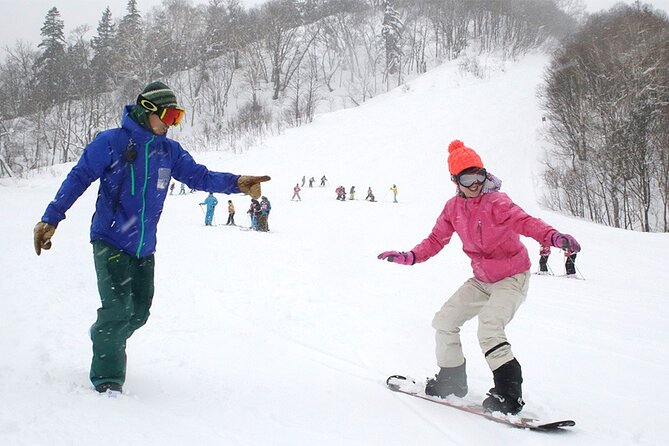
The morning is built around step-by-step feedback. Your coach can change the drill when your progress calls for it, and can also slow down if a skill is not settled yet. That is the chief advantage over a standard group class.
For a beginner, the lesson should feel orderly. You learn how to stand, balance, stop, and turn before being asked to handle more demanding terrain. The coach’s job is not just to get you moving, but to help you control speed and stop safely.
For an intermediate skier, the useful work may be more technical. Parallel turns, rhythm, and edge control can make your skiing smoother and less tiring. These are practical improvements, especially on a long day when weak habits become obvious.
Snowboarders follow a comparable path, but the instruction remains specific to snowboarding. You select one discipline for the session, so you should not plan to switch from skis to a snowboard halfway through the day.
The lesson is available in English, Chinese, or Japanese. That choice is important when you are learning body position, pressure, and turning technique. If you need detailed explanations, book the language that lets you ask questions comfortably.
Five hours on snow, with a real lunch break
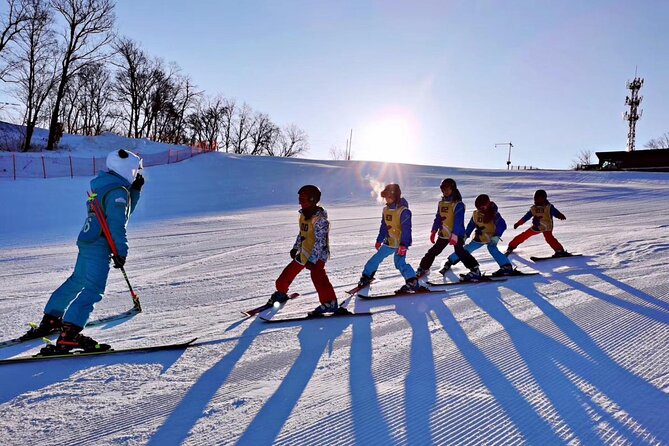
The full-day option provides five hours of instruction with a one-hour lunch break. The overall activity is listed at about six hours, so plan most of your day around it.
This format gives you more room than a three-hour half-day lesson. You can spend the morning correcting a basic movement, take a break, and return to the slope with enough time to test the change. The coach can also move you through more than one level of terrain if your ability develops during the session.
Lunch is a useful reset in a cold mountain environment. It breaks up the physical effort and gives you time to warm up. Your own meal or refreshments are not included, even though the coach’s meals are included in the stated package. Budget for your lunch and check where you will take the break at the resort.
The one-hour stop also makes this a better fit for people who want instruction without racing through the day. Still, five hours of skiing is demanding. You should have a moderate level of physical fitness, and you should expect the day to feel tiring if you are new to snow sports.
A half-day option of three hours is available if the full format feels too long. The full-day session is the better choice if you want steady progression, while the half-day may suit a first lesson, a shorter schedule, or a group with limited stamina.
Our other Hokkaido reviews may also help you decide



What beginners can realistically learn
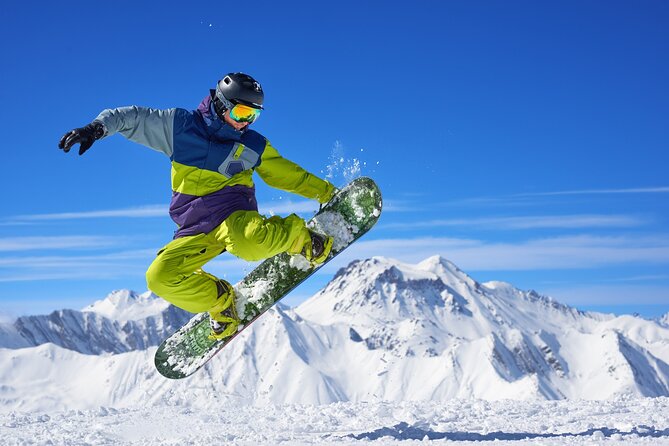
This is a good setup if you are starting from the beginning. Your coach can work on the basic stance, balance, and stopping before introducing turns. That order helps you feel more secure before moving onto green runs.
Do not expect to master skiing or snowboarding in one day. A successful beginner lesson should leave you with safer movement, a clearer sense of how to control speed, and practical exercises you can repeat after the coach leaves.
The private setting is especially useful if you are nervous. You can ask the same question more than once, and the coach can give immediate feedback rather than moving on because the rest of a large class is waiting.
You still need to arrange your own equipment and resort access. A lift pass is listed at about ¥5,800, while ski or snowboard rental is about ¥9,500. Those figures are additional to the lesson price, so your true cost can be much higher than $316.89 per person.
What intermediates and advanced riders gain
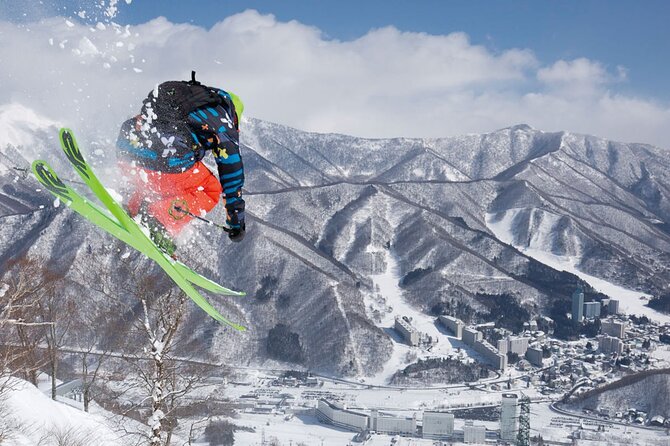
The lesson is not only for beginners. Intermediate skiers can use the time to improve parallel turns, rhythm, and edge control. These skills help you manage speed and make cleaner turns on blue runs.
Advanced riders can focus on carving, line choice, and powder adaptation. Niseko’s snow makes this particularly relevant, but the coaching remains within resort boundaries. If you want backcountry guiding, this is not the right activity.
The best reason for an advanced skier to book private instruction is focused correction. You are not paying for a lecture on general technique. You are paying for a coach to watch your skiing and adjust the work to your current habits and goals.
Progress may also depend on conditions. Heavy snowfall can close lifts. In that unusual situation, you may need to carry your own equipment up the slope. That is an important practical drawback for anyone expecting uninterrupted lift access.
The real value of the $316.89 price
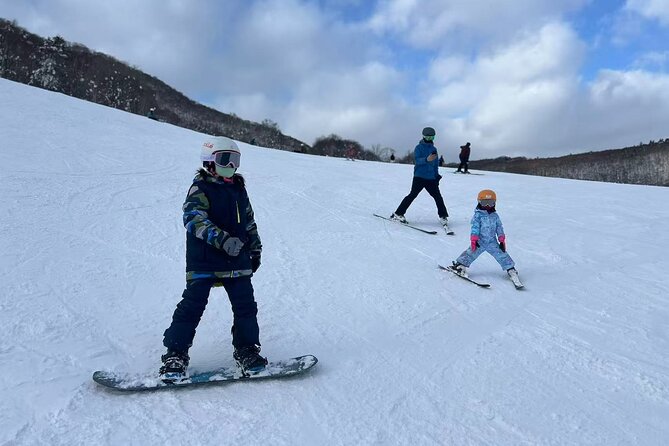
At $316.89 per person, this is a premium lesson. The price makes more sense when you divide it among a small private group and compare it with the cost of several separate lessons. Group discounts may improve the value, but the exact savings are not provided.
The package includes tailored instruction, the private coach, the coach’s lift ticket, transport, and meals. Those inclusions remove some expenses for the instructor and keep the fee easier to understand.
Your own costs remain substantial:
- Resort lift pass, approximately ¥5,800
- Ski or snowboard rental, approximately ¥9,500
- Your lunch and refreshments
- Insurance
- Transportation to and from the resort, unless the arranged pickup covers your needs
The wording around transport deserves a careful check. The coach’s transport is included, and pickup is offered, but you are also told that transportation to and from the resort is not included for participants. Confirm exactly where you will be collected and dropped off before booking.
I would consider the price fair for a group that values private attention and wants a full day of technical work. It is harder to justify if you already ski confidently, need only a short refresher, or are traveling on a tight budget.
Equipment, passes, and preparation
You arrange your own skis or snowboard and safety equipment. Rental equipment is available at an estimated cost of ¥9,500, but the exact rental shop and package details are not specified here. Allow time before the lesson to collect and fit your gear.
You also buy your own lift pass. The listed estimate is about ¥5,800, though the final amount may depend on the resort and pass type available on your date.
Bring suitable winter clothing, but do not treat the lesson as a sightseeing stop. You will be active for most of the day, and a moderate level of fitness is expected. The coach will cover safety at the beginning, but you remain responsible for your own insurance.
Your booking is confirmed within 48 hours, subject to availability. That matters during busy ski periods, when resort capacity and instructor schedules can fill quickly. The activity requires good weather, so poor conditions can lead to a new date or a full refund.
If the resort is entirely closed, a 10 percent service fee applies in the rare case of cancellation. Heavy snowfall that closes lifts is a different problem: the lesson may continue, but you could be asked to carry your own equipment up the slope.
Who should book this lesson
I would recommend it for beginners who want patient instruction, families or friends who prefer a private group, and intermediate skiers who want to correct specific habits. The language options also make it practical for international visitors who want instruction in English, Chinese, or Japanese.
It can suit advanced riders, too, provided your goal is in-resort technique rather than backcountry access. Carving, edge control, line choice, and powder handling are all suitable targets.
I would think twice if your group has no shared ability level or if several people want different sports. The session covers one discipline only, ski or snowboard, and the private format is most useful when the group can work toward broadly similar goals.
The absence of existing ratings means you should judge the activity by its structure, inclusions, and price rather than by a long record of public feedback. Ask about group size, pickup, the instructor’s language, and the exact resort meeting point before paying.
Cancellation and booking details
You can cancel at least 24 hours before the local start time for a full refund. Cancellations or changes made within 24 hours are not refunded or accepted.
If bad weather causes the activity to be canceled, you are offered another date or a full refund. Confirmation normally arrives within 48 hours, subject to availability.
Should you book it?
Book this lesson if you want a full day of focused coaching at one of Niseko’s major resorts and you are willing to cover the extra costs. The strongest reasons are the private format, flexible level-based teaching, and choice of English, Chinese, or Japanese instruction.
Choose the half-day option if you are unsure about your stamina or budget. Skip this activity if you only want a casual introduction, need backcountry guiding, or prefer the low price of a large group class. For a family or small party that wants to make real progress on Niseko’s powder, the private attention can be worth the premium.
FAQ
How long is the full-day Niseko lesson?
The activity lasts approximately six hours, including a five-hour lesson and a one-hour lunch break.
Which Niseko resorts are available?
You can take the lesson at Grand Hirafu, Hanazono, Niseko Village, Annupuri, or Moiwa.
Is the lesson private?
Yes. Only your group participates in the activity. It is designed for individuals or small groups.
Is equipment included?
No. You arrange your own ski or snowboard rental. The estimated rental cost is approximately ¥9,500.
Is the resort lift pass included?
No. You arrange your own resort lift pass. The listed estimate is approximately ¥5,800.
What languages are available?
Instruction is available in English, Chinese, or Japanese. You choose either skiing or snowboarding for the session.
More Tour Reviews in Hokkaido


More Private Tours in Hokkaido
More Niseko Tours in Hokkaido


Other Hokkaido tours worth your shortlist

Niseko Tours, side by side.
 ★ 5.0Chitose Airport to Niseko Private Transfer | Licensed DriverFrom $315.3019 reviews
 ★ 5.0SkyExpress Private Transfer: New Chitose Airport – Niseko (8 Pax)From $535.6315 reviews
 ★ 5.0Half Day – Snow View Rafting in NisekoFrom $111.0513 reviewsNew Chitose Airport Private Transfer to Sapporo/Niseko/FuranoFrom $177.306 reviews
The lists this tour appears in