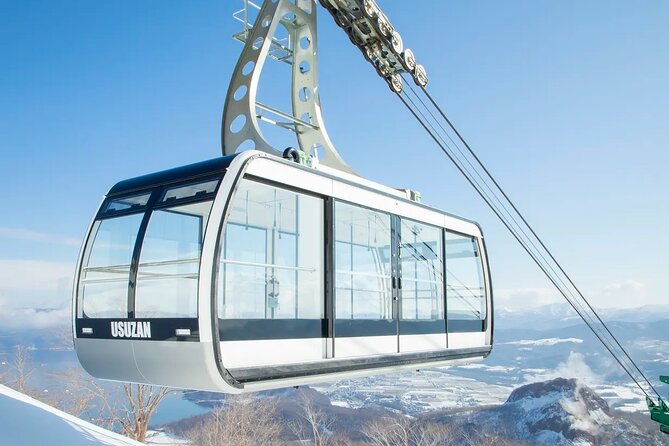
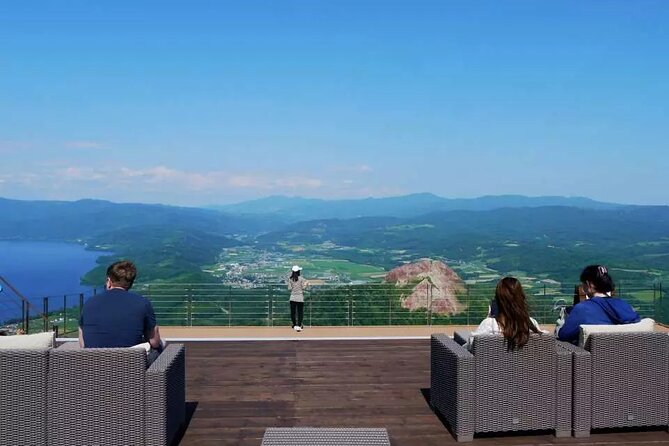
Mt. Usu is an active volcano, and the six-minute ropeway ride puts you above one of Hokkaido’s most dramatic volcanic areas. From the upper station, you can look across Lake Toya, Mt. Showa Shinzan, and, on a clear day, the Pacific Ocean.
In This Article
- Key points to know before you go
- What the Mt. Usu experience is really about
- Riding the ropeway above Mt. Usu
- Volcanic craters and upper observation decks
- Adding Toyako Observatory to the day
- How long should you allow?
- Is $19.42 a fair price?
- Timing, transport, and practical planning
- Weather is the key risk
- Who will enjoy this outing most?
- Should you book the Mt. Usu Ropeway ticket?
- FAQ
- What does the Mt. Usu Ropeway ticket include?
- Is the Toyako Observatory included?
- How long is the ropeway ride?
- How long does the full experience take?
- What are the opening hours?
- Can the ropeway stop because of bad weather?
- What happens if the experience is canceled because of weather?
- Can I cancel the ticket for a personal reason?
- How long is the voucher valid?
I like the wide views and the chance to pair a smooth ropeway ride with short walks toward volcanic craters. I also like the simple pricing: at $19.42 per person, the round-trip ropeway ticket gives you access to the main attraction without forcing you into a long guided program.
The main catch is the weather. Service can stop in poor conditions, and the ticket is normally non-refundable if you cancel for another reason, so you should plan this outing around a reliable forecast.
Key points to know before you go
- Six-minute ascent: The ropeway carries you up Mt. Usu with views of Lake Toya, Mt. Showa Shinzan, and sometimes the Pacific Ocean.
- Volcanic viewpoints: Upper observation decks and trails let you see volcanic craters at close range.
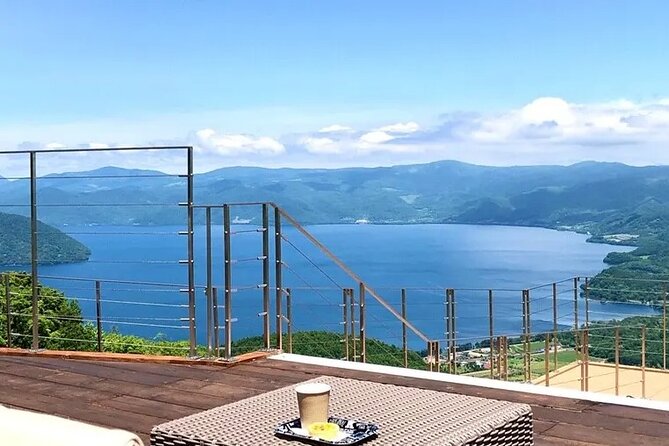
- Lake Toya pairing: Toyako Observatory adds broad views of the caldera lake and the mountains around it.
- Round-trip access included: The ticket covers the ropeway ride up and back, but not personal spending.
- Five-day validity: The voucher remains valid for five days from the participation date and expires at 11:59 PM on the final day.
- Weather matters: Ropeway service may be suspended in bad weather, with a different date or full refund offered if the experience is canceled.
What the Mt. Usu experience is really about
This is not just a ride to a high viewpoint. Mt. Usu is an active volcano, so the appeal comes from seeing how fire beneath the ground has shaped Hokkaido above it.
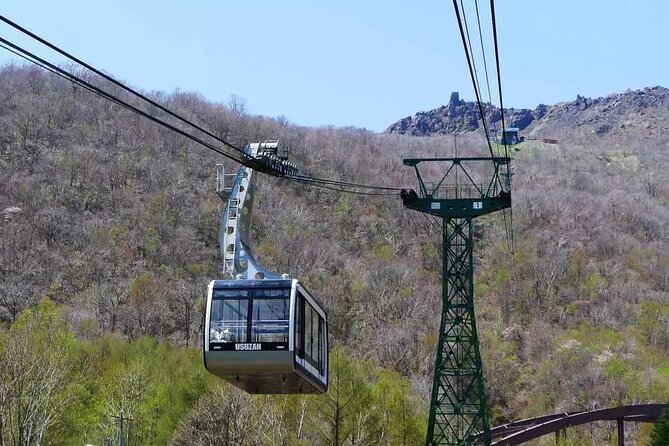
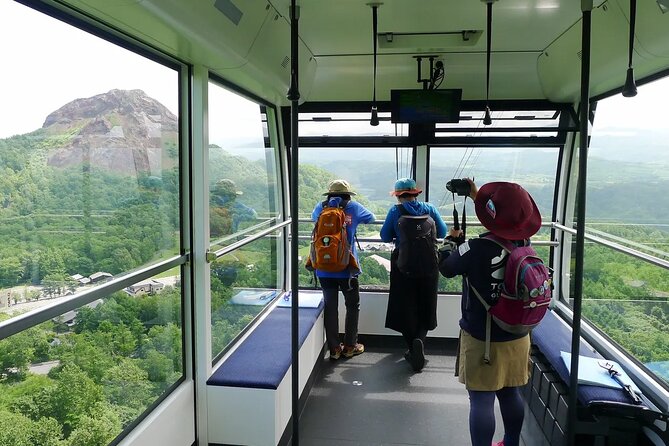
You begin with the Mt. Usu Ropeway, which takes about six minutes each way. That is long enough to watch the views open up, but short enough that the ride itself does not take over the day.
From the ropeway, you can look toward Lake Toya, Mt. Showa Shinzan, and the Pacific Ocean when visibility is good. The view changes with the weather. On a clear day, you get a broad sweep of water, mountains, volcanic peaks, and open sea. In cloud or rain, the ride may feel far less rewarding, and service may stop altogether.
At the upper station, the experience becomes more active. Observation decks give you easy viewpoints, while hiking trails lead toward sights connected to the volcano’s craters. You do not need to be a serious hiker to appreciate the area, but comfortable walking shoes make sense if you want more than a quick photo.
Our other Hokkaido reviews may also help you decide



Riding the ropeway above Mt. Usu
The ropeway is the strongest part of the outing for visitors who want impressive views without a long uphill climb. In six minutes, you gain a higher position on Mt. Usu and get a clear sense of how the volcano relates to the lake and nearby peaks.
I like this arrangement because it gives you two kinds of sightseeing. The ride provides a moving view, while the upper area gives you time to stop, look closely, and choose your own pace.
The round-trip ticket is included, so you are not paying separately for the return ride. That matters because the upper area is intended for sightseeing rather than simply being a one-way hiking destination.
The ropeway is also a useful choice if you have limited time or do not want a strenuous ascent. The supplied information does not give a trail difficulty rating, so you should not assume every route is easy. You can still focus on the observation decks if the trails do not suit you.
Volcanic craters and upper observation decks
At the top, Mt. Usu’s geology becomes the main subject. The observation points and trails offer views of volcanic craters, giving you something more meaningful than a standard mountain panorama.
I find the crater views valuable because they explain why this place feels different from a normal lookout. You are not simply looking at distant scenery. You are standing in an area shaped by volcanic activity and seeing the results nearby.
The walks also help break up the ropeway ride. Take time at the upper viewpoints instead of rushing back down. The exact walking experience will depend on weather, conditions, and how much of the trail network is open, so treat the outing as a flexible visit rather than a fixed march from point to point.
If photography matters to you, the upper area offers several types of pictures: Lake Toya from above, Mt. Showa Shinzan, volcanic formations, and the Pacific Ocean on clear days. Light conditions can change quickly around a mountain, so it is wise to allow time for more than one viewpoint.
Adding Toyako Observatory to the day
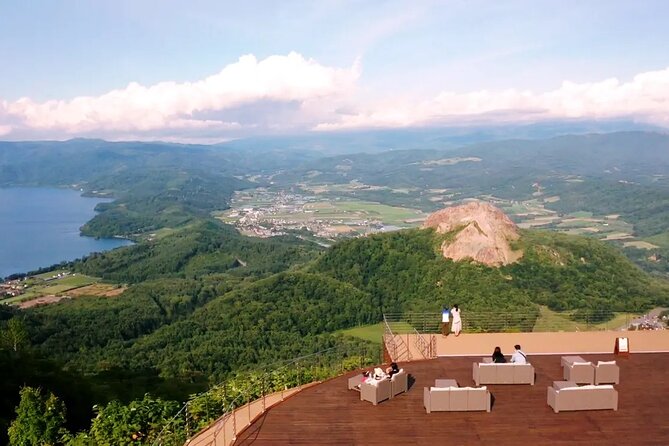
The Toyako Observatory provides a different view from Mt. Usu. Instead of focusing mainly on volcanic craters and high mountain slopes, you get a broad look at Lake Toya and the mountains that surround the caldera lake.
That contrast makes the combination worthwhile. Mt. Usu gives you a closer connection to volcanic ground, while the observatory helps you understand the lake’s scale and setting.
The observatory is also a calmer stop in the overall plan. After the ropeway and upper trails, you can use it as a place to pause and take in the wider scene. The experience description points to sunrise and sunset as especially attractive times for the views, but the listed operating hours run from 8:15 AM to 5:15 PM, every day, during the stated operating period. You should check the timing carefully rather than assume access before opening or after closing.
The information provided does not spell out a separate admission charge for the observatory. The included item is specifically the round-trip ropeway ticket, so you should confirm any local admission or personal costs before setting out.
How long should you allow?
The experience is listed as approximately eight to nine hours. That is much longer than the ropeway ride itself, so the total duration likely includes travel time, time at the volcanic site, the Toyako Observatory visit, and time for walking or meals.
You should not read the eight to nine hours as eight hours spent inside a cable car or at one lookout. The ropeway ride is only six minutes each way. The value of the day comes from combining several stops and giving yourself time to enjoy the scenery.
If you want only the ropeway and a few photographs, you may spend less time at the site. If you add the trails, crater viewpoints, observatory, and a meal, the longer estimate makes more sense.
A restaurant called Dining Funkatei is listed with opening hours from 10:30 AM to 2:30 PM. Its business hours may change, so do not rely on it as your only food plan. Personal expenses, including meals, are not included in the ticket price.


Is $19.42 a fair price?
At $19.42 per person, this is a reasonable price for a scenic ropeway ride with a return trip included. You are paying for access to the main uphill transport and the views it opens up, not for a guide, meal, or full-day transport service.
The value is strongest if you plan to use the upper observation areas and trails rather than ride up, take one picture, and leave. The Toyako Observatory adds value by giving you a second viewpoint over Lake Toya, but you should remember that the listed inclusion is only the round-trip ropeway ticket.
The price also works well for independent sightseers. You can set your own pace, spend longer at a viewpoint, or move on when the weather turns poor. The tradeoff is that you do not receive a named guide or a structured explanation of the volcano. No guide name or guiding service is provided in the available information.
Timing, transport, and practical planning
The attraction is near public transportation, which makes it more suitable for an independent day out than a remote wilderness visit. Still, the details provided do not identify a specific station, bus route, or transfer schedule. You should check the transport connection from your base before booking.
Opening hours are listed as 8:15 AM to 5:15 PM from Monday through Sunday, for the stated period of September 17, 2024, through July 17, 2026. These hours give you a useful daytime window, but ropeway operation may still change because of weather.
The voucher is valid for five days from the participation date and expires at 11:59 PM on the last day. That offers some flexibility after the start date, though you should read the voucher wording carefully and confirm how the validity applies to your planned visit.
Confirmation is received at the time of booking. Keep the confirmation available when you arrive, since the ticket is the proof of your included round-trip ropeway access.
Weather is the key risk
Bad weather is the one issue you should take seriously. The service may be suspended when conditions are poor, and visibility can fall even when the attraction remains open.
If the operator cancels the experience because of poor weather, you will be offered a different date or a full refund. That is different from changing your mind. The ticket is non-refundable and cannot be amended for personal reasons, so cancellation on your side does not produce a refund.
For the best chance of seeing Lake Toya, Mt. Showa Shinzan, and the Pacific Ocean, choose a day with good visibility. The supplied information does not promise clear views at any particular time, so it is better to treat the scenery as weather-dependent rather than guaranteed.
Who will enjoy this outing most?
I would recommend this experience to you if you want a strong view of Hokkaido without committing to a long mountain climb. The ropeway handles the steep part, and you can decide how much walking to add once you reach the upper area.
It also suits photographers and people interested in volcanoes. You get water, mountains, craters, and an active volcanic setting in one outing.
Families and mixed-ability groups may find the ropeway useful because not everyone needs to tackle the same amount of walking. The information says most participants can take part, but it does not provide detailed accessibility information. If you need step-free access or specific mobility support, confirm those details before booking.
I would be more cautious if your schedule is fixed to one narrow weather window. The cancellation terms are strict, and poor conditions can affect both operation and the quality of the views.
Should you book the Mt. Usu Ropeway ticket?
Book it if you want an independent day focused on Hokkaido’s volcanic scenery, especially if Lake Toya, Mt. Showa Shinzan, and crater views are high on your list. The round-trip ropeway makes Mt. Usu accessible without turning the visit into a demanding climb, and the Toyako Observatory gives the day a useful second viewpoint.
Skip it if you need a guided geological tour, guaranteed clear weather, or a fully arranged transport package. You should also avoid booking casually if your plans may change, since the ticket cannot normally be canceled or amended for a refund.
For the best value, choose a clear day, arrive within the 8:15 AM to 5:15 PM operating window, allow several hours for both Mt. Usu and the observatory, and leave room for the upper trails. At $19.42, it is a sensible ticket for a self-directed visit, provided you accept the weather risk.
FAQ
What does the Mt. Usu Ropeway ticket include?
The ticket includes a round-trip ride on the Mt. Usu Ropeway.
Is the Toyako Observatory included?
The experience includes a visit to the Toyako Observatory, but the listed included item specifically states the round-trip ropeway ticket. Confirm any separate observatory admission details before visiting.
How long is the ropeway ride?
The ropeway ride takes approximately six minutes each way.
How long does the full experience take?
The total duration is listed as approximately eight to nine hours.
What are the opening hours?
The listed opening hours are 8:15 AM to 5:15 PM, Monday through Sunday, for the period from September 17, 2024, through July 17, 2026.
Can the ropeway stop because of bad weather?
Yes. Service may be suspended in poor weather conditions.
What happens if the experience is canceled because of weather?
You will be offered a different date or a full refund if the operator cancels because of poor weather.
Can I cancel the ticket for a personal reason?
No. The experience is non-refundable and cannot be changed for any reason. A personal cancellation or amendment request will not be refunded.
How long is the voucher valid?
The voucher is valid for five days from the participation date and expires at 11:59 PM on the final day.
More Tour Reviews in Hokkaido
More Noboribetsu & Lake Toya Tours in Hokkaido

Other Hokkaido tours worth your shortlist



Noboribetsu & Lake Toya Tours, side by side.
 ★ 4.7Hokkaido Seasonal: Lake Toya & Noboribetsu Jigokudani ValleyFrom $55173 reviews
 ★ 4.1Hokkaido, Noboribetsu and Lake Toya Day TourFrom $6688 reviews
 ★ 5.0[Departure from Sapporo] Noboribetsu Jigokudani, Lake Toya, Cape Chikyu by private carFrom $404.1637 reviews
 ★ 4.5Lake Toya, Bear Ranch and Sapporo Otaru Full Day TourFrom $85.6633 reviews
The lists this tour appears in