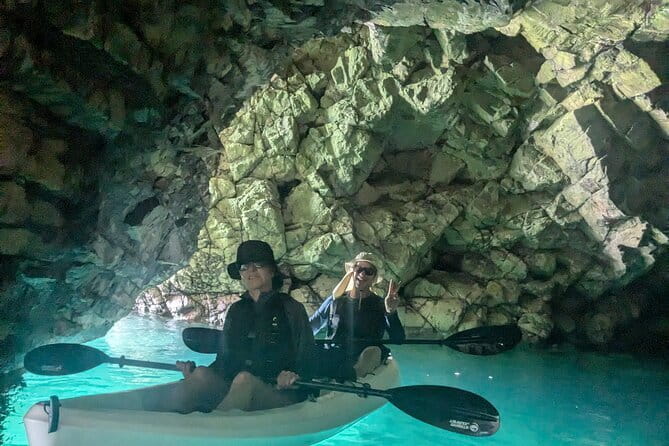
Shioya Beach gives you a close look at Hokkaido’s coast that you cannot get from a roadside viewpoint. In a stable kayak, you paddle below dramatic cliffs and tucked-away coves, then reach a quiet beach for a swim in clear water. I like the easy double kayaks and the calm, careful way the tour is run. I also like that non-swimmers and first-timers can join.
In This Article
- Key points at a glance
- Why Shioya Beach is the right setting for a short kayak trip
- Your first 10 minutes: a proper safety briefing
- The first 35 minutes: getting used to the water
- Cliffs, coves, and caves below the Marine Park
- The five-minute secret stop and 10-minute swim
- The final hour: a longer look at the coast
- What the $103 price covers
- Finding Shioya Kaigan and preparing for the launch
- Who will enjoy this most
- Practical verdict: should you book it?
- FAQ
- How long does the sea kayaking tour last?
- Where does the tour begin and end?
- Is transportation to Shioya Beach included?
- Are beginners and non-swimmers allowed to join?
- What equipment is included?
- What should I bring?
- Does the tour operate in all weather?
I especially appreciate the small-group feel, with space for up to 10 adults and two single kayaks for paddlers who want more independence. Guide Max has earned praise for helping everyone and explaining what they see. The main consideration is weather: the tour runs only in calm sea and wind, and a recent rockfall meant the grotto could not be entered, so the exact route can change.
Key points at a glance
- Shioya’s cliff-lined coast: Paddle beside secluded bays, sea caves, seaweed, starfish, sea urchins, and seabirds.
- A gentle start for beginners: Stable double kayaks, life jackets, and first-aid-trained instructors make this a practical first sea kayaking trip.
- A real swim stop: The route includes a five-minute break and about 10 minutes of swimming at a secluded beach.
- English-speaking guidance: Max and the other certified instructors provide instruction, assistance, and local explanation in English.
- Weather controls the outing: Tours go ahead only in calm wind and sea conditions, and cave access may change after rockfall.
- Useful extras included: Sandals, photographs, a changing tent, and a simple pump shower are provided.
Why Shioya Beach is the right setting for a short kayak trip
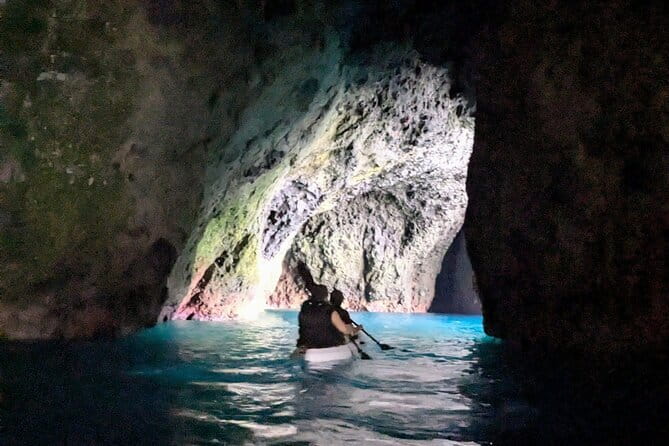
Shioya Beach sits on the Otaru coast, where the water meets a rugged line of cliffs and small bays. That setting makes the two-hour format work well. You get a taste of sea kayaking without giving up most of your day.
I like the way this outing puts you at water level. From a kayak, the cliffs rise beside you rather than sitting in the distance. You can look into clear shallows, spot sea urchins and starfish, and watch seabirds above the protected marine area. The scenery is the main event, but the quiet matters just as much. The route reaches sections of coast that are not easy to see from land.
This is not a hard-core expedition. The tour uses stable double kayaks that are easy to paddle, which makes them a sensible choice if you have never handled a sea kayak. Elementary school students and older children can join, and non-swimmers are welcome. You still need to be comfortable taking part in a water activity, but you do not need previous kayaking experience or swimming skills.
Our other Otaru reviews may also help you decide


Your first 10 minutes: a proper safety briefing
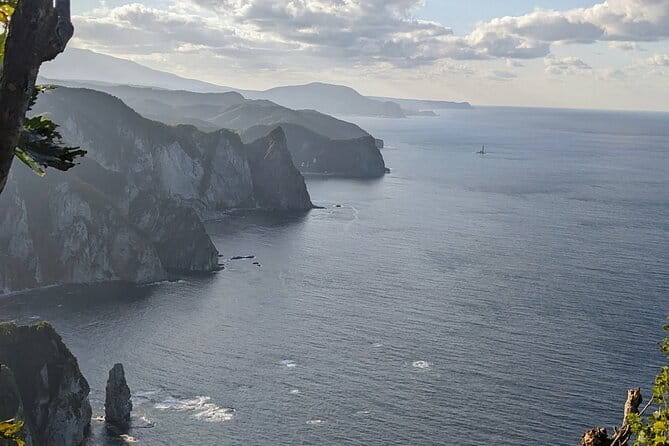
The tour begins at Shioya Kaigan with about 10 minutes of safety instruction. This is short enough not to drag, but long enough to cover the basics before you reach the water.
Your guide will get you familiar with the kayak, paddle, and life jacket, then explain how to work with your partner in a double kayak. That partner arrangement is important. You will paddle more smoothly if you listen to the guide and keep a steady rhythm rather than trying to power ahead on your own.
All participants receive life jackets. The instructors are certified kayak guides, insured, and trained in First Aid. Those details matter more on the sea than they do on a calm lake, where wind and water movement are easier to predict. The guides also make the call about conditions. If the wind or sea is not calm enough, the tour does not operate.
Max is one guide you may meet. He has been praised for being helpful, explaining what is around you, and stepping in when someone needs assistance. That is the kind of guidance I want on a short outdoor tour: clear instruction, a watchful eye, and enough local detail to make the coast more than a pretty view.
The first 35 minutes: getting used to the water
After the safety talk, you spend about 35 minutes kayaking along the coast. This first stretch gives you time to find your balance and settle into the movement of a double kayak.
The stable boats are a strong point for beginners. You are less likely to spend the opening minutes worrying about every small wobble, so you can look around and enjoy the cliffs. If you are paired with another adult, the boat also lets you share the work. Two single kayaks are available, and the tour can take up to 10 adult participants.
The size of the group can affect how personal the outing feels. A smaller departure should give you more room to ask questions and paddle at a relaxed pace. A full group of 10 is still modest for a guided activity, though the experience may feel less private. Private or small-group arrangements are available if having a quieter outing matters to you.
You should expect the guide to adjust the pace to the group. This is not advertised as a race or a fitness session. The point is to see the coastline from the water, not to arrive exhausted.
Cliffs, coves, and caves below the Marine Park
The most memorable section is the route beside the cliffs and through the sheltered bays. The protected Marine Park contains small coves and cave formations that are difficult to appreciate from shore.
You may see sea urchins and starfish in the water, along with seaweed moving below the kayaks. Seabirds pass overhead, adding a little life to what can otherwise feel like a remarkably quiet stretch of coast. I like this kind of sightseeing because it asks you to slow down. You are not moving from one famous viewpoint to the next. You are watching the water, the rock, and the spaces between them.
Cave access is not guaranteed. A rockfall shortly before one outing made it unsafe to enter the grotto, so the guide kept the group outside. That is a useful warning, not a flaw in the tour. Coastal rock changes, and a responsible guide will protect the group rather than force a dramatic route for the sake of a photo.
You should also understand that the sea and wind set the limits. Calm conditions may allow a pleasant route beside the cliffs, while a change in conditions can shorten or alter the outing. If entering a specific cave is your main reason for booking, keep your expectations flexible.
The five-minute secret stop and 10-minute swim
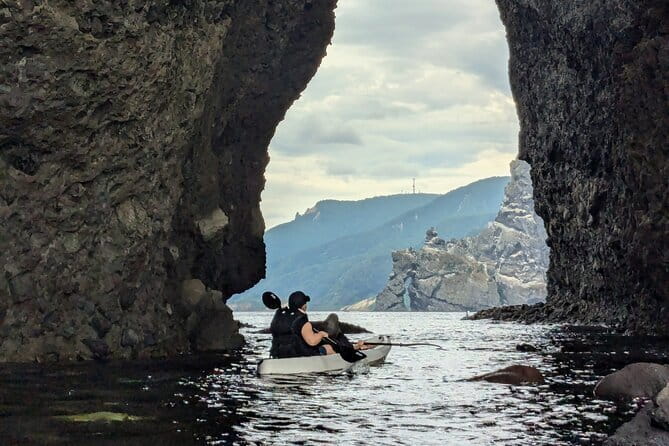
About halfway through the outing, the group stops at a secluded beach. The scheduled break lasts about five minutes, followed by roughly 10 minutes for swimming.
This stop gives the trip a welcome change of pace. You are not sitting in the kayak for two straight hours. You can step ashore, stretch, and take in the clear water from a different angle. The swim is optional in practical terms, although the tour is built around allowing time for it. Non-swimmers can enjoy the beach stop and remain in a life jacket rather than entering the water.
Bring swimwear and a towel if you plan to swim. You also need sunscreen, a hat, and drinking water. Sandals are supplied, which is useful for the beach and shoreline. The operator provides a changing tent and a simple pump shower, so you have a basic way to change and rinse off after the outing.
The stop is short, so do not expect a long beach visit. You will have enough time for a quick swim and a breath of fresh air, not a full afternoon by the sea.
Our other Otaru reviews may also help you decide

The final hour: a longer look at the coast

The longest part of the route is the final hour of kayaking. By then, you should feel more comfortable with the boat, and you can give more attention to the coast around you.
This portion is where the experience moves beyond a brief introductory paddle. You have time to pass more cliffs and coves, look for marine life, and enjoy the quiet stretches of water. Your guide can point out features along the route and help you keep the kayak moving in a controlled way.
The one-hour return section also means you should pace yourself. Even stable kayaks require repeated paddling, and the sea can make the work feel different from paddling on flat inland water. Use the early part of the tour to find a comfortable rhythm. If your arms begin to tire, tell the guide rather than trying to push through silently.
The route ends back at Shioya Kaigan. Since the whole activity lasts about two hours, you can reasonably fit it into a morning or afternoon plan around Otaru, provided you allow time to reach the beach independently.
What the $103 price covers
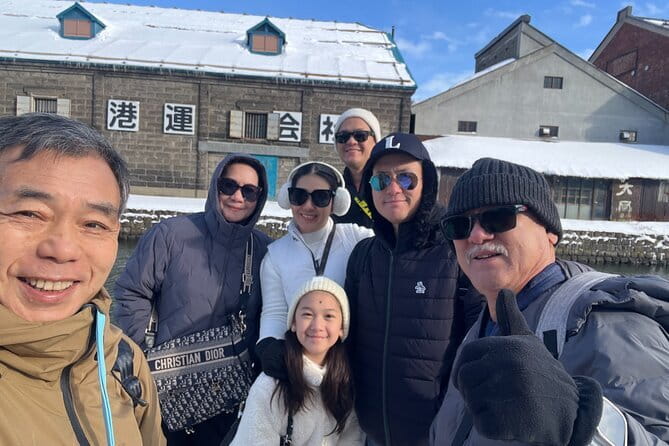
At $103 per person, this is not a bargain-priced waterfront rental. You are paying for a guided coastal outing, safety oversight, equipment, a swim stop, and a small-group format rather than simply hiring a kayak by the hour.
The price includes a two-hour guided tour, double kayaks, two single kayaks, life jackets, certified instructors, and English-speaking guides. It also includes sandals, photographs, a changing tent, and a simple pump shower. Those extras reduce the amount of equipment you need to pack and give you a record of the day without asking you to manage a camera while paddling.
I think the price makes the most sense if you are new to sea kayaking or want to see the coast without handling route planning and safety decisions yourself. A confident paddler looking only for independent time on the water may find a guided tour less appealing. For a first outing, though, the instruction and supervised access to cliffs and coves add real value.
The tour can take up to 10 adults, and private or small-group options are available. Ask about the group setup when you book if personal attention is important to you. A smaller group can make it easier to hear explanations and match the guide’s pace.
Finding Shioya Kaigan and preparing for the launch
Transportation to Shioya Beach is not included, so you need to arrange your own way to Shioya Kaigan. Parking is available on site. Look for the pink flags and park next to them, a detail worth noting because one participant had difficulty finding the meeting point.
I would allow extra time to locate the flags rather than arriving at the scheduled start with wet-weather nerves already in place. The meeting area is practical rather than grand, and the pink markers are the key reference point.
Wear swimwear under comfortable clothing if you expect to use the beach stop. Pack a towel, hat, sunscreen, and water. Smoking, alcohol, drugs, and littering are not allowed, which is standard and especially important in a protected coastal area.
Departure times vary, so check the available start times before building your Otaru schedule. Since conditions control operation, it is also wise to keep some flexibility in your day.
Who will enjoy this most
I would recommend this tour to first-time kayakers, families with elementary school children, and anyone who wants a short outdoor activity with a strong scenery payoff. The stable double kayaks remove much of the intimidation, and the guide-led format gives you help when the water or paddling feels unfamiliar.
It also suits non-swimmers, since life jackets are supplied and swimming is not the only purpose of the stop. If you are bringing children under elementary school age, ask the operator first, since younger children are not automatically covered by the stated suitability.
The experience is a good fit for people who prefer nature to a busy schedule. You will spend most of the two hours moving slowly along the shore, with time to notice small details. It is less suitable if you need a guaranteed cave entry, a long swim, or a fixed route unaffected by weather.
You should also be comfortable sharing a double kayak unless you reserve an available single boat or a suitable private arrangement. The two single kayaks offer some flexibility, but they do not turn the whole tour into a solo-kayaking experience.
Practical verdict: should you book it?
Book this tour if you want an easy introduction to Hokkaido sea kayaking, a clear-water swim stop, and close views of Shioya’s cliffs and coves. The strongest reasons are the stable boats, attentive certified guides, included equipment, and access to a protected stretch of coast that is hard to experience from land.
Think twice if your schedule cannot handle a weather-related change or if a particular grotto is essential to your plans. The guides rightly put safety first, and rockfall or rough conditions can change the route.
For most visitors with two free hours, $103 is a fair price for a guided, well-equipped coastal outing. Find the pink flags, bring a towel and sunscreen, and arrive ready to paddle at a relaxed pace. If Max is leading your trip, expect a helpful presence and plenty of guidance. If another instructor leads, the same certified, English-speaking setup applies.
FAQ
How long does the sea kayaking tour last?
The tour lasts about two hours, including the safety briefing, kayaking, a short beach break, and swimming time.
Where does the tour begin and end?
The tour begins and ends at Shioya Kaigan, also known as Shioya Beach.
Is transportation to Shioya Beach included?
No. You need to arrange your own transportation to Shioya Beach. Parking is available on site beside the pink flags.
Are beginners and non-swimmers allowed to join?
Yes. Stable double kayaks are suitable for first-timers, and non-swimmers are welcome. Life jackets are provided for everyone.
What equipment is included?
The tour includes double kayaks, two single kayaks, life jackets, sandals, photographs, a changing tent, and a simple pump shower.
What should I bring?
Bring a hat, swimwear, towel, sunscreen, and water. Swimmers, clothing, and towels are not provided.
Does the tour operate in all weather?
No. Tours operate only during calm wind and sea conditions for safety and comfort. The route may also change if a cave or coastal area is unsafe.
More Tours in Otaru


More Tour Reviews in Otaru
More Otaru Tours in Otaru
Other Otaru tours worth your shortlist




Otaru Tours, side by side.
 ★ 4.5Lake Toya, Bear Ranch and Sapporo Otaru Full Day TourFrom $85.6633 reviews
 ★ 3.5Hokkaido Noboribetsu Lake Toya, Otaru Panoramic Tour From SapporoFrom $120.0028 reviews
 ★ 4.9Otaru Asarigawa Ski Resort Day Trip with GearFrom $18527 reviews
 ★ 4.4Hokkaido, Sappro, Otaru & Cape Kamui One-day TourFrom $6621 reviews
The lists this tour appears in