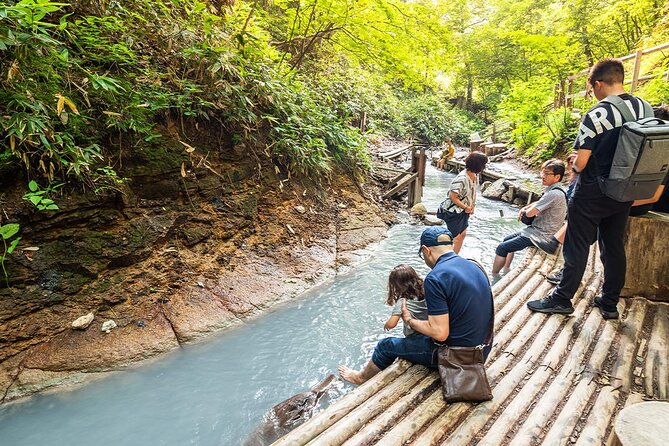
The most striking part of this full-day outing is the sharp change of scenery: sulfurous steam vents in Noboribetsu Hell Valley, a broad volcanic lake at Toya, and Otaru’s old canal streets before you return to Sapporo. You cover a large stretch of southern Hokkaido without arranging several separate train and bus connections.
In This Article
- Key points to know
- A 400-kilometer introduction to southern Hokkaido
- Hell Valley, where Hokkaido smells volcanic
- Oyunuma Pond adds a quieter volcanic pause
- Lake Toya gives you the wide view
- Showa Shinzan and the bear-ranch decision
- The road to Otaru can be part of the scenery
- Otaru offers a charming finish, but only briefly
- Guide quality and how much guiding to expect
- Price, transport, and the real value
- Who should book this Hokkaido day trip?
- FAQ
- How long does the Hokkaido tour last?
- Where does the tour start and finish?
- Is transportation included?
- Is admission to the bear ranch included?
- Is lunch included?
- Can young children join for free?
- What happens if bad weather cancels the tour?
I like the mix of nature and town life, and I like that guides such as Jay have handled the day with clear instructions and strong language skills. The route also reaches places that are awkward to combine by public transport. The catch is the pace: with about 400 kilometers of road travel, this is a sightseeing sampler, not a leisurely visit.
Key points to know
- Volcanic Noboribetsu comes first, with about 1 hour 20 minutes for Hell Valley and a further 30 minutes at Oyunuma Pond.
- Lake Toya receives the longest scenic stop, but the two Toya-area visits are still structured around a busy timetable.
- Showa Shinzan Bear Ranch costs extra, and the ropeway is not part of the listed experience.
- Otaru is a brief final stop, useful for a first look but too short for a thorough canal-town visit.
- The vehicle can be cramped, with limited legroom in some seats and long stretches between destinations.
- Lunch is not included, so bring food or be ready for limited choices during the Toya and bear-ranch portion.
A 400-kilometer introduction to southern Hokkaido
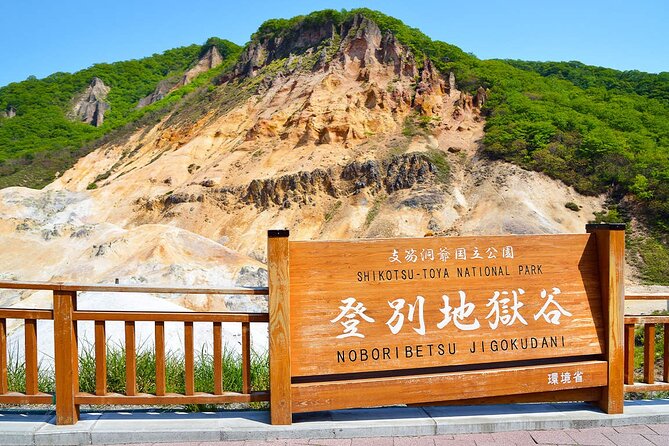
This excursion is best understood as a first look at several major sights rather than a deep visit to any one place. You leave Sapporo at 8:00 in the morning, spend most of the day moving between stops, and return to the same meeting point near Sapporo Station North Square after roughly 9 to 10 hours.
That broad coverage is the main reason to book. Noboribetsu, Lake Toya, Showa Shinzan, and Otaru each deserve more time than this schedule allows, but reaching all four in one day would be difficult without a vehicle. You get a strong sense of how spread out Hokkaido is, along with a useful list of places to revisit later.
The tour accepts up to 40 people. In practice, the vehicle arrangement matters more than the official group limit. Some departures use a small bus or van, and several seats have very little legroom, particularly those positioned over a wheel well. You may spend four hours or more in the vehicle, so your seat can shape the whole day.
The guide may speak Japanese, English, and Chinese. Jay has been specifically noted for handling several languages and explaining the region well. Sophia has also led departures in multiple languages. The quality of English explanation can vary, especially when the guide is switching between languages, so you should be comfortable exploring some stops independently.
Our other Sapporo reviews may also help you decide


Hell Valley, where Hokkaido smells volcanic
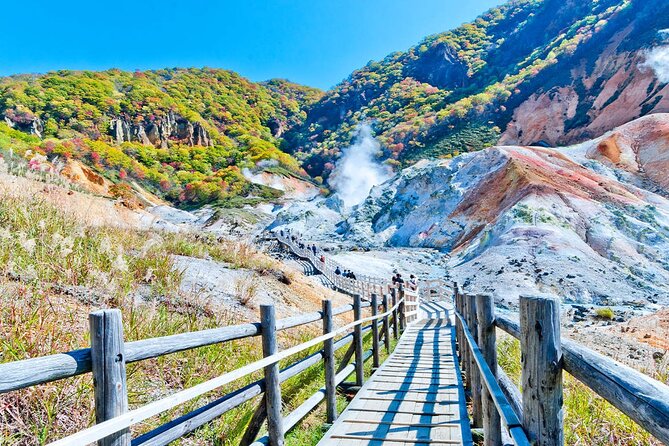
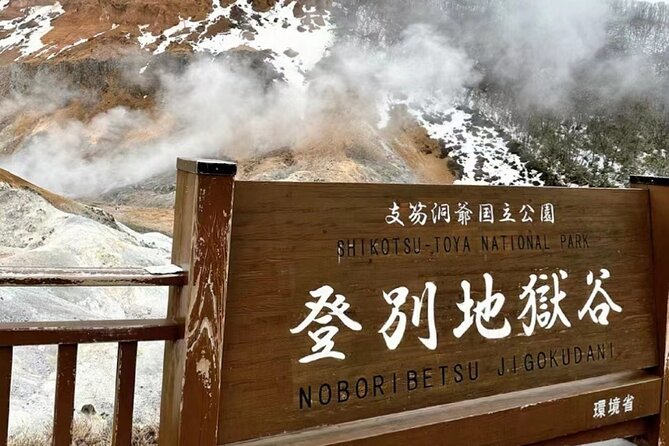
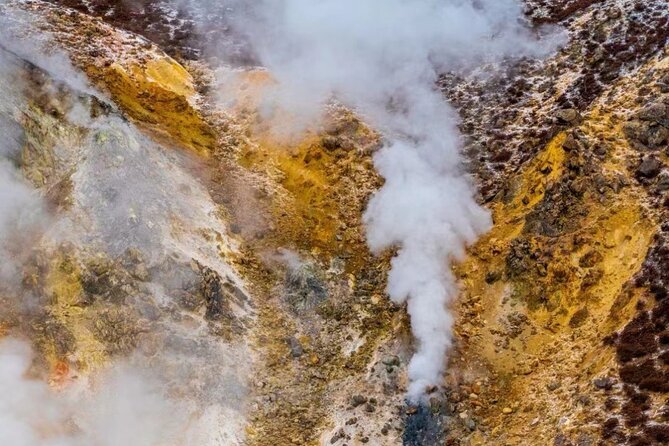
Noboribetsu’s Jigokudani, or Hell Valley, is the morning highlight. The name fits the place: steam rises from vents, sulfur colors the ground, and hot water runs through the volcanic area. The air has a strong sulfur smell, which is part of the experience rather than a nuisance to be avoided.
You have about 1 hour 20 minutes here, with no admission fee listed. That gives you time to follow the walking paths and take in the steaming hollows without needing a long hike. In snowy weather, the white ground and rising steam create an especially dramatic scene, though heavy snow can delay the timetable.
I like this opening stop because it gives you something you cannot get from a city viewpoint or a standard lake visit. It also provides a physical sense of Hokkaido’s volcanic activity. The trade-off is that the stop focuses on the main geothermal area. If you want to explore Noboribetsu’s onsen town as well, the schedule may not leave enough time.
Wear shoes with a firm sole and clothing suited to changing weather. The tour operates outdoors, and the experience depends on walking around exposed geothermal ground. In winter, snow can slow the group and reduce the amount of free time.
Oyunuma Pond adds a quieter volcanic pause
A short drive takes you to Oyunuma Pond, a volcanic pond formed from the remains of an eruption. The water contains sulfur and iron, and its surface remains hot. You receive about 30 minutes here, again with no separate admission fee.
This stop works as a useful companion to Hell Valley. Jigokudani is full of vents and steaming activity, while Oyunuma gives you a broader view of a volcanic pool. The visit is short, so think of it as a focused photo and viewing stop rather than a long walk.
The two Noboribetsu stops are among the most distinctive parts of the day. They also show why a guided vehicle is useful. Combining them with Lake Toya and Otaru by public transport would require careful planning and would likely take much longer.
Lake Toya gives you the wide view
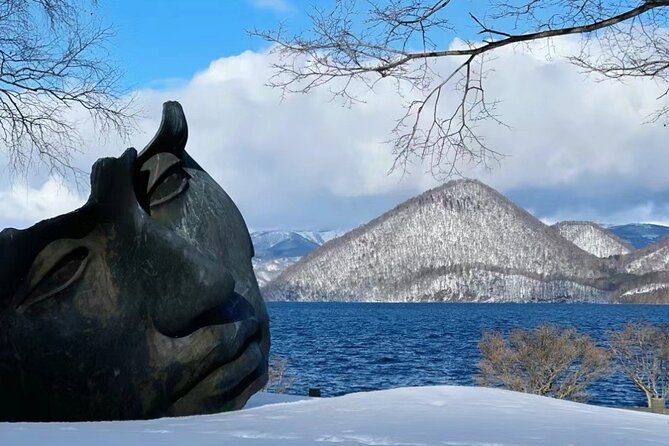
Lake Toya is a caldera lake inside Shikotsu-Toya National Park. It is nearly circular, about 10 kilometers across, and covers roughly 70.72 square kilometers. The water and surrounding volcanic country can look very different depending on clouds, rain, snow, and mist.
The main Lake Toya visit lasts about two hours. That is the most generous scenic allocation on the schedule, giving you time to enjoy the view, eat, and walk around at your own pace. There is also a separate 20-minute Toya viewpoint stop, intended to show the lake from another angle.
The lake is a strong middle section because it slows the rhythm after the morning’s geothermal sites. You can take in the open view rather than concentrating on steam vents and marked paths. On a clear day, the panorama can be the visual centerpiece of the outing. In rain or thick mist, the lake may be far less impressive, and the schedule can feel less forgiving.
Lunch is not included. Bring a takeaway meal if you want to protect your sightseeing time, particularly because food choices at the stop may be limited. The tour’s long road day makes a large breakfast sensible too.
Showa Shinzan and the bear-ranch decision
Showa Shinzan is an active volcanic formation near Lake Toya. The nearby bear ranch houses more than 100 purebred Hokkaido brown bears, and you can pay extra to enter and feed them. Admission is listed at about ¥850 per person, or roughly $5, though the tour price does not include it.
The schedule allows about two hours for the Showa Shinzan area and bear ranch. That sounds generous until you account for lunch, walking, and the optional admission. You need to decide how to use the time rather than assuming every activity is included.
This is the most controversial part of the itinerary. Some visitors find the bears memorable, while others are uncomfortable with the animals being kept in enclosures and prefer the natural view from the mountain ropeway. The ropeway itself is not included in the listed tour, and its operating schedule may not fit easily into a group itinerary.
I would treat the bear ranch as an optional choice, not the reason to book the tour. If you want to see it, carry enough cash for the ¥850 entry and any food. If the sight of caged animals bothers you, use the time for the surrounding Showa Shinzan area, but check the guide’s instructions before leaving the group.
Our other Sapporo reviews may also help you decide


The road to Otaru can be part of the scenery
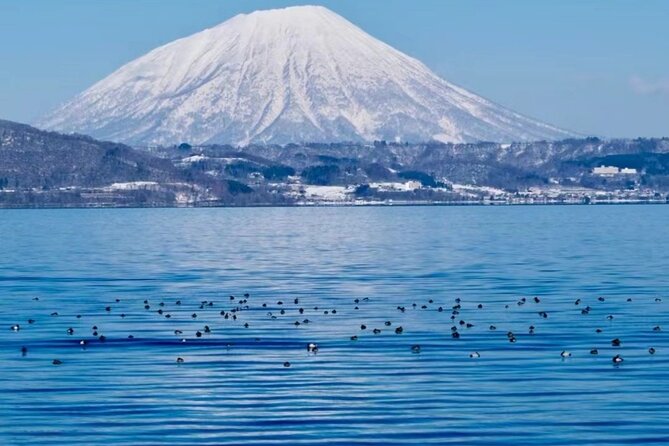
One of the better parts of the day happens between stops. The drive from Lake Toya toward Otaru takes you through a broad sweep of Hokkaido, and on clear or snowy days you may catch striking views of Mount Yotei from the road.
There is no dedicated Mount Yotei photo stop in the schedule. If you see a good view from the bus, have your camera ready, but do not expect the driver to pull over for a formal viewpoint. This is a small detail, yet it helps you set realistic expectations.
The long drive also explains why the tour feels rushed at the destinations. The route covers a great deal of ground, and weather or traffic can affect the balance. Heavy snowfall has caused delays on some departures, but the itinerary can still continue with all major stops, provided conditions remain safe.
Safety should take priority in winter. You may find the journey slower and less predictable in heavy snow. A departure that runs smoothly in clear weather may feel much tighter when roads are icy or visibility is poor.
Otaru offers a charming finish, but only briefly
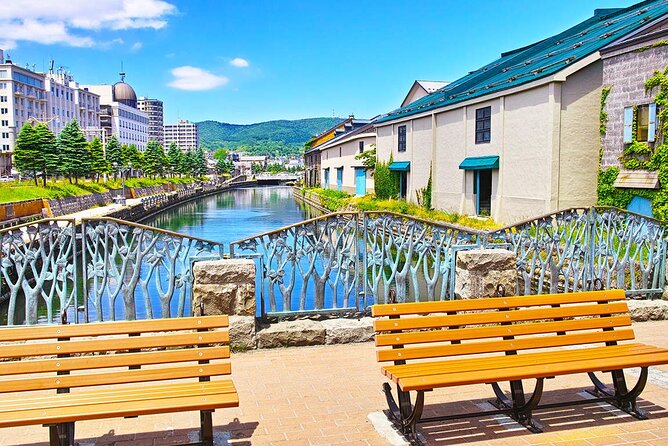
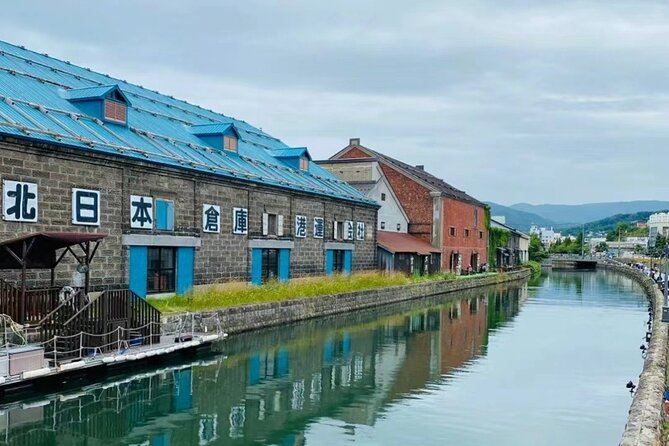
Otaru is a port town known for its canal, old warehouses, glass shops, and music-box stores. The listed stop is about 50 minutes, which is enough for a quick walk and a first look at the canal area, but not enough for a relaxed town visit.
The canal is easy to understand on foot, and the old buildings give Otaru a different mood from the volcanic sites earlier in the day. Kitaichi Glass is a well-known place to browse glasswork, while the Otaru Music Box Museum offers another popular stop. These shops suit visitors who want small gifts, sweets, glass items, or a quick indoor break.
The short stay has a clear downside. You may need to find the canal yourself rather than being escorted there, and the area can feel crowded and commercial. Some people prefer to spend more time around Lake Toya or Showa Shinzan, especially since Otaru is relatively easy to reach from Sapporo by train on another day.
In winter, the Otaru Snow Light Path Festival can add lanterns and glowing snow displays. This depends on the season and dates, so do not book the excursion expecting the festival unless your travel dates match it.
Guide quality and how much guiding to expect
This is not a continuous walking tour with a guide beside you at every stop. The usual pattern is a short explanation, clear meeting instructions, and free time for you to explore. That arrangement suits independent visitors who want transport and basic context, but it may disappoint you if you expect detailed interpretation at every site.
Jay has been praised for being organized, friendly, and able to explain the places in several languages. When he leads, the day may feel more like a guided introduction. Sophia has also been described as helpful and fluent in several languages, though English explanations may be shorter when the group includes Mandarin and Japanese speakers.
The multilingual format is useful, but it can stretch one guide thin. If you are joining an English-language departure, listen carefully to meeting times and locations, then ask direct questions when something is unclear. A curious attitude helps because much of the discovery happens on your own.
The guide and driver have separate jobs. The driver handles difficult distances and, in winter, challenging roads. The overall experience depends heavily on safe driving, clear announcements, and a working bus microphone. Sit near the front if you can and confirm where to meet before walking away from the group.
Price, transport, and the real value
At $120 per person, the tour is not a cheap sightseeing shuttle, but the price can make sense if you value convenience. Round-trip transport connects four separate parts of Hokkaido in one day, and the route would be difficult to reproduce independently within the same hours.
The value drops if you want comfort, long visits, or a quiet pace. The small vehicle is the main concern. Tight legroom, stuffy air, and a seat above a wheel well can make the long drives unpleasant. The tour may hold up better for a solo visitor who wants maximum coverage than for someone with mobility concerns or a strong need for personal space.
The $120 price does not include the bear ranch, personal purchases, or lunch. Add those costs before comparing it with a private vehicle or a slower self-guided trip. Children from 0 to 2 can join free if they do not need a separate seat.
Free cancellation is available up to 24 hours before the start time. Changes made inside that window are not accepted, and poor weather may lead to a different date or a full refund. Since the tour depends on road conditions, that policy matters most in winter.
Who should book this Hokkaido day trip?
I would recommend it to a first-time Sapporo visitor who wants to see a lot in one day and accepts that the day will feel packed. It is especially useful if you do not want to plan several regional train and bus connections.
You are a good match if you enjoy changing scenery, can explore without constant guiding, and are willing to spend much of the day in a vehicle. The volcanic stops and Lake Toya provide the strongest reasons to go, while Otaru gives you a quick taste of a historic port town.
I would be cautious if you have long legs, dislike crowded buses, need generous breaks, or want an in-depth look at Otaru. I would also think twice if the bear ranch is a major concern, since the ropeway is not included and the optional ranch may not suit you.
My practical verdict is simple: book this for breadth and convenience, not comfort or depth. If you only have one free day and want a broad Hokkaido sampler, it can be a useful choice. If you have several days, split the route. Give Noboribetsu and Lake Toya their own time, then visit Otaru by train at a calmer pace.
FAQ
How long does the Hokkaido tour last?
The tour lasts approximately 9 to 10 hours, including transportation between Sapporo and the sightseeing stops.
Where does the tour start and finish?
It starts at 8:00 am near Sapporo Station North Square, at 3-chōme-12-2 Kita 7 Jōnishi, Kita Ward, Sapporo. It ends back at the same meeting point.
Is transportation included?
Yes. Round-trip transfers are included, and the total tour duration includes the time spent traveling between destinations.
Is admission to the bear ranch included?
No. Showa Shinzan Bear Ranch admission is not included. The listed entrance price is ¥850 per person, approximately $5.
Is lunch included?
No. Lunch is not included, and personal expenses are also excluded. Bringing a takeaway meal may help you make the most of the limited stop time.
Can young children join for free?
Children aged 0 to 2 can join free if they do not occupy a separate seat.
What happens if bad weather cancels the tour?
If poor weather causes the activity to be canceled, you will be offered another date or a full refund. You can cancel for a full refund if you do so at least 24 hours before the start time.
More Noboribetsu & Lake Toya Tours in Sapporo


More Otaru Tours in Sapporo
More Day Trips from Sapporo in Sapporo


Other Sapporo tours worth your shortlist

Noboribetsu & Lake Toya Tours, side by side.
 ★ 4.7Hokkaido Seasonal: Lake Toya & Noboribetsu Jigokudani ValleyFrom $55173 reviews
 ★ 4.1Hokkaido, Noboribetsu and Lake Toya Day TourFrom $6688 reviews
 ★ 5.0[Departure from Sapporo] Noboribetsu Jigokudani, Lake Toya, Cape Chikyu by private carFrom $404.1637 reviews
 ★ 4.5Lake Toya, Bear Ranch and Sapporo Otaru Full Day TourFrom $85.6633 reviews
The lists this tour appears in