Otaru is easy to wander, but a private guide can help you see the story behind its canal warehouses, old banks, glass shops, sake brewing, and seafood stalls. You choose two or three sights, so the four-hour visit can focus on what interests you instead of following a fixed route.
In This Article
- Key points to know before booking
- Why a private walk works well in Otaru
- Otaru Canal: the essential first stop
- Otaru Art Base: historic buildings with an art focus
- Sakaimachi Street: sweets, shopping, and an easy meal stop
- Tanaka Sake Brewing Kikkogura: a taste of older Japan
- Mt. Tengu Ropeway and Ski Museum: views beyond the center
- What the four-hour format really gives you
- Guide quality and the value of personal attention
- Is $108.38 per person fair?
- Practical planning for a smoother day
- Who should book this Otaru tour?
- FAQ
- How long is the Otaru private tour?
- How many attractions can I visit?
- Is transportation included?
- Is hotel pickup included?
- Are admission fees and lunch included?
- Can I cancel for a full refund?
I like the personal pace and the chance to ask direct questions about Otaru’s past and present. I also like that guides such as Kazuo Sumi, Roy Aoki, Kumiko, Teri, and Kenji have helped visitors connect art, food, local culture, and daily life.
The main catch is simple: this is a walking tour, not a private-car tour. Public transportation is possible, but you pay those fares yourself, along with admission fees, lunch, and personal purchases. Guide availability is also worth confirming, since one booking was cancelled when no guide could be found.
Key points to know before booking
- Choose two or three Otaru sights: Build your four-hour visit from the canal, art facilities, shopping street, sake brewery, or Mt. Tengu.
- Meet on foot in Otaru: Pickup means an on-foot meeting within the designated area, not hotel pickup by car.
- A licensed English-speaking guide leads the way: The private format gives you room to ask questions and adjust the pace.
- Food fits naturally into the route: Sakaimachi Street offers sweets, snacks, restaurants, and shopping, while sushi can be added as part of your time in town.
- Admission and transport cost extra: The tour price covers the guide and planning, but not tickets, fares, lunch, or personal expenses.
- Allow time for weather: Rain and cold can make a walking tour feel demanding, though a good guide can help you make the most of a difficult day.
Why a private walk works well in Otaru
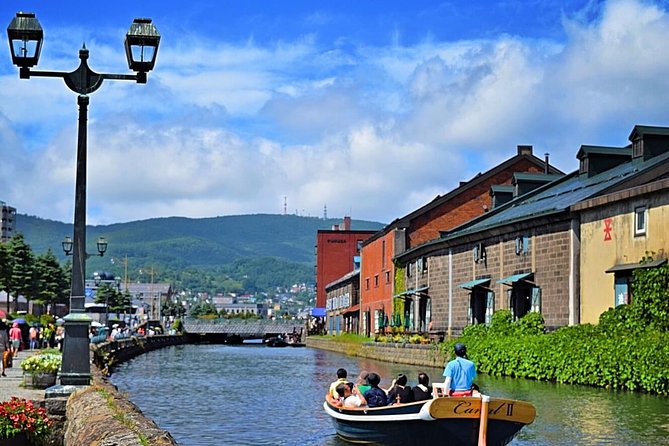
Otaru’s main sights are close enough to connect on foot, but they do not all tell the same story. The canal brings you to the city’s former shipping role. Sakaimachi Street shifts the mood to food, sweets, and shopping. The art facilities place you inside restored historic buildings, while Tanaka Sake Brewing Kikkogura offers a look at an older Japanese craft.
That mix is the reason I see value in a private guide here. You are not paying for a large group to follow a fixed script. You can spend more time on art, ask about sake, pause for snacks, or keep moving if shopping is not your priority.
The guide is also useful for context. Otaru once served as a major distribution hub for Hokkaido, with a population that at one time exceeded Sapporo’s. A canal photo is pleasant on its own, but the city makes more sense when you understand why the canal and its warehouses mattered.
This is a four-hour private activity, with only your group participating. That gives you a more relaxed setting for questions, and it can be especially helpful if your group includes older family members. One guide, Kazuo Sumi, was praised for his patience with elderly parents and for explaining the art they saw.
Our other Otaru reviews may also help you decide


Otaru Canal: the essential first stop
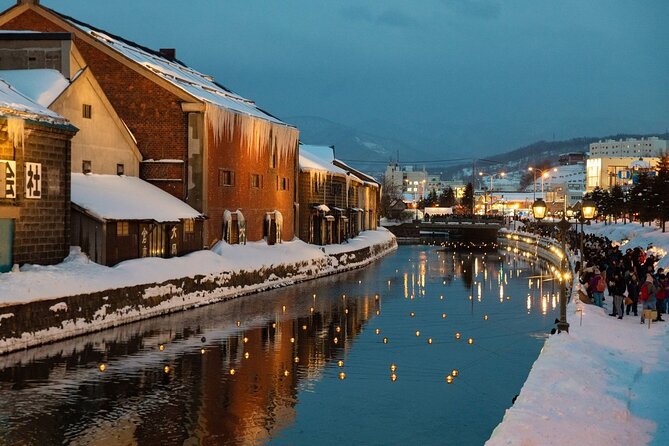
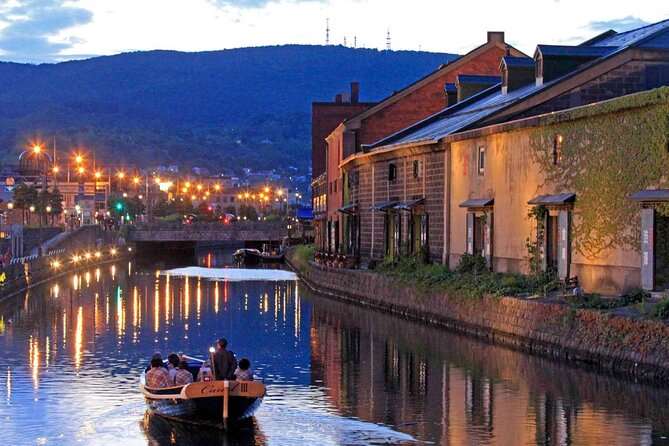
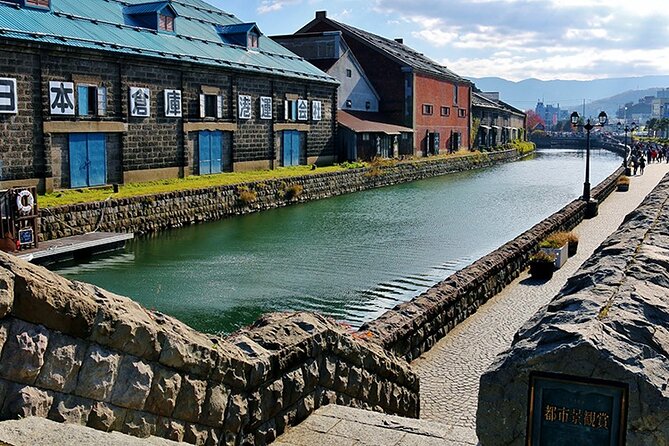
The Otaru Canal is the obvious place to begin. It is the city’s classic sightseeing point, lined with historic warehouses and open views along the water. The canal’s importance comes from trade, not just scenery. It once helped move goods through Otaru when the city was a major economic center in Hokkaido.
You do not pay an admission fee to visit the canal, which makes it a useful anchor for a half-day plan. It also gives your guide a natural setting for explaining how Otaru changed over time.
I would choose the canal almost every time, especially on a first visit. The drawback is that it is not a full four-hour activity by itself. If you want more than a stroll and photographs, pair it with the Art Base, Sakaimachi Street, or the sake brewery.
The canal is also exposed to weather. Rain and a sudden drop in temperature can make the walk uncomfortable. Bring clothing suitable for a four-hour outing, and remember that the guide cannot turn this into a vehicle tour if the weather turns poor.
Otaru Art Base: historic buildings with an art focus
Otaru Art Base sits across Rinkosen Street from the canal. It uses early twentieth-century buildings from Otaru as part of the city’s cultural attractions, giving you a chance to see historic architecture from inside rather than only from the pavement.
This stop suits you if you enjoy art, buildings, and the connection between old commercial spaces and modern tourism. A guide can add useful background and help you notice details you might otherwise pass without understanding.
Plan on about an hour here. Admission is not included, so check the extra cost when you build your budget. The guide’s entry fees are covered only for sights listed under the tour’s included attractions, while your own admission fees remain your responsibility.
I would pair the Art Base with the canal for a balanced route. You get the outdoor setting first, then a more focused cultural stop. If your priority is food and shopping, though, you may prefer Sakaimachi Street.
Sakaimachi Street: sweets, shopping, and an easy meal stop
Sakaimachi Dori runs inland from Rinkosen Street, parallel to the canal. This is the place to add the pleasures of a holiday day: food, sweets, shops, and a possible sushi meal.
The value of having a guide here is not that you need help finding a street. You can likely walk along it on your own. The benefit is choosing where to spend limited time and asking about local specialties as you go.
A half-day tour does not leave room for every shop and restaurant, so be clear about your priorities. Tell the guide if you want snacks, sweets, shopping, or a proper lunch. Lunch is not included, and food purchases are your own expense.
Sakaimachi Street works well after the canal. It adds a more casual side of Otaru and can keep the visit from feeling like a string of museums. It is also a good choice for groups with different interests, since one person can browse while another stops for food.
Tanaka Sake Brewing Kikkogura: a taste of older Japan
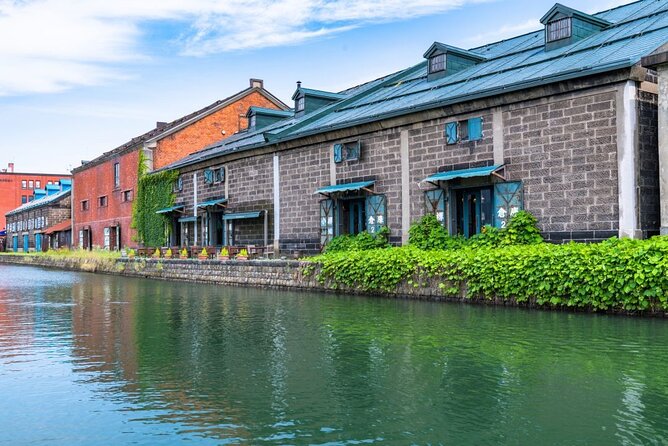
Tanaka Sake Brewing Kikkogura gives the tour a different subject. Otaru is often associated with Western-style buildings and glass crafts, but sake brewing connects the city to a much older Japanese tradition.
The stop is scheduled for about an hour, and admission is not included. If you are curious about Japanese drinks, local production, or the way traditional businesses fit into modern Otaru, this is one of the more distinctive choices.
A guide can make this stop more useful by explaining what you are seeing and answering questions in English. Roy Aoki, one of the named guides, focused on both Otaru’s past and its current character during his tours. That kind of bridge between old and new is exactly what makes a brewery visit more than a quick tasting stop.
Choose the brewery if you want substance and local culture rather than a shopping-heavy afternoon. If you do not drink sake, the stop may be less important to you, and the limited four-hour schedule might be better spent at the canal, art facilities, or shopping street.
Our other Otaru reviews may also help you decide


Mt. Tengu Ropeway and Ski Museum: views beyond the center
Mt. Tengu overlooks Otaru and the Sea of Japan. The ropeway and ski museum offer a change from the compact central streets, with a higher viewpoint and a different look at the city.
This choice needs more planning than the canal or Sakaimachi Street. The tour does not include a private vehicle, so you must pay for public transportation if it is used. The time needed to reach the mountain also matters during a four-hour visit. You should confirm the practical route with the guide before committing to this option.
The stop is listed as an hour, but transport can make the overall schedule feel tighter. I would choose it if views are a top priority and you are willing to give up one of the central attractions. I would not combine it casually with several downtown stops unless the guide confirms that the timing works.
For a first Otaru visit, the mountain is best for someone who has already seen the canal area or cares more about scenery than museums and food. Weather matters here as well, since poor conditions can affect the enjoyment of an elevated viewpoint.
What the four-hour format really gives you
Four hours is enough for a thoughtful half-day, not a complete survey of Otaru. The experience asks you to choose two or three places from the highlights rather than rush through all five.
A sensible central plan might include:
- Otaru Canal
- Otaru Art Base
- Sakaimachi Street
That combination gives you scenery, culture, shopping, and food without making the day too scattered. If sake is your main interest, replace the Art Base or shopping street with Tanaka Sake Brewing Kikkogura.
If you want Mt. Tengu, ask about transport and timing before the day begins. Since there is no private car, the mountain can change the rhythm of the outing.
The private format matters most when your group has a clear interest or a specific pace. You can ask to linger at an art display, move quickly through shops, or take time for sushi. One group combined a sake brewery, an old bank, a town walk, and a sushi lunch during its half-day, which shows how food and short sightseeing stops can fit together when the route is managed well.
Guide quality and the value of personal attention
The guide is the heart of this experience. The named English-speaking guides include Kazuo Sumi, Roy Aoki, Kumiko, Teri, and Kenji. You may not receive a specific guide unless that is arranged, but the range of guide names shows that the agency uses multiple local hosts.
The strongest guide experiences described in the supplied material share three traits: patience, clear explanations, and an ability to connect Otaru’s history with present-day life. Kumiko helped turn a cold, rainy day around through careful guiding and conversation about culture. Teri led a pleasant half-day covering a brewery, an old bank, and the town. Kenji’s approach included scenery, culture, history, and local seafood.
That personal attention is most valuable when you ask questions. Tell your guide what you already know and what you want to understand. A private walk is far more useful when you say I want local food, I care about architecture, or I need a gentle pace instead of leaving every choice until the last minute.
Is $108.38 per person fair?
At $108.38 per person, this is not the cheapest way to see Otaru. You still pay for transportation, entrance fees, lunch, and personal purchases. If you only want to photograph the canal and stroll down Sakaimachi Street, you can spend less by walking independently.
The price makes more sense for a private group that values an English-speaking licensed guide and a route shaped around its interests. You are paying for local interpretation, planning, and time saved deciding what deserves attention. The value rises if your group includes older relatives, first-time visitors, or people who want historical and cultural explanations rather than a self-guided walk.
Group discounts are offered, so compare the total cost for your party rather than judging the per-person figure alone. Also remember that you cannot combine multiple tour groups. This is designed for your own party, not for joining another booking to reduce the cost.
Practical planning for a smoother day
The meeting is on foot within a designated area of Otaru. Do not assume that pickup means a private vehicle coming to your hotel. The activity is near public transportation, and public transport can be used at your expense.
Choose your two or three sites before meeting the guide, but keep some flexibility. The canal, Art Base, Sakaimachi Street, and the brewery are easier to think of as a central cluster. Mt. Tengu needs a closer look at transport and timing.
Wear comfortable walking shoes and prepare for changing weather. A cold, rainy day was enough to make walking unpleasant for one group, so a weather check is practical, not fussy.
Confirmation is provided when you book. Service animals are allowed, and most people can participate, but this remains a walking tour. Mention mobility concerns when arranging the experience so the route can be discussed clearly.
Free cancellation is available up to 24 hours before the start time. After that point, cancellations and changes are not accepted for a refund. One reported booking had no guide available and was cancelled, so confirm the arrangement if your Otaru visit depends heavily on this tour.
Who should book this Otaru tour?
I would choose this experience if you want a private, flexible introduction to Otaru and prefer asking questions to reading signs on your own. It is a strong fit for couples, families, and small groups with mixed interests.
It also suits you if older relatives need a patient pace. The guide can help you avoid wasting energy on sights you do not care about, though you still need to be comfortable walking and using public transportation if required.
I would skip it if you want a private car, a fixed sightseeing checklist, or an all-inclusive price. It is also less useful if you only want unstructured shopping time. In that case, use the canal and Sakaimachi Street independently and spend the tour budget elsewhere.
For most first-time visitors, I would request the canal, Art Base, and Sakaimachi Street. Add the sake brewery instead of the art stop if local drinks and traditional production matter more to you. Choose Mt. Tengu only after checking the transport plan and weather.
FAQ
How long is the Otaru private tour?
The tour lasts approximately four hours and is designed as a half-day experience.
How many attractions can I visit?
You can choose two or three attractions from the listed highlights, including the canal, Otaru Art Base, Sakaimachi Street, Tanaka Sake Brewing Kikkogura, and Mt. Tengu Ropeway Ski Museum.
Is transportation included?
No. The tour does not include a private vehicle. Public transportation may be used, but transportation fees are your responsibility.
Is hotel pickup included?
Pickup is offered on foot within the designated area of Otaru. This is not private-car pickup.
Are admission fees and lunch included?
No. Entrance fees, transportation, lunch, and personal expenses are not included. The guide’s entry fees are covered only for sights listed among the tour attractions.
Can I cancel for a full refund?
Yes, if you cancel at least 24 hours before the experience start time. Cancellations or changes made less than 24 hours before the start time are not accepted for a refund.
More Tour Reviews in Otaru
More Private Tours in Otaru
More Otaru Tours in Otaru
Other Otaru tours worth your shortlist



Otaru Tours, side by side.
 ★ 4.5Lake Toya, Bear Ranch and Sapporo Otaru Full Day TourFrom $85.6633 reviews
 ★ 3.5Hokkaido Noboribetsu Lake Toya, Otaru Panoramic Tour From SapporoFrom $120.0028 reviews
 ★ 4.9Otaru Asarigawa Ski Resort Day Trip with GearFrom $18527 reviews
 ★ 4.4Hokkaido, Sappro, Otaru & Cape Kamui One-day TourFrom $6621 reviews
The lists this tour appears in