Making soba with only buckwheat flour and water is the unusual heart of this Sapporo class. With no wheat flour to bind the dough, your noodles can dry out or crack quickly, so you’ll need to work at a brisk pace while an experienced instructor guides each step.
In This Article
- Key points before you book
- Why 100 percent buckwheat changes the class
- Arriving at the Hassamu soba restaurant
- Mixing and kneading the buckwheat dough
- Stretching the dough before it dries
- Cutting noodles that may crack
- Boiling and tasting your own soba
- Learning the role of dipping sauce and sobayu
- What the price includes at $84.70
- Who will get the most from this Sapporo activity
- Practical details for planning the visit
- Should you book the 100 percent buckwheat class?
- FAQ
- Is this soba-making experience gluten-free?
- Where does the experience take place?
- How long does the soba class last?
- What steps will I learn?
- Is the activity private?
- What is included in the price?
- Can someone come only to watch?
- What is the cancellation policy?
I like two things right away: you use Hokkaido buckwheat, prized in Japan for its quality, and you make the noodles inside a working soba restaurant rather than a staged tourist facility. I also like that the lesson continues at the table, where you learn how to use the dipping sauce and finish with sobayu, the warm cooking water traditionally served after soba.
The main consideration is the difficulty. 100 percent buckwheat soba is far less forgiving than ordinary soba made with wheat flour, so this is not simply a casual craft activity. The ¥15,000 price, about $84.70, is also a serious cost for a 75-minute class, though it includes the meal and private group participation.
Key points before you book
- Only buckwheat flour and water: This plan contains no wheat flour or binding flour, making it suitable for a gluten-free soba-making experience.
- Hokkaido flour: The noodles use buckwheat grown in Hokkaido, one of Japan’s best-known soba-producing areas.
- A real restaurant setting: You learn in an operating soba shop supported by artisans with more than 10 years of noodle-making experience.
- A complete soba lesson: The session covers mixing, kneading, stretching, cutting, boiling, eating, dipping sauce, and sobayu.
- Private participation: Only your group takes part, with mobile tickets and group discounts available.
- Fast hands help: Gluten-free dough dries and cracks easily, so you need to follow instructions and keep moving.
Why 100 percent buckwheat changes the class
Most soba is not made from buckwheat alone. This restaurant normally serves noodles made with 80 percent buckwheat flour and 20 percent wheat flour, a blend that is easier to handle. The gluten in wheat gives the dough strength, helping the noodles stay together as you roll and cut them.
This special plan removes that support. Your dough uses Hokkaido buckwheat flour and water, with no wheat flour or other binding ingredient. That is the reason the class is useful for people seeking a gluten-free soba activity, but it is also the reason the work takes more care.
I would not book this expecting perfect restaurant noodles on your first try. The dough is sensitive to temperature and humidity, and it can dry quickly. The class asks you to work with speed, since cracks can appear if the dough sits too long.
That challenge is part of the value. You get a direct look at why handmade soba is a craft, not just a matter of mixing flour and slicing a sheet of dough. Even ordinary buckwheat noodles require close attention to the flour, the weather, the water, and the timing.
We have reviewed more tours and experiences across Sapporo; these are worth comparing before you book.


Arriving at the Hassamu soba restaurant
The meeting point is 9-chōme-17-28 Hassamu 6 Jō, in Nishi Ward, Sapporo. The activity is near public transportation, and it ends at the same place, so you do not need to arrange a separate ride back after eating.
This is a practical setup for a morning or afternoon plan in Sapporo. You arrive at a working restaurant, take part in the lesson, and finish your visit where you began. Since confirmation arrives at booking and a mobile ticket is accepted, you can keep the entry details on your phone.
The setting matters. You are not visiting a large attraction built around demonstrations. You are entering a real soba restaurant where making noodles is part of the business. The trade-off is that you should expect a focused food lesson rather than a broad sightseeing program, polished stage show, or tour through several locations.
The activity is private, meaning only your group participates. That makes a difference for a family, couple, or small party. You can ask questions and receive corrections without sharing the work area with a large public class.
Mixing and kneading the buckwheat dough
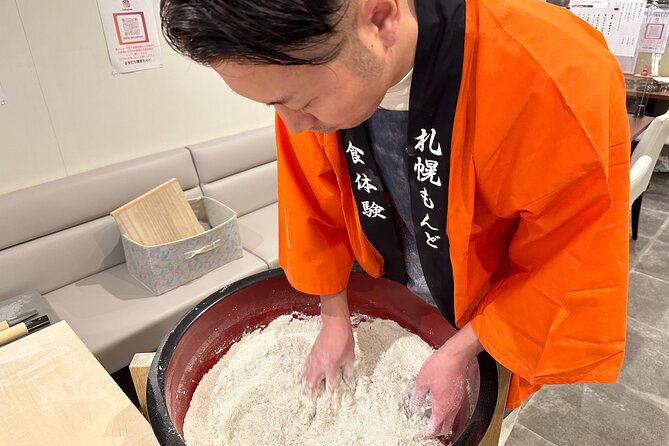
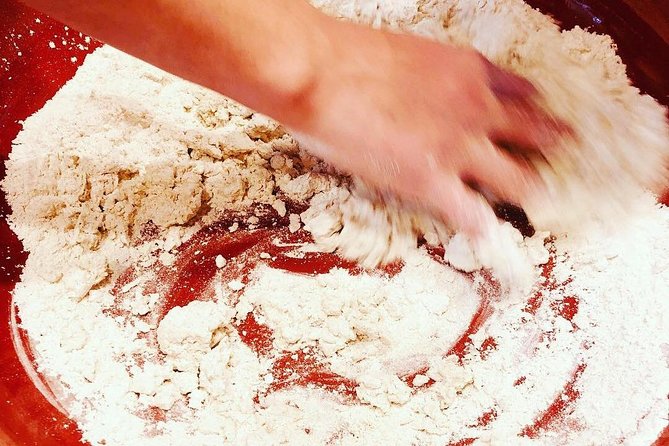
The first hands-on stage is mixing the buckwheat flour with water. This sounds basic, but it is where the dough begins to reveal its character. Without wheat flour, the mixture does not gain the same stretchy structure, so the amount of water and the speed of your work matter.
You then knead the dough. The goal is not only to combine the ingredients, but to form a workable mass that can later be stretched and cut. The instructors are supported by soba artisans who have spent more than 10 years making noodles, so you are learning from people familiar with the small changes needed for different buckwheat blends.
The restaurant’s staff can make several ratios of soba, including noodles with 20 percent wheat flour, 10 percent wheat flour, and other buckwheat-heavy combinations. That background helps explain why this gluten-free version requires extra attention. It is not the shop’s easiest formula. It is the demanding one.
I like this part because you gain a practical sense of what gluten does. A plate of soba can look simple, but your hands quickly show you how much the flour affects the process. If you have made pasta before, do not assume the dough will behave in the same way.
Stretching the dough before it dries
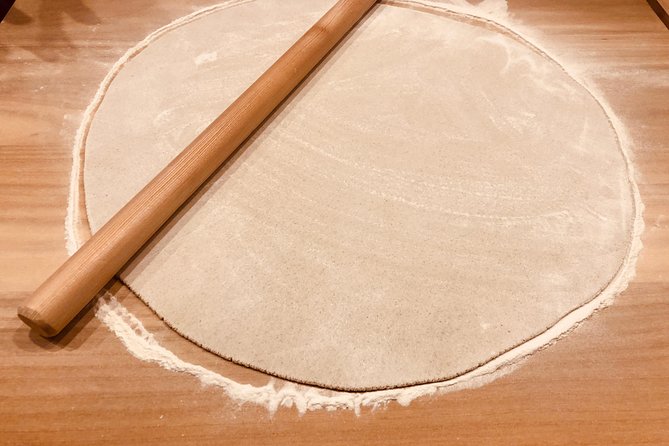
After kneading, you stretch the dough into a thin sheet. This is the point where patience and speed must work together. You want an even sheet, but you cannot take so long that the surface begins to dry.
The class emphasizes the importance of temperature and humidity. Those conditions affect regular soba, too, but the all-buckwheat dough is especially sensitive. You may find that the instructor gives frequent directions and corrections here, which is helpful rather than intrusive.
A common mistake would be to treat the dough gently for too long. With this plan, careful does not mean slow. You need to keep the dough moving and respond to the instructor’s timing.
The 75-minute duration is short enough to fit neatly into a day in Sapporo, but it also means the session has little room for wandering. The class moves through a set process: mix, knead, stretch, cut, boil, and eat. If you want a long cultural lecture or plenty of time to repeat each stage, this may feel brisk.
Cutting noodles that may crack
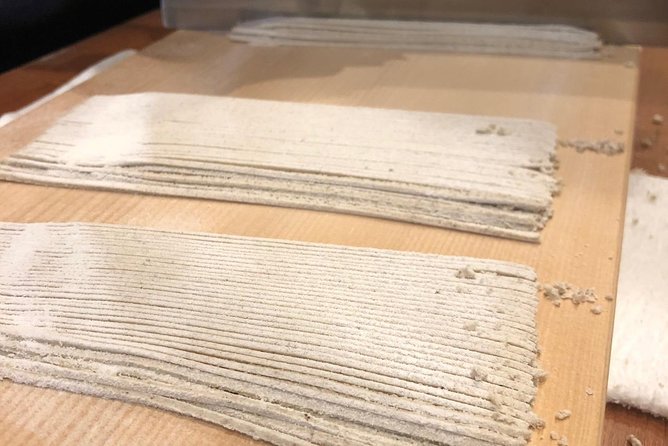
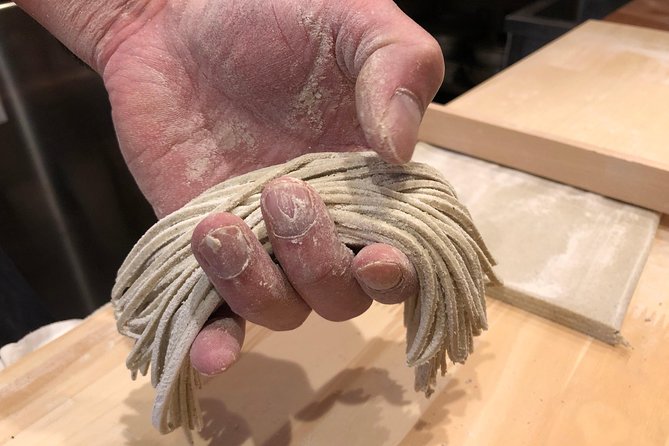
Once the dough is stretched, you cut it into soba noodles. This is a satisfying stage because the flat sheet becomes recognizable noodles under your knife. It is also where cracks and uneven pieces can appear if the dough has dried or the sheet is not handled well.
Do not judge the class by whether every noodle looks identical. The point is to understand the work and produce noodles you can cook and eat. The instructors know that first attempts are imperfect, especially with 100 percent buckwheat dough.
You may appreciate the lesson more after seeing how easily the noodles can break. Handmade soba has a short path from flour to meal, yet every step affects the final bite. The cutting stage makes that link clear.
Because the class is private, your group can focus on the process without feeling rushed by a line of other participants waiting for the same tools. Still, the dough itself sets the pace. A private class does not remove the need for quick hands.


Boiling and tasting your own soba
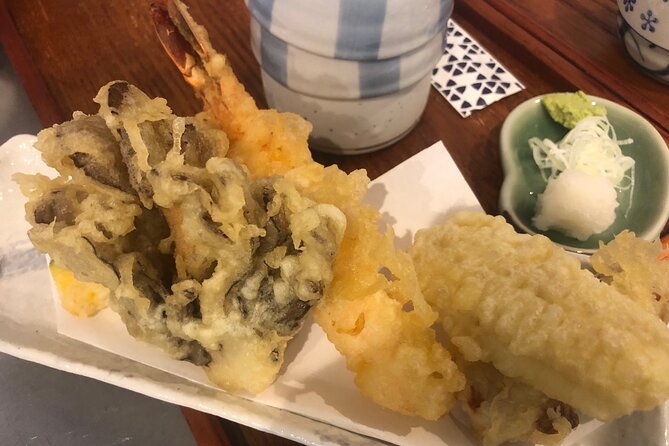
After cutting, the noodles are boiled and served for you to eat. The meal is the reward, but it is also part of the instruction. You are tasting the result of your own mixing, kneading, stretching, and cutting, not simply being handed a bowl of noodles at the end.
The restaurant uses its usual cooking equipment, including boiling kettles and colanders. For the gluten-free plan, those items are cleaned before use. The containers used for dishes and service are also the restaurant’s normal containers.
That information is useful if you are booking because of gluten concerns. The plan is designed around a gluten-free preparation, but the restaurant’s standard equipment and containers are still part of the setting. The description specifically explains the cleaning process before the class, while the optional tempura uses the restaurant’s regular frying oil.
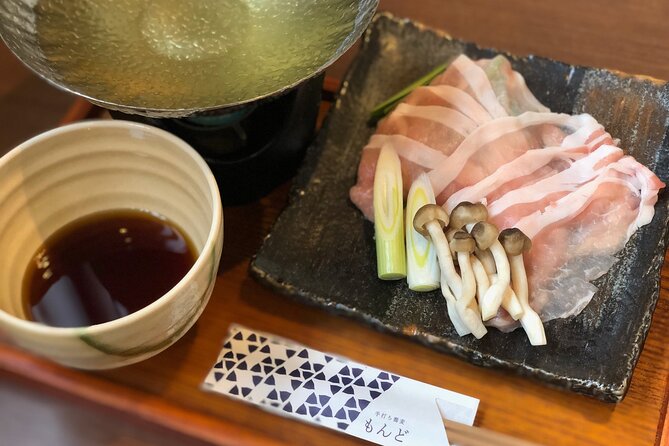
The finished noodles are served with a house dipping sauce made from soup stock. You learn how to add the sauce and how to eat the soba, rather than simply receiving a plate and being left to guess. This is a small but valuable detail, since soba has its own eating customs and the sauce is meant to be used carefully rather than poured over the noodles like a standard pasta sauce.
Learning the role of dipping sauce and sobayu
Soba culture reaches beyond the noodles. At the meal, you learn how to use the dipping sauce and how to finish with sobayu, the warm water left from cooking the soba.
Sobayu is traditionally drunk at the end, often with some remaining dipping sauce. Here, it is not treated as an odd extra or a novelty. It is explained as part of Japanese soba culture, giving you a better sense of how a soba meal is meant to finish.
I like that the eating lesson follows the making lesson. You first work to produce the noodles, then learn how a restaurant serves and eats them. The experience connects kitchen technique with table customs in a way that a simple restaurant meal cannot.
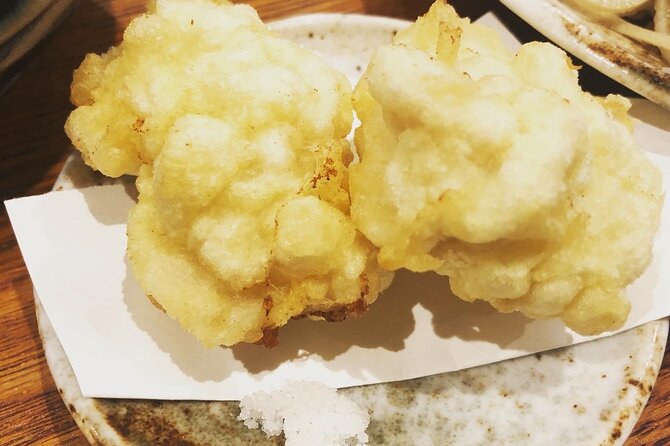
The food itself can include more than soba, depending on the chosen arrangements. One family experience included soba, tempura, and shabu shabu, and the tempura option is prepared with rice oil and rice flour. Since the supplied details describe tempura as an option, you should confirm that add-on when booking if you want it included.
What the price includes at $84.70
At about $84.70 per person, this is not a budget meal or a quick noodle demonstration. The price includes all fees and taxes, the hands-on class, and the soba you eat afterward. Its strongest value comes from the specialized format: 100 percent buckwheat noodles made in a real restaurant with experienced artisan support.
For a family or small private group, the cost can make more sense than paying separate admission for a sightseeing attraction and then buying a meal. You get a shared activity, instruction, and food in one stop. Group discounts may also reduce the per-person cost, so larger parties should check the available rate.
Still, the price is high for 75 minutes. If you only want to sample Hokkaido soba, a normal restaurant meal will cost less and require no hands-on work. You are paying for the difficulty of the gluten-free recipe, the private setting, and the chance to make and eat the noodles yourself.
Non-participants who only visit are charged the same amount as participants, ¥15,000 per person. That makes this a poor choice for a companion who plans to sit out. Everyone in your booking should be prepared to take part.
Who will get the most from this Sapporo activity
This class suits you best if you care about food technique, Japanese dining customs, or gluten-free eating. It is also a strong family activity, since the process gives everyone a job and ends with a meal.
It can work well for couples, too. One person can help watch the texture while the other focuses on stretching or cutting, although the private format means you are not competing with strangers for attention.
You should be comfortable with a little pressure. The noodles can crack, the dough can dry, and the pace is quicker than a relaxed cooking demonstration. If you want a perfectly calm class with guaranteed picture-perfect results, choose a more forgiving cooking activity.
The class is also useful for anyone who thinks of soba as just another noodle. After 75 minutes, you will have a clearer idea of how flour type, water, weather, and timing shape the finished food. That understanding is likely to stay with you the next time you order soba in Japan.
Practical details for planning the visit
The experience lasts about 1 hour and 15 minutes and returns you to the meeting point. It is near public transportation, and mobile tickets are accepted. The activity is confirmed at booking.
The provider is もんど. The staff includes experienced soba makers, and one participant specifically identified Taku as a helpful teacher who made the class educational and fun. Since staffing can change, you should not assume Taku will lead every booking, but the name gives you a useful person to ask for when confirming.
Free cancellation is available if you cancel at least 24 hours before the local start time. Cancellations or changes made inside that window are not accepted for a refund.
The gluten-free aim is clear, but people with serious allergies should discuss their needs directly with the provider. The class uses cleaned restaurant equipment and containers, while optional tempura uses the restaurant’s normal oil. Those details may matter to you even when the noodles themselves contain only buckwheat flour and water.
Should you book the 100 percent buckwheat class?
Book it if you want more than a meal and you are curious about the real work behind soba. The private restaurant setting, Hokkaido flour, practical eating lesson, and difficult gluten-free recipe give the hour real substance.
I would especially recommend it to families, food-focused couples, and anyone who needs or prefers a wheat-free soba option. The strongest praise centers on the friendly instruction, the chance to make noodles by hand, and the delicious meal at the end. Taku’s teaching style was singled out as warm and clear, and the activity has received a perfect overall rating from nine reviews.
Skip it if you only want inexpensive soba, if nobody in your party wants to participate, or if the ¥15,000 fee feels too high for a short class. For the right audience, though, this is a thoughtful Sapporo food experience that teaches you why handmade soba takes skill, then lets you eat the evidence.
FAQ
Is this soba-making experience gluten-free?
The plan uses 100 percent buckwheat flour and water, with no wheat flour or binding flour. The restaurant also cleans the boiling kettles, colanders, and other equipment before the gluten-free plan.
Where does the experience take place?
It takes place at 9-chōme-17-28 Hassamu 6 Jō, Nishi Ward, Sapporo, Hokkaido 063-0826, Japan.
How long does the soba class last?
The activity lasts approximately 1 hour and 15 minutes.
What steps will I learn?
You will mix, knead, stretch, and cut the buckwheat noodles. You will then eat the soba and learn how to use the dipping sauce and enjoy sobayu.
Is the activity private?
Yes. Only your group participates in this private tour or activity.
What is included in the price?
All fees and taxes are included. The experience also includes the hands-on soba-making activity and the soba meal after preparation.
Can someone come only to watch?
Non-participants who visit without taking part are charged the same amount as participants, ¥15,000 per person.
What is the cancellation policy?
You can receive a full refund when you cancel at least 24 hours before the experience start time. Cancellations and changes made less than 24 hours before the start time are not accepted.
More Tour Reviews in Sapporo
Other Sapporo tours worth your shortlist


Soba & Ramen Making, side by side.
 ★ 5.0Popular in SapporoExperience authentic hand-made soba at a real soba shop!From $72.6777 reviews
 ★ 5.0Mondo’s most popular plan! Experience making soba noodles and the king of Japanese cuisine, tempura, in Sapporo!From $85.7971 reviews
 ★ 5.0in Sapporo! Hand-made soba experience and shabu-shabu experience plan of Yezo deer meat (Gibier meat) from HokkaidoFrom $85.6629 reviews
 ★ 4.8Authentic Handmade Soba Experience!From $7011 reviews
The lists this tour appears in