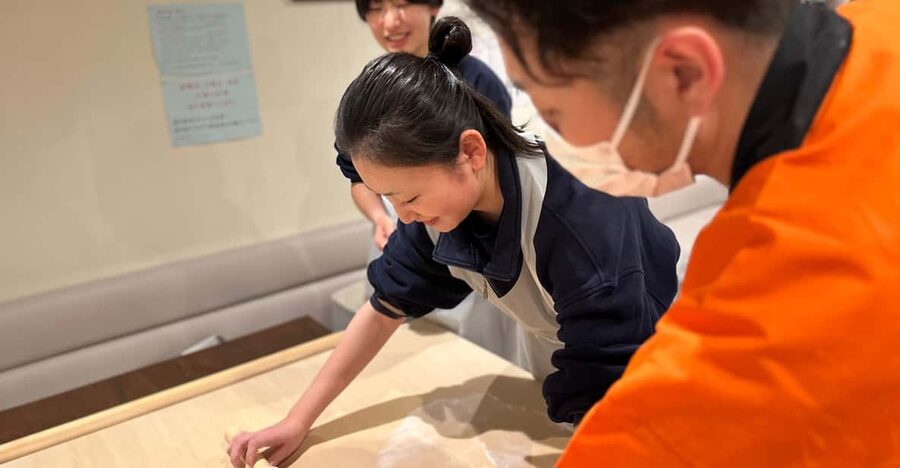
Hokkaido’s buckwheat becomes lunch at Teuchi-Soba Mondo, a local Sapporo restaurant where you mix flour, roll dough, cut noodles, and eat what you made. This is not a quick tourist demonstration. You take part in the work behind one of Japan’s best-known foods.
In This Article
- Key points before you book
- Why this Sapporo soba class feels different
- Arriving at Teuchi-Soba Mondo
- Mixing Hokkaido buckwheat flour
- Rolling the dough and cutting each strand
- Eating the noodles you made
- Learning the proper way to eat soba
- What the 75-minute schedule really means
- Language, group size, and personal attention
- Family groups and food concerns
- Is $70 a fair price?
- Who should book this experience?
- Should you book the Mondo soba experience?
- FAQ
- Where does the soba-making experience take place?
- How long does the activity last?
- What will I do during the class?
- Is the class available in English?
- Is this a private activity?
- Is food included in the price?
I like the small private-group format, which allows the Japanese and English-speaking instructor to give close attention. I also like the setting: you make soba at a restaurant that serves lunch to local customers, not in a staged cultural center. The main consideration is that the actual noodle-making can feel short, and extra food to eat with the noodles may cost more.
Key points before you book
- Hokkaido buckwheat: The noodles use flour from Japan’s leading buckwheat-producing region.
- A real restaurant setting: Teuchi-Soba Mondo operates as a popular handmade soba restaurant in Sapporo.
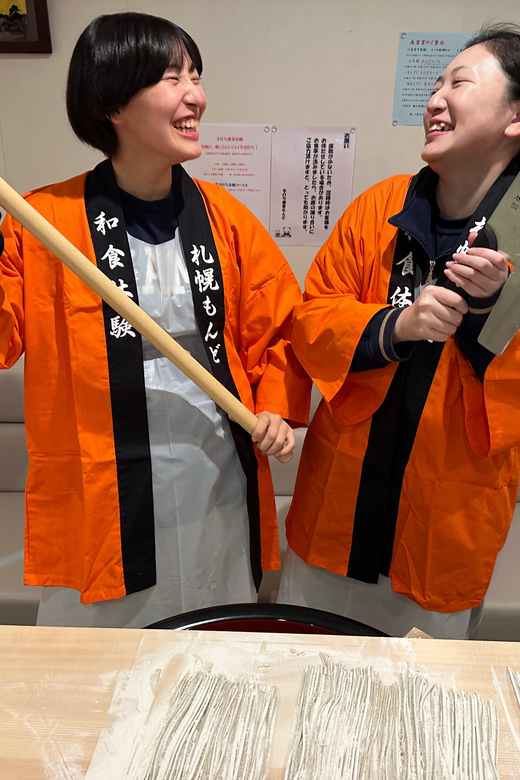
- Hands-on from flour to bowl: You mix, roll, and cut the dough before tasting your finished noodles.
- Private instruction: The group is private, with guidance available in Japanese and English.
- A local neighborhood location: The restaurant is outside central Sapporo, giving you a break from the city center.
- Traditional finishing touch: You learn about soba-yu, the warm liquid traditionally enjoyed after the noodles.
Why this Sapporo soba class feels different
Soba is not simply another Japanese lunch. It is one of Japan’s three major traditional foods, alongside sushi and tempura, and it has been part of Japanese food culture since the Edo period.
At Mondo, you are not only shown a finished bowl. You work through the basic stages that turn buckwheat flour into noodles. That makes the meal more understandable. You see why the dough needs care, why cutting matters, and why handmade soba has a place in Japanese dining.
The restaurant’s ordinary lunch business is important. This is a working soba shop, not a purpose-built attraction. You meet the food in the setting where it is normally prepared and served. That gives the class a more grounded feel, even if it also means the experience is simple rather than theatrical.
I especially like the connection to Hokkaido. The region is Japan’s leading producer of buckwheat, so using Hokkaido flour gives the class a clear sense of place. You are not making a generic Japanese noodle in an anonymous kitchen. The main ingredient comes from the region around you.
We have reviewed more tours and experiences across Sapporo; these are worth comparing before you book.


Arriving at Teuchi-Soba Mondo
The meeting point is 9-chōme-17-28 Hassamu 6 Jō in Sapporo. Look for the signage and banners for Teuchi-Soba Mondo, the restaurant’s Japanese name being 手打ち蕎麦 もんど.
This is in the Hassamu area, away from the busiest central parts of Sapporo. That location changes the mood of the outing. One participant described being pleased to leave the city-center rush and enjoy the experience in a more local part of Sapporo.
You should allow time to find the restaurant and arrive ready for the scheduled start. The staff checks your ticket before the class begins. Since the activity returns to the same place where it starts, the plan is straightforward: arrive, make soba, eat soba, and finish at the restaurant.
The setting may suit you if you want to see a less polished side of Sapporo. It may be less convenient if your schedule is built around attractions in the city center and you want every activity within walking distance of them. The information provided does not specify the best transport method, so check your route before booking.
Mixing Hokkaido buckwheat flour
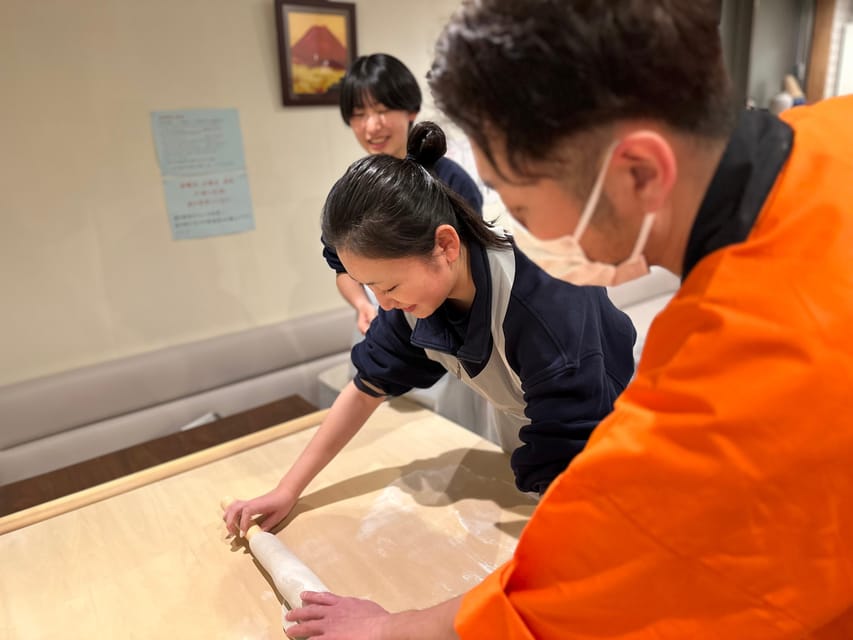
The process begins with mixing the buckwheat flour. This is the stage where you start to understand that handmade noodles depend on technique, not just ingredients.
The class is designed for participation, so you are not standing behind a counter while someone else works. You handle the mixture and follow the chef’s instructions. The Japanese and English-speaking instructor explains what to do as the dough takes shape.
Soba dough can be less forgiving than wheat-based dough, which is part of the lesson. You need to pay attention to the instructions and work carefully. The class is short, so the guidance is focused on the essential steps rather than a long cooking lecture.
For many people, this will be the most useful part of the experience. It gives you a physical sense of the ingredient. You can discuss buckwheat all day, but handling the dough tells you more about the craft.
Rolling the dough and cutting each strand
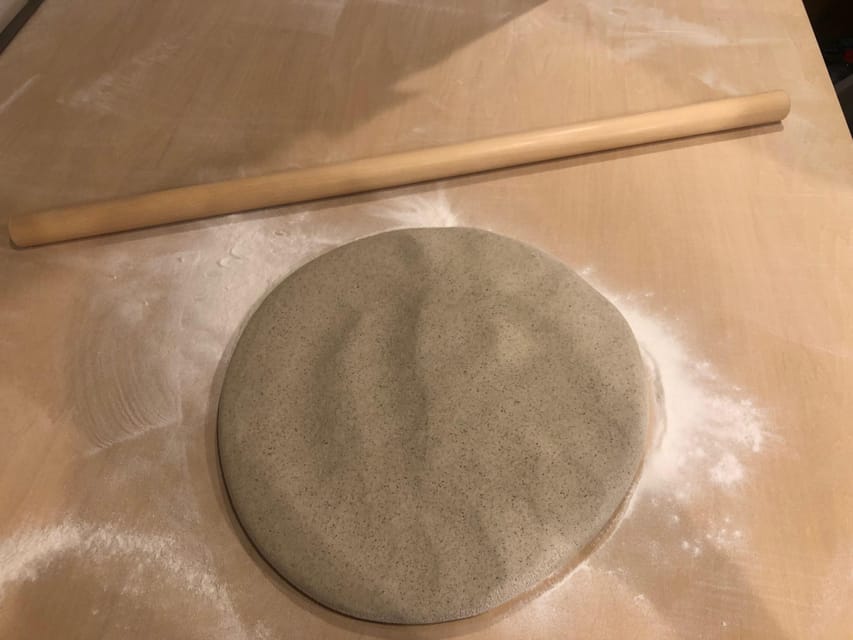
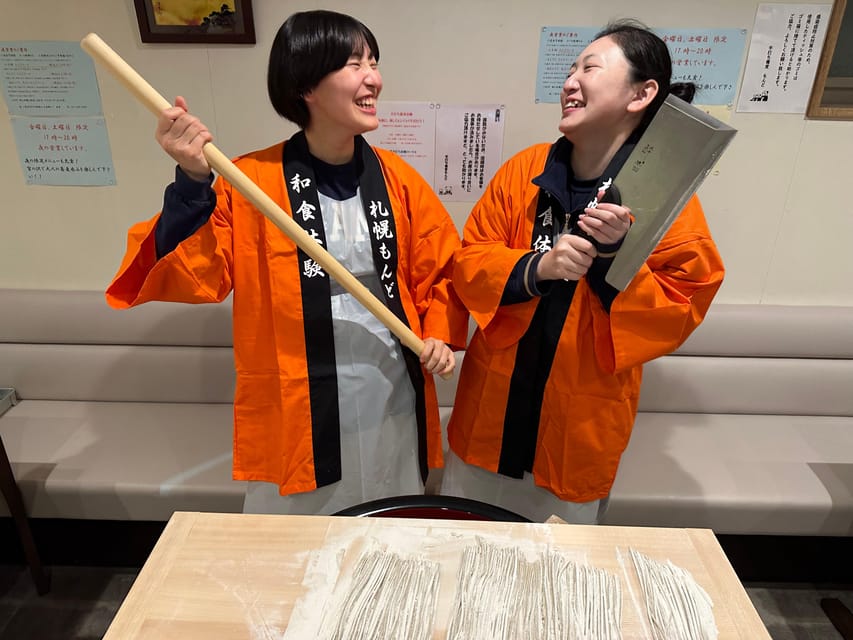
Once the dough is ready, you roll it out and cut the noodles. These are the two steps that turn your rough mixture into something that can actually be cooked and eaten.
Rolling takes care. You want the dough thin enough for noodles, but you also need to follow the instructor’s method. Cutting then requires a steady hand. The pieces should be narrow and reasonably even so they cook properly.
The tools and workspace are one reason this experience is unusual in Japan. Most home kitchens do not have the special equipment or room needed for soba-making. One participant noted that even many Japanese people do not get to make soba because they lack those tools and the necessary space.
That is a useful point when judging the activity. You are not paying only for a meal. You are paying for access to a working setup, ingredients, instruction, and the chance to eat the result. If you already make noodles at home, the class may feel less novel. If you have never handled soba dough, the practical element adds real value.
The actual noodle-making portion may be brief. One participant felt the hands-on section was shorter than expected. Keep that in mind if you want a long cooking workshop with several attempts. This is a compact introduction, not a full-day apprenticeship.
Eating the noodles you made
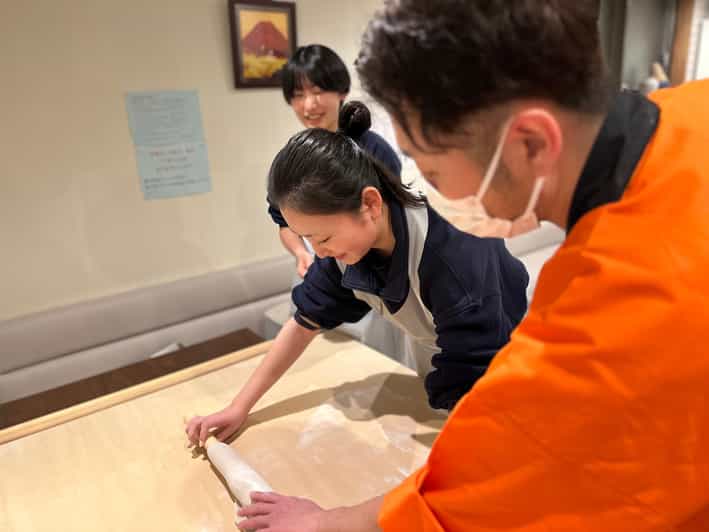
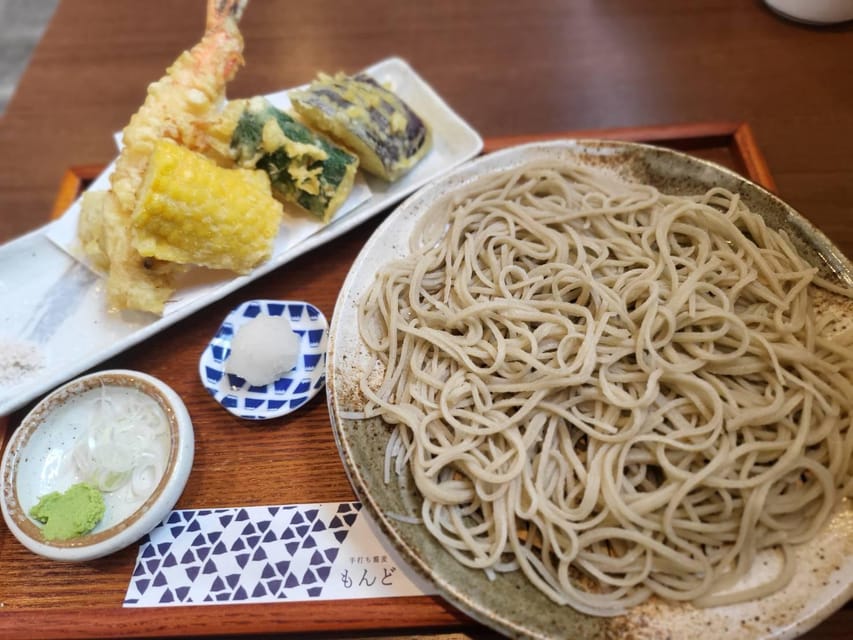
After the work is finished, you eat the soba you prepared. That moment gives the activity a satisfying finish because the meal is connected to your own effort.
The restaurant’s chefs want to make Japanese food approachable for people from different countries. You do not need to arrive as a food expert. The point is to learn the basic method, then sit down and understand the dish as food rather than as a craft project.
One practical detail deserves attention. A participant was surprised to find that food to mix with the noodles had to be purchased separately. The meal itself was described as very good, but you should ask what is included and what may be ordered at an additional cost before the class starts.
That matters when you are comparing the $70 price with other cooking activities. The fee covers a private soba-making experience at a functioning restaurant and lets you eat the noodles you make. It may not cover every side dish or extra item you want at lunch.
The restaurant is known for handmade buckwheat noodles, so the meal is not an afterthought. Still, if you expect a large lunch with several courses, clarify the arrangement. The supplied information confirms that you eat the soba you make, but it does not list additional dishes as included.


Learning the proper way to eat soba
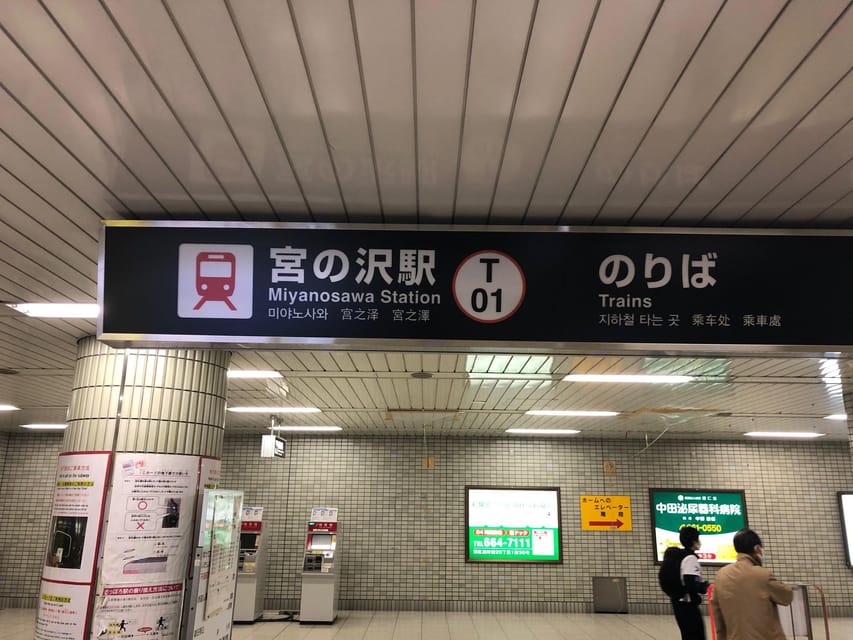
The meal also includes instruction in how to eat soba. This is a small but worthwhile detail, especially if Japanese dining customs are new to you.
Soba is often served with attention to texture, temperature, dipping, and timing. The class gives you a chance to learn the restaurant’s approach instead of guessing your way through the meal.
You also learn about soba-yu, the liquid left from cooking the noodles. It is traditionally enjoyed after the soba, often with the remaining dipping sauce. The practice is easy to miss if you simply order noodles from a menu, so including it gives the meal a cultural finish.
I like this part because it connects the kitchen work with everyday dining. You are not only learning how food is made. You are learning how the dish is enjoyed in Japan.
What the 75-minute schedule really means
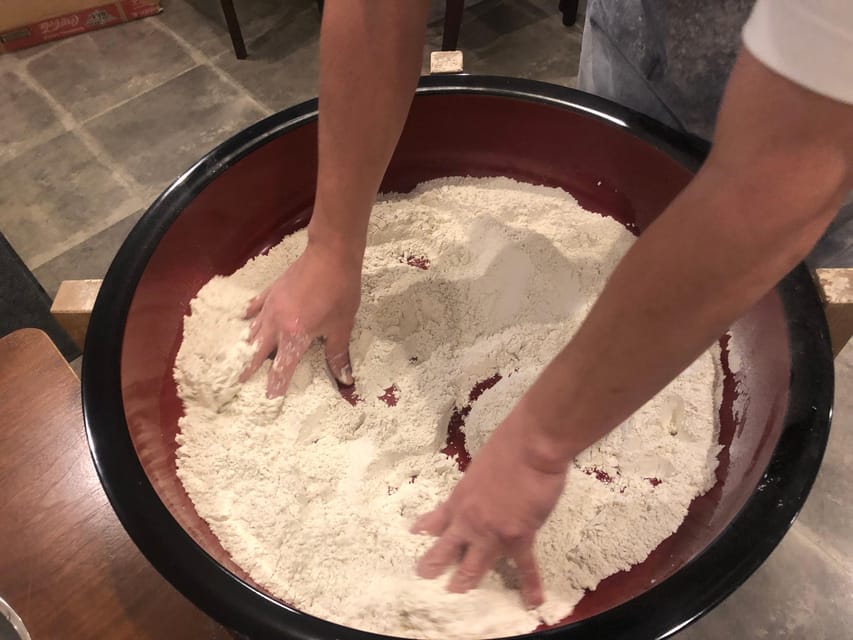
The activity is advertised as about one hour, while the itinerary describes a guided class lasting 75 minutes. Treat it as a compact session rather than a leisurely afternoon.
The time includes the instruction, noodle-making, and meal. You should not expect several rounds of dough, an extended lecture on Japanese food, or a broad tour of the restaurant. The appeal is its directness. You arrive, work with the flour, prepare the noodles, and eat them without a lot of filler.
This length works well for families and for people fitting the class into a larger Sapporo schedule. A family of six, including an eight-year-old child, completed the activity successfully. That suggests the format can work for children who are willing to follow instructions and take part in careful food preparation.
The short schedule can also be a limitation. If you want a detailed technical study of soba-making, you may leave wanting more time. The class gives you the essential experience, not every detail of the trade.
Language, group size, and personal attention
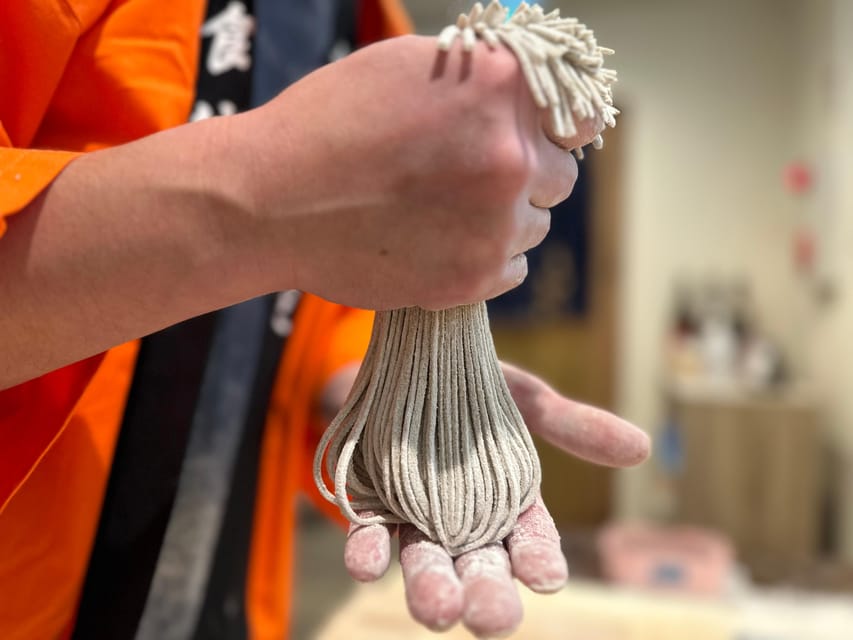
Instruction is available in Japanese and English. The private-group format is one of the strongest reasons to choose this activity over a large public demonstration.
In a private class, you can ask for help at the moment you need it. That is useful when rolling or cutting, when a small correction can make the task easier. It also makes the experience more comfortable for families or friends who want to work at their own pace.
A couple from the Mondo team received particular praise for being warm, kind, and attentive. The staff’s personal approach appears to be a major part of the experience. The class is not built around a large group moving through stations, so the human contact matters.
The language information is clear, but you should still expect food terms and hands-on instructions to be part of the communication. The activity is about doing, so watching the instructor closely will help even when a cooking term is unfamiliar.
Family groups and food concerns
The class can suit a family group, including children. The eight-year-old who took part with a family of six was included successfully, which is a useful sign for parents planning a food activity rather than a long museum visit.
Children need to handle the dough and cutting tools carefully, so adults should be ready to help them listen and work patiently. The provided information does not give a minimum age, so ask the operator if your child is younger than eight.
A gluten allergy also deserves a direct conversation before booking. One family with a daughter who had a gluten allergy said her needs were taken care of. That is encouraging, but it should not be treated as a blanket guarantee for every allergy or every preparation.
Tell the restaurant about the allergy in advance and confirm how the flour, tools, cooking water, and serving arrangements will be handled. Buckwheat itself is naturally gluten-free, but cross-contact and added ingredients can matter. The supplied information confirms one successful accommodation, not a universal policy.
Is $70 a fair price?
At $70 per person, this is not the cheapest way to eat soba in Sapporo. You can order a bowl of noodles for far less. The question is what you want from the outing.
The price makes more sense if you value the private format, the instruction, the use of restaurant equipment, and the chance to eat noodles you made yourself. It also buys a cultural lesson that is difficult to reproduce in a normal restaurant meal.
The value is weaker if you mainly want lunch or expect a long cooking course. The hands-on noodle-making period is short, and extra food to eat with the noodles may be separate. Those details can change your sense of value, so ask about included food when you arrive.
I see this as a good midrange cultural activity for someone who wants substance without spending half a day in a kitchen. The restaurant setting and Hokkaido flour give it more local character than a generic cooking class, while the one-hour format keeps it manageable.
Who should book this experience?
I would recommend it to you if you enjoy food, prefer small groups, and want an activity tied closely to Hokkaido. It is also a good choice for families, couples, and friends who want to make one shared meal rather than simply sit at a restaurant table.
It fits especially well into a Sapporo visit that includes time outside the central district. The Hassamu location gives you a reason to see a different part of the city, though you should plan your route carefully because the restaurant is not described as being in the center.
You may want to skip it if you dislike hands-on cooking, have a very tight schedule, or want a large meal included in the price. You should also ask questions before booking if you have a serious food allergy or need a specific dining arrangement.
The activity requires at least two adults. Cancellation is free up to 24 hours before the start, and you can reserve now and pay later, which helps if your Sapporo plans are still changing.
Should you book the Mondo soba experience?
Book it if you want a genuine, compact food experience built around Hokkaido buckwheat and a working local restaurant. The best parts are the private attention, the chance to make every stage of the noodles, and the simple pleasure of eating your own work.
Go in with the right expectations. This is about 60 to 75 minutes, not an extended culinary course. The noodle-making can feel brief, and extra lunch items may not be included in the $70 price.
For food-minded visitors, families, and anyone curious about Japanese traditions beyond sushi, I think it is a worthwhile choice. For a basic bowl of soba, spend less elsewhere. For a personal lesson in how soba is made and eaten, Teuchi-Soba Mondo gives you something a menu cannot.
FAQ
Where does the soba-making experience take place?
It takes place at Teuchi-Soba Mondo, a handmade soba restaurant at 9-chōme-17-28 Hassamu 6 Jō in Sapporo. Look for the restaurant’s signage and banners.
How long does the activity last?
The experience is described as lasting about one hour, while the guided class portion is listed as 75 minutes.
What will I do during the class?
You will mix Hokkaido buckwheat flour, roll out the dough, carefully cut the noodles, and eat the soba you made. You will also learn how to eat soba properly and about soba-yu.
Is the class available in English?
Yes. Instruction is available in Japanese and English.
Is this a private activity?
Yes. The group type is private, so the class is arranged for your own group.
Is food included in the price?
You can eat the soba you make. Additional food to mix with the noodles may need to be purchased separately, so confirm the details before ordering.
More Tour Reviews in Sapporo
Other Sapporo tours worth your shortlist


Soba & Ramen Making, side by side.
 ★ 5.0Popular in SapporoExperience authentic hand-made soba at a real soba shop!From $72.6777 reviews
 ★ 5.0Mondo’s most popular plan! Experience making soba noodles and the king of Japanese cuisine, tempura, in Sapporo!From $85.7971 reviews
 ★ 5.0in Sapporo! Hand-made soba experience and shabu-shabu experience plan of Yezo deer meat (Gibier meat) from HokkaidoFrom $85.6629 reviews
 ★ 5.0Gluten-free only.Soba making experience plan!From $84.709 reviews
The lists this tour appears in