Hokkaido turns a wedding photo session into a full day out, from Otaru Canal and Dream Beach to Blue Pond and Toyohira Shrine. You begin with 2.5 hours of hair, makeup, and fitting at LE’CIEL PHOTO, then head out in a private car for your chosen settings.
In This Article
- Key points to know before booking
- Starting at LE’CIEL PHOTO in Sapporo
- How the private eight-hour schedule works
- Otaru Canal and Mt. Tengu for a classic Hokkaido look
- Nakajima Park and Moerenuma Park near Sapporo
- Blue Pond, Biei, and the cost of going farther
- Dream Beach and Asari Station for less formal portraits
- Toyohira Shrine and the Shinto ceremony option
- Sumiyoshi Shrine and Hinode Park
- Gowns, kimono, and what the package really includes
- The photo package and delivery timetable
- Is $2,064 good value for two people?
- Weather, transport, and small planning details
- Who should book this Hokkaido photo day?
- Should you book this private Hokkaido shoot?
- FAQ
- Where does the experience begin?
- How long does the experience last?
- How many locations can we visit?
- Are kimono and Shiromuku included?
- How quickly will we receive the photographs?
- What happens if the weather is poor?
I like the generous photo package, with more than 300 high-resolution images and 30 professional retouches. I also like the choice of mood: elegant western wedding photos, traditional kimono portraits, or a Shinto ceremony at Toyohira Shrine.
The main consideration is the price, $2,064 for up to two people. It can be good value for a couple wanting styling, outfits, transport, a full-day photographer, and hundreds of images, but it is far more than a short studio shoot.
Key points to know before booking
- Three locations are included: Choose from places such as Otaru Canal, Blue Pond, Nakajima Park, Moerenuma Park, Mt. Tengu, Dream Beach, Furano, and Biei.
- The day begins indoors: Hair, makeup, and dress fitting take about 2.5 hours before the outdoor photography starts.
- Traditional clothing depends on the plan: Wedding gowns may be included, while kimono and wedding kimono such as Shiromuku or Iro-uchikake may require a premium plan or add-on.
- Toyohira Shrine offers a real ceremony option: The Shinto Wedding Ceremony Plan must be confirmed ahead of time and may not operate on every date.
- Photo delivery is quick: All images arrive within two days, with 30 retouched photographs delivered within seven days.
- Only one couple books each day: The private format gives you the photographer and styling team’s attention without another group sharing the schedule.
Starting at LE’CIEL PHOTO in Sapporo
Your day begins at LE’CIEL PHOTO, the Sapporo studio used for preparation. This is not a quick change into rented clothing. Allow about 2.5 hours for hair, makeup, dress fitting, and the final styling choices.
That long preparation period matters. Wedding gowns, kimono, and formal wedding kimono need different handling, and the look has to work both indoors and outdoors. If you choose a kimono plan, a dresser is available as part of the relevant package.
You should select your preferred gowns or kimono on the company website before the shoot. Availability is not something to leave until the morning of the session, especially if you have your heart set on a particular Shiromuku or Iro-uchikake.
The package supports English, Chinese, Korean, and Japanese. That is useful when you are discussing makeup, clothing, poses, and the order of the day. No guide names are provided, so your photographer and styling team will be confirmed by the provider rather than selected by name.
We have reviewed more tours and experiences across Sapporo; these are worth comparing before you book.


How the private eight-hour schedule works
The advertised experience lasts eight hours and is limited to one couple per day. You are not joining a large sightseeing group, and the private car moves between the places you select.
The full list of possible stops is longer than a normal eight-hour day can comfortably cover. The included service allows photography at three chosen locations, not every place named in the sample route. Think of the locations as a menu, then build a sensible combination with the studio.
This is important when planning. Otaru Canal, Dream Beach, and Mt. Tengu make a coherent Otaru-focused day. Nakajima Park, Moerenuma Park, and Toyohira Shrine keep you nearer Sapporo. Blue Pond, Biei, or Furano require a different balance because of the longer road time.
The photographer has about five and a half hours after preparation, before returning to LE’CIEL PHOTO. A one-hour photo stop is listed for each location, but driving, changing accessories, and arranging the clothing also take time. Three locations gives you variety without turning the day into a race.
Otaru Canal and Mt. Tengu for a classic Hokkaido look
Otaru Canal is one of the strongest choices if you want a recognizable Hokkaido setting. Its historic canal-side views give formal wedding clothing a more urban, European feel, while the water and old buildings add visual variety.
The canal is also practical for a photo session because it offers several backdrops in one area. You can use the water, stone paths, and nearby architecture without spending the whole stop moving between distant points.
Mt. Tengu gives you a different mood. From the mountain area, you can frame the couple against broad views around Otaru. It is a good partner for the canal because the two stops do not look alike.
The tradeoff is time. Combining two Otaru locations with a third stop elsewhere in Hokkaido can create a long day in the car. If your priority is relaxed photography rather than collecting far-apart backgrounds, an Otaru-centered plan makes more sense.
Nakajima Park and Moerenuma Park near Sapporo
Nakajima Park is a convenient Sapporo choice, especially if you want greenery without committing to a distant drive. It can soften the formality of a wedding gown or kimono with open park settings.
Moerenuma Park offers a more modern setting. Its planned forms and open spaces give the photographer room to create clean, graphic compositions. It is a useful contrast to the older feel of Otaru Canal and the traditional atmosphere of a shrine.
Choosing both parks gives you two spacious outdoor settings, but they may feel less distinct than combining a park with the sea or a shrine. I would choose this pair if you prefer a calm Sapporo day and want to reduce road time.
For a couple wearing elaborate kimono, shorter transfers can also make the day easier. Formal clothing is beautiful but not always simple to walk in, and a private car is more comfortable than managing public transport between several locations.
Blue Pond, Biei, and the cost of going farther
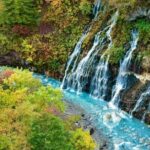
Shirogane Blue Pond is the most unusual natural setting in the choices. Its pale blue water and surrounding trees create a quiet, almost otherworldly backdrop that contrasts sharply with city parks and old canal buildings.
Blue Pond is likely to be the main reason some couples choose a longer route. If this is your must-have location, build the day around it rather than adding several distant stops. The package covers private car transfers, but it does not turn Hokkaido’s geography into a small place.
Biei and Furano are also listed as possible locations. They give you open countryside and seasonal scenery, but the exact visual character will depend on the time of year and weather. The provider does not promise a specific seasonal display, so book these places for their open rural setting rather than a guaranteed flower scene.
I would pair Blue Pond with locations that lie naturally along the route, if the studio confirms that plan. Trying to combine Blue Pond, Otaru, and several Sapporo stops could leave less time for portraits.


Dream Beach and Asari Station for less formal portraits
Otaru Dream Beach brings the sea into the session. Beach photographs can make a wedding shoot feel lighter and less posed, especially after the more formal preparation at the studio.
The shore also gives you a clear contrast with a shrine or park. A gown against the sea has a different tone from a kimono at a traditional gate, so this is a smart pick if you want your final album to show several sides of the day.
Asari Station is another possible stop, though the supplied details do not specify what parts of the station or surrounding area will be used. Ask the provider how they plan to photograph there before choosing it. That is particularly important if you have a precise style in mind.
The same advice applies to any location selected from the wider list. The photographer can work with the setting, but you should confirm the final three places, expected travel time, and clothing changes in advance.
Toyohira Shrine and the Shinto ceremony option
Toyohira Shrine is more than a scenic photo stop when you choose the Shinto Wedding Ceremony Plan. This option includes a real shrine ritual, along with professional photography, rather than simply using the shrine as a background.
That gives the day a stronger cultural purpose. A Shiromuku or Iro-uchikake is not just a costume choice in this setting. It fits the traditional ceremony format and changes the session from staged wedding portraits into a formal religious experience.
The ceremony requires advance confirmation and may not be available on certain dates. Do not assume that selecting Toyohira Shrine automatically includes the ritual. Confirm the ceremony plan, the clothing, and the schedule before paying for the booking.
Toyohira Shrine can also be combined with other Sapporo locations, such as Nakajima Park or Moerenuma Park. This keeps the day practical and gives you both traditional and contemporary photographs.
Sumiyoshi Shrine and Hinode Park
Sumiyoshi Shrine is another shrine choice in the proposed route. The information provided does not state that a ceremony is included there, so treat it as a photography location unless the provider confirms otherwise.
It may suit you if the goal is a shrine atmosphere without booking the Toyohira ceremony plan. For a couple choosing traditional clothing, having a shrine setting can make the kimono portraits feel more connected to Japan than a generic studio background.
Hinode Park is also available as a possible photo stop, though no detailed description of its specific views is supplied. Ask what seasonal or local features will be used before committing to it. The best choice depends on the final style you want, not simply the number of places you can name.
Gowns, kimono, and what the package really includes
The included clothing depends on the plan you book. The base information specifies up to two wedding dresses or two different styling sets, while kimono rental is not automatically included in every option.
Traditional kimono, including Shiromuku and Iro-uchikake, is reserved for premium plans or available as an add-on. This distinction can change the total cost considerably, so read the selected plan carefully rather than assuming every outfit shown is included.
Two wedding dresses or two styling sets can give you a useful change during the day. Still, changing clothing takes time, particularly outdoors or between distant locations. If you want both western and traditional looks, ask how the changes fit into the eight-hour schedule.
Professional hair and makeup support is provided for up to eight hours. Props and lighting equipment are also supplied. These details matter because a full-day outdoor shoot needs more than a camera and a pretty location. The team can adjust the setup for different backgrounds and clothing styles.
The photo package and delivery timetable
The numbers here are strong. You receive more than 300 high-resolution photographs, plus 30 professionally retouched images.
The large set is useful for candid moments, outfit changes, family-style portraits if applicable to your booking, and different poses at each location. The 30 retouched images are the ones to choose with care for albums, framed prints, or formal announcements.
You receive all photos within two days, while the 30 edited images arrive within seven days. That is much faster than many custom photography services, though the listing does not state the delivery method or image file specifications. Ask how the files are sent and how long they remain available for download.
A behind-the-scenes video is not included, but it can be purchased as an optional add-on. If video matters to you, arrange it before the shoot rather than expecting the photographer to provide it automatically.
Is $2,064 good value for two people?
At $2,064 per group of up to two, this is a major purchase. You are paying for an eight-hour private experience, not merely for a few edited portraits.
The package includes a professional photographer, up to eight hours of hair and makeup support, studio preparation, selected wedding clothing options, a private car between locations, equipment, multilingual support, more than 300 images, and 30 retouched photographs. When all of those services are needed, the price can make sense.
The value is strongest for couples already planning a wedding or anniversary trip around professional photographs. It is also attractive if you want several Hokkaido settings without arranging transport, clothing, makeup, and a photographer separately.
The value is weaker if you only want a short portrait session or if you are comfortable arranging your own clothes and transport. Meals, drinks, insurance, some kimono rentals, wedding kimono, and video are extra or excluded.
The one-couple-per-day format is part of the price. You get a private schedule and can shape the day around three selected places, rather than following another group’s pace.
Weather, transport, and small planning details
Outdoor photography depends on the weather. Heavy rain or snow may lead to alternative locations, so keep your preferred choices flexible. Hokkaido conditions can affect beaches, parks, mountain viewpoints, and Blue Pond differently, but no specific backup locations are promised.
Pickup is available from your Sapporo hotel or nearby areas, with the exact time confirmed in advance. The stated meeting point is LE’CIEL PHOTO, so confirm whether your booking begins with hotel pickup or requires you to reach the studio yourself.
Bring food and drinks planning into the day. Meals and beverages are not included, and a full day of styling, driving, and photography can leave little time for an unplanned restaurant stop.
Free cancellation is available up to 24 hours before the experience for a full refund. You can also reserve now and pay later, which helps if your Hokkaido schedule is still changing. Travel insurance is not included.
Who should book this Hokkaido photo day?
I would recommend it to couples who want polished wedding photographs and a private sightseeing-style day built around them. It suits people who value convenience, professional styling, and a large final image collection.
It is especially appealing if you want to combine a western wedding gown with Hokkaido scenery, or if traditional clothing and a shrine setting are central to your plans. The Toyohira ceremony option gives the experience a seriousness that a standard costume photo session does not have.
I would hesitate if your budget is tight, if you dislike being photographed for most of a day, or if you want to visit many parts of Hokkaido rather than stay focused on three photo locations. The long preparation and road transfers also mean this is not a casual two-hour activity.
Before booking, confirm four things: the exact three locations, the clothing included in your chosen plan, the availability of the Toyohira ceremony if wanted, and the backup plan for bad weather.
Should you book this private Hokkaido shoot?
Book it if the photographs are the main event and you want the practical pieces handled together. The combination of studio styling, private transport, professional photography, multilingual support, and fast delivery is hard to match with separate bookings.
Choose your locations with care. Otaru works well for canal, mountain, and beach variety. Sapporo parks and Toyohira Shrine keep transfers shorter. Blue Pond, Biei, and Furano offer a more remote feel, but they should shape the day rather than be squeezed into a long list.
For a couple seeking a serious wedding portrait experience with a possible Shinto ritual, the $2,064 price can be justified. For a simple souvenir shoot, it is likely more service than you need.
FAQ
Where does the experience begin?
You meet at LE’CIEL PHOTO in Sapporo for preparation. Pickup from your hotel in Sapporo or nearby areas may be available, with the exact time confirmed in advance.
How long does the experience last?
The activity lasts eight hours. Hair, makeup, and dress fitting take about 2.5 hours before the outdoor photography begins.
How many locations can we visit?
The package includes photography at three chosen locations. Possible choices include Otaru Canal, Moerenuma Park, Nakajima Park, Blue Pond, Dream Beach, Mt. Tengu, Furano, Biei, and selected shrines.
Are kimono and Shiromuku included?
Kimono rental is not included in every plan. Shiromuku and Iro-uchikake are available in premium plans or as an add-on, so check the exact plan before booking.
How quickly will we receive the photographs?
All photographs are delivered within two days. Thirty professionally retouched images are delivered within seven days.
What happens if the weather is poor?
Outdoor locations may change in heavy rain or snow. Alternative locations will be arranged, but the specific backup sites are not listed.
More Tours in Sapporo


More Tour Reviews in Sapporo
Other Sapporo tours worth your shortlist


Japanese Culture Experiences, side by side.
 ★ 5.0Mondo’s most popular plan! Experience making soba noodles and the king of Japanese cuisine, tempura, in Sapporo!From $85.7971 reviews
 ★ 5.0Chopsticks Making Experience in SapporoFrom $42.358 reviews
 ★ 5.0Private Kimono Styling with Memory Photos by a Bridal StylistFrom $130.318 reviews
 ★ 5.0Calligraph Name in Japanese and Dress in KimonoFrom $42.824 reviews
The lists this tour appears in