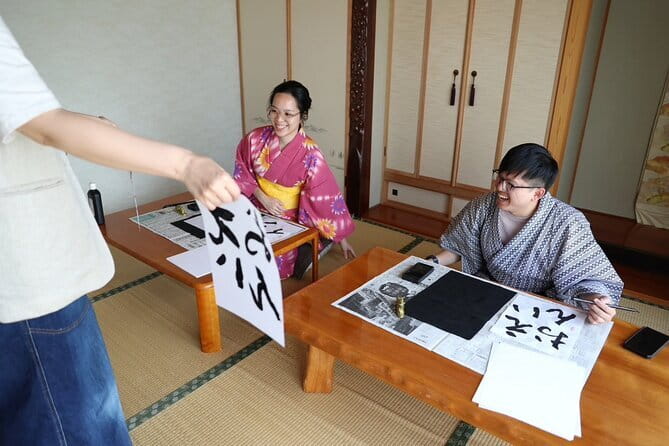
The most memorable part of this Sapporo activity is the combination of kimono dressing and Japanese calligraphy in a traditional tatami room. You are not simply watching a demonstration. You learn how to sit, hold the brush, draw basic lines, and form a Japanese character under personal guidance from Erika.
In This Article
- Key points
- A quiet Japanese lesson in a Sapporo tatami room
- Meeting Erika and getting ready in a kimono
- Learning brush posture and the first line
- Creating a Japanese name before you arrive
- Taking photos and keeping your finished work
- Why the private format helps families
- Location, timing, and transport in Sapporo
- Is $42.82 a fair price?
- What to confirm before booking
- Who will enjoy this Sapporo experience?
- Should you book Calligrash name in Japanese and dress in kimono?
- FAQ
- Where does the activity start?
- Where does the activity end?
- How long does the experience last?
- Is transportation included?
- Is the experience private?
- Are calligraphy materials provided?
- Are snacks included?
- Can young children wear a kimono?
- Can I cancel for a full refund?
I like the hands-on practice and the keepsake you take home. I also like the family focus, especially the option for children ages 0 to 7 to wear a kimono. The main consideration is the short two-hour format: dressing, photos, instruction, and practice all share the same time.
Key points
- Traditional setting: Learn calligraphy in a tatami room rather than in a large public class.
- Step-by-step instruction: Practice posture, brush grip, basic lines, and character forms.
- Private experience: Only your group participates, making it easier to ask questions and receive help.
- Family-friendly kimono option: Children ages 0 to 7 can wear a kimono, even if they do not take the calligraphy lesson.
- Personal souvenir: Take your finished calligraphy work home.
- Flexible scheduling: The provider can discuss a lesson time that works for your group.
A quiet Japanese lesson in a Sapporo tatami room
This experience offers a simple way to try two Japanese traditions at once. You dress in a kimono, then sit in a traditional tatami room to learn calligraphy with brush and ink.
That setting matters. Calligraphy is not just about making a recognizable character. The posture, the pace of each stroke, and the movement of the brush are part of the practice. A tatami room gives the lesson a calm, traditional frame, even though the activity itself is suitable for first-time visitors.
The tour lasts about two hours. That is enough time to get dressed, receive basic instruction, practice with the brush, and create a finished piece. It is not a long formal course, so you should think of it as an introduction and cultural activity rather than a full study of Japanese calligraphy.
The experience is private, meaning only your group participates. This is useful if you are visiting with children, if someone in your group needs extra help, or if you would rather ask questions freely than practice in front of strangers.
We have reviewed more tours and experiences across Sapporo; these are worth comparing before you book.


Meeting Erika and getting ready in a kimono
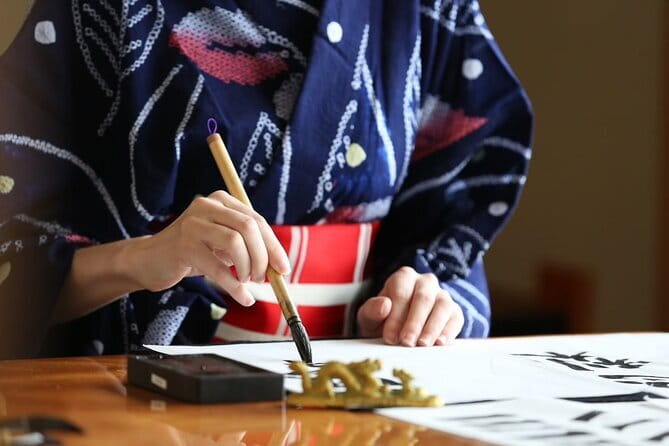
The provider is called Calligrash name in Japanese and dress in kimono. Erika is the guide identified with the activity, and the available family feedback gives special attention to her warm welcome, photography, and help with both the clothing and calligraphy.
The kimono portion comes first as the visual introduction to the experience. You can expect to be dressed in traditional Japanese clothing before moving into the calligraphy lesson. The supplied details do not specify the exact kimono style, dressing time, or whether you choose from several patterns, so contact the provider if those details matter to you.
For families, the age policy is especially useful. Kimonos are available for children from age 0 through age 7. A child does not have to take the calligraphy trial lesson to wear a kimono, so younger children can still join the photo and cultural parts of the activity.
You should provide each child’s age and gender when asking about the children’s kimono option. That lets the provider prepare suitable clothing in advance. The same advance contact is useful for confirming the Japanese names that will be prepared for your group.
Learning brush posture and the first line
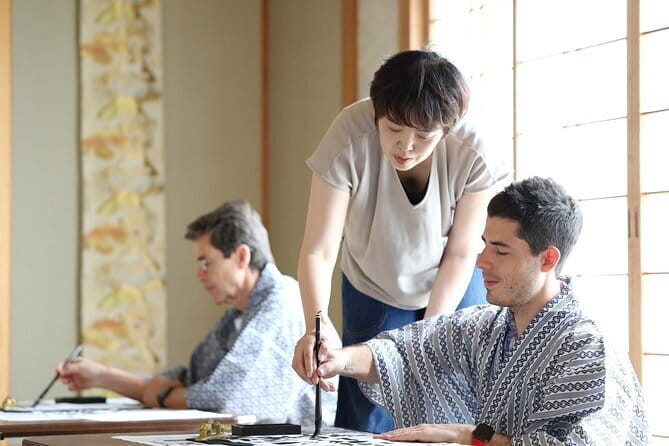
The calligraphy lesson begins with basic technique rather than a difficult character. Erika guides you into the right posture, shows you how to hold the brush, and explains how to draw a basic line.
These small steps are valuable because a brush behaves differently from a pen. Pressure, angle, and speed affect the width and shape of the stroke. You may find that simply making one clean line takes more concentration than expected.
You then practice by following a prepared model. This gives you something clear to copy instead of asking you to invent a character from scratch. The process is designed for beginners, and the personal instruction helps keep the first attempt from feeling like a test.
One particularly hands-on detail is the guided brush movement. Erika may move your hand and brush together so you can feel the motion needed for a stroke. That kind of physical correction can help you understand the technique faster than verbal instructions alone.
You will also receive help with the form of the character. This matters because Japanese characters have an order and structure that may not be obvious to someone who uses the Roman alphabet. The goal is not perfect mastery in one sitting, but a clear first sense of how calligraphy works.
Creating a Japanese name before you arrive
Your group’s names are confirmed in advance, and the provider prepares them in Japanese. This gives the activity a personal touch and makes the finished work more meaningful than a generic practice sheet.
The supplied information does not say which Japanese writing system will be used for each name or how the name will be selected. If you care about the exact spelling or the meaning of the characters, ask Erika before the session.
This preparation can also make the lesson feel more organized. You are not spending the whole class deciding what to write. Instead, you can focus on brush technique and the character form once the lesson begins.
For children, having a prepared name may help hold their attention. The experience also includes snacks, which is a small but welcome addition during a family activity.
Taking photos and keeping your finished work
Photography is available if you want it. That can include moments in the kimono and during the calligraphy practice, although the exact number or style of photos is not specified.
I see this as a useful feature for families. Dressing in a kimono is often the part children remember visually, while calligraphy creates something they can hold onto afterward. Having photos of both stages helps preserve the full activity rather than only the final piece.
You can take your calligraphy work home as a souvenir. The artwork may not look perfect, and that is part of its value. It shows your first attempt at a Japanese brush character, made during a lesson rather than purchased from a shop.
If you want photos, say so during the activity. The provider says photos can be taken if requested, so it is best not to assume they are automatic.


Why the private format helps families
A private booking gives your group the whole session. That makes this a stronger choice for families or small groups with different ages and confidence levels.
A child who finishes early may need attention while another person is still practicing. In a private class, the pace can be more flexible than in a larger group. The provider also says lesson times can be adjusted, so you can contact them about a time that suits your schedule.
The private format also removes some pressure for adults. First-time calligraphy can feel awkward at first, especially when you are learning how to hold the brush and control the ink. Personal guidance makes it easier to ask for another demonstration or try a stroke again.
There is one limit. Private does not mean that every part of the experience is customized in unlimited detail. The available information confirms flexibility with scheduling, children’s kimonos, and calligraphy participation, but it does not promise a fully bespoke lesson plan.
Location, timing, and transport in Sapporo
The meeting point is 16 Chome-1 Kita 34 Johigashi, Higashi Ward, Sapporo, Hokkaido 007-0834, Japan. The activity ends back at the same meeting point.
The location is near public transportation, but the exact station, walking distance, and route are not provided. Check the route before you leave, and allow time to find the correct building. This is especially important if you are bringing children or arriving in kimono-ready clothing is not part of the plan.
Pickup is offered, while private transportation is not included. Those details can sound contradictory, so confirm exactly what pickup means for your booking. Do not assume that a private car transfer from your hotel is part of the $42.82 price.
The activity is generally open to most participants. No special fitness level is stated, and the core lesson involves sitting, dressing, holding a brush, and practicing at a calm pace. If anyone in your group has a concern about sitting on tatami or changing into traditional clothing, contact the provider before booking.
Is $42.82 a fair price?
At $42.82 per person, the price covers about two hours of instruction, kimono use, calligraphy materials, snacks, and a finished piece to take home. You are paying for several connected parts rather than just a short brush demonstration.
The value is strongest when you want a personal cultural activity. A private lesson, individual brush guidance, Japanese name preparation, and optional photos make the price more reasonable than a basic drop-in craft class.
Families may find the package especially useful because children can wear a kimono even if they cannot manage the full calligraphy lesson. That means a younger child can participate without needing to complete the same activity as older children or adults.
The value is less clear if you only want a quick kimono photo. The experience is built around calligraphy as well as dressing, and you should allow the full two hours. If you are looking for an advanced calligraphy course, this short introduction will probably feel limited.
The activity is often booked about 35 days in advance. That suggests you should not leave it until the last day of a Sapporo visit, particularly if you need a specific time or children’s clothing.
What to confirm before booking

Confirmation is sent within 48 hours of booking, subject to availability. Since the provider prepares Japanese names in advance and offers flexible scheduling, contact is worthwhile before your visit.
I would confirm these practical points:
- The exact meeting instructions and nearest public transport stop
- What pickup includes and whether you need to make your own way to the address
- The available kimono size for each child
- The Japanese spelling prepared for each person
- Whether you want photos taken
- Whether every participant plans to do calligraphy
- The exact start time and expected arrival time
The provider can accommodate people who only want to wear a kimono and skip the calligraphy trial. That is useful for very young children or anyone who wants the cultural clothing experience without the brush lesson.
Free cancellation is available if you cancel at least 24 hours before the local start time. Cancellations or changes made later are not refunded or accepted, so keep that cutoff in mind when arranging your Sapporo schedule.
Who will enjoy this Sapporo experience?
This is a good match for families, couples, and small groups looking for a cultural activity with something tangible to remember. Children can take part in the clothing and photos, while older children and adults can try the full calligraphy process.
It also suits first-time visitors who want more than a photo opportunity. The lesson explains posture, brush grip, line technique, and character form, giving you a basic understanding of what you are doing.
You may want to choose another activity if you need a large group event, an advanced class, or a fully mobile experience with hotel transport included. The meeting point is fixed, the class lasts about two hours, and the calligraphy instruction is introductory.
The family feedback gives the strongest praise to Erika’s welcome, her help with the children, and the photos she took during the activity. That combination makes this more than a clothing rental. You receive guidance, a small lesson, and a personal record of the experience.
Should you book Calligrash name in Japanese and dress in kimono?
Book it if you want a private, gentle introduction to Japanese culture and like the idea of taking home your own brush-written souvenir. The strongest reasons are the tatami-room setting, direct instruction from Erika, flexible participation for children, and the chance to combine kimono dressing with calligraphy in one visit.
Before paying, confirm the pickup details, children’s kimono arrangements, and Japanese name spellings. If those details work for your group, $42.82 is a fair price for a two-hour private activity with materials, snacks, optional photos, and personal guidance.
FAQ
Where does the activity start?
It starts at 16 Chome-1 Kita 34 Johigashi, Higashi Ward, Sapporo, Hokkaido 007-0834, Japan.
Where does the activity end?
The activity ends back at the meeting point.
How long does the experience last?
The experience lasts approximately two hours.
Is transportation included?
Private transportation is not included. Pickup is offered, so confirm the pickup details with the provider before your visit.
Is the experience private?
Yes. Only your group participates in this private activity.
Are calligraphy materials provided?
Yes. The tools used for Japanese calligraphy are loaned for the activity.
Are snacks included?
Yes. Snacks are included.
Can young children wear a kimono?
Yes. Kimonos are available for children ages 0 to 7. A child can wear a kimono even if they do not take the calligraphy lesson.
Can I cancel for a full refund?
Yes, if you cancel at least 24 hours before the experience start time. Cancellations or changes made less than 24 hours before the start time are not accepted for a refund.
More Tour Reviews in Sapporo
Other Sapporo tours worth your shortlist









Japanese Culture Experiences, side by side.
 ★ 5.0Mondo’s most popular plan! Experience making soba noodles and the king of Japanese cuisine, tempura, in Sapporo!From $85.7971 reviews
 ★ 5.0Chopsticks Making Experience in SapporoFrom $42.358 reviews
 ★ 5.0Private Kimono Styling with Memory Photos by a Bridal StylistFrom $130.318 reviewsWedding & Kimono Tours | Parks, Lakes & ShrineFrom $2,064
The lists this tour appears in