Hakodate’s old Motomachi district is easy to see and surprisingly easy to misunderstand. This walk takes you beyond the famous postcard stops, pairing little-known historic corners with stories from a local café owner who knows the neighborhood as a lived-in place, not just a sightseeing zone. You’ll visit churches, public buildings, a slope, and an old water-supply site, all within a compact part of town.
In This Article
- Key points before you book
- Why this two-hour walk works in Motomachi
- Starting at the Motomachi water-supply site
- From a former Russian hospital to Hakodate’s churches
- Hakodate Orthodox Church and the value of seeing the cluster
- Old Public Hall: Hakodate’s civic face
- Old British Consulate and the foreign-port story
- Higashi Hongan-ji Temple brings the route back to Japan
- The optional café meal and Hakodate food culture
- Is $47.43 a fair price?
- Who will enjoy this walk most?
- Practical details for your day in Hakodate
- Should you book Walk Around Hakodate’s Hidden Spots?
- FAQ
- How long does the Hakodate walking tour last?
- What time does the tour start?
- Where does the tour begin?
- Where does the tour finish?
- How many people can join the tour?
- Is food included?
- Can I cancel or change my booking?
I like the small maximum group of 10, which should make it easier to ask questions and keep the walk personal. I also like the optional café meal, since food can explain a town’s past in a way that plaques often cannot. The main drawback is the strict non-refundable policy, and two hours is short if you want to linger inside every building.
Key points before you book
- A local café owner leads the walk: Expect neighborhood stories and food culture alongside architectural sightseeing.
- Six main stops cover Motomachi’s old quarter: Churches, public buildings, a consulate, a temple, and a former water-supply site form the route.
- The group is capped at 10 people: This suits visitors who want conversation rather than a large organized procession.
- The optional meal adds local context: You can eat at the café before the walk and connect the town’s food traditions with its past.
- The start and finish are close together: The tour begins at Marutamagoya and ends at Marutama Square, both on Motomachi’s 2-chome streets.
- Plan for a fixed commitment: The experience cannot be refunded or amended after booking.
Why this two-hour walk works in Motomachi
Hakodate’s Motomachi district is one of the city’s best areas for a short guided walk. Its streets bring together foreign religious buildings, civic architecture, Japanese Buddhist tradition, and traces of the city’s development during the 19th century. That mix gives the route more variety than a simple church-and-viewpoint stroll.
The guide’s connection to a local café is important. You are not only being shown buildings. You are also being introduced to the food culture tied to Hakodate’s town life. The café is described as a place where local residents relax, so the experience has a useful neighborhood angle rather than feeling like a fast circuit of monuments.
The walk starts at 1:00 pm and lasts about two hours. That timing works well if you spend the morning at another Hakodate sight, take a midday train or tram into the area, or want an organized introduction before exploring Motomachi on your own.
The group limit of 10 matters here. Narrow streets, slopes, and small historic sites are easier to handle with a compact group. You should also have a better chance to ask about the buildings, local dishes, and daily life in the district.
Our other Hakodate reviews may also help you decide


Starting at the Motomachi water-supply site
The first stop is the Motomachi Water Supply Pond, also identified with Mizumoto Park. It is an unusual opening because it is not the standard grand building that most visitors expect from an old-town tour.
A water-supply site points to the practical side of Hakodate’s growth. Historic districts are often presented through impressive churches and halls, but water systems reveal how a town supported expanding homes, businesses, and public life. This stop gives the guide a chance to explain the less glamorous systems behind the city’s development.
You should expect about 10 minutes here, with no admission charge. That short visit is useful for orientation, though anyone hoping for a long park stop may find it brief. Think of it as a piece of the town’s working story rather than a major photo stop.
From a former Russian hospital to Hakodate’s churches
The next stop is Hakodatesei John Church, also described as Hakodate St. John’s Church and a former Russian hospital. The multiple names may cause a little confusion, so listen closely to the guide’s explanation of how the site fits into Hakodate’s religious and international past.
This is one of the places where a local guide can add value. A building name alone does not tell you how different foreign influences reached Hakodate, how religious institutions operated, or why this small district contains such a striking mix of traditions. The tour is designed to give that context while you are standing in front of the site.
The church stop lasts about 10 minutes and admission is free. You should not expect a long interior visit or an extended architectural lecture based on the published timing. The benefit is the connection between the building, the neighborhood, and the wider town story.
The route then reaches Chacha Nobori slope. The slope is not listed with a separate visit time, but it is an important part of the walk because Motomachi is defined partly by its rising streets and changing views. Walking the slope helps you understand the district’s shape instead of seeing each building as an isolated point on a map.
Be ready for some uphill walking. The tour is only two hours, and most participants can take part, but the presence of a slope means comfortable shoes are sensible. The route is not presented as difficult, yet it is not a flat café crawl either.
Hakodate Orthodox Church and the value of seeing the cluster
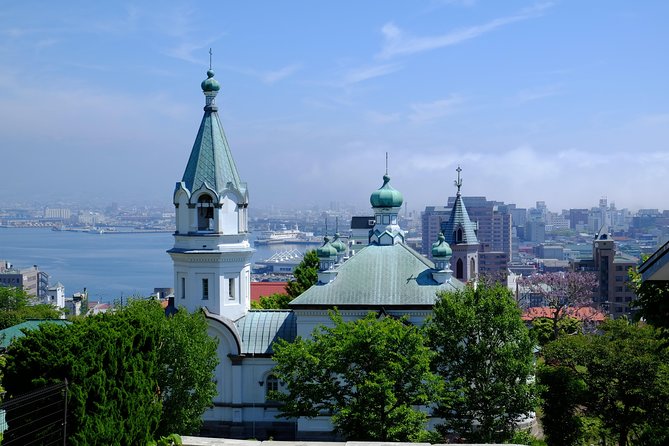
Hakodate Orthodox Church is the third timed stop. Like the earlier church, it is free to visit as part of the walk and receives about 10 minutes.
The real value here is the cluster. Motomachi’s religious buildings sit close enough together that you can compare them within one outing. That makes the district a good place to see how Hakodate became a meeting point for different communities and architectural traditions.
You may find the pace quick if you enjoy church architecture. Ten minutes gives you time to look, listen, and take photographs, but not necessarily to study every detail. The guide’s local perspective is therefore more important than the amount of time spent at each building.
I like this structure because the tour does not ask you to spend half a day inside one site. Instead, it shows how several places relate to one another. Afterward, you can return to the building that caught your attention most.
Old Public Hall: Hakodate’s civic face
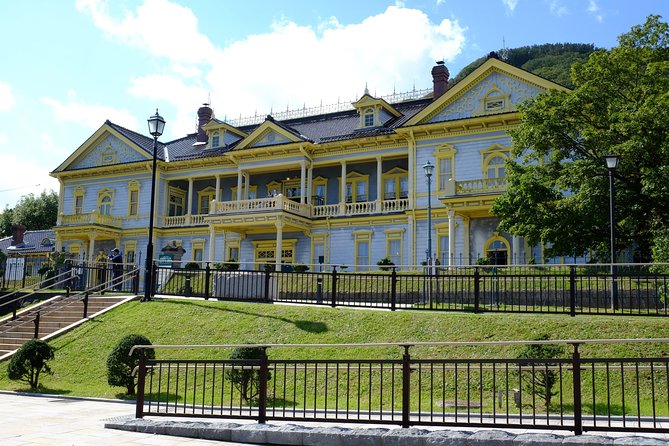
The Old Public Hall of Hakodate Ward changes the tone of the walk. After the water-supply site and churches, this building brings attention to public life and civic identity.
The hall represents the formal side of the town: government, gatherings, and the way Hakodate presented itself as it developed. The guide can help connect the building’s appearance to the city’s growth, rather than leaving you with only a pretty façade and a date.
This stop also lasts about 10 minutes and carries no separate admission charge on the tour. If you want to go inside and explore at length, check the timing carefully. The walk’s purpose is to give you a guided introduction to several sites, not to provide extended admission time at each one.
That distinction is worth keeping in mind when judging the price. You are paying for the route, the guide’s interpretation, and the local connection. You are not booking a full museum tour with long visits at every building.
You can also read our reviews of more walking tours in Hakodate

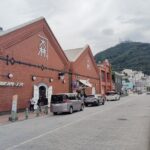


Old British Consulate and the foreign-port story
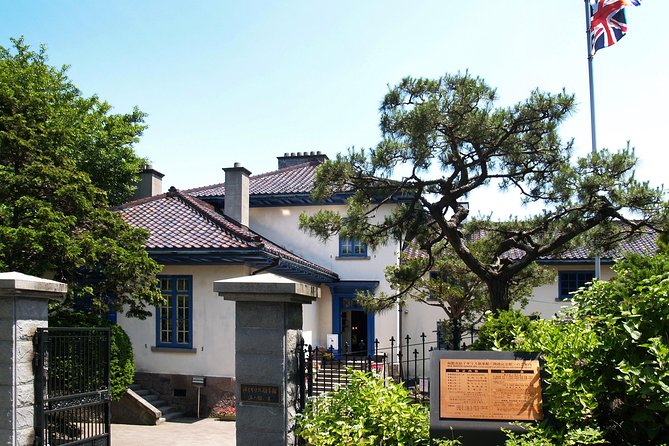
The Old British Consulate of Hakodate is the fifth main stop. Along with the churches and public hall, it shows why Hakodate’s old quarter feels different from many other Japanese city districts.
The consulate gives the walk another angle on the city’s contact with the outside world. You can see how international links shaped the town’s institutions and appearance, while the guide explains the local meaning behind the site.
Again, the planned time is about 10 minutes. That is enough for a clear explanation and a few photographs, but you should set aside separate time if you want a detailed interior visit. The stop is most useful as part of the larger pattern: religious buildings, civic buildings, foreign institutions, and Japanese traditions all appear within the same compact area.
This is also where the tour’s location works in your favor. Since the start and end points are both in Motomachi, you can continue visiting nearby sights after the walk instead of losing time on a long transfer.
Higashi Hongan-ji Temple brings the route back to Japan
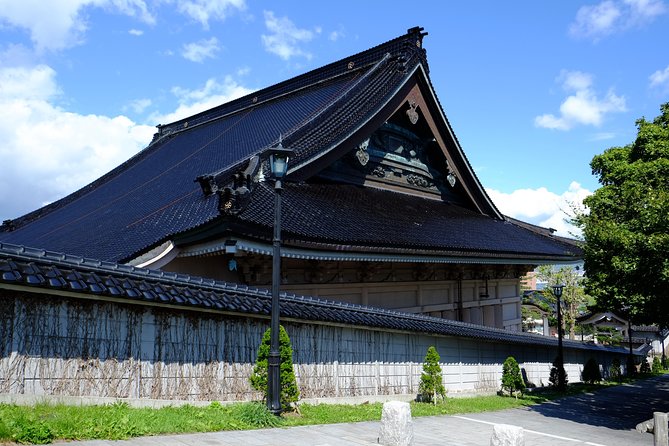
The final main stop is Ōtani Hongan-ji Hakodate Betsu-in, also called Higashi Hongan-ji Temple. It gives the walk a Japanese religious counterpoint to the churches and consulate.
That contrast is one of the route’s strongest features. You are not being shown only the buildings associated with foreign contact. The temple reminds you that Hakodate’s identity also rests on established Japanese religious and community traditions.
The visit is planned for about 10 minutes, with no admission charge. As with the other stops, the guide’s explanation is likely to matter more than a long formal visit. You will leave with a clearer sense of how the district’s different institutions sit beside one another.
Finishing at the temple also gives the walk a satisfying change of focus. The route begins with infrastructure, moves through international and civic buildings, and ends with a major Japanese religious site.
The optional café meal and Hakodate food culture
The café element makes this experience different from a standard architecture walk. Before the tour, you may choose to eat a meal related to Hakodate’s food culture at the cozy local café. The meal is optional, so you can book the walk without making lunch part of the plan.
I would consider adding it if you want more than visual sightseeing. Food can make the town’s history easier to understand, especially when the guide is also the café owner. You are given a chance to connect what you taste with the streets and buildings you will see afterward.
The available details do not give a fixed menu or meal price, so you should confirm those points before committing to the food option. Personal expenses are not included in the experience, and the optional meal should be treated as a separate cost unless the provider tells you otherwise.
The café is also a practical meeting area before or after the walk. The start point is Marutamagoya at 2-3 Motomachi, while the end point is Marutama Square at 2-9 Motomachi. Both are in the same general district, making it easy to combine the tour with more Motomachi sightseeing.
Is $47.43 a fair price?
At $47.43 per person, this is not the cheapest way to walk around Hakodate. You can see the outside of many old buildings on your own for free. The price makes more sense if you value a local guide, a planned route, background on the food culture, and access to places you might otherwise pass without understanding.
The group cap of 10 improves the value. A small group usually allows more direct conversation, and this tour is built around personal explanation rather than a large audio-style presentation. The guide’s connection to a community café adds a local point of view that a self-guided map cannot provide.
The value drops if you already know Motomachi well, prefer to set your own pace, or plan to enter each building for a long visit. You may feel rushed by the 10-minute timing at each main stop.
On average, the experience is booked 62 days ahead. That suggests you should reserve early if your schedule is fixed, especially since confirmation is subject to availability and is sent within 48 hours of booking. Since the booking is non-refundable and cannot be changed, only reserve once you are confident about your date.
Who will enjoy this walk most?
I would recommend it to first-time visitors who want a clear introduction to Motomachi without spending half a day on a formal city tour. It suits anyone interested in architecture, local food, religious buildings, and the way a port town developed.
It is also a good choice if you prefer a small, friendly walking group over a bus tour. The route has enough variety to keep the two hours moving, and the local café connection gives the experience a social feel.
Families and older visitors may find the compact length manageable, since most participants can take part. Still, the Chacha Nobori slope means you should be comfortable walking uphill for part of the route.
You may want something else if your top priority is extensive time inside the Old Public Hall, British Consulate, or churches. This experience gives you a guided overview of several locations, not a detailed tour of one building.
Practical details for your day in Hakodate
The tour begins at 1:00 pm. It is near public transportation, which helps if you are coming from another part of Hakodate, but the provided details do not specify a particular station, tram stop, or walking time. Check the exact meeting point before setting out.
Your mobile ticket is included as a feature, and confirmation should arrive within 48 hours, subject to availability. The experience includes everything necessary for the tour itself, while personal expenses are separate.
Wear shoes suited to a city walk and slope. The route is short, but you will be moving between several sites, and the best part of the experience is being able to pay attention to the streets rather than worrying about your feet.
Plan extra time around the tour. The start and finish points are both in Motomachi, so you can use the morning to visit another Hakodate attraction, take the optional café meal before the walk, or continue exploring after 3:00 pm.
Should you book Walk Around Hakodate’s Hidden Spots?
Book this tour if you want a personal introduction to Motomachi’s lesser-known corners, especially if food and local stories matter as much to you as famous buildings. The local café owner, small group, and mix of churches, civic sites, slopes, a temple, and water infrastructure give the walk a thoughtful shape.
Skip it if you want a completely flexible route or long interior visits. At $47.43, the experience earns its price through guidance and local context, not through admission tickets. For a first visit to Hakodate, that can be a worthwhile trade, as long as you accept the fixed booking and brisk two-hour pace.
FAQ
How long does the Hakodate walking tour last?
The walk lasts approximately two hours.
What time does the tour start?
The tour starts at 1:00 pm.
Where does the tour begin?
It begins at Marutamagoya, 2-3 Motomachi, Hakodate, Hokkaido 040-0054, Japan.
Where does the tour finish?
It ends at Marutama Square, 2-9 Motomachi, Hakodate, Hokkaido 040-0054, Japan.
How many people can join the tour?
The experience has a maximum group size of 10 participants.
Is food included?
The tour offers an optional meal related to Hakodate’s food culture at the local café. Personal expenses are not included in the experience.
Can I cancel or change my booking?
No. The experience is non-refundable and cannot be changed for any reason after booking.
More Walking Tours in Hakodate
More Tour Reviews in Hakodate


More Hakodate Tours in Hakodate

Other Hakodate tours worth your shortlist






Hakodate Tours, side by side.
 ★ 5.0Hakodate 6hr Private Tour with Government-Licensed GuideFrom $269.3217 reviews
 ★ 4.5Hakodate Exploration Tour with Private GuideFrom $407.209 reviews
 ★ 5.0Hakodate 4hr Private Tour with Government-Licensed GuideFrom $221.527 reviews
 ★ 4.44-Hour Cultural and Historical Highlights TourFrom $4165 reviews
The lists this tour appears in