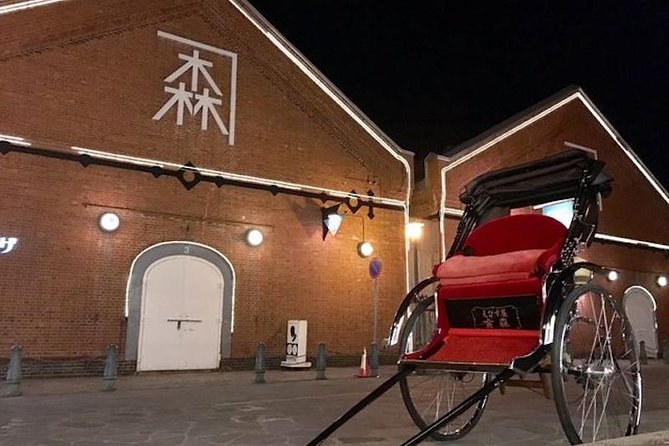
Hakodate’s best-known night sights take on a different feel from a covered Japanese rickshaw. Instead of hauling bags up the slopes or squeezing through busy streets on foot, you sit back while your driver carries you past churches, Hachimanzaka, the public hall, and the Kanemori Red Brick Warehouse.
In This Article
- Key points
- Why a rickshaw works well in Hakodate at night
- Meeting at Mt. Hakodate Ropeway’s lower station
- Churches and the old western district
- Hachimanzaka, Hakodate’s famous slope
- The public hall and Kanemori Red Brick Warehouse
- Choosing 30, 45, or 60 minutes
- Is $43.61 per person a fair price?
- Weather, comfort, and winter planning
- What to bring and how to plan the evening
- Who will enjoy this ride most
- Should you book the Hakodate night rickshaw?
- FAQ
- Where does the rickshaw tour begin?
- Where does the tour finish?
- When does the tour start?
- Is the Mt. Hakodate Ropeway included?
- How many people can ride in one rickshaw?
- Does the rickshaw operate in rain or snow?
- Can I cancel or change my booking?
I like two things here: the small private format, with only your group in the rickshaw, and the useful finish near Hakodate Station or nearby hotels on the 45 or 60 minute courses. The main catch is timing. The start changes with sunset, and the price cannot be refunded or altered after booking.
Key points
- Night tour after sunset: The start is usually about 15 minutes after sunset, with the exact time confirmed before the ride.
- Private rickshaw ride: Up to two adults share one rickshaw, with one preschool child allowed on an adult’s lap if conditions are safe.
- Historic western Hakodate: The route links the church district, Hachimanzaka, the public hall, and Kanemori Red Brick Warehouse.
- Covered in poor weather: The rickshaw can operate in rain or snow, though heavy snow may cancel the ride.
- Useful final stop: The 45 and 60 minute courses end at Hakodate Station or nearby hotels, not back at the ropeway station.
- About $43.61 per person: The fare includes the rickshaw and driver service, but not the Mt. Hakodate Ropeway or other transportation.
Why a rickshaw works well in Hakodate at night
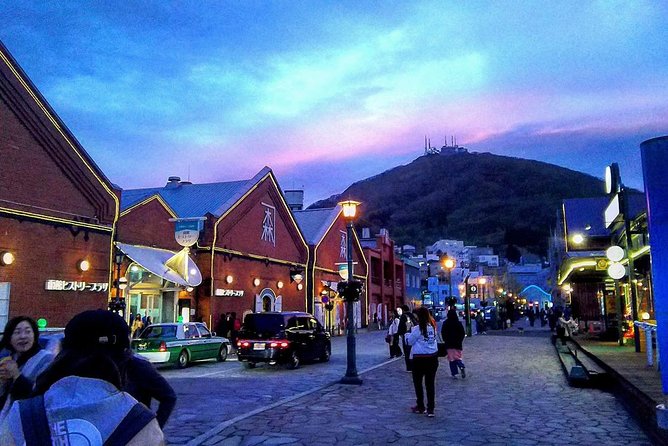
Hakodate is a city of slopes, port streets, old foreign trading buildings, and preserved religious sites. Many of its most attractive evening views are close together, but the uphill streets and cold northern weather can make walking less appealing, especially when you are carrying luggage.
A rickshaw gives you a raised seat and a moving view of the streets. Your driver pulls the vehicle and guides you through the illuminated district, including lanes that may not be obvious if you are following a standard sightseeing map. You are not simply being transported from one point to another. The appeal is the combination of a short city ride, local guidance, and photo stops.
The vehicle is also practical. It has protection for rainy and snowy weather, so you do not have to abandon the plan at the first sign of bad weather. Still, this is not a guarantee against every winter condition. Heavy snow can lead to cancellation for safety reasons.
The activity is private, which matters if you want a quiet hour with your own companion or family. It does not have the social energy of a large group tour, but you also do not have to adjust to strangers, wait for a large party, or keep pace with a guide on foot.
Our other Hakodate reviews may also help you decide


Meeting at Mt. Hakodate Ropeway’s lower station
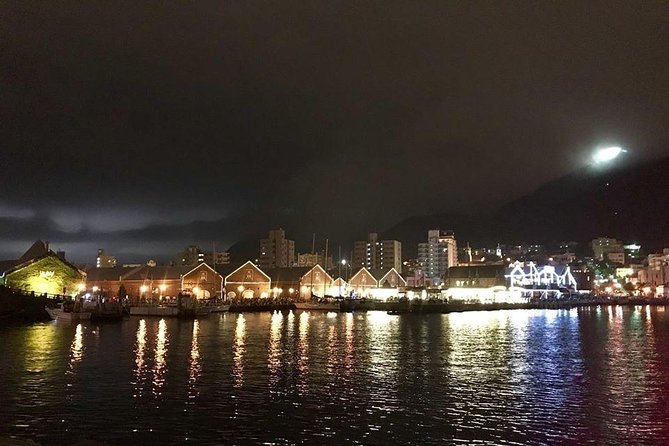
The ride begins at Sanroku Station, also called the submontane station, of the Mt. Hakodate Ropeway. The official meeting point is Sanchō Tenbōdai Station, Mt. Hakodate Ropeway, in Hakodate’s Motomachi area.
This is a sensible starting point because the ropeway station sits close to several of the city’s famous night sights. You can visit the Mt. Hakodate summit separately, then come down and meet the rickshaw near the lower station. The ropeway fare is not included, so plan and pay for that separately if you want to combine both activities.
The starting time is not fixed at one standard hour. It is adjusted to sunset and usually begins about 15 minutes after sunset or later. You receive the exact starting time ahead of the ride. This seasonal timing is useful because Hakodate’s evening light changes sharply between summer and winter.
I would keep your schedule flexible around the meeting time. Do not book a tight dinner reservation immediately afterward, particularly if you are taking the 45 or 60 minute course and continuing to Hakodate Station or a nearby hotel.
Churches and the old western district
From the ropeway station, the route heads through Hakodate’s historic western district. The itinerary calls out the churches first, an area where the city’s international past is visible in its religious buildings and old streets.
At night, illuminated architecture becomes the main subject. You are not visiting each church as an indoor sightseeing stop. Instead, you ride through the district and see the exteriors as part of a wider evening route.
This is where the rickshaw format earns its keep. You can focus on the buildings and street views without stopping to check directions every few minutes. Your driver may also point out backstreets and local places that are not always marked in guidebooks, though the exact commentary depends on the driver.
If you care about photography, have your camera or phone ready before the ride begins. The tour allows the driver to take souvenir photos with the rickshaw at attractive spots, but you need to bring your own camera. No photography equipment is supplied.
Hachimanzaka, Hakodate’s famous slope
Hachimanzaka is one of Hakodate’s signature streets. The slope leads toward the waterfront, creating a strong view down the road and across the older part of the city.
The street is especially suited to a night ride because its incline, lighting, and long sightline make it easy to appreciate from a seated vehicle. Walking it can be rewarding, but the climb is less appealing when you are carrying bags, dealing with snow, or moving with a child.
Do not expect a long stop at every location during a one-hour ride. The value is in seeing several connected places in one smooth outing. If you want extended time at Hachimanzaka for photographs, a separate visit on foot may suit you better.
Your driver is also the person who makes this stop more than a quick pass. The experience promises information about local backstreets and places that may not appear in a printed guide. Since no driver names are provided, you cannot request a particular guide in advance based on the available details.
The public hall and Kanemori Red Brick Warehouse
The public hall adds another piece of Hakodate’s old port-city character. Like the churches, it is primarily an exterior sight on this route, framed by the evening streets and the rickshaw’s open view.
Kanemori Red Brick Warehouse is the final named stop on the shorter 30-minute course. It is also part of the longer route before the ride continues toward Hakodate Station and nearby hotels.
The warehouse district gives the trip a change of mood. The church area and slopes feel residential and historic, while the red brick buildings connect to Hakodate’s waterfront commerce and present-day sightseeing area. The route therefore covers more than one kind of Hakodate, from hillside architecture to port-side streets.
If your goal is mainly to see the illuminated preservation district, the 30-minute option may be enough. If you want the ride to serve as transportation after sightseeing, the 45 or 60 minute option makes more sense because it continues to the station area.
You can also read our reviews of more evening experiences in Hakodate


Choosing 30, 45, or 60 minutes
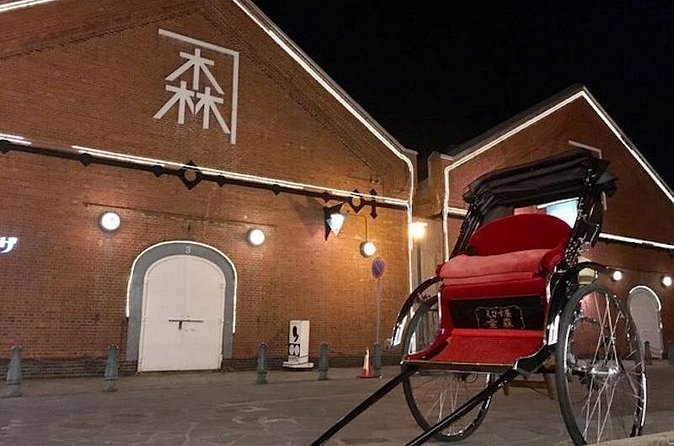
The supplied schedule identifies the Kanemori Red Brick Warehouse as the last point of the 30-minute course. The 45 and 60 minute courses continue to Hakodate Station and nearby hotels.
That difference is important. The longer courses are not simply extra sightseeing time. They can also reduce the need to arrange your own transport after the ride, provided your hotel is in the stated nearby area.
A one-hour course gives you the fullest version of the experience, but it is still a short introduction rather than a full Hakodate tour. You will see a chain of major evening sights, hear local information from the driver, and move through the district without carrying your luggage. You will not have time for long indoor visits or a broad tour of the entire city.
Up to two adults can ride in one rickshaw. If you are booking for two adults, the advertised per-person price applies naturally. A preschool child may sit on an adult’s lap when there is no safety issue. Two or more preschool children can change the number of rickshaws and the fare, so families should check the arrangement before assuming one vehicle will work.
Is $43.61 per person a fair price?
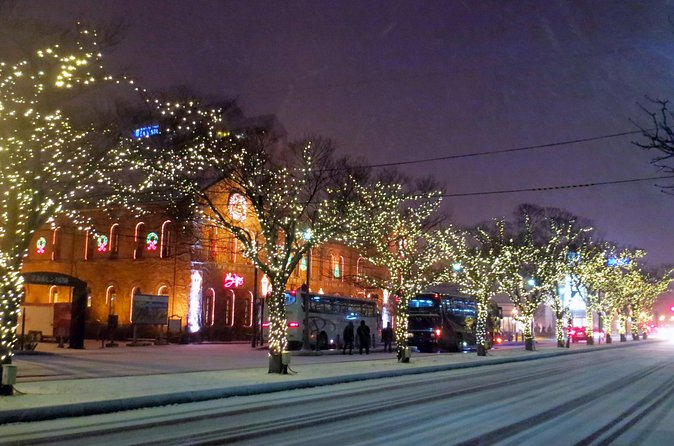
At about $43.61 per person, this is not the cheapest way to move around Hakodate. You are paying for a private vehicle, a driver, sightseeing commentary, weather protection, and the novelty of a traditional rickshaw.
The value improves if you are already planning to visit the western district at night and would otherwise walk between several uphill streets. It improves again if your longer course ends near your hotel or Hakodate Station. In that case, part of the fare replaces a separate transfer while also adding sightseeing.
The value is weaker if you only want a quick ride to the Kanemori Red Brick Warehouse or if you are comfortable walking the same streets independently. Hakodate’s historic district is compact enough that an independent visit can cost far less, though you would give up the rickshaw setting and the driver’s local route knowledge.
Group discounts are available, but the exact savings are not stated. Since the activity is private and the standard vehicle carries up to two adults, ask how the discount applies to your party before booking if you are traveling with more than two adults.
Weather, comfort, and winter planning
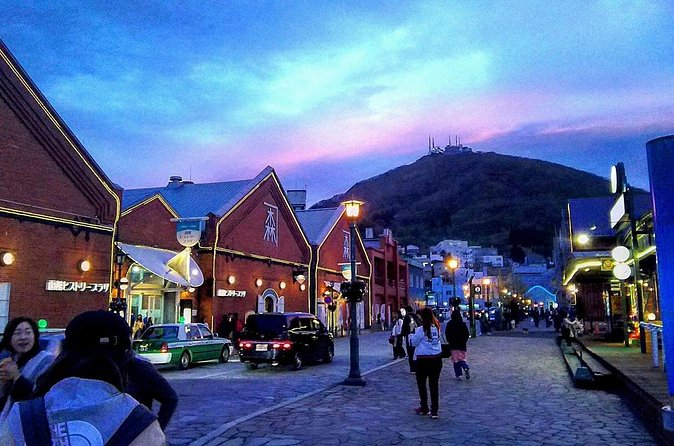
The rickshaw is prepared for rain and snow, which is a real advantage in northern Japan. You can keep your sightseeing plan even when walking conditions are unpleasant.
Heavy snow is the exception. If it creates a safety problem, the activity may be canceled. You should receive a phone notification at least three hours before the scheduled start, along with a refund.
The vehicle does not include free Wi-Fi or a toilet. That is not unusual for a one-hour ride, but it matters if you are arranging a longer evening around the activity. Use facilities before meeting and do not count on connecting to the internet during the ride.
Service animals are allowed. The activity is near public transportation, and most people can participate. The available information does not give detailed mobility guidance, so you should confirm any specific access needs before reserving.
What to bring and how to plan the evening
Bring a camera or phone for the souvenir photos. The driver can take pictures at good locations, but the equipment is your responsibility.
Dress for Hakodate’s night weather, especially outside the warmer months. The covered rickshaw reduces exposure to rain and snow, but it does not turn a northern evening into an indoor experience.
I would plan the ropeway separately. The Mt. Hakodate Ropeway fare is not part of this activity, and transportation outside the stated route is also excluded. If you ride the ropeway first, allow enough time to return to Sanroku Station for the confirmed meeting time.
Keep luggage manageable. One of the ride’s practical benefits is avoiding heavy bags and crowded walking routes, but the vehicle still has limited space compared with a taxi or hotel transfer. The supplied details do not state a luggage allowance, so check before bringing large cases.
The booking is non-refundable and cannot be changed for any reason. That makes the sunset-based start and weather forecast especially important. Confirmation is sent within 48 hours, subject to availability.
Who will enjoy this ride most
I would recommend it to couples looking for a memorable evening ride, families who want to avoid steep walks, and first-time visitors who prefer a guided introduction to Hakodate’s historic district.
It also suits anyone arriving with luggage or finishing the evening near Hakodate Station. The longer routes combine sightseeing with a useful drop-off, which gives the fare more practical value.
You may want to skip it if you prefer slow independent exploration, indoor museum visits, or a fixed schedule that cannot move with sunset. It is also not the right choice if a firm cancellation option matters to you, since the booking is non-refundable except for a heavy-snow cancellation by the operator.
There are no published ratings or guest comments to help judge individual driver style, so I would treat the driver’s personality as an unknown. The route and private format are clear, but the quality of the spoken commentary can vary by the person assigned.
Should you book the Hakodate night rickshaw?
Book this experience if you want to see Hakodate’s illuminated western district without walking every slope, and if a private ride with a local driver sounds more appealing than a standard transfer. The strongest choice for most people is the 45 or 60 minute course, since it continues beyond Kanemori Red Brick Warehouse and finishes near Hakodate Station or nearby hotels.
Choose the 30-minute course only if you mainly want the church district, Hachimanzaka, the public hall, and the red brick area. At about $43.61 per person, it is a special-occasion activity rather than a budget tour, but the combination of night scenery, weather cover, local route knowledge, and station-area drop-off can make the cost worthwhile.
FAQ
Where does the rickshaw tour begin?
It begins at Sanroku Station, also called Sanchō Tenbōdai Station, at the Mt. Hakodate Ropeway in Hakodate.
Where does the tour finish?
The 30-minute course finishes at Kanemori Red Brick Warehouse. The 45 and 60 minute courses finish at Hakodate Station and nearby hotels.
When does the tour start?
The start time changes according to sunset. It is generally scheduled about 15 minutes after sunset or later, and the exact time is provided in advance.
Is the Mt. Hakodate Ropeway included?
No. The Mt. Hakodate Ropeway fare is not included, and transportation outside the stated tour route is also excluded.
How many people can ride in one rickshaw?
Up to two adults can ride in one rickshaw. If safety conditions allow, one preschool child may sit on an adult’s lap.
Does the rickshaw operate in rain or snow?
Yes, the rickshaw can operate comfortably in rainy or snowy weather. Heavy snow may cause cancellation for safety reasons, with notice by phone at least three hours before the tour and a refund.
Can I cancel or change my booking?
No. The activity is non-refundable and cannot be changed for any reason.
More Tours in Hakodate


More Tour Reviews in Hakodate
More Hakodate Tours in Hakodate

Other Hakodate tours worth your shortlist




Hakodate Tours, side by side.
 ★ 5.0Hakodate 6hr Private Tour with Government-Licensed GuideFrom $269.3217 reviews
 ★ 4.5Hakodate Exploration Tour with Private GuideFrom $407.209 reviews
 ★ 5.0Hakodate 4hr Private Tour with Government-Licensed GuideFrom $221.527 reviews
 ★ 4.44-Hour Cultural and Historical Highlights TourFrom $4165 reviews
The lists this tour appears in