Hakodate’s best feature is its unusual mix of Japanese and foreign influences. In four hours, a government-licensed guide can connect the star-shaped Goryokaku fortress, old churches in Motomachi, red-brick warehouses, harbor views, and the city’s seafood market into one focused visit. I like the freedom to choose just two or three stops, and I like that guides such as Akira, Meji, Fumi, and Fumiko have shaped tours around guests’ interests.
In This Article
- Key points at a glance
- Why Hakodate works so well with a private guide
- Goryokaku Park, Hakodate’s five-pointed fortress
- Hakodate Morning Market for an early seafood stop
- Motomachi, where Hakodate faces the wider world
- Kanemori Red Brick Warehouse and Bay Hakodate
- Mount Hakodate and the famous city view
- Onuma Quasi-National Park, the difficult choice for a four-hour visit
- Hakodate Museum of Northern Peoples and the Ainu story
- How the guide can change the day
- Is $221.52 per person fair value?
- Practical details before you reserve
- Who should book this Hakodate tour?
- FAQ
- How long is the Hakodate private tour?
- How many attractions can I choose?
- Is transportation included?
- Is the tour private?
- Is the Hakodate Morning Market open all day?
- Are meals and entrance fees included?
The main consideration is transportation. This is a walking tour with an on-foot meeting point, not a private-car excursion. Mount Hakodate and Onuma Quasi-National Park are both on the choice list, but covering distant sights in four hours may require public transport or a taxi at your own cost.
Key points at a glance
- Choose 2 to 3 sights: Build your half-day around history, food, harbor views, or old foreign districts.
- A licensed local guide leads the way: English-speaking guides can explain Hakodate’s trade, military, and Ainu connections.
- Goryokaku gives you the city’s big historical story: This star-shaped fort was central to the final fighting of the Tokugawa era.
- Motomachi and the Bay Area show Hakodate’s international past: Churches, old buildings, trams, and red-brick warehouses give the city its character.
- The Morning Market rewards an early start: It operates from 5 a.m., or 6 a.m. in winter, until noon.
- Budget for extras: Transportation, meals, entrance fees, and personal purchases are not included.
Why Hakodate works so well with a private guide
Hakodate is not a city you understand from one postcard view. Its story comes from several neighborhoods that feel quite different from one another. The port opened to foreign trade in 1854, after Japan’s long period of isolation, and merchants from Russia, China, and Western countries left their mark on the town.
You can see that past in the European-style buildings and churches of Motomachi, the old red-brick warehouses beside the harbor, and the vintage trams that link several central districts. You can also taste it at the Hakodate Morning Market, where the city’s long relationship with the sea is placed right in front of you.
A private tour helps because you are not following a fixed sightseeing route. You select two or three places from the available list, then your guide shapes the four hours around those choices. That works especially well for a first visit, a short port call, or a day when you want explanations rather than a quick series of photographs.
The service has received a 4.9 rating from seven published ratings, with particular praise for the guides’ patience, clear explanations, and willingness to adjust the route. Akira, Meji, Yumiko, Fumi, and Fumiko are among the guides named in the supplied information. Your assigned guide may differ, so treat those names as examples rather than a guarantee.
Our other Hakodate reviews may also help you decide


Goryokaku Park, Hakodate’s five-pointed fortress
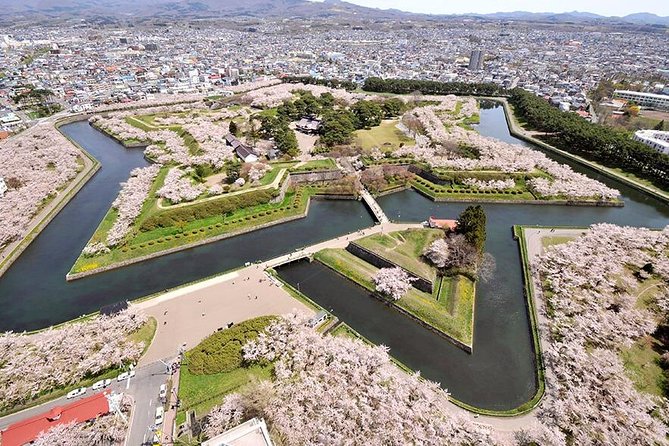
If you want one stop that explains Hakodate’s place in Japanese history, choose Goryokaku Park. The fortress was built in the late Edo period as a Western-style military stronghold. Its five-point design was intended to improve defense, while the site also served as a government center.
Goryokaku later became the setting for the final battle between forces loyal to the Tokugawa shogunate and the new imperial government. That gives the park more weight than its pleasant paths and open lawns might suggest. You are walking through the site of a major turning point in Japan’s move into the modern era.
A guide can make the fort’s shape and political story easier to follow. One particularly useful version of this visit includes the Goryokaku Tower, which provides a broad view of the star-shaped grounds and a clear sense of how the design works. The tower is not listed as an included expense, so ask your guide about the current entry cost before going up.
The park itself is listed as free, but four hours is not enough for a leisurely visit to every attraction in Hakodate. If Goryokaku is your priority, pair it with the Morning Market or one nearby central sight rather than trying to add distant Mount Hakodate and Onuma as well.
Hakodate Morning Market for an early seafood stop
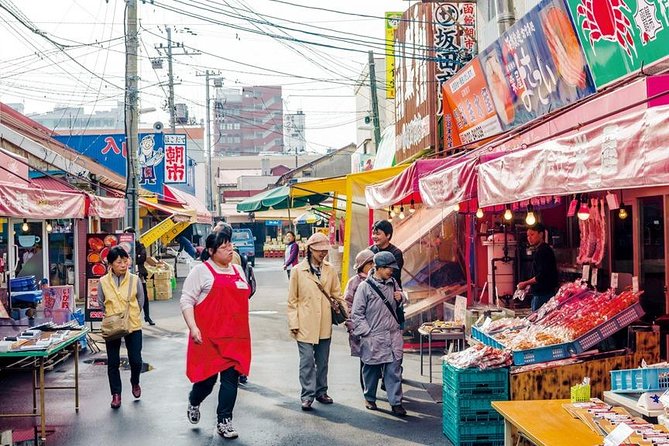
The Hakodate Morning Market is only a short distance from JR Hakodate Station, making it one of the easiest choices for a morning tour. It opens daily from 5 a.m., or 6 a.m. in winter, and closes at noon. That schedule matters: book this stop early or you may miss it entirely.
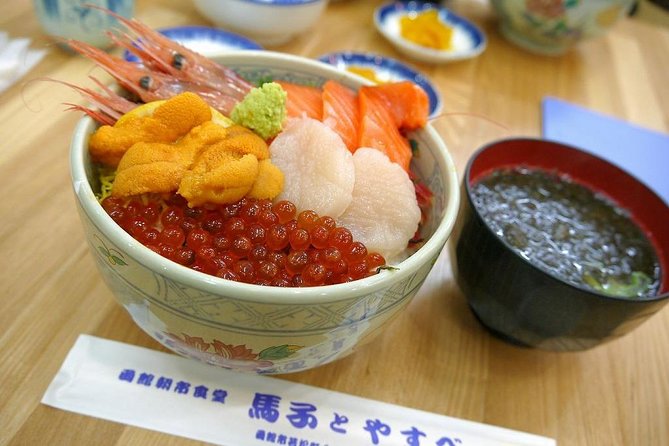
The market covers about four city blocks. It is a practical place to see the city’s fishing culture, browse seafood, and consider a fresh breakfast before the rest of your sightseeing. Food is not included, so you pay directly for anything you eat or buy.
I would choose the market if you want a sensory start to the day and do not need a long historical introduction. Your guide can help you understand what you are seeing and fit the market into a larger route. Still, market time can easily expand once you stop to eat, shop, and look around. Tell the guide at the start if you want a quick visit or a proper breakfast.
The market also pairs well with the Bay Area and Kanemori Red Brick Warehouse. These places are close enough in theme to create a port-focused morning, though the tour still needs to account for walking time and any paid transport.
Motomachi, where Hakodate faces the wider world
Motomachi is the strongest choice for architecture and social history. Hakodate’s port was among the first in Japan to open to foreign trade, and merchants from several countries settled here. The result is a district where Japanese streets meet churches and buildings influenced by Russia, China, and Western Europe.
This is the part of the tour that shows why Hakodate feels different from many other Japanese cities. You are not simply looking at old buildings. You are seeing how trade changed the town’s appearance and introduced new communities, religions, and commercial links.
A licensed guide adds real value here because the significance of a building can be easy to miss when you are walking independently. The 30-minute stop listed for Motomachi is enough for an introduction and a few important views, but it is not a detailed architecture walk. Choose it if you want a compact overview, and ask for more time if particular churches or buildings matter to you.
Motomachi is also a good option for visitors who prefer a slower urban walk over a formal museum or fortress. Wear comfortable shoes, since the whole experience is described as a walking tour.
Kanemori Red Brick Warehouse and Bay Hakodate
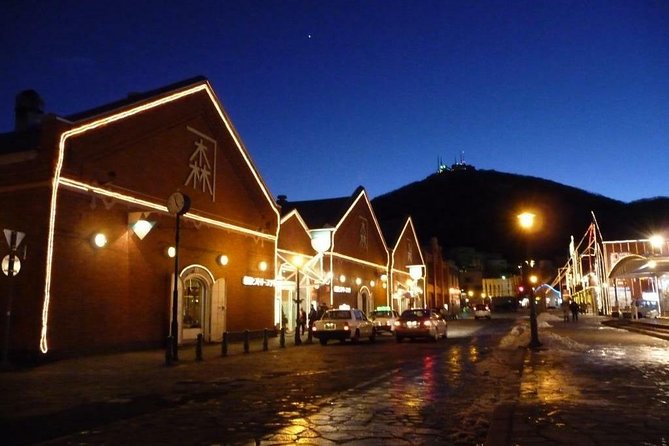
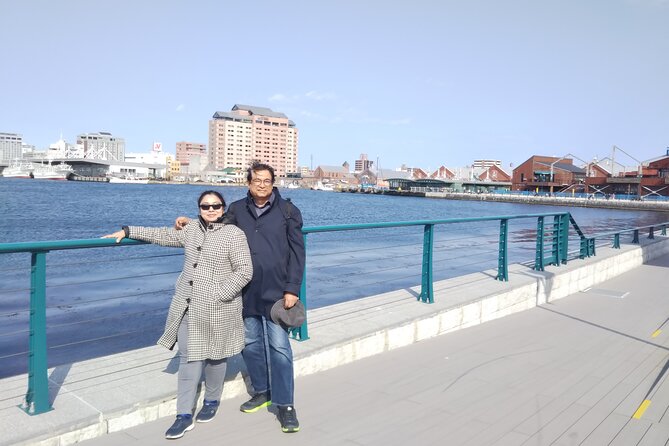
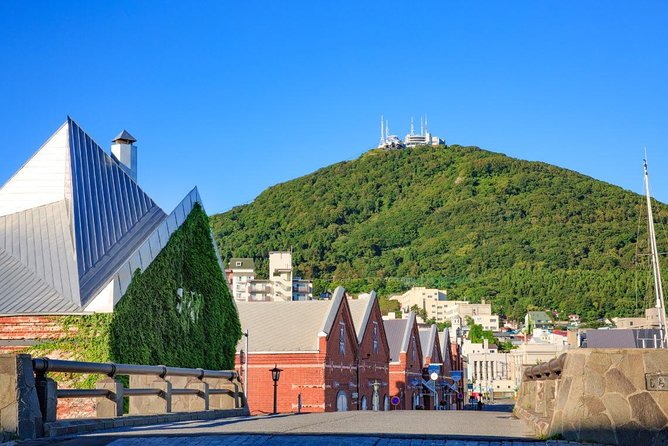
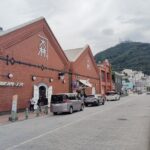
The Kanemori Red Brick Warehouse gives you a direct look at Hakodate’s commercial past. Several old warehouses from the port’s trading era remain beside the water, and they have been converted into a shopping area. The buildings are historic in appearance but now serve a modern visitor economy.
That combination makes the area easy to enjoy. You can see the old port structures, walk beside the harbor, and browse shops in the same stop. If you want a polished sightseeing area with food and shopping nearby, this is a practical choice.
Bay Hakodate adds the wider harbor setting. The area faces Hakodate Port and offers open views, with a row of old red-brick buildings forming the main visual focus. It overlaps with the warehouse stop, so I would normally choose one rather than spend two of your three selections on nearby attractions.
The advantage is convenience. The drawback is that these areas can feel more commercial than Motomachi or Goryokaku. Pick them for harbor atmosphere, photographs, and easy browsing, not for the deepest historical explanation.
Our other Hakodate reviews may also help you decide


Mount Hakodate and the famous city view
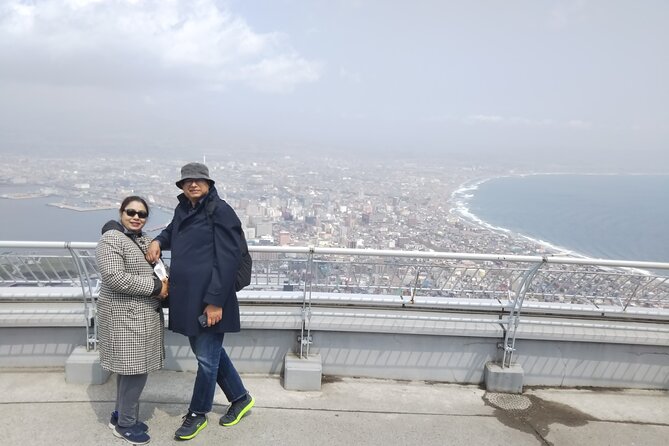
Mount Hakodate rises 334 meters at the southern end of the peninsula. Its wooded slopes and high viewpoint give you a broad look over Hakodate, especially when the air is clear. The view is the reason this stop is so popular, with the narrow shape of the city framed by water on both sides.
The listed visit is 30 minutes and does not include an admission ticket. The tour information does not specify the exact transport method to the mountain, and the experience itself does not include a private vehicle. That is important. You should ask how the guide plans to reach the viewpoint and expect to pay any public transport or taxi costs separately.
A guide is most useful here when the view is paired with an explanation of Hakodate’s layout. You can understand the position of the port, the central districts, and the peninsula far better from above. If your main goal is the night view, confirm the start time and visibility conditions before booking, since the tour lasts approximately four hours and the supplied details do not promise a particular time of day.
Mount Hakodate is a strong choice for first-time visitors who want a quick orientation. It is a less efficient choice if you also want Onuma or several central neighborhoods in the same session.
Onuma Quasi-National Park, the difficult choice for a four-hour visit
Onuma Quasi-National Park lies about 20 kilometers north of Hakodate. It is known for lakes dotted with islands and views toward Mount Komagatake. This is the most nature-focused option on the list, and it gives you a very different experience from the port, market, and historic districts.
The issue is time. The listed stop lasts 30 minutes, but getting to and from a site outside the central city can consume a large part of a four-hour tour. Since transportation is excluded and no private vehicle is provided, you need a clear plan before choosing it.
Onuma makes sense if you have already seen central Hakodate, are staying longer, or care more about scenery than the city’s foreign-trade history. It makes less sense for a short visit when Goryokaku, Motomachi, and the harbor are all competing for your attention.
Ask the guide or operator whether Onuma can realistically fit your meeting point and chosen schedule. The tour is customizable, but customization does not remove the distance between sites.
Hakodate Museum of Northern Peoples and the Ainu story
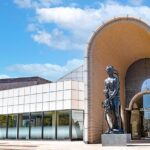
The Hakodate Museum of Northern Peoples occupies a former bank building constructed in 1926. Inside, the museum focuses on Ainu culture and other northern peoples. It offers a useful change of pace from forts, markets, and port buildings.
This stop is best for you if cultural history is a priority. Hakodate’s story is not only about foreign merchants and the end of the shogunate. The Ainu connection adds an essential northern perspective, and a guide can help place the displays in context.
Admission is not included. The stop is listed as 30 minutes, which gives you a brief introduction rather than a full museum visit. If you like to read exhibits carefully, you may need more time than the standard stop allows. Confirm the entry cost and timing before making it one of your two or three selections.
How the guide can change the day
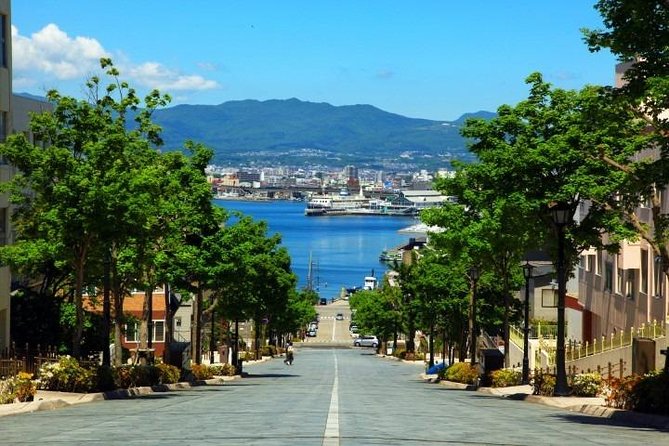
The strongest feature here is not the number of sights. It is the chance to tell the guide what matters to you before the walk begins. You might favor Goryokaku and the museum for history, Motomachi and the warehouses for architecture, or the Morning Market and Bay Area for food and port life.
Past guide examples show different strengths. Akira has led tours using Hakodate’s heritage trams, while Meji shaped a route around specific priorities and explained the city clearly. Fumi was praised for patient answers to detailed historical questions, and Fumiko suggested using a taxi to make better use of the four-hour period. A taxi was paid separately, but it solved the problem of covering more ground efficiently.
That last point is practical. A private guide can adjust the order and emphasis, but the tour does not include a vehicle. You may walk, use public transportation, or arrange taxis, depending on the route. Transportation costs belong to you, and a taxi can make sense when the group wants to connect distant points without losing the whole afternoon.
The tour is private, so only your group participates. That gives you room to ask questions, slow down for photographs, or move on when a stop is not holding your attention. It also means you cannot combine multiple tour groups to reduce the price.
Is $221.52 per person fair value?
At $221.52 per person, this is not a bargain sightseeing walk. Its value depends heavily on group size and how well you use the guide. The price covers a four-hour private experience with a licensed local English-speaking guide, but not transportation, meals, admission fees, or personal expenses.
For a small group, the cost may feel high compared with a standard shared tour. For a larger private group, group discounts may improve the value. The ability to shape the route can also save time, especially if you have a short stay and want explanations tailored to your interests.
The price is easier to justify if you ask good questions and choose sites that benefit from local interpretation. Goryokaku, Motomachi, and the Museum of Northern Peoples all gain meaning from context. The Bay Area and warehouses are simple to visit alone, though a guide can connect them to Hakodate’s trading past.
This experience is booked an average of 134 days ahead, so advance planning matters. That may be particularly useful if you need a specific morning for the market or want to coordinate the tour with a ship or train schedule.
Practical details before you reserve
You meet your guide on foot within the designated Hakodate area. Although pickup is advertised, the included details describe an on-foot meeting and no private vehicle. Confirm the exact meeting point and route plan before the day of the tour.
Most people can take part, and service animals are allowed. The tour is near public transportation, but transport fares are yours to pay. Entry fees are also separate, except where the operator specifically covers guide entry for sights listed in the selection.
Free cancellation is available up to 24 hours before the local start time for a full refund. Changes or cancellations inside that window are not accepted for a refund.
The four-hour duration is approximate. That gives the guide some room to adjust the pace, but you should not plan every attraction on the list. Two or three well-chosen stops will make a better day than eight rushed photo stops.
Who should book this Hakodate tour?
Book it if you want a private, question-friendly introduction to Hakodate and prefer choosing the subjects yourself. It fits couples, families, and small groups who want a licensed guide rather than a fixed script.
It is especially useful for a first visit, a short stop in the city, or anyone curious about the meeting point between Japanese history and foreign trade. Goryokaku plus Motomachi is the strongest all-around pairing. Add the Morning Market for food, the museum for Ainu culture, or the Bay Area for port scenery.
Think twice if you want a car, a full-day tour, or a guaranteed visit to every listed attraction. Onuma and Mount Hakodate require careful timing, and all transport costs are extra.
If you can accept the walking format and plan the route before you arrive, this tour offers a smart way to give Hakodate a clear shape in four hours.
FAQ
How long is the Hakodate private tour?
The tour lasts approximately four hours.
How many attractions can I choose?
You can choose two or three sites from the listed options, and the guide customizes the route around your choices.
Is transportation included?
No. The tour is described as a walking experience with an on-foot meeting point. Transportation fees and private vehicle service are not included.
Is the tour private?
Yes. Only your group participates, and multiple tour groups cannot be combined.
Is the Hakodate Morning Market open all day?
No. It opens daily from 5 a.m., or 6 a.m. during winter, and closes at noon.
Are meals and entrance fees included?
No. Lunch, meals, personal expenses, transportation fees, and entrance fees are not included.
More Tour Reviews in Hakodate

More Private Tours in Hakodate
More Hakodate Tours in Hakodate

Other Hakodate tours worth your shortlist





Hakodate Tours, side by side.
 ★ 5.0Hakodate 6hr Private Tour with Government-Licensed GuideFrom $269.3217 reviews
 ★ 4.5Hakodate Exploration Tour with Private GuideFrom $407.209 reviews
 ★ 4.44-Hour Cultural and Historical Highlights TourFrom $4165 reviews
 ★ 5.0Hakodate Highlights Shore Excursion (5h) for Cruise GuestsFrom $5214 reviews
The lists this tour appears in