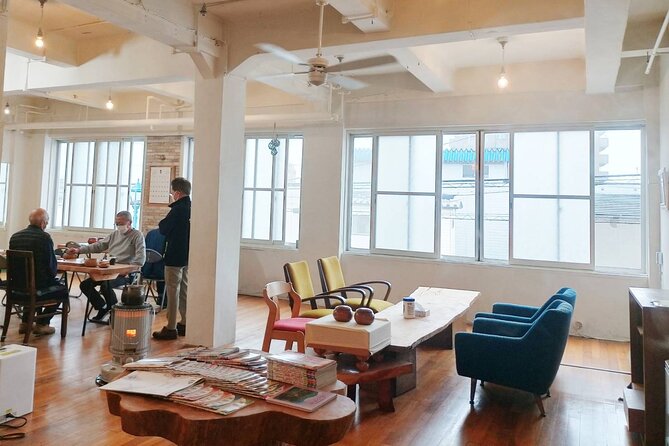
Hakodate offers plenty of food, views, and old streets, but this 90-minute Go lesson gives you a quieter look at Japanese culture. A certified 6-dan instructor teaches the game while an English-speaking local guide explains the rules, translates, and adds cultural context. You do not need any previous experience.
In This Article
- Key Points
- Why Go Makes a Good Hakodate Activity
- Meeting at Culture Center Gagyukan in Suehirocho
- Meeting the Japanese Go Teacher and English-Speaking Guide
- The First Part of the 90-Minute Session
- Learning Why Go Matters in Japanese Culture
- Playing a Friendly Match
- Tea, Seasonal Wagashi, and a Simple Take-Home Guide
- What the Private Format Means for Your Group
- Who Will Enjoy This Go Lesson Most
- Timing, Booking, and Cancellation Details
- Should You Book the Hakodate Go Experience?
- FAQ
- How long does the Go experience last?
- Where does the activity start?
- Where does the activity end?
- Do I need previous Go experience?
- Is English support available?
- Who teaches the Go lesson?
- Is this a private activity?
- What is included in the experience?
I like the mix of hands-on play and Japanese tradition, especially the tea and seasonal wagashi served during the session. I also like that the activity is private to your group, so you can ask basic questions without feeling rushed. The main drawback is simple: Go can feel slow or difficult if you want a fast-paced activity, and the session is short for anyone hoping to become truly skilled.
Key Points
- A certified 6-dan instructor leads the session, offering a high level of playing and teaching experience.
- English support continues throughout, with translation and help from a local guide.
- You learn through play, not just through a talk about Japanese history.
- Tea and a seasonal wagashi add a small but meaningful cultural touch.
- The private format suits families and first-time players, with only your group taking part.
- The meeting point is Culture Center Gagyukan in Hakodate’s Suehirocho district, and the activity finishes there.
Why Go Makes a Good Hakodate Activity
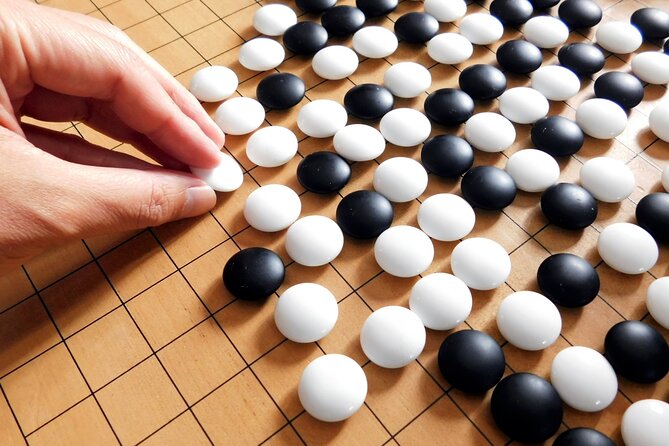
Go, called 囲碁 in Japanese, is an ancient board game built around territory, balance, patience, and reading your opponent. The rules are basic enough to explain to a beginner, but the choices become more complex as the board fills.
That contrast makes Go a fine match for a short cultural activity. You can understand the central idea during one session, then spend years improving if the game catches your interest. You do not need to arrive as a chess player, puzzle fan, or anime expert. The class is designed for someone who may be seeing a Go board for the first time.
I also like the setting this activity creates. Instead of simply looking at Japanese culture from the outside, you sit down, handle the stones, make choices, and share a traditional pastime with a teacher. It is a small experience, but it asks you to take part.
The activity is especially useful if you have already seen Hakodate’s main sights and want something less hurried. It can also work well on a rainy day, during a break from sightseeing, or for a family looking for an activity that does not depend on athletic ability.
Our other Hakodate reviews may also help you decide


Meeting at Culture Center Gagyukan in Suehirocho
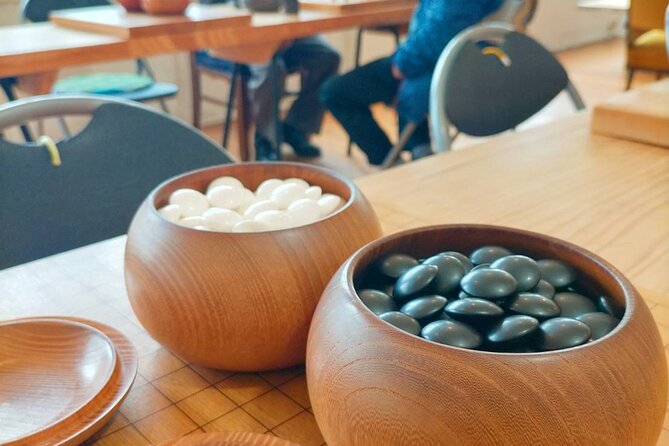
You meet at Culture Center Gagyukan, written in Japanese as カルチャーセンター臥牛館, at 99 Suehirocho, Hakodate, Hokkaido 040-0053. The venue is near public transportation, and pickup is offered, though you should confirm the exact pickup arrangement when booking.
The activity returns to the same meeting point at the end. That makes the timing easy to manage, especially if you are planning this between other stops in central Hakodate.
You receive a mobile ticket, so there is no need to depend on a printed voucher. Confirmation is sent within 48 hours of booking, subject to availability. Since this activity is often reserved about 45 days ahead, I would not leave it until the last day of a short Hakodate visit if the schedule matters to you.
The setting is traditional rather than theatrical. You are going to a place for learning and play, not a staged performance. That is a plus for anyone who prefers a real local activity, though you should not expect a large museum display or a sightseeing tour attached to the lesson.
Meeting the Japanese Go Teacher and English-Speaking Guide
The session is led by a Japanese Go teacher with certified 6-dan rank. In Japan, that is a high amateur level, and the instructor brings decades of teaching and competition experience to the board.
You also have an English-speaking local guide throughout the session. The guide explains the rules, translates between you and the teacher, and helps connect the game with Japanese history and culture. This two-person approach matters because the best Go lesson needs both technical clarity and cultural explanation.
The English support is particularly valuable at the beginning. Go uses terms and ideas that can be hard to understand from a quick translation alone. If you are unsure why a move matters, the guide can help explain the choice instead of leaving you to guess.
The available information identifies the experience provider as Bobby, but it does not give the personal name of the Japanese Go teacher or the English-speaking guide. If meeting a particular instructor is important to you, ask for the names when you confirm your booking.
The First Part of the 90-Minute Session
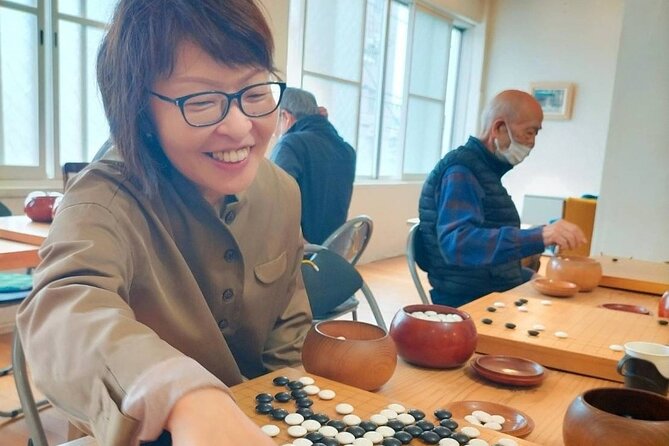
The class begins with the basics. You learn how the board works, how stones are placed, and how players claim space. The instruction is described as beginner-friendly, so the first section should be approachable even if you have never played a board game of this type.
Go is often called easy to learn but difficult to master. That is not just a sales line. The first rules can be explained quickly, but the board soon presents several possible moves. A good teacher helps you focus on the main idea without burying you under advanced theory.
Expect the lesson to include explanation, demonstration, and questions. The exact order may vary depending on your group and the teacher’s approach. A private session gives the instructor room to adjust the pace, which is helpful if one person understands the rules quickly while another needs more examples.
Families should find the format approachable because the activity does not require prior knowledge. Still, younger children may need help staying focused during the explanation. The game rewards patience, so this is better for children who can sit and think for a while than for those looking for constant movement.
Learning Why Go Matters in Japanese Culture
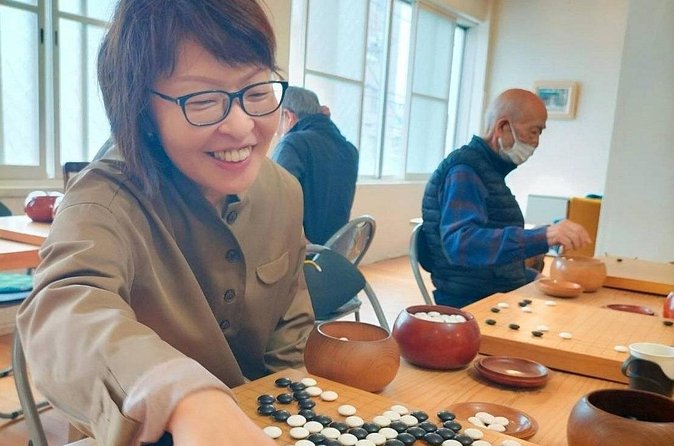
The lesson is not limited to rules and winning. The English-speaking guide also explains why Go has a place in Japanese history and culture.
That context gives the board more meaning. You are not just learning how to surround stones. You are learning about a traditional Japanese pastime that has been played and taught for centuries. The game’s slow pace, careful choices, and attention to the whole board also give you a small window into values often linked with Japanese arts and study.
The cultural portion should not be confused with a long history lecture. The main purpose is still to play. That balance is sensible for a 90-minute activity, since you want enough explanation to understand the tradition without losing time at the board.
I find this approach more useful than simply visiting a shop and buying a Go set. You leave with an experience of how the game is played and why it matters, not just an object whose rules you may never learn.


Playing a Friendly Match
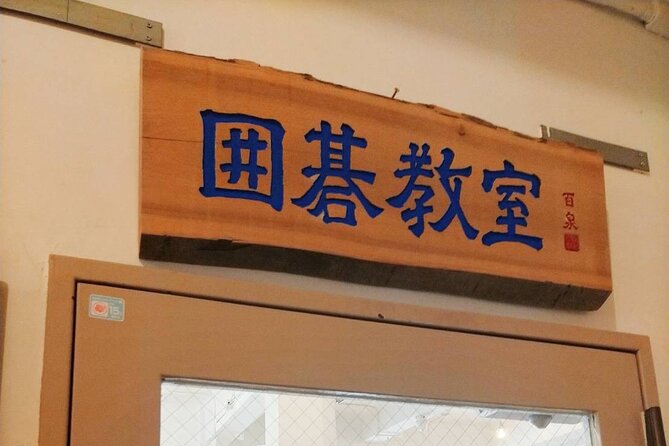
After the introduction, you play a friendly match with the instructor or with other participants in your private group. This is where the rules begin to make sense.
Your first game may feel confusing. The board can look open at the start, then suddenly become crowded with decisions. That is normal. The aim of the activity is not to turn you into a strong player in one sitting. It is to help you grasp the basic rhythm of Go and experience the pleasure of making your own decisions.
Playing the teacher can be useful because you can ask questions as the game develops. Playing another member of your group may feel less intimidating and gives everyone a chance to test the rules together. The format allows for either option, depending on the group and instructor.
Because the activity is private, you avoid the pressure of being paired with strangers. That is a real advantage for beginners. You can stop to ask what a move means, reset a position, or admit that you have forgotten a rule without holding up a larger class.
The limitation is time. Ninety minutes must cover the introduction, cultural explanation, match, tea, and guide material. You should see the match as a first taste, not as a full tournament or extended practice session.
Tea, Seasonal Wagashi, and a Simple Take-Home Guide
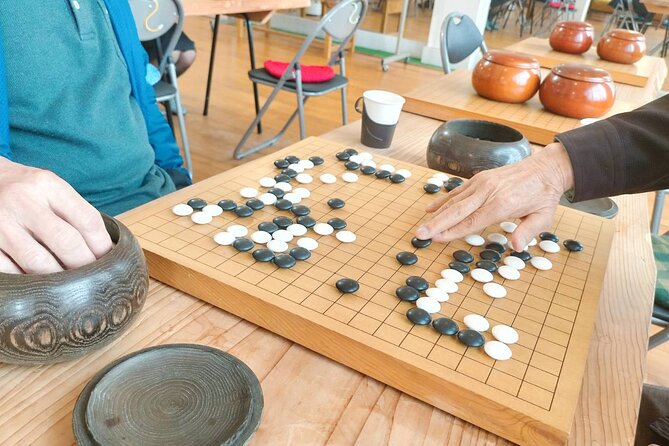
The session includes tea and a seasonal wagashi, a traditional Japanese sweet. This is a modest addition, but it helps shape the experience as a cultural visit rather than a plain board-game lesson.
Wagashi changes with the season, so the exact sweet is not specified. That uncertainty is part of the appeal, though anyone with food allergies or dietary restrictions should ask about the ingredients before participating.
The tea break also gives you a natural pause after the first round of instruction. You can think over the game, ask follow-up questions, and enjoy a quiet Japanese custom alongside the Go lesson.
You also receive a simple Go guide to take home. This matters because the most common problem with a short introduction is forgetting the rules once you leave. The guide gives you a reference for trying the game again, even if you do not buy a board during your trip.
Do not expect a full equipment package or an advanced textbook. The guide is described as simple, which makes it useful for remembering the basic ideas rather than mastering higher-level tactics.
What the Private Format Means for Your Group
This is a private activity, so only your group participates. For a family, couple, or small party, that can make the lesson feel relaxed and personal.
The private format also gives you more control over the pace. A beginner can ask for another explanation, while someone who already knows the rules may be able to move ahead more quickly. The instructor or guide can choose a match format that fits the group.
There is a tradeoff. Private activities sometimes feel less social than a shared class, and you may not meet other Go players. If your goal is to make new friends through a larger workshop, this may not be the right setup. If your priority is comfort and personal attention, the private arrangement is a strong point.
Group discounts are offered, which may improve the value when several people book together. The listed price is $26.28 per person. For that amount, you receive instruction from a high-ranking teacher, English help, a match, tea, seasonal wagashi, and a take-home guide.
That is a fair price for a specialized cultural activity, especially when compared with a basic sightseeing stop that gives you little chance to participate. The value depends on your interest, though. If you dislike board games or want a major attraction with lots of visual variety, the cost may feel less worthwhile.
Who Will Enjoy This Go Lesson Most
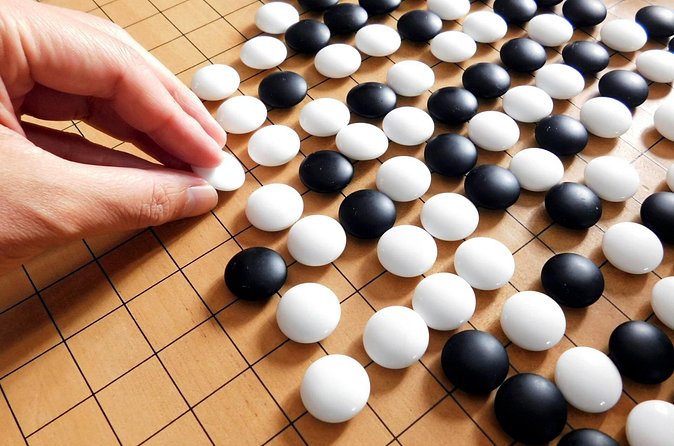
I would recommend this activity to first-time players, families, couples, and adults who want a calm cultural experience in Hakodate. It is also a good choice for anyone curious about Japanese traditions but not eager to join a cooking class, wear a costume, or spend several hours in a formal workshop.
You will get the most from it if you enjoy asking questions and making decisions at your own pace. A little patience helps. Go is not a game of instant rewards, and the board may take time to understand.
The activity can suit most participants, and service animals are allowed. It is near public transportation, which makes it practical for many visitors. The provided details do not specify a wheelchair-accessibility layout, exact age guidance, or the size of the board, so ask the provider if any of those points affect your plans.
It is less suitable if you want a broad tour of Hakodate. There are no listed walking stops, food tastings beyond the wagashi, or major sightseeing visits. You come for one focused activity and spend the session at the Go venue.
Timing, Booking, and Cancellation Details
Plan for about one hour and 30 minutes from start to finish. Since the activity ends back at the meeting point, you can schedule another plan afterward, but leave yourself a little breathing room rather than booking something immediately next door at a fixed time.
The experience offers free cancellation up to 24 hours before the start time. Cancel at least 24 hours ahead for a full refund. Cancellations or changes made less than 24 hours before the start time are not accepted for a refund, and the cut-off follows local Hakodate time.
Confirmation arrives within 48 hours, subject to availability. The typical advance booking pattern of about 45 days suggests that reserving early is sensible during a short visit or a busy season. Pickup is offered, but the details are not stated, so confirm the meeting procedure rather than assuming a hotel pickup.
Should You Book the Hakodate Go Experience?
Book it if you want a quiet, personal introduction to Japanese culture and like the idea of learning by doing. The certified 6-dan teacher, continuous English support, private format, tea, wagashi, and take-home guide give the experience more substance than a quick demonstration.
Think twice if you want fast action, a large group atmosphere, or a full sightseeing itinerary. Go asks you to slow down and concentrate, and 90 minutes gives you an introduction rather than mastery.
For most curious visitors, the price is reasonable and the format is easy to fit into a Hakodate schedule. If the idea of placing your first stones on a traditional board sounds more appealing than another rushed photo stop, this is a worthwhile addition. Reserve ahead, confirm the pickup details, and arrive ready to think carefully.
FAQ
How long does the Go experience last?
The session lasts approximately 90 minutes.
Where does the activity start?
It starts at Culture Center Gagyukan, at 99 Suehirocho, Hakodate, Hokkaido 040-0053, Japan.
Where does the activity end?
The activity ends back at the meeting point.
Do I need previous Go experience?
No. The instruction is beginner-friendly and suitable for people who have never played Go.
Is English support available?
Yes. An English-speaking local guide supports you throughout the session by explaining rules, translating, and discussing the cultural meaning of Go.
Who teaches the Go lesson?
The session is led by a certified 6-dan Japanese Go instructor with decades of teaching and competition experience. The experience provider is Bobby.
Is this a private activity?
Yes. Only your group participates.
What is included in the experience?
The activity includes Go instruction, a friendly match, English support, tea, a seasonal wagashi, and a simple Go guide to take home.
More Tour Reviews in Hakodate
More Hakodate Tours in Hakodate
Other Hakodate tours worth your shortlist









Hakodate Tours, side by side.
 ★ 5.0Hakodate 6hr Private Tour with Government-Licensed GuideFrom $269.3217 reviews
 ★ 4.5Hakodate Exploration Tour with Private GuideFrom $407.209 reviews
 ★ 5.0Hakodate 4hr Private Tour with Government-Licensed GuideFrom $221.527 reviews
 ★ 4.44-Hour Cultural and Historical Highlights TourFrom $4165 reviews
The lists this tour appears in