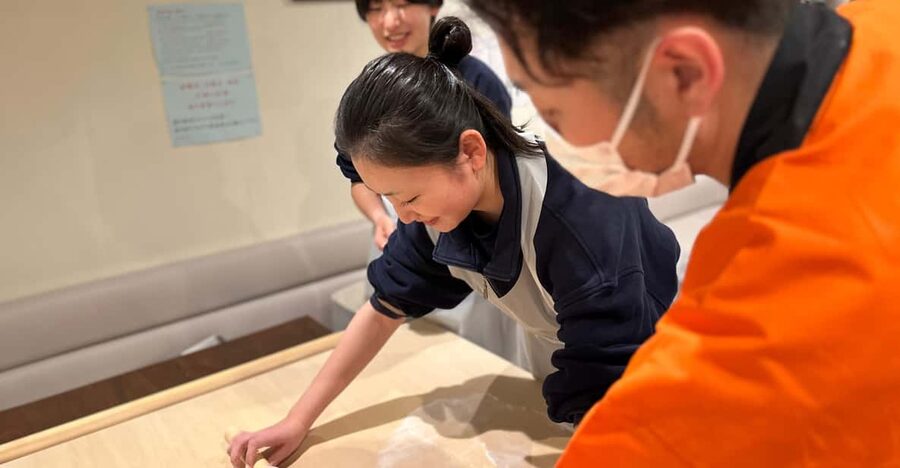
Making soba by hand, then eating it with fresh tempura and two Hokkaido sakes, gives you a compact lesson in how Japanese people build a meal. At Mondo, you knead buckwheat dough, roll it with a wooden pin, cut the noodles, and taste the results soon after.
In This Article
- Key points to know before booking
- Why this Sapporo food experience works
- At Mondo near Miyanosawa Station
- Kneading and rolling the buckwheat dough
- Cutting noodles with a Japanese soba knife
- Tempura prepared while you work
- Two Hokkaido sakes and the sobamae custom
- What the food portion is really like
- Who will get the most from the 90 minutes
- Timing, cancellation, and planning details
- Should you book this soba and sake experience?
- FAQ
- Where does the soba-making experience take place?
- How do I reach Mondo by subway?
- Is Mondo near Shiroi Koibito Park?
- How long does the activity last?
- What will I make during the class?
- Is tempura included?
- How many sakes are included?
- Is the experience private?
- Can I cancel for a refund?
I like the hands-on noodle work and the way the meal connects soba, tempura, and sake. I also like the private format, with careful help for first-timers. The main drawback is practical: frying tempura can create fumes, and one participant found the ventilation bothersome.
Key points to know before booking
- You make the soba yourself: Knead, roll, cut, and eat noodles made during the class.
- Chef-prepared tempura is included: A Japanese food artisan cooks the tempura while you work on the noodles.
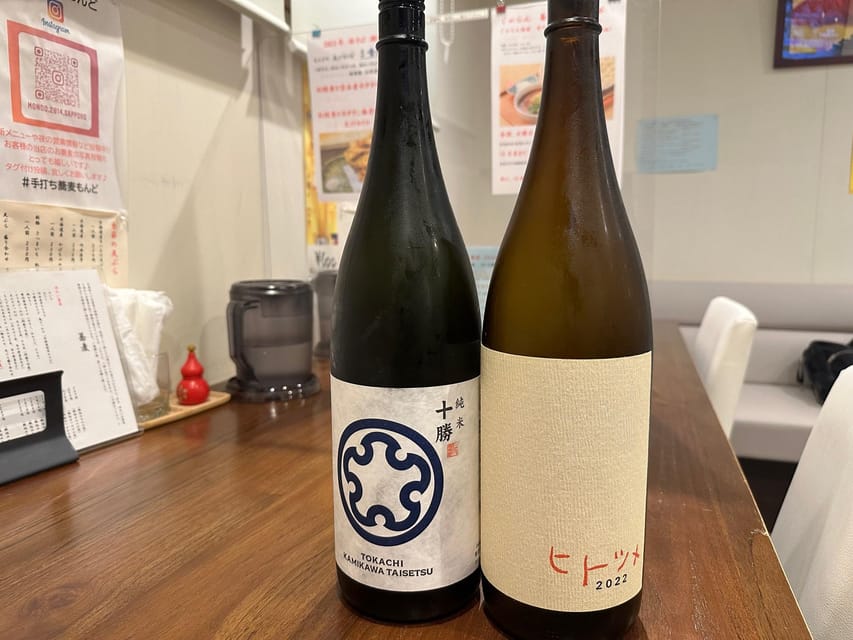
- Two Hokkaido sakes are served: A licensed sake taster chooses the pours for the meal.
- Mondo is easy to reach: The restaurant is a three-minute walk from Exit 6 of Miyanosawa Station on the Sapporo Subway Tozai Line.
- The experience is private: You share the session only with your own group.
- Arrive on time: A late arrival can disrupt the start for other booked groups and may be treated as an unapproved cancellation.
Why this Sapporo food experience works
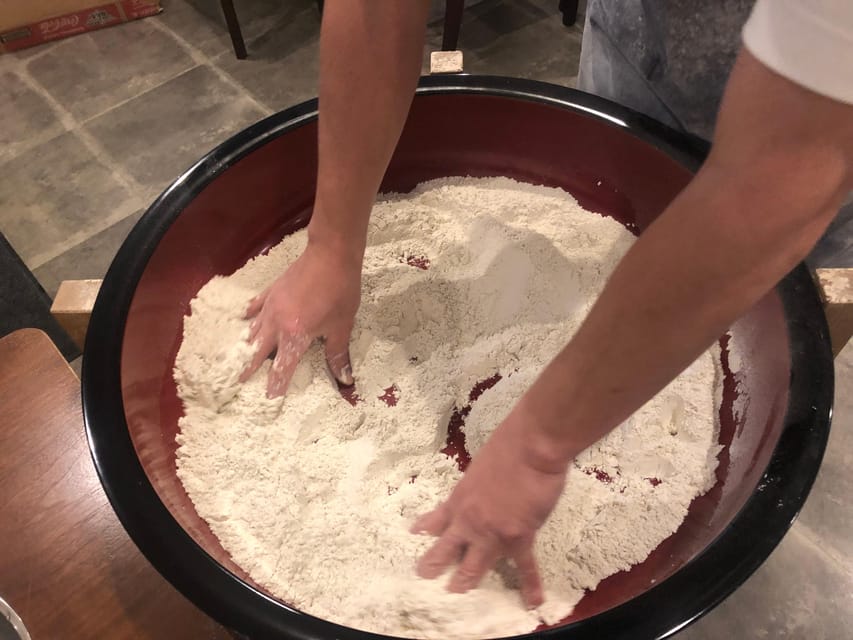
This is not just a meal with a small cooking demonstration attached. You take part in the central job: turning buckwheat flour into noodles that you later eat. That simple change in perspective matters. Once you have rolled and cut soba yourself, the dish on your plate feels less like an anonymous restaurant order and more like the final step of a craft.
The experience also explains a familiar Japanese pairing through taste rather than a lecture. Sake before the noodles is known as sobamae, a custom connected with eating soba. Tempura is another common partner for soba, and the combination gives you contrasting textures: crisp fried coating, smooth broth or noodles, and the clean taste of sake.
Mondo is a handmade soba restaurant, not a large activity center. That makes the setting feel tied to the food itself. The restaurant serves lunch as a regular soba business, so communication on the day of your visit may be limited before the session. Plan your questions ahead and do not count on getting a quick same-day reply.
We have reviewed more tours and experiences across Sapporo; these are worth comparing before you book.


At Mondo near Miyanosawa Station
The meeting point is 手打ち蕎麦もんど, also presented as Mondo, a restaurant specializing in handmade soba. From Exit 6 of Miyanosawa Station on the Sapporo Subway Tozai Line, the walk takes about three minutes.
The location also works well if you are visiting Shiroi Koibito Park, since the restaurant is within walking distance. That makes this a useful food activity for a Sapporo day built around western Hokkaido sights rather than central downtown dining.
The directions are clear, but I would still leave a little extra time. The start time matters here. If you cannot arrive by the scheduled beginning, the operator may treat the booking as an unapproved cancellation. This is not the sort of activity where arriving halfway through is harmless, since the noodle-making steps are shared in sequence.
The group is private, which is a real advantage for a practical class. You can ask for help without feeling you are holding up a room full of strangers. English and Japanese instruction is available.
Kneading and rolling the buckwheat dough
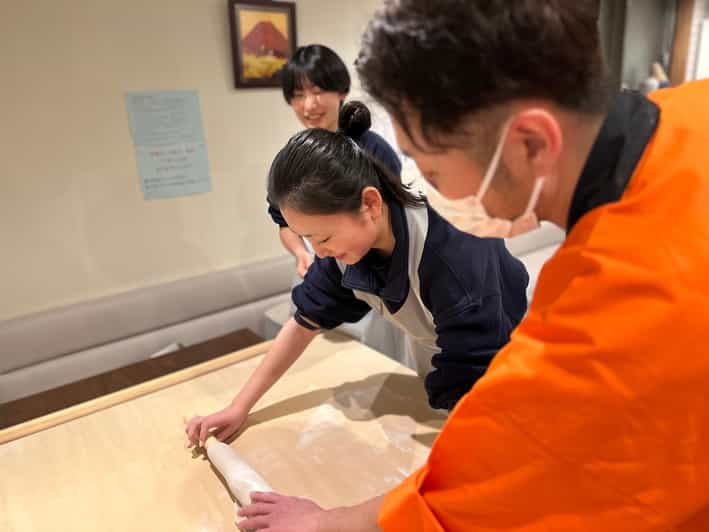
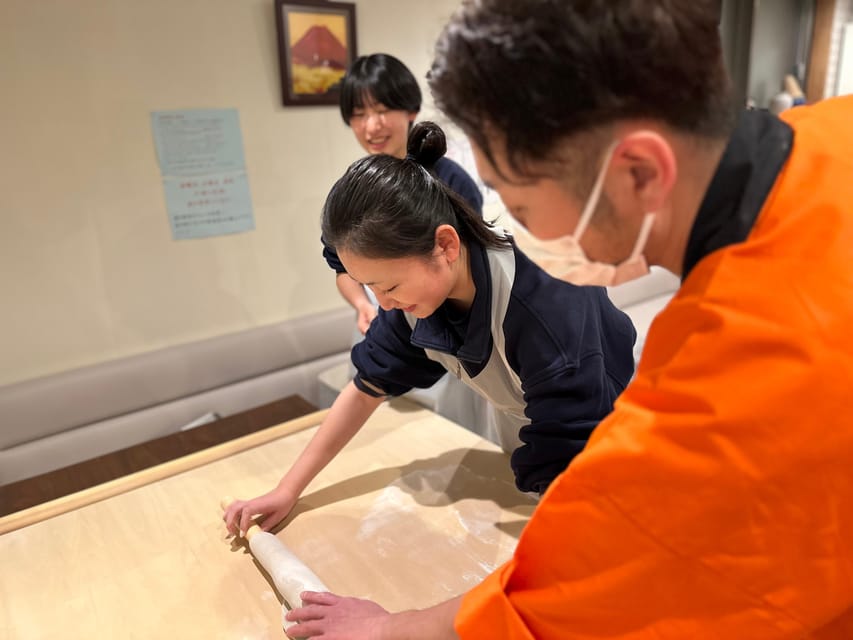
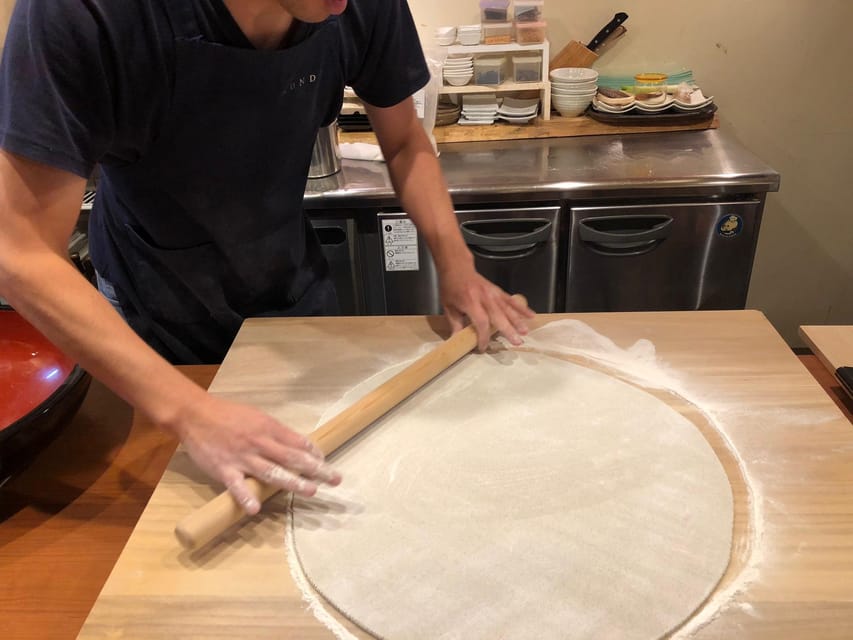
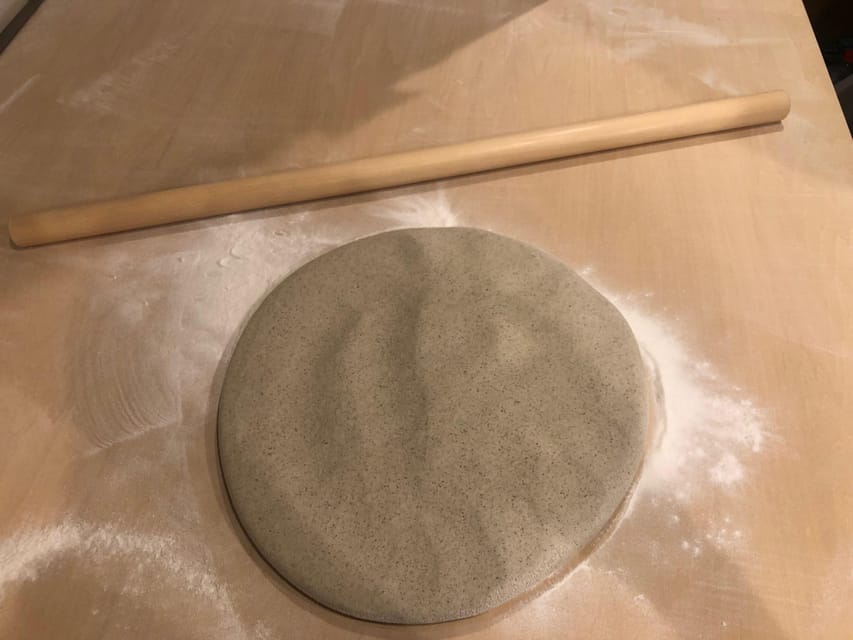
The cooking portion begins with soba making. You knead the buckwheat mixture by hand, then use a wooden roller to flatten it. This is the part where the activity becomes more than a tasting.
Buckwheat dough does not behave exactly like ordinary wheat dough. It needs controlled handling, and uneven thickness will affect the noodles later. You do not need previous experience. The soba maker supports you carefully, so the process is intended to be approachable for a first attempt.
One useful attitude is to treat the class as craft practice, not a test. Your noodles may not look perfectly uniform, and that is part of the point. You are learning how a familiar Japanese food is formed before it reaches the bowl.
The experience is described as a more casual version of a private luxury Japanese dining plan. That distinction is helpful. You still receive a private format and a full meal, but the focus is relaxed participation rather than formal fine dining.
Cutting noodles with a Japanese soba knife
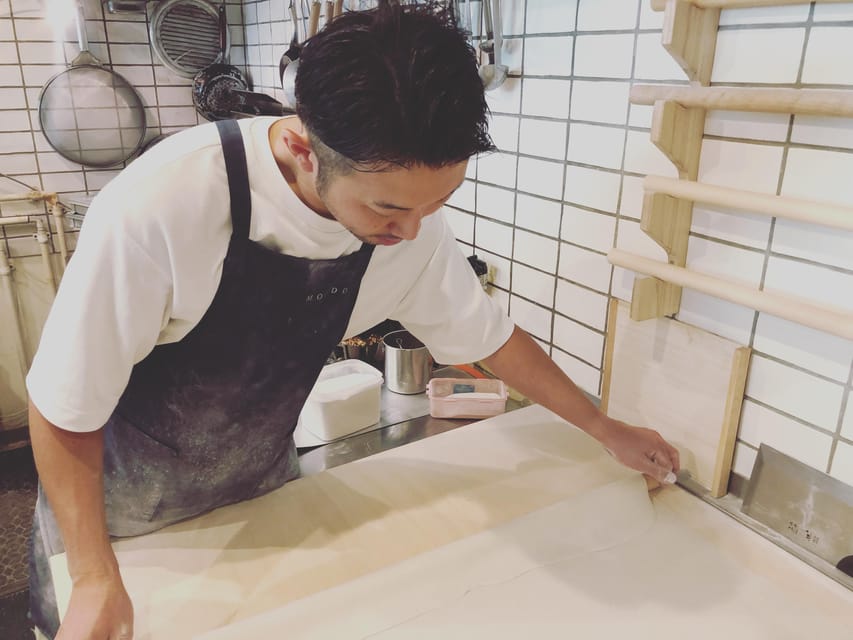
After rolling, you cut the flattened dough into noodles. This is likely the most satisfying visual step, since you can see the sheet turn into strands under your knife.
Even spacing matters. Thick and thin pieces will cook differently, so the cutting stage affects what you finally eat. The activity gives you a direct sense of why hand-cut soba has a distinctive look. It also gives the instructor a natural chance to guide your technique.
The noodle-making section takes place before the meal, and the advertised experience lasts 90 minutes. The itinerary also describes the main Sapporo cooking and regional food portion as 75 minutes, so you should expect a compact class and meal rather than a long, leisurely evening. The exact balance between instruction, cooking, tasting, and conversation may depend on the group.
That shorter format suits you if you want a focused food activity. It may feel brief if you are hoping for an extensive cooking school with several dishes.
Tempura prepared while you work
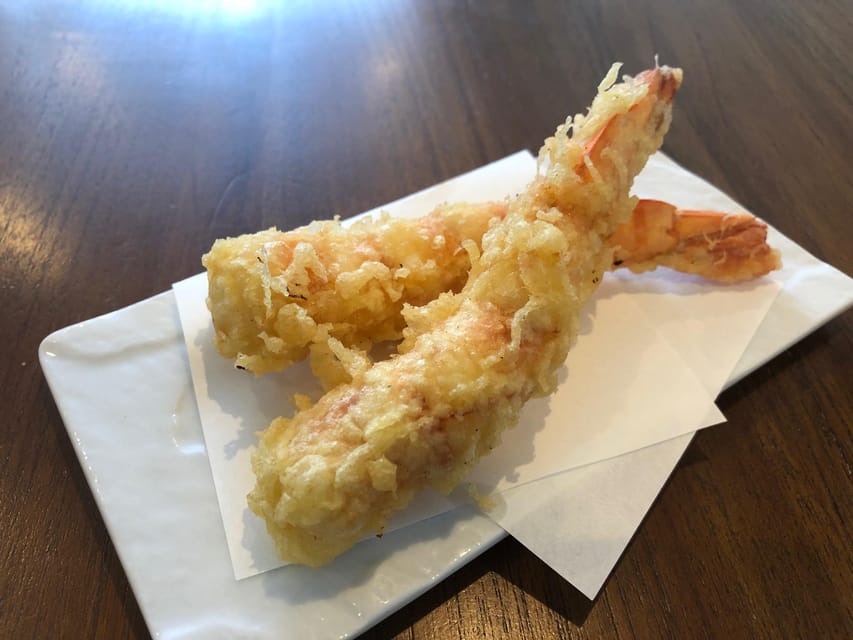
While you make the soba, a Japanese food chef prepares tempura. The supplied information identifies the chef as a Japanese culinary artisan, and one highly positive account specifically names Chef Taku as part of the team that made the session worthwhile.
This division of work is smart. You get to concentrate on the noodles instead of trying to manage hot oil at the same time. Then the tempura arrives as part of the meal, giving you a dish made by an experienced cook alongside your own handmade soba.
There is one comfort issue to keep in mind. One participant reported that the range hood was turned on late, causing eyes to sting from frying fumes. That is a fair reason to ask about ventilation at the start, especially if you are sensitive to cooking smoke. It does not cancel out the food value, but it is the clearest practical weakness in the available feedback.


Two Hokkaido sakes and the sobamae custom
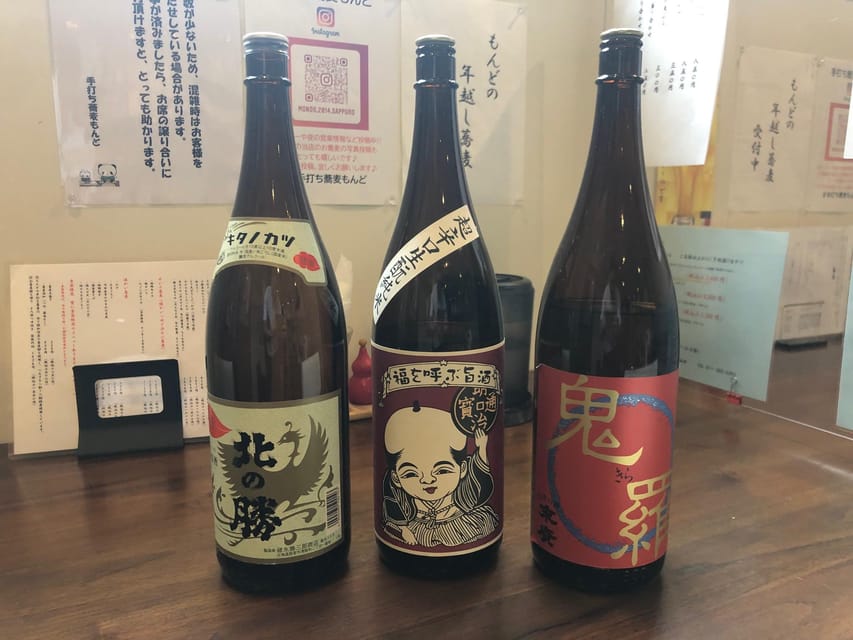
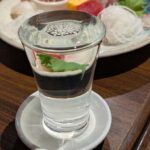
Two limited-edition Hokkaido sakes are included. A sake taster with a sake license selects and recommends the pours, so you are not left to choose from an unfamiliar list.
The sake is meant to be part of the meal’s structure. Japanese diners often drink sake with soba, beginning with sobamae and finishing with noodles. Tempura fits naturally into that sequence. The result is a small but balanced menu built around local drink, handmade noodles, and fried food.
This is also where the price needs context. At $116 per person, the activity is not cheap for a 90-minute meal. But the cost includes private instruction, the handmade soba class, the meal, chef-prepared tempura, and two selected Hokkaido sakes. For someone who would otherwise pay separately for a cooking class and a guided tasting, the package has reasonable value.
It is less attractive if you do not drink alcohol or mainly want a large meal. The sake is a central part of the plan, and people under 20 cannot take part.
What the food portion is really like
You finish by tasting the soba you made, along with the tempura and the two sakes. The strongest appeal is the connection between effort and food. You do not simply watch a master make soba and then eat a bowl. You handle the dough, cut the strands, and then taste the result.
The meal also gives you a chance to compare your noodles with the restaurant’s skill. Hokkaido has produced its own soba since the Edo period, according to the experience description, and the activity presents this as a regional food tradition rather than a generic Japanese cooking lesson.
Do not expect a broad menu. The main food pairing is soba and tempura, with sake as the drink component. That narrow focus is a strength if you want to understand one classic combination. It is a limitation if you want to sample many Hokkaido specialties in one sitting.
The positive comments place special weight on the food, conversation, and guidance. Doreen praised the fun class and the food, while Javier described an evening guided by a husband-and-wife soba team, with good conversation and sake. Those details suggest that the human side of the session can be as important as the mechanics of rolling dough.
Who will get the most from the 90 minutes
I would choose this for a couple, small family group with eligible adults, or friends who want a private food activity in western Sapporo. The private format gives the experience a more personal rhythm than a large group class.
It is especially suitable for first-timers. The instructor support means you do not need prior cooking skills, and the tasks are clear enough to complete within the short session. You will get the most from it if you enjoy doing rather than only watching.
The activity also fits sake drinkers who want guidance. Two selected Hokkaido sakes offer a simple introduction without requiring you to study a long menu. If you prefer to avoid alcohol, the experience may not be the right match because sake is one of its defining parts.
Families should note the age restriction. People under 20 are not suitable for this activity. The supplied information does not list a child version or an alcohol-free alternative.
Timing, cancellation, and planning details
The stated duration is 90 minutes, with starting times subject to availability. Lunch or dinner may be offered, and the experience combines cooking class and regional food.
Book this around your Sapporo schedule rather than squeezing it between uncertain plans. The restaurant operates as a handmade soba restaurant during lunch, and staff may not be able to answer inquiries on the day. Arrive before the start time, not exactly at it.
You can cancel up to 24 hours in advance for a full refund. The reserve-now, pay-later option lets you hold a place without paying at once, which helps if your Sapporo plans are still shifting.
The activity is private, but the listing does not provide a detailed accessibility description. If you have specific mobility, seating, or dietary needs, ask before booking rather than assuming the restaurant can adjust the session.
Should you book this soba and sake experience?
Book it if you want to make a traditional Japanese food yourself, prefer a private group, and like the idea of matching handmade soba with tempura and Hokkaido sake. The easy station access and proximity to Shiroi Koibito Park make it practical for a west Sapporo itinerary.
Think twice if you want a long cooking course, dislike alcohol, or are sensitive to frying fumes. At $116, the value depends on using all parts of the package: instruction, your own noodles, tempura, and both sake tastings.
For the right person, this is a compact and memorable food lesson. You leave with more than a bowl of soba. You understand the work behind it, the reason tempura belongs beside it, and how sake fits into the meal.
FAQ
Where does the soba-making experience take place?
It takes place at 手打ち蕎麦もんど, also called Mondo, a handmade soba restaurant in Hokkaido, Japan.
How do I reach Mondo by subway?
Mondo is about a three-minute walk from Exit 6 of Miyanosawa Station on the Sapporo Subway Tozai Line.
Is Mondo near Shiroi Koibito Park?
Yes. The restaurant is within walking distance of Shiroi Koibito Park.
How long does the activity last?
The advertised duration is 90 minutes. The itinerary describes the Sapporo cooking and regional food portion as 75 minutes.
What will I make during the class?
You will knead buckwheat dough, roll it with a wooden roller, cut the dough into noodles, and taste the handmade soba.
Is tempura included?
Yes. Tempura prepared by a Japanese food chef is included in the experience.
How many sakes are included?
Two types of limited-edition sake from Hokkaido are included. A licensed sake taster selects and recommends them.
Is the experience private?
Yes. It is offered as a private group experience.
Can I cancel for a refund?
You can cancel up to 24 hours before the activity for a full refund. The reserve-now, pay-later option is also available.
More Tour Reviews in Sapporo
Other Sapporo tours worth your shortlist


Soba & Ramen Making, side by side.
 ★ 5.0Popular in SapporoExperience authentic hand-made soba at a real soba shop!From $72.6777 reviews
 ★ 5.0Mondo’s most popular plan! Experience making soba noodles and the king of Japanese cuisine, tempura, in Sapporo!From $85.7971 reviews
 ★ 5.0in Sapporo! Hand-made soba experience and shabu-shabu experience plan of Yezo deer meat (Gibier meat) from HokkaidoFrom $85.6629 reviews
 ★ 4.8Authentic Handmade Soba Experience!From $7011 reviews
The lists this tour appears in