Biei’s Blue Pond is the star here: a calm pool of startling color framed by pale tree trunks, volcanic water, and open Hokkaido scenery. This 10-hour outing also links it with a rare underground waterfall, Furano’s flower fields, and Ningle Terrace, so you see a lot in one long day.
In This Article
- Key points to know before booking
- Why this Sapporo day trip works
- Starting from central Sapporo
- Blue Pond: 30 minutes of strange blue water
- The underground waterfall and turquoise river
- Roller Coaster Road in Kamifurano
- Lunch in Furano and the melon question
- Shikisai no Oka and the changing flower season
- Ningle Terrace after the open fields
- What the guide adds, and what may be missing
- Who will get the most from this route
- Should you book it?
- FAQ
- Where does the tour start and finish?
- Is hotel pickup available?
- How long does the tour last?
- Is lunch included?
- Does the alpaca visit cost extra?
- What is the cancellation policy?
I like the small vehicle and the central Sapporo pickup options, which make this route much easier than arranging several distant sights by public transport. I also like the mix of nature, food, flowers, and craft shops. The catch is that this may feel more like efficient sightseeing transport than a fully narrated tour, so do not book it expecting long historical talks or detailed guiding at every stop.
Key points to know before booking
- Blue Pond is the main event: You get about 30 minutes to photograph its blue water and pale tree trunks.
- The day covers serious ground: Expect around 10 hours, with much of the remaining time spent driving between Sapporo, Biei, and Furano.
- The group is small: The listed capacity is described as no more than 9 people in one place and up to 13 in another, so confirm the final group size before booking.
- Lunch needs checking: Local dishes are offered, but lunch is described as optional, and the all-you-can-eat melon upgrade costs extra.
- Flower timing matters: Shikisai no Oka changes with the season, and the flower display may not match every photograph you have seen.
- The guiding style is light: The driver and English-speaking guide handle the route, but the practical experience may be closer to transport with stops than a lecture-led excursion.
Why this Sapporo day trip works
Sapporo is a useful base for Hokkaido, but Biei and Furano are far enough away to make a spontaneous side trip awkward. This outing solves that problem in one sweep. You leave the city, cross into open country, stop at several well-known sights, and return to the same meeting point at Sapporo Station North Square.
The price is $75.65 per person. That is reasonable if you value a reserved seat, air conditioning, admission tickets, and a route that joins several scattered stops. You are paying for convenience as much as for sightseeing. The value drops if you want long visits at each place or detailed commentary from the guide.
The most important thing to understand is the pace. A 10-hour day sounds generous, but Biei and Furano are not next door to Sapporo. You will spend a meaningful part of the day on the road. I would see that as a fair trade for reaching places that are difficult to combine independently, especially if you prefer not to rent a car.
Our other Sapporo reviews may also help you decide


Starting from central Sapporo
You can arrange pickup from a hotel or accommodation in central Sapporo, or meet at Sapporo Station North Square at 3-chōme-12-2 Kita 7 Jōnishi. The tour ends back at the meeting point, which is useful if you have evening plans in central Sapporo.
The vehicle is air-conditioned, a welcome detail for a full day with several outdoor stops. The route is designed for a small group, though the supplied details give two different maximums: one says 13 people and another says 9. Ask for the confirmed group size when you book if personal space matters to you.
A previous rating was only three out of five, with the strongest practical praise going to the on-time pickup and a pleasant, unfussy drive. The central criticism was clear: the experience offered little discussion beyond how long to stay at each sight. I would take that seriously. The English-speaking guide may help manage the day, but the level of local storytelling is not guaranteed.
Blue Pond: 30 minutes of strange blue water
The Shirogane Blue Pond sits beside the Biei River. It was formed after a dam was built to intercept volcanic mud and debris, leaving a body of water whose color shifts with light and conditions. Pale, dead trees rise from the pool, giving the place its unusual look.
This is a short stop, but 30 minutes is enough to walk around the viewing area and take photographs. The pond is not a place where you need hours unless you want a slow, quiet visit. Your best approach is to look first, then photograph. The color can seem different depending on the sun, weather, and your position.
You should also keep your expectations in check. The Blue Pond is photogenic, but the visit is centered on looking and taking pictures rather than on an activity or long walk. If you want a full nature outing, this stop alone will feel brief. As part of a larger day, it gives you the memorable visual moment most people are hoping to see.
The nearby volcanic setting adds useful context. This is not simply a painted-looking pool. Its color comes from mineral-rich water and the area’s volcanic conditions, although the amount of explanation you receive on site may be limited.
The underground waterfall and turquoise river
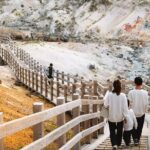
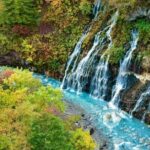
Another stop presents one of Japan’s unusual natural sights: an underground waterfall. Aluminum-rich spring water comes down in thin white strands into turquoise water, creating a sharp contrast between the falling water and the calmer river below.
The description makes this sound like a quick scenic stop rather than a long hike. That suits the overall route, which gives you several distinct sights without asking you to spend the whole day at one location. You can expect the water and surrounding rock to provide a different mood from the quiet Blue Pond.
This is also where a guide could add real value by explaining the volcanic and mineral conditions behind the waterfall. Since the tour may offer limited commentary, listen for any information provided, but do not assume a detailed geology talk. I would treat the stop as a striking photo and nature break.
Roller Coaster Road in Kamifurano
The Roller Coaster Road is a 2.5-kilometer stretch with steep rises and falls. Its repeated elevation changes have earned it a place among Kamifurano’s eight scenic views.
The appeal comes from the road itself. From the vehicle, you see the countryside rise and drop in broad waves, a very different sight from a formal viewpoint or garden. It is a quick reminder that Hokkaido’s beauty often comes from the shape of the land and the space between towns.
Do not expect a theme park ride. The name refers to the road’s hills, not to an attraction with a ride or ticket booth. The experience depends on the driver’s route and the view from the vehicle, so it may be less satisfying if you are hoping to stop, walk, and take a series of photographs.
Still, I like its inclusion. It breaks up the pond and flower stops, and it lets you see how the region feels beyond its headline sights.
Our other Sapporo reviews may also help you decide


Lunch in Furano and the melon question
The Furano lunch stop is designed around Hokkaido flavors. The listed choices include miso ramen, grilled salmon, and dairy-based desserts. These are familiar regional staples, and they give you a practical meal during a long day rather than asking you to find food on your own.
Lunch is marked as optional in the included details, so confirm exactly what your selected price covers. There is also an upgrade for all-you-can-eat melon, featuring Yubari melons. That may appeal to you if you particularly want to try Hokkaido’s famous sweet melon, but it is not essential to enjoying the day.
The lunch stop lasts about one hour. That is enough for a straightforward meal, but not for a relaxed restaurant experience with lots of choice. I would choose this tour lunch for convenience and local flavor, not for a special food-focused visit.
The optional wording is worth clarifying before departure. Ask whether lunch is included in your booking, what dish is provided, and how much the melon upgrade costs. The supplied details clearly say that the alpaca feeding fee is extra, but they are less clear about the exact lunch arrangement.
Shikisai no Oka and the changing flower season
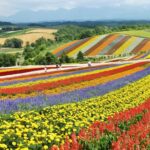
Shikisai no Oka covers about 15 hectares of sloping ground planted in bands of color. Lavender, poppies, and sunflowers are among the flowers you may see, creating the rainbow effect that makes the site popular.
You have about one hour here. That gives you time to walk among the flower displays, take wide photographs, and enjoy the views across the hills. The slopes also mean you should expect some walking rather than a single flat viewing area.
The timing of your visit matters a great deal. Flowering dates change, and the route may be adjusted depending on what is in bloom. A photograph filled with lavender may not match your visit if you arrive earlier or later in the season. I would book this stop for the setting and variety, not for a promise that every flower will be at its peak.
An optional alpaca area adds a family-friendly touch. Feeding costs ¥500 and is not included. You can skip it without missing the main flower experience, which is helpful if you prefer to keep your extra spending low.
Ningle Terrace after the open fields
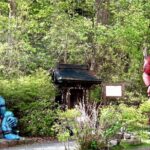
Ningle Terrace provides a pleasant change of pace. Instead of open flower slopes and roadside views, you enter a wooded setting lined with 15 small timber cottages. The shops sell handmade items such as lavender sachets and birchwood jewelry.
You have roughly 30 minutes, so think of this as a compact browse rather than a serious shopping visit. The cottages may be useful if you want a small Hokkaido souvenir that feels more personal than a standard airport purchase. The craft focus also gives the day a human, local element after several nature stops.
At dusk, fairy lights give the area a storybook look. The timing of your visit will determine how much of that atmosphere you see, and the schedule does not promise an evening arrival. Even in daylight, the cottages and trees offer a different visual setting from the rest of the route.
I would save your shopping decisions for this stop, but keep the short time limit in mind. If you see something you want, do not assume there will be time for a long second look.
What the guide adds, and what may be missing
The tour includes an English-speaking guide, driver service, and admission tickets. That matters when you are moving through several places in a single day. You have someone managing the route, keeping the group together, and helping the schedule run on time.
The available feedback suggests a practical rather than deeply interpretive style. The vehicle arrived on time, and the drive was described as friendly, but the main complaint was that there was little discussion beyond the length of each stop. You should book with that expectation.
If you want a guide who explains local agriculture, volcanic geology, Hokkaido food, and the history of each town in detail, this may disappoint you. If you mainly want reliable transport to the major sights, a clear schedule, and some help along the way, the format makes more sense.
That distinction is the key to choosing well. The tour is not poor value simply because it is lightly narrated. It is poor value only if you are paying for a storytelling experience that you do not receive.
Who will get the most from this route
I would recommend this day trip to you if you have limited time in Sapporo and want to see both Biei and Furano without driving. It suits photographers, first-time Hokkaido visitors, couples, families, and anyone who wants a set route with transport already arranged.
It is also a good fit if you like variety. In one day, you move from volcanic water to a waterfall, a rolling road, a regional meal, flower fields, alpacas, and craft cottages. None of the stops is extremely long, but the range keeps the day moving.
I would hesitate if you dislike long drives, need a slow pace, or want to explore each place independently. The schedule leaves little room for an extended café stop, an unplanned walk, or lingering at the Blue Pond after the allotted time.
The mobile ticket is convenient, and most people can participate. The route is near public transportation at its meeting point, but the appeal is the vehicle access to distant sights. Other personal spending, including the alpaca feeding fee, is not included.
Should you book it?
Book this tour if your priority is seeing the major Biei and Furano sights in one day from Sapporo, without renting a car or working out several long connections. The Blue Pond, flower fields, Roller Coaster Road, and Ningle Terrace make a strong visual route, and the $75.65 price can be fair when transport and admissions are counted.
Skip it if your main goal is a rich guided explanation of Hokkaido. The available experience points to on-time, friendly transportation with limited commentary. Before paying, confirm the group-size limit, whether lunch is included, and the precise pickup arrangement.
You can cancel for a full refund up to 24 hours before the start time. Changes or cancellations made within 24 hours are not accepted, so keep that cutoff in mind when weather or personal plans are uncertain.
FAQ
Where does the tour start and finish?
You can meet at Sapporo Station North Square, 3-chōme-12-2 Kita 7 Jōnishi, Kita Ward, Sapporo. The activity ends back at the meeting point.
Is hotel pickup available?
Pickup and drop-off at a hotel or accommodation in central Sapporo are listed as an option. Confirm the exact arrangement for your address when booking.
How long does the tour last?
The full experience lasts approximately 10 hours. Travel between Sapporo, Biei, and Furano takes up much of the remaining time outside the scheduled stops.
Is lunch included?
Lunch is described as optional. Listed food choices include miso ramen, grilled salmon, and dairy-based desserts. An all-you-can-eat Yubari melon upgrade is available, so confirm the lunch cost and selection before departure.
Does the alpaca visit cost extra?
Yes. Alpaca feeding costs ¥500 and is not included in the tour price.
What is the cancellation policy?
You can cancel at least 24 hours before the local start time for a full refund. Cancellations or changes made less than 24 hours before the start time are not accepted.
More Tours in Sapporo


More Tour Reviews in Sapporo


More Blue Pond & Biei Tours in Sapporo


Other Sapporo tours worth your shortlist

Blue Pond & Biei Tours, side by side.
 ★ 5.0【Private Car】Asahiyama Zoo, Blue Pond, Shirahige Falls, Ningle Terrace (from Sapporo)From $465.1460 reviews
 ★ 5.0[Biei/Furano] One-day sightseeing by private car!From $596.3343 reviews
 ★ 4.0Furano Flower Sea & Biei Blue Pond Tour w/ PickupFrom $7740 reviews
 ★ 4.6Furano Lavender & Biei Blue Pond Tour with LunchFrom $9413 reviews
The lists this tour appears in