Making ramen from scratch is the real heart of this Sapporo experience. You mix flour and water, knead the dough, roll it thin, cut your own noodles with a special knife, then cook and eat the result. I like the hands-on noodle work and the chance to learn in a private group with patient instructor Erika.
In This Article
- Key points at a glance
- Why making the noodles matters in Sapporo
- Inside 和do Studio Sapporo
- Step one: learning the tools and the method
- Step two: mixing and kneading the ramen dough
- Step three: flattening and rolling the dough
- Step four: cutting the noodles with a special knife
- Step five: choosing toppings and building the bowl
- Step six: eating the ramen you made
- What the $64.87 price really covers
- Clothing, allergies, and other practical concerns
- Who will enjoy this class most
- Booking and cancellation details
- Should you book the Sapporo ramen class?
- FAQ
- Where does the ramen-making experience take place?
- How long does the activity last?
- Is the activity private?
- What will I do during the class?
- Is food included?
- Is transportation included?
- What ingredients are included in the ramen?
- Can I cancel for a full refund?
I also like that your meal is included, so the $64.87 price covers both a cooking lesson and lunch or dinner. The main drawback is practical: the ramen contains many common allergens, including wheat, egg, milk, sesame, mackerel, soy, pork, chicken, gelatin, rice, seafood, and apple. Flour may also get on your clothes.
Key points at a glance
- Noodles made completely from scratch: Mix, knead, flatten, roll, and cut the dough yourself.
- A private 90-minute class: Only your group takes part, giving the lesson a personal feel.
- Erika’s careful instruction: She guides each step patiently and thoroughly, with no previous cooking skill required.
- Miso broth is a smart pick: One review specifically recommends it as the base for your finished bowl.
- Your ramen is included: You eat the noodles and toppings you prepare during the activity.
- Easy planning: The studio is near public transportation, uses a mobile ticket, and offers free cancellation up to 24 hours before the start time.
Why making the noodles matters in Sapporo
Many food activities let you watch a cook work, then hand you a finished dish. This one puts the dough in your hands. That difference matters. You feel how flour and water change as you knead, and you see how a flat sheet becomes strands of ramen.
The process is simple enough for a first-time cook, but it still gives you a useful look at the work behind a bowl of noodles. You are not just adding toppings to a prepared meal. You are involved from the first mix to the final bite.
Sapporo is a natural place for this kind of food lesson. The city is closely associated with ramen, especially miso ramen, so making your own bowl here connects a local specialty with a practical skill. The class does not appear to be a long culinary course. Instead, it gives you a compact introduction that fits neatly into a sightseeing day.
At about 1 hour and 30 minutes, the experience is short enough to pair with other plans. It also has enough stages to feel like a real activity rather than a quick demonstration.
We have reviewed more tours and experiences across Sapporo; these are worth comparing before you book.


Inside 和do Studio Sapporo
The meeting point is 和do Studio Sapporo in Sapporo’s Chuo Ward, at Minami 3 Jonishi 9 chome, near the 060-0063 postal area. The studio is near public transportation, but transportation itself is not included, so you will need to make your own way there.
This is a private activity. Only your group participates, which is a useful feature if you prefer to ask questions freely or work at your own pace. It also makes the class a better fit for couples, families, friends, or a small group looking for a shared activity.
You receive confirmation when you book, and a mobile ticket makes entry simple. The activity ends back at the same meeting point, with no private or public transportation included as part of the experience.
The supplied information does not give a detailed route from the nearest station, so check the exact map location before setting out. Build in a little extra time if you are unfamiliar with Sapporo’s street layout.
Step one: learning the tools and the method
The class begins with an explanation of the tools and the stages ahead. This opening is useful because noodle making involves several separate tasks, and it is easier to enjoy the work when you know what comes next.
No cooking experience is required. You are guided step by step, so the class is designed to be approachable even if you have never made noodles before.
Erika is named as the instructor, and the available feedback points to a careful teaching style. She is described as meticulous, patient, and thorough. That matters here because dough can feel unfamiliar at first, and a clear explanation can prevent frustration.
This is also the point where you can pay attention to the safety guidance. The experience includes a warning that injuries are possible despite precautions. You should follow the instructions closely, especially when using the special knife later in the session.
Step two: mixing and kneading the ramen dough
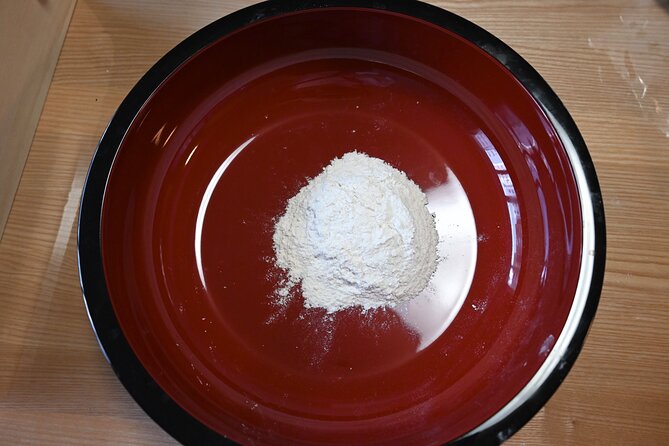
You begin by mixing flour and water. Then you knead the dough until it becomes smooth.
This part may look basic, but it is where you start to understand the texture of fresh noodles. The goal is not simply to stir ingredients together. You work the dough until it reaches the right consistency for rolling and cutting.
I like this stage because it gives the class a physical side. You are not standing back while someone else cooks. You are handling the main ingredient and watching it change under your hands.
The information provided does not specify how long the kneading takes or the exact flour-to-water ratio. That is not a serious problem for a guided class, but it does mean you should not expect to leave with a precise recipe unless the instructor shares one during the session.
Step three: flattening and rolling the dough
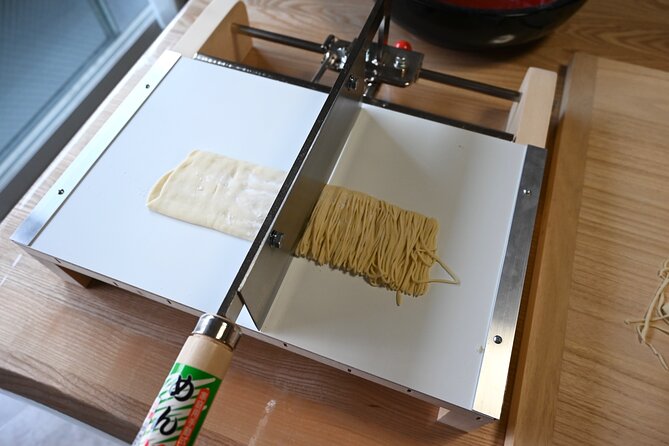
Once the dough is smooth, you stretch and roll it into thin sheets. This is a key step because the thickness of the sheet affects the shape and feel of the final noodles.
Rolling dough evenly takes a little care. You may find that this is one of the more demanding parts for young children or anyone with limited hand strength. The private format should help, since your group can receive direct guidance rather than trying to keep up with a large class.
The activity description focuses on making the noodles yourself, not simply watching a professional do the work. That gives this stage real value. You get a clearer sense of the effort involved in preparing ramen before it reaches a restaurant bowl.
The class is still only about 90 minutes, so the instruction is likely organized for a manageable result rather than a lengthy technical lesson. Think of it as a practical introduction to noodle making, not professional training.


Step four: cutting the noodles with a special knife
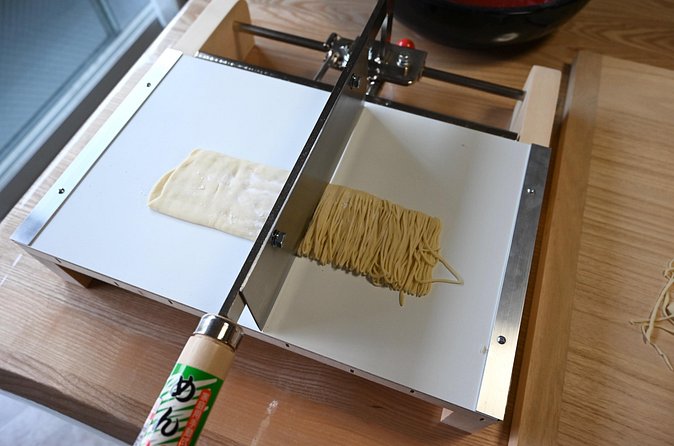
After the dough is rolled into sheets, you use a special knife to cut your own ramen noodles. This is the most distinctive part of the process and the stage that turns the dough into something recognizably ready for the bowl.
The knife is also the reason to take the safety note seriously. You do not need prior cooking experience, but you do need to listen carefully and handle the tool as instructed. The provider warns that it cannot accept responsibility for injuries, even though precautions are taken.
The wording does not explain the knife’s exact design or the cutting technique, so I would not assume this is a casual activity for very young children. Adults should be prepared to supervise children closely.
Still, the cutting stage offers a satisfying payoff. You can look at the noodles and know that your group made them, rather than simply assembling a preprepared dish.
Step five: choosing toppings and building the bowl
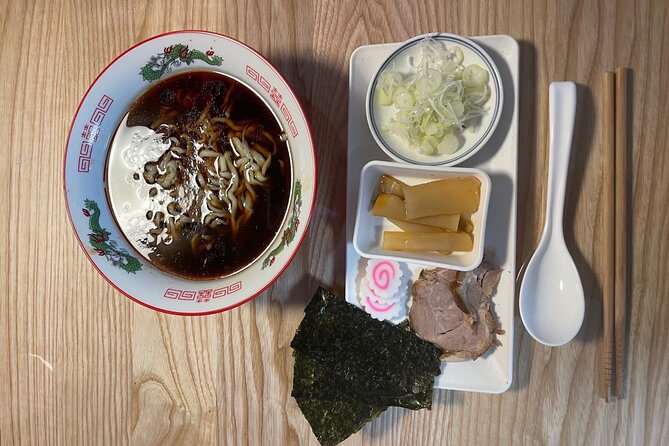
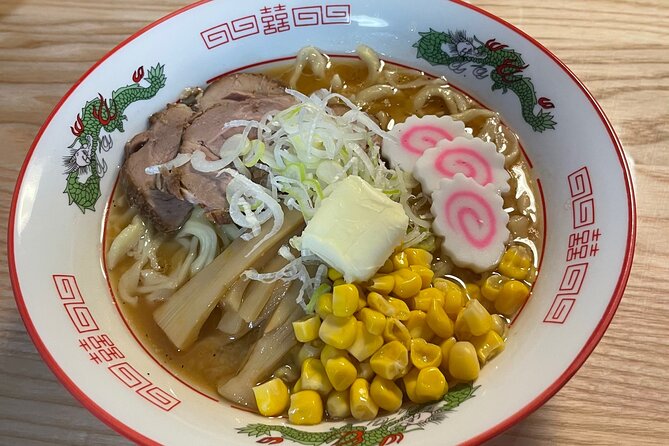
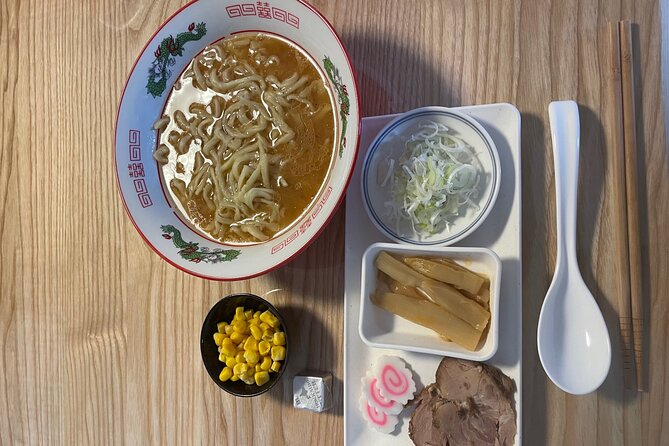
With the noodles prepared, you add toppings to your bowl. The activity allows you to decorate the ramen with your favorite toppings, although it does not provide a complete list of the available choices.
That flexibility is a nice touch. The topping stage lets you make the bowl feel personal after the more structured dough work. It also creates a natural pause before eating.
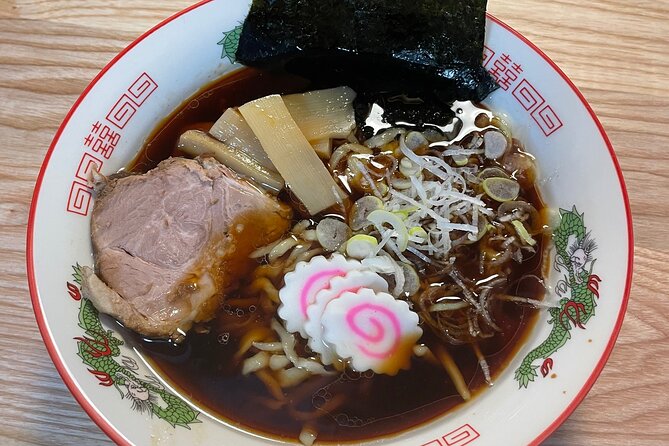
A review specifically recommends choosing miso broth as the base. Since miso ramen is strongly associated with Sapporo, that suggestion makes sense for a first visit. It is not presented as the only option, so you may have another broth choice, but the available information does not name the full selection.
Keep in mind that the listed ingredients include pork, chicken, mackerel, seafood, soy, sesame, milk, egg, and several other items. If you have dietary restrictions, ask about the broth, noodles, toppings, and preparation before booking. The published allergy notice is broad, so do not assume a vegetarian, vegan, gluten-free, or seafood-free bowl is possible.
Step six: eating the ramen you made
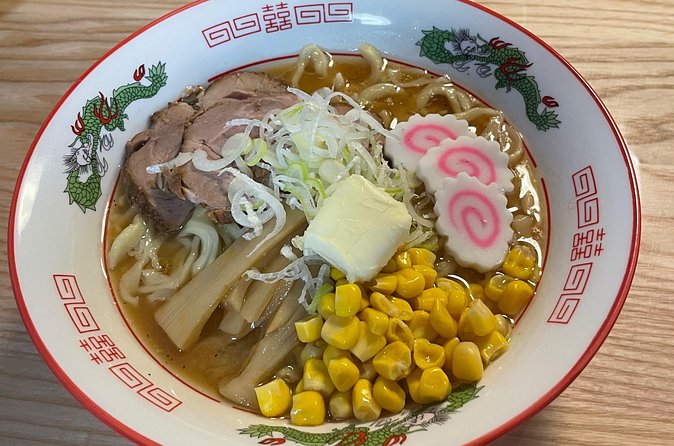
The final step is immediate and simple: you eat the ramen you prepared. Your meal is included in the price, so you do not finish the lesson and then need to find a separate restaurant.
That timing is part of the appeal. The bowl is the result of every earlier stage, from mixing and kneading to rolling and cutting. Food often tastes better when you understand the work behind it, and this class builds that connection into the schedule.
The available comments praise the food as delicious and recommend the experience for ramen lovers. Another comment describes the session as fun and points to the hospitality of the hosts. The praise centers on two things that matter most for this type of class: the noodles are made fully from scratch, and the teaching feels attentive rather than rushed.
Do not expect a broad meal with several courses. The included food is the ramen you make. For most people, that is exactly the point, but anyone looking for a full restaurant-style dinner should plan another meal afterward if needed.
What the $64.87 price really covers
At $64.87 per person, this is more expensive than simply ordering a bowl of ramen in Sapporo. You are paying for instruction, the ingredients, the private format, the equipment, and the activity itself, with the finished ramen included.
The private setting helps explain the price. A large demonstration can be cheaper, but it gives you less direct time with the instructor. Here, only your group takes part, so the experience is built around participation rather than watching from the side.
The 90-minute length also affects the value. This is not an all-day cooking school, and you should not judge it as one. Its strength is that it fits into a busy Sapporo itinerary while still giving you several real tasks to complete.
I would consider the price fair for someone who values food culture and active learning. It is less compelling if you only want a cheap meal or if you already make noodles regularly at home. The value comes from the combination of a local dish, a guided process, and a private group setting.
There were more than 10 bookings in the previous month, and the experience has a perfect 5 rating from five published ratings. That is a small sample, so I would treat it as encouraging rather than final proof. The repeated praise for Erika’s patience and the fresh noodles is more useful than the number alone.
Clothing, allergies, and other practical concerns
Wear comfortable clothing that you do not mind getting dusty. Flour can land on your clothes during mixing, kneading, rolling, and cutting.
Paper hats and aprons are provided. You should still choose practical clothes, since the apron may not cover every part of your outfit.
The allergy notice is unusually important here. The ramen includes:
- Wheat
- Egg
- Milk
- Sesame
- Mackerel
- Soy
- Pork
- Chicken
- Gelatin
- Rice
- Seafood
- Apple
If any of these ingredients create a problem for you, contact the provider before reserving. The supplied information does not promise substitutions or special diets.
The activity also includes a general injury warning. You will be using a special knife, so follow the demonstration and do not treat the cutting stage as a toy or photo opportunity.
Who will enjoy this class most
I would recommend this experience to ramen fans, curious eaters, and people who prefer doing something over simply seeing another Sapporo sight. It is also a good choice for a private group that wants a shared activity with a clear beginning, middle, and end.
Families may like the flour, rolling, and topping stages, but the knife means adults should use judgment with children. The information does not state a minimum age, so confirm that point if you are booking for young children.
This also suits a short stay. Because the class lasts about 90 minutes and ends where it begins, you can place it between other plans without giving up half a day. The near-public-transport location helps, though you must arrange your own ride to and from the studio.
Ramen enthusiasts will get the most from it, especially if they care about how noodles are made. If your main goal is a polished cooking lesson with a detailed recipe, several broth choices, and advanced technique, the available details do not promise that level of instruction.
Booking and cancellation details
A mobile ticket makes the booking process convenient, and confirmation is provided at the time of booking. The activity has free cancellation if you cancel at least 24 hours before the local start time.
Cancellations made less than 24 hours before the start are not refunded, and changes inside that window are not accepted. The cut-off follows local time in Sapporo, so check the clock carefully if you are arranging plans from another time zone.
Because the experience is private, a missed reservation may be harder to replace at short notice. I would confirm your meeting point, allow time for public transportation, and review the allergy information before the cancellation deadline.
Should you book the Sapporo ramen class?
Book it if you want to understand ramen through your hands, not just through your appetite. The strongest reasons are the from-scratch noodles, the private 90-minute format, Erika’s careful instruction, and the chance to eat the finished bowl immediately.
Skip it if you have a serious allergy to one of the listed ingredients, dislike hands-on cooking, or only want the least expensive bowl of ramen in town. For everyone else, $64.87 buys a focused food experience with a satisfying result and a clear connection to Sapporo’s ramen culture.
FAQ
Where does the ramen-making experience take place?
It takes place at 和do Studio Sapporo in Chuo Ward, Sapporo, at Minami 3 Jonishi 9 chome, in the 060-0063 Hokkaido postal area.
How long does the activity last?
The experience lasts approximately 1 hour and 30 minutes.
Is the activity private?
Yes. Only your group participates in the activity.
What will I do during the class?
You will learn the tools and steps, mix flour and water, knead the dough, roll it into thin sheets, cut the noodles with a special knife, add toppings, and eat your ramen.
Is food included?
Yes. You eat the ramen noodles you make during the experience.
Is transportation included?
No. Public transportation and private transportation are not included. The studio is near public transportation, and the activity ends back at the meeting point.
What ingredients are included in the ramen?
The listed ingredients are wheat, egg, milk, sesame, mackerel, soy, pork, chicken, gelatin, rice, seafood, and apple.
Can I cancel for a full refund?
Yes, if you cancel at least 24 hours before the experience start time. Cancellations made less than 24 hours before the start are not refunded, and changes during that period are not accepted.
More Tour Reviews in Sapporo
Other Sapporo tours worth your shortlist






Soba & Ramen Making, side by side.
 ★ 5.0Popular in SapporoExperience authentic hand-made soba at a real soba shop!From $72.6777 reviews
 ★ 5.0Mondo’s most popular plan! Experience making soba noodles and the king of Japanese cuisine, tempura, in Sapporo!From $85.7971 reviews
 ★ 5.0in Sapporo! Hand-made soba experience and shabu-shabu experience plan of Yezo deer meat (Gibier meat) from HokkaidoFrom $85.6629 reviews
 ★ 4.8Authentic Handmade Soba Experience!From $7011 reviews
The lists this tour appears in