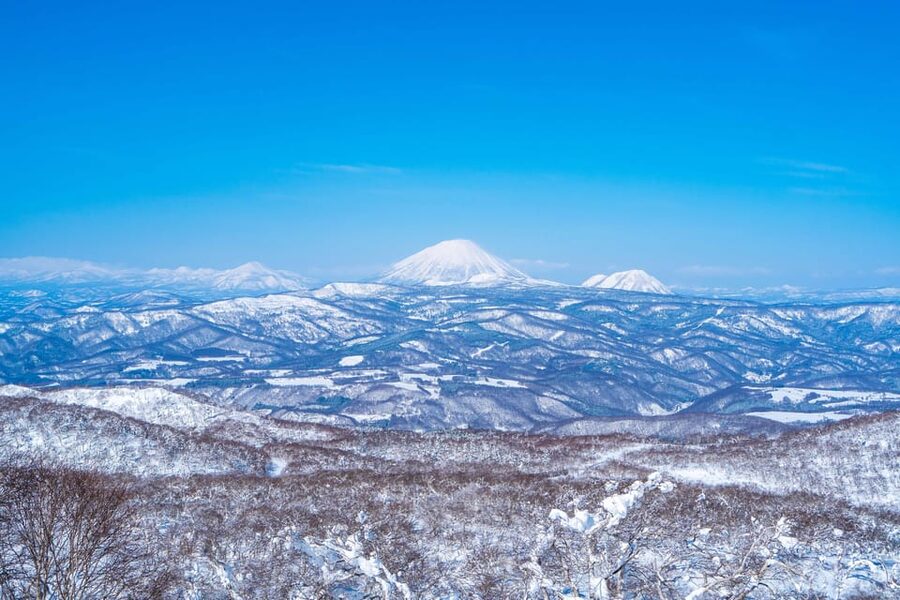
Orofure Pass gives you a close look at Hokkaido winter at its wildest: deep powder, frozen trees, and ridgeline views stretching toward Mt. Orofure, Mt. Yotei, and Lake Toya. The tour’s best feature is the walk beneath the strange, sculpted snow monsters, trees coated by windblown snow and ice.
In This Article
- Key Points Before You Book
- Why Orofure Pass Makes a Fine Winter Walk
- The Drive From Noboribetsu to the Snow
- Learning to Use Snowshoes With Aidan
- Through the Forest and Toward the Ridgeline
- Meeting the Snow Monsters at Orofure Pass
- The Noboribetsu Winter Panorama
- A Sheltered Lunch and Something Hot
- What to Wear for Five Hours in Snow
- Who Should Book This Tour?
- Is the $154 Price Fair?
- Booking Flexibility and Weather
- Should You Book the Orofure Pass Snowshoeing Tour?
- FAQ
- How long does the Orofure Pass snowshoeing tour last?
- How far is Orofure Pass from Noboribetsu?
- What are the snow monsters?
- What mountain and lake views might I see?
- Is snowshoe equipment included?
- What food and drink are included?
- What should I wear?
- Is the tour suitable for beginners?
- How many people can join the tour?
- Can the tour be canceled because of weather?
I like the small group, capped at seven, and the personal guidance from Aidan, who helps first-time snowshoers learn the basics without fuss. I also like the thoughtful finish: a sheltered lunch stop, hot drink, and the chance to arrange a useful drop-off after the hike. The main caution is simple: this is a real mountain walk, not a gentle roadside stroll, and bad weather can cancel or shorten it.
Key Points Before You Book
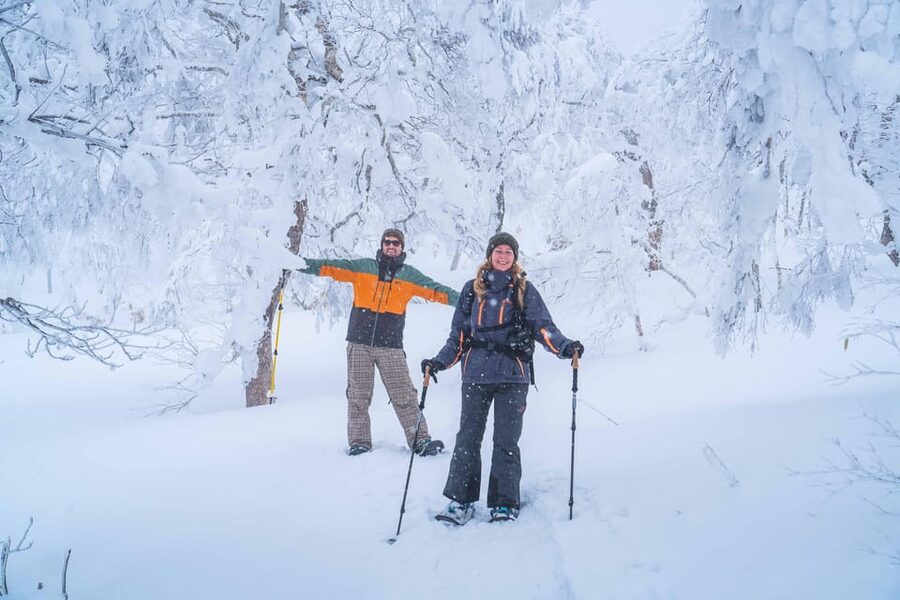
- Snow monsters at Orofure Pass: Walk beneath trees shaped by heavy snow and freezing mountain weather, one of Noboribetsu’s most unusual winter sights.
- Views beyond Noboribetsu: From the ridgeline, you may see Mt. Orofure, Mt. Yotei, and Lake Toya when the weather is clear.
- Aidan leads the walk: He speaks English and Japanese, teaches snowshoe technique, and has been especially helpful with first-time participants and solo visitors.
- Small-group setting: With no more than seven people, the guide can give more attention than a large coach excursion.
- Gear and transport included: Snowshoes, poles, gaiters, pickup, and drop-off are covered. You bring your own winter clothing, footwear, water, and daypack.
- Five hours, including a break: The outing includes the hike, a sheltered lunch stop, a hot drink, snack, and the drive back to Noboribetsu.
Why Orofure Pass Makes a Fine Winter Walk
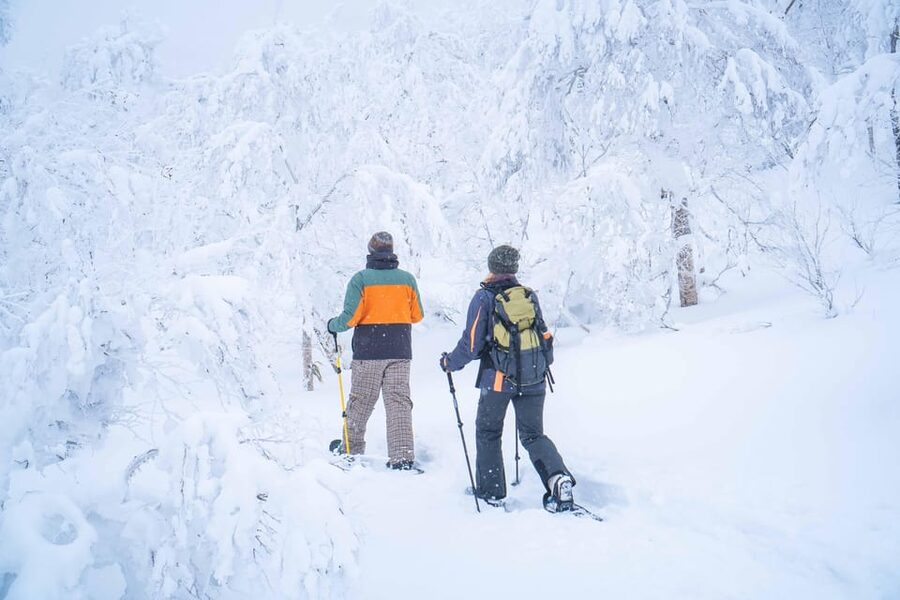
Orofure Pass sits about 30 minutes from Noboribetsu, but the setting feels far removed from town. Heavy winter snow gathers on the trees, then freezes into bulky white shapes. Wind adds to the effect, coating branches until the forest looks almost unreal.
That is the appeal here. You are not simply walking across a prepared snow field. You are moving through a forest and up toward a ridgeline, using snowshoes to spread your weight across soft snow. The route gives you changing views instead of one fixed photo stop.
The snow monsters are the visual prize, but the outing works because the scenery changes as you climb. In the forest, the snow muffles the surroundings. Higher up, the route opens toward mountain and lake views. If clouds move in, the wide panorama may disappear, but the forest still gives you a proper winter setting.
I would think of this as a scenic mountain outing with a moderate physical demand. You need to walk uphill and downhill over uneven ground, and snow conditions can make each step more tiring than it looks. The guide can show you how to use the equipment, but snowshoes do not turn a mountain hike into an effortless walk.
Our other Noboribetsu reviews may also help you decide


The Drive From Noboribetsu to the Snow
Pickup is included, which makes the tour much easier to fit into a Noboribetsu stay. Look for a gray or black Mitsubishi Delica with license plate 207, and tell Nobo Tours the name of your hotel or accommodation.
The drive to Orofure Pass takes about 30 minutes. That short transfer matters because you get mountain scenery without spending most of the day in a vehicle. The tour lasts five hours, so the travel time leaves several hours for the actual walk, scenic stops, and the break.
The exact start time depends on availability. You should check the schedule when booking and be ready at your accommodation for pickup. Since mountain weather can change quickly, keep your plans flexible. The tour may be canceled or postponed when conditions are unsafe.
Transportation back to Noboribetsu is included. A useful detail from the guide’s usual service is that Aidan has sometimes made practical drop-offs, including a station or an onsen, when arrangements allowed. Treat that as a possible courtesy, not a guaranteed part of the package.
Learning to Use Snowshoes With Aidan
If this is your first snowshoe outing, the guide’s instruction can make a big difference. Aidan has helped beginners feel prepared, explained how to walk in the equipment, and offered tips for handling the snow. You still need a reasonable level of fitness, but you do not need to arrive as an expert.
Snowshoes change your stride. You need to lift your feet a little higher and give yourself room when turning. Poles help with balance, especially on slopes. Gaiters keep snow from working its way into your footwear and lower trousers. All three pieces of equipment are included.
The small group size is important here. With a maximum of seven participants, Aidan can pay closer attention to pace, footing, and comfort. This is also a good setup for solo visitors. You are less likely to disappear into a crowd, and the guide can keep conversation moving during the quieter parts of the walk.
Aidan leads in English and Japanese. His role is not limited to pointing out views. He explains the area, talks about the natural setting, and helps you understand how to move safely through it. Several people have found his friendly, easy conversation a major part of the day.
Through the Forest and Toward the Ridgeline
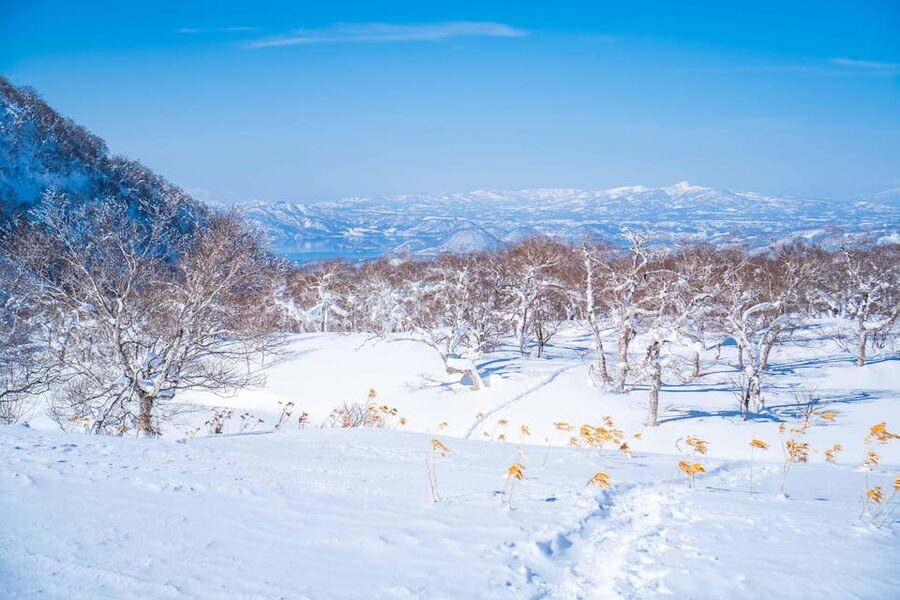
The walking route begins in a forest filled with powder snow. The exact condition of the trail depends on recent snowfall and mountain weather, so you should expect a natural surface rather than a firm, even path.
This is where the snowshoes earn their place. Without them, soft snow would make walking slow and difficult. With them, you can spread your weight and move through the forest with less sinking. The pace is still physical, particularly if the snow is deep or the route rises steeply.
The forest section is more than a warm-up. Snow-covered trees create the first close views of the winter conditions, and the quiet can be striking. You may spend much of this part looking at details nearby: branches under snow, the shape of the trail, and the changing texture of the powder.
As you gain height, the route heads toward a ridgeline. This is the point where the outing feels more open and exposed. You are no longer surrounded by trees on every side, and the views begin to carry the day.
Meeting the Snow Monsters at Orofure Pass
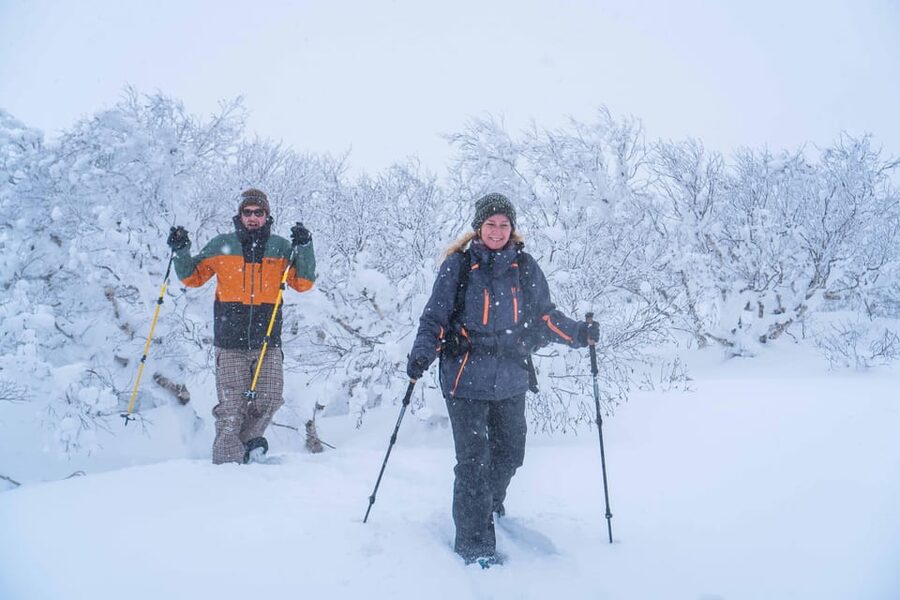
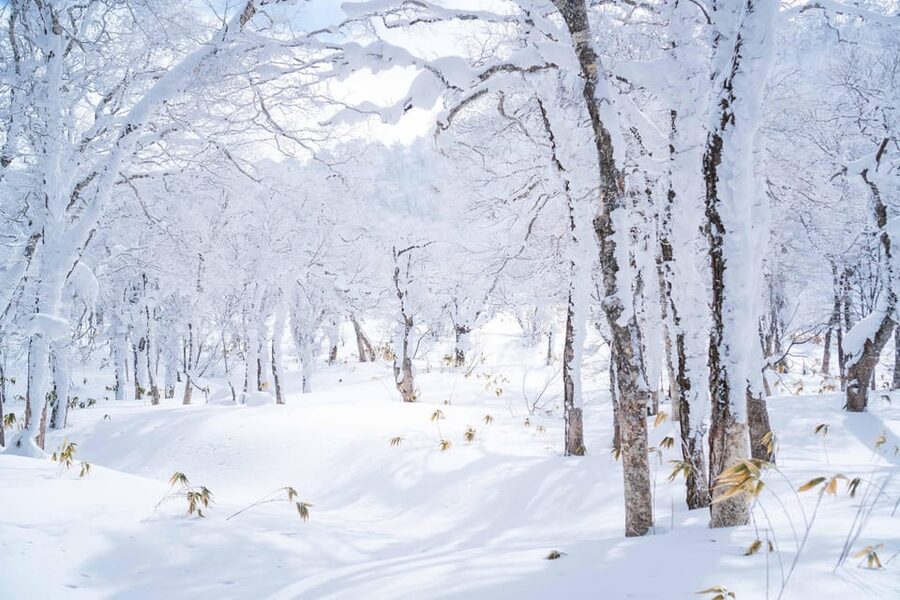
The snow monsters are trees transformed by weather. Snow falls heavily, freezes on branches, and builds up into odd white forms. The result is not a row of carved sculptures or a maintained attraction. It is a natural winter effect that changes with wind, temperature, and fresh snowfall.
Walking beneath these trees is the most distinctive part of the tour. You get a close view of how much snow the mountain receives, rather than seeing the forms from a distant lookout. The shapes can make the forest seem crowded with white figures, especially when the branches are fully coated.
Conditions matter. The snow monsters may look different from one day to the next, and thick cloud can reduce the sense of scale. If the weather is clear, the forms contrast sharply with the surrounding snow. If the weather turns, the forest setting still gives you a strong winter experience, but the long views may be limited.
Bring sunglasses even on a cloudy-looking day. Snow reflects a great deal of light, and mountain conditions can change quickly. A windproof outer layer is just as useful here because ridgelines can feel much colder than the sheltered forest.
Our other Noboribetsu reviews may also help you decide


The Noboribetsu Winter Panorama
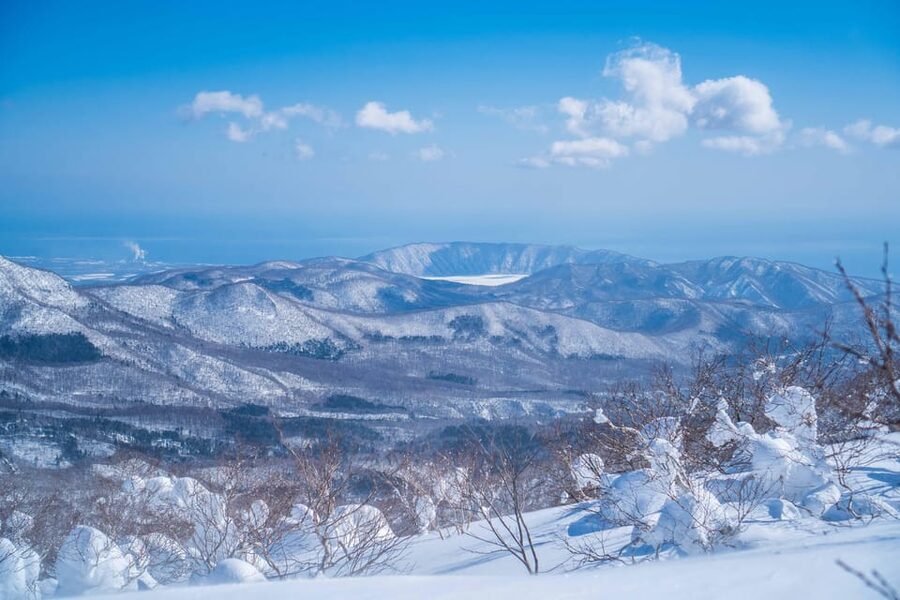
From the higher section, the route can open to views of Mt. Orofure, Mt. Yotei, and Lake Toya. These are not guaranteed on every departure. Clear conditions are needed, and mountain weather can close in quickly.
When the air is open, the view adds real value to the tour. You see more than the immediate snowfield. Mt. Orofure gives the outing its local mountain setting, while the possible view toward Mt. Yotei and Lake Toya gives you a wider sense of Hokkaido’s geography.
This is also the most weather-sensitive portion of the day. Wind, cloud, or heavy snow can affect the ridgeline walk and may lead the guide to shorten the route. That is not a flaw in the experience. It is a sensible response to winter mountain conditions.
You should book this for the chance to see the panorama, not as a promise of a specific photograph. The snow monsters are the more dependable reason to go. The distant views are the bonus that can turn a good outing into a memorable one.
A Sheltered Lunch and Something Hot
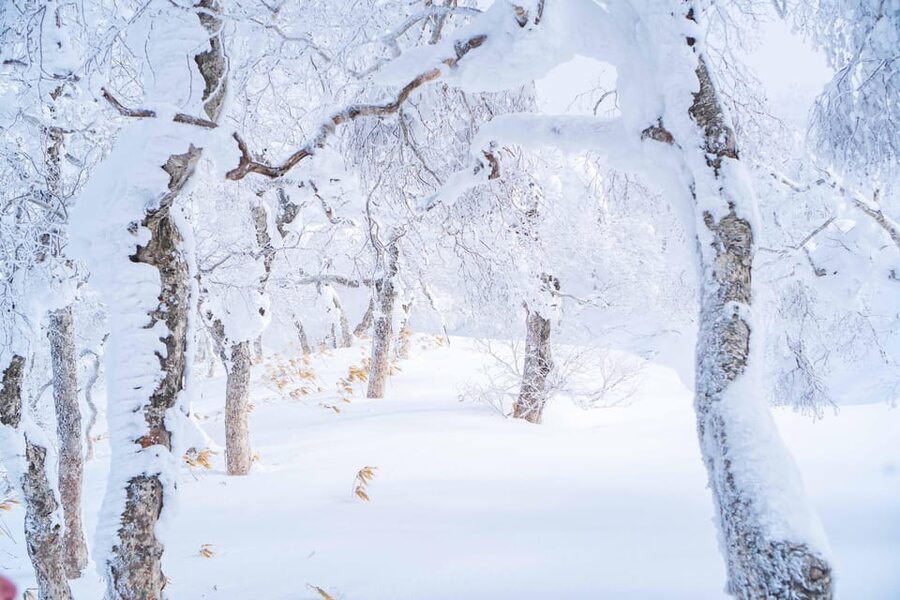
After reaching the higher section, you make your way back down and stop in a sheltered spot for lunch and a hot drink. The package includes a hot drink and snack. You should bring your own water and any extra food you need.
This break is well placed. Snowshoeing can make you warm while you are moving, but the cold returns quickly when you stop. A sheltered rest gives you time to adjust layers, drink something warm, and regain energy before the final section.
The food should not be the main reason you book, since the included provision is described as a snack rather than a full restaurant lunch. Aidan has also gone beyond the basic arrangement on some outings, with homemade cookies and a sourdough sandwich prepared by his wife. Those personal touches are not something I would count on every time, but they show the friendly, hands-on character of this small operation.
Bring a daypack with water, spare snacks, and anything you may need to add or remove during the day. Keeping your food and clothing accessible is more useful than carrying a large pack.
What to Wear for Five Hours in Snow
Clothing is not included, so plan this part carefully. You need warm layers that you can add or remove as your effort and the weather change.
A practical setup includes:
- Warm base and middle layers
- A windproof jacket
- Warm outdoor trousers
- Gloves
- A hat
- Sunglasses
- Comfortable winter footwear
- Gaiters, supplied by the tour
- A small daypack
Do not wear jeans. Cotton is also a poor choice because it holds moisture instead of moving it away from your skin. Skirts and dresses will make snowshoe movement awkward.
The supplied snowshoes, poles, and gaiters cover the specialist equipment. They do not replace proper boots or warm clothing. The phrase comfortable shoes in the packing advice should be understood as suitable winter footwear, not ordinary city sneakers.
Mountain weather can change even when Noboribetsu is sunny. Pack for poor conditions, including wind and snowfall. You should also arrange your own travel insurance because Nobo Tours does not provide insurance for participants.
Who Should Book This Tour?
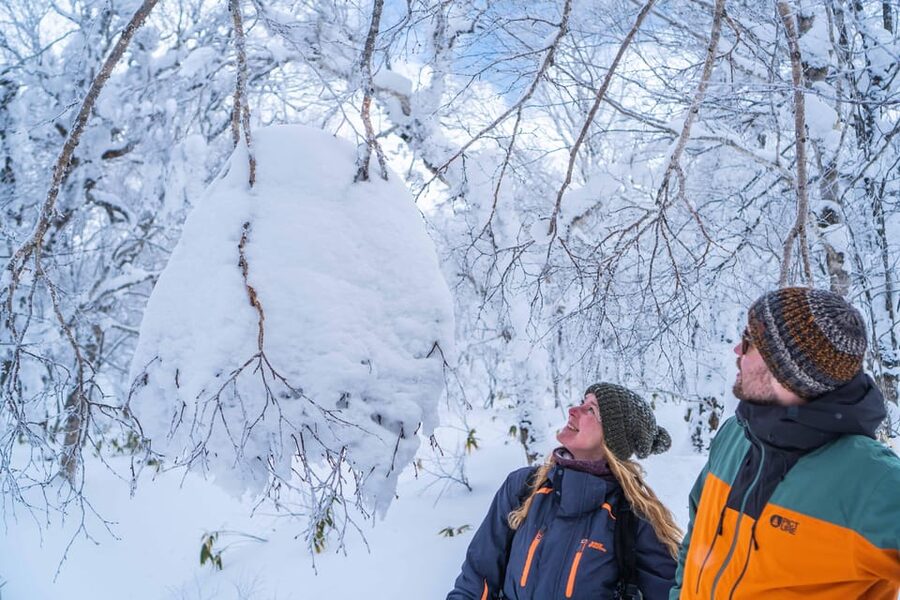
This outing suits adults who want an active winter experience and are comfortable walking uphill and downhill over uneven ground. It is particularly good for first-time snowshoers who want instruction and a small group rather than a large organized excursion.
It also works well for solo visitors. Aidan’s conversational style and the seven-person limit make the day more social without turning it into a crowded group event. Couples and friends who want photographs in the snow should also find the format appealing. Aidan has taken professional-quality photos on some trips, although photography should not be treated as a guaranteed inclusion.
This is not suitable for children under 18, wheelchair users, or people with mobility impairments. You should also avoid it if you have back or heart problems, a cold, or a low level of fitness. If an injury occurs or the guide decides that continuing is unsafe, the tour ends.
The route is not described as technically difficult, but the combination of cold, soft snow, and uneven ground makes it demanding. If you rarely exercise or are unsure about winter walking, choose a gentler activity.
Is the $154 Price Fair?
At $154 per person, this is not the cheapest way to see snow in Hokkaido. The value depends on what you would otherwise need to arrange yourself.
The price includes five hours of guiding, pickup and drop-off, snowshoes, poles, gaiters, a hot drink, and a snack. You also get access to an area about 30 minutes from Noboribetsu that would be difficult to experience independently without suitable gear and winter route knowledge.
The small group improves the value. A seven-person maximum gives you more personal attention, and the guide can explain snowshoe technique and respond to changing conditions. For a first outing, that support may be worth more than simply renting equipment and trying to find a route on your own.
The price does not cover clothing, footwear, a backpack, water, extra snacks, or insurance. Add those costs when comparing it with other winter activities. I would consider the tour good value if you want a guided mountain setting and do not already own snowshoes. It is less appealing if you only want a short, easy introduction to snow.
Booking Flexibility and Weather
You can cancel up to 24 hours before the activity for a full refund. The reserve-now, pay-later option also helps if you are building a flexible Hokkaido itinerary.
Weather deserves attention before you commit. Orofure Pass is a mountain environment, and the tour can be canceled or postponed if conditions are poor. Even on a sunny day, bring warm layers, gloves, a hat, a jacket, and sunglasses.
The guide’s safety judgment comes first. The walk may finish early if conditions worsen or if continuing becomes unsafe. That can be disappointing, but it is the right approach for a winter mountain activity.
Should You Book the Orofure Pass Snowshoeing Tour?
I would book this if you want the chance to walk beneath Hokkaido’s snow monsters rather than simply view winter scenery from a road or hotel. The combination of powder snow, a forest route, a ridgeline, and possible views toward Mt. Yotei and Lake Toya gives the five hours a clear sense of purpose.
Aidan’s personal approach is another reason to choose it. He helps beginners, keeps the group engaged, and may add thoughtful touches such as homemade food, photos, or a convenient drop-off. Those extras are not guaranteed, but the small-group format already gives the tour a more personal feel.
Skip it if you need a flat route, dislike cold-weather exercise, or do not have proper winter clothing. Also skip it if your schedule cannot absorb a weather delay. For fit adults who want an active Noboribetsu experience, this is a strong pick, with the snow monsters as the main prize and the open mountain views as a welcome bonus.
FAQ
How long does the Orofure Pass snowshoeing tour last?
The tour lasts five hours, including transportation, the snowshoe walk, a sheltered break, and the return drive to Noboribetsu.
How far is Orofure Pass from Noboribetsu?
Orofure Pass is about 30 minutes from Noboribetsu by vehicle.
What are the snow monsters?
Snow monsters are trees covered by heavy snow and ice. Wind and freezing conditions build unusual white shapes on the branches.
What mountain and lake views might I see?
From the ridgeline, you may see Mt. Orofure, Mt. Yotei, and Lake Toya. Clear weather is needed for the wider views.
Is snowshoe equipment included?
Yes. Snowshoes, poles, and gaiters are included in the tour price.
What food and drink are included?
The tour includes a hot drink and snack. You should bring your own water and any additional food you may need.
What should I wear?
Wear warm outdoor layers, a hat, gloves, sunglasses, a windproof jacket, and suitable winter footwear. Avoid jeans, skirts, dresses, and cotton clothing.
Is the tour suitable for beginners?
Yes, beginners can join if they have a reasonable level of fitness. Aidan provides help with snowshoe technique and preparation.
How many people can join the tour?
The group is limited to seven participants.
Can the tour be canceled because of weather?
Yes. The tour may be canceled or postponed if mountain weather makes the activity unsafe. It may also finish early if conditions worsen, an injury occurs, or the guide decides it is not safe to continue.
More Tour Reviews in Noboribetsu
More Snowshoe Tours in Noboribetsu
More Noboribetsu & Lake Toya Tours in Noboribetsu
Other Noboribetsu tours worth your shortlist


Snowshoe Tours, side by side.
 ★ 5.0Snowshoeing and Onsen Adventures in a Winter Wonderland -Sapporo.From $224.0230 reviews
 ★ 5.0Snowshoe Hike Tour from Sapporo include hotel p/up & drop offFrom $308.7316 reviews
 ★ 5.03.5hours Primeval Forest Snowshoe hike and Wildlife Watching TourFrom $55.5214 reviews
 ★ 5.0Snowshoe Adventures and Onsen Bliss Winter Escape in FuranoFrom $78.3812 reviews
The lists this tour appears in