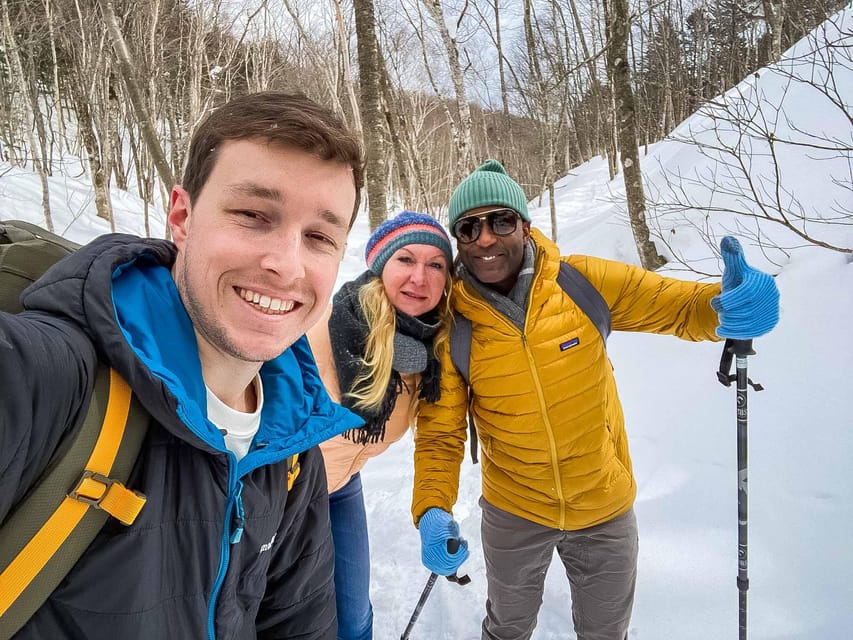
The real draw here is a short-lived winter wonder hidden in an abandoned mine near Noboribetsu. For about 10 weeks each year, dripping water freezes into bamboo ice, building stalactites and stalagmites as high as 4 meters. I like the rare natural setting and the chance to reach it on snowshoes rather than simply stepping out of a vehicle. I also like the small group, capped at seven people, which gives the guide room to set a comfortable pace.
In This Article
- Key points to know before booking
- Why bamboo ice is worth the six-hour outing
- Setting out from Noboribetsu in a small group
- Snowshoeing through the white forest
- Lunch beneath snow-covered trees
- Inside the abandoned mine cave
- The return walk and what it demands
- Is $154 a fair price?
- Who should book this winter outing?
- Practical planning for your Noboribetsu day
- Should you book the Bamboo Ice Cave tour?
- FAQ
- How long does the Bamboo Ice Cave tour last?
- Where is the bamboo ice cave?
- How long does bamboo ice form each year?
- How far do you walk?
- What equipment is included?
- Is lunch included?
- What should I wear?
- Is hotel pickup available?
- Who should not take this tour?
The main consideration is the physical effort. You will cover about 7 kilometers over uneven ground, crossing compacted snow bridges and walking up and down through a winter forest. That makes this a poor fit for anyone with mobility, heart, back, or respiratory problems, but a strong choice if you want an active Hokkaido outing with real time in nature.
Key points to know before booking
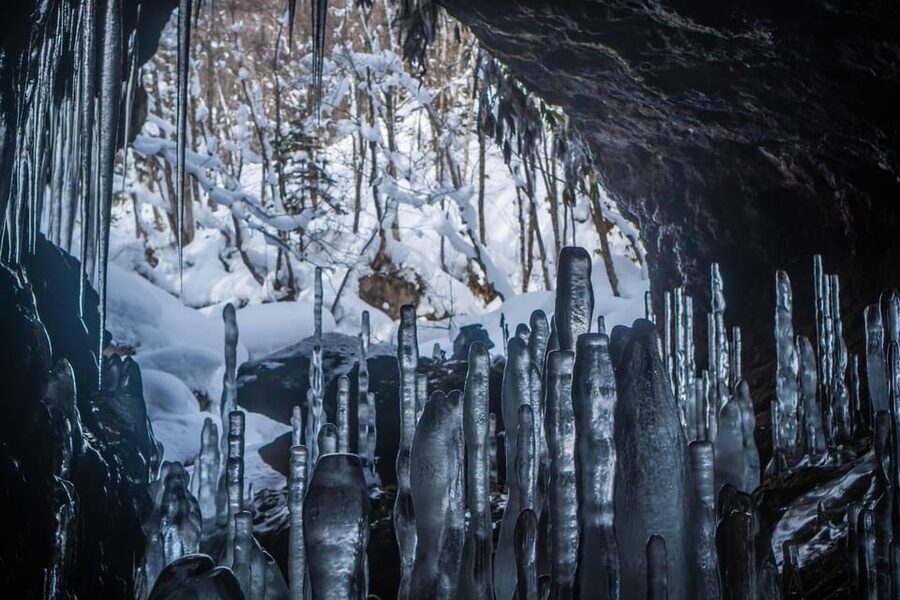
- Bamboo ice lasts for only about 10 winter weeks, so the cave is a seasonal sight with a narrow viewing window.
- The 7-kilometer snowshoe route crosses small streams on snow bridges and includes uneven, hilly terrain.
- Guide Aidan leads the English and Japanese tour, with breaks, nature facts, photos, and help throughout the walk.
- Lunch and a hot drink are included, with homemade sourdough sandwiches and chocolate chip cookies prepared by Aidan’s wife, Yasuko.
- The group is limited to seven participants, a useful advantage on a route where pace and safety matter.
- Snowshoes, poles, and gaiters are supplied, but you must bring suitable winter clothing, hiking shoes, water, and a daypack.
Why bamboo ice is worth the six-hour outing
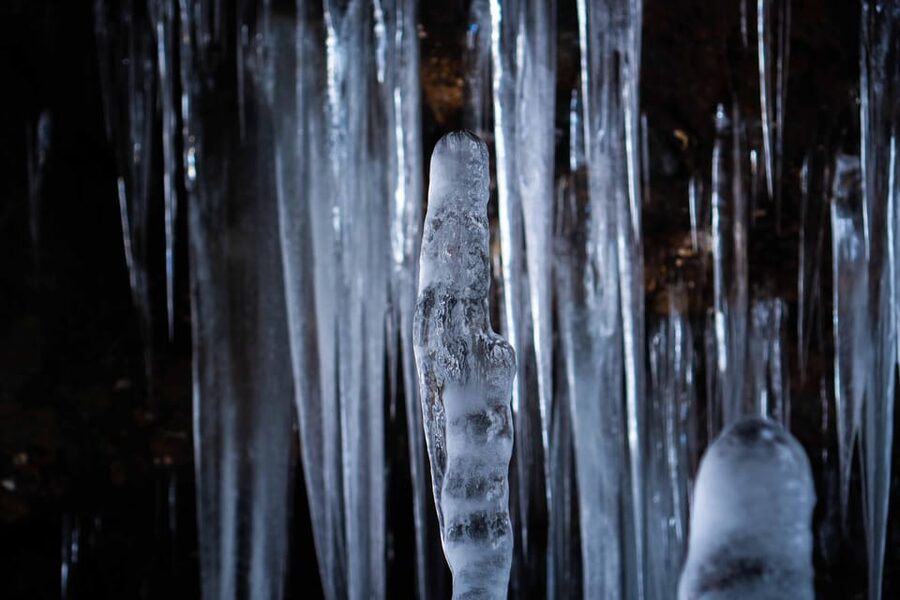
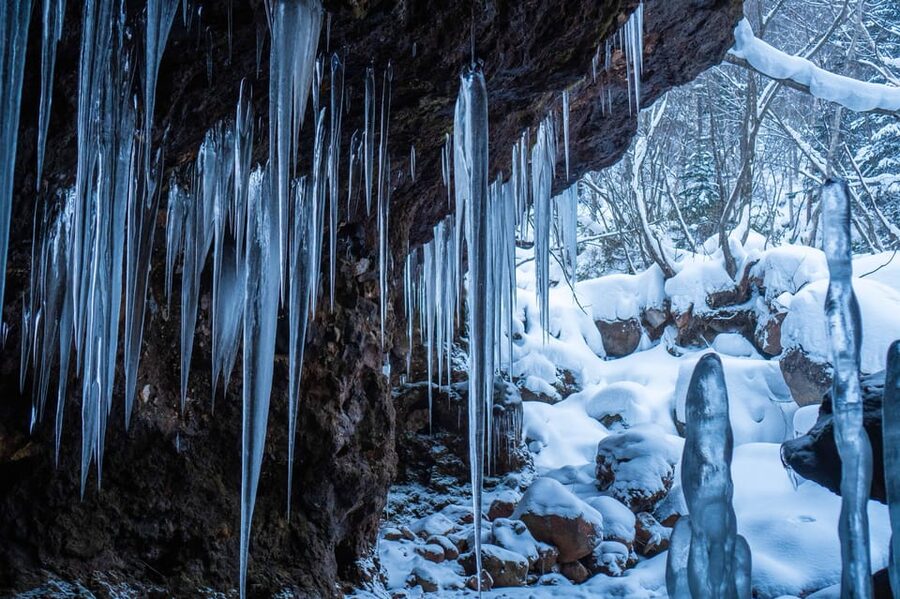
Bamboo ice is not bamboo. The name describes the tall, narrow shapes that form as water drips from the ceiling of the cave and freezes during the cold nights. The process repeats over many days, producing icy columns that can resemble frozen bamboo stalks.
This cave is one of only three places in Hokkaido where you can see the phenomenon. That rarity matters, but the timing matters even more. The formation appears for roughly 10 weeks each winter, so you need to plan around the season rather than treat it as a year-round Noboribetsu attraction.
I like that the cave is reached as part of a forest walk. You do not simply arrive, take a quick photograph, and leave. The snowy route gives the cave a sense of place, and the gradual change from open woodland to the abandoned mine makes the final sight feel earned.
The ice itself is likely to be the most striking part of the day. Formations can reach up to 4 meters high, with ice building on the cave floor and ceiling. Conditions can change with weather and temperature, so the exact appearance will vary, but the basic spectacle comes from watching ordinary water turn into oversized winter sculpture.
Our other Noboribetsu reviews may also help you decide


Setting out from Noboribetsu in a small group
Pickup is included from your hotel or accommodation in Noboribetsu. Look for a gray or black Mitsubishi Delica with license plate 207, and provide your accommodation name when booking. This simple vehicle detail is useful in a town where several winter activities may be operating at the same time.
The six-hour schedule includes transport, the walk to the cave, time for lunch and exploration, the return trek, and the drive back to Noboribetsu. Starting times vary, so you need to check availability for the date you want.
The group limit of seven is one of the tour’s practical strengths. A snowshoe outing is not like a bus tour where everyone follows a fixed path at the same speed. People warm up at different rates, stop to look at animal tracks, and need help adjusting equipment. A small group gives Aidan more freedom to manage those details.
English and Japanese guiding is available. Aidan’s approach, based on the tour details and direct experience described by participants, includes regular mini-breaks, nature facts, clear instructions, and help during the walk. He also offers to take photographs and shares them afterward, a thoughtful touch when you want pictures of the day but do not want to keep stopping to manage your own camera.
Snowshoeing through the white forest
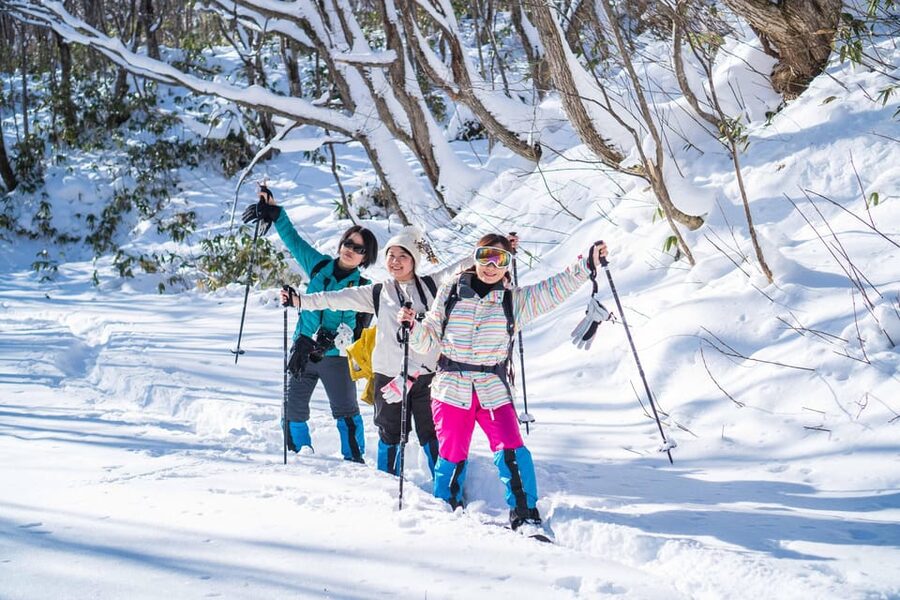
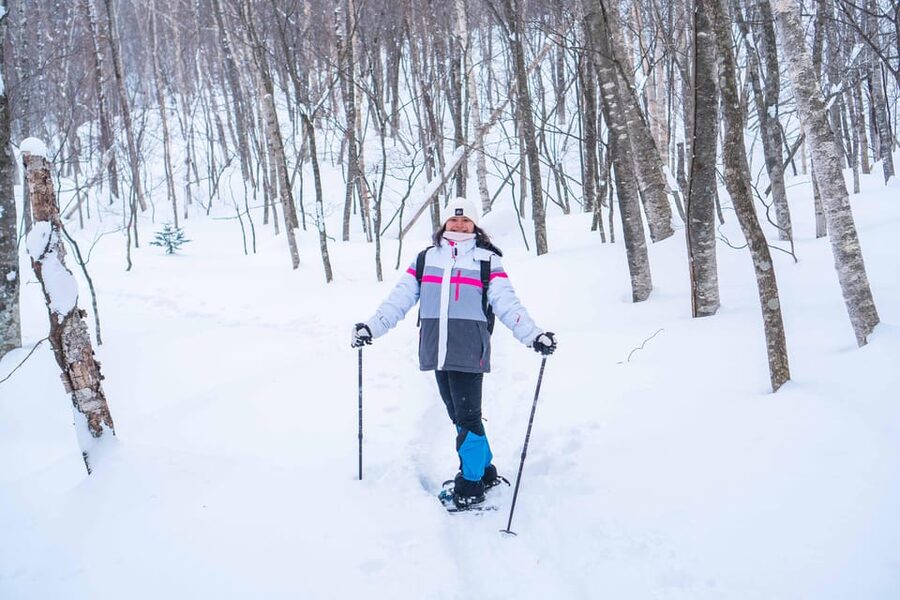
The walk takes you through a winter forest where snow coats the trees. This is not just a transfer between Noboribetsu and the cave. The forest is a central part of the experience, especially if your usual Hokkaido sightseeing has focused on hot springs, food, and city attractions.
You will use snowshoes, poles, and gaiters supplied by Nobo Tours. Snowshoes spread your weight across the snow, helping you move over soft surfaces that would be difficult in ordinary shoes. Poles add balance, while gaiters help keep snow out around your lower legs.
The route covers around 7 kilometers in total and includes walking up and down uneven ground. The terrain is manageable only if you are comfortable with a sustained winter walk. Aidan reportedly uses short breaks and stops for interesting facts rather than pushing everyone at one unbroken pace. That can make a major difference, particularly if you are new to snowshoeing.
You may also spot animal tracks in the snow. The tour does not promise a particular animal sighting, but tracks give you something to watch for between the main viewpoints. I like this kind of detail because it turns the forest into something to read, not just scenery to pass through.
Small streams cross the route. Instead of using regular bridges, you cross on compacted snow bridges formed by the winter conditions. This is one of the more unusual parts of the walk, but it is also a reason to pay attention to the guide and your footing. Snow conditions can shift, and mountain weather can change quickly even when Noboribetsu begins with clear skies.
Lunch beneath snow-covered trees
Lunch is included and is eaten near the cave beneath snow-covered trees. That setting gives the meal a clear advantage over a rushed snack eaten inside a vehicle. You get a pause before exploring the ice, and the forest becomes part of the meal.
The sandwiches are made with homemade sourdough bread prepared by Yasuko, Aidan’s wife. A chocolate chip cookie is served as a sweet finish, and a hot drink is available at the cave. Hot chocolate was especially welcome during one February outing, and it is easy to see why a warm drink matters after a cold approach walk.
You still need to bring your own water and snacks. The included lunch should not be treated as a complete supply plan for six hours outdoors. Bring enough water for the walk, plus an extra snack if you tend to eat more during physical activity.
A daypack is also your responsibility. You will need it for water, extra layers, and personal items. Keep the load light, but make sure it is large enough for clothing you remove as you warm up.
Inside the abandoned mine cave
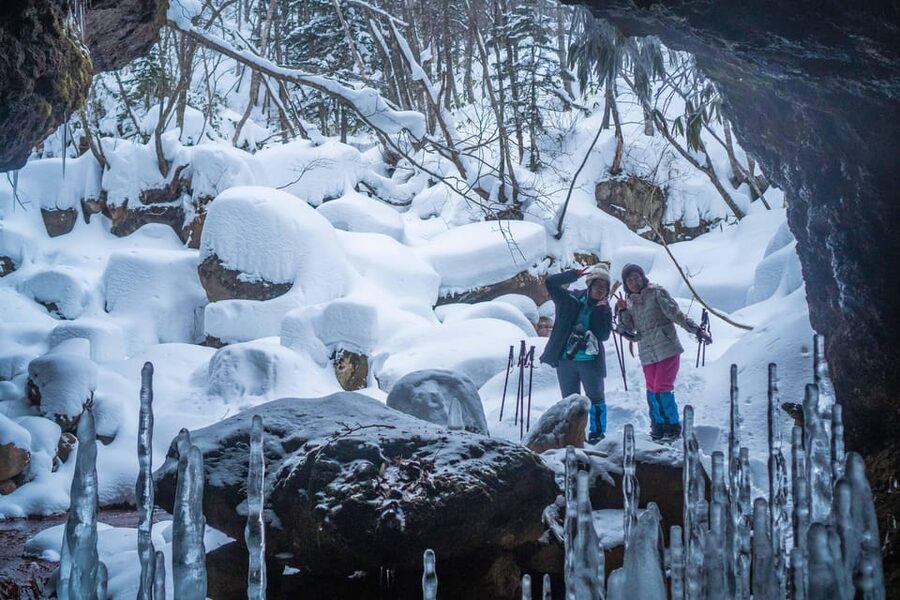
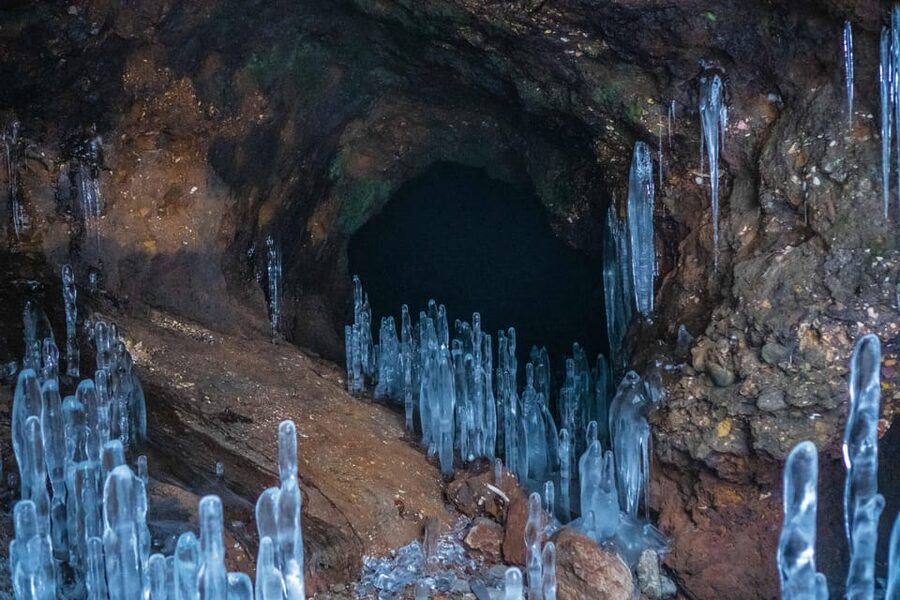
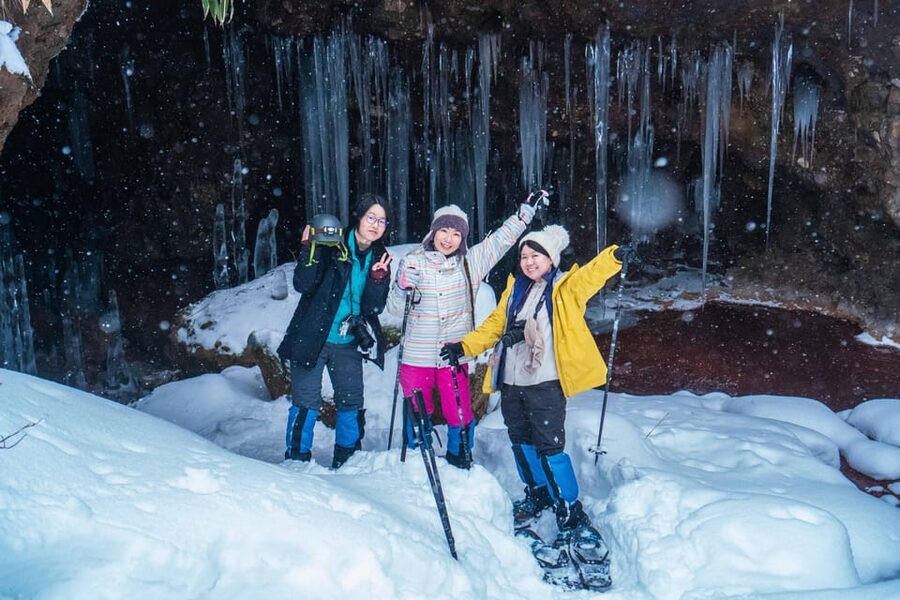
After lunch, you enter the cave area to see the bamboo ice. The formation comes from water dripping from the ceiling, freezing at night, and repeating the cycle until layers build up. Stalactite shapes hang from above while stalagmite forms rise from the ground.
The tallest formations can reach about 4 meters. That scale is what separates the sight from ordinary icicles. Inside a dark abandoned mine, surrounded by snow and reached on foot, the ice should feel far removed from a maintained attraction.
The cave is natural and seasonal, so you should expect a raw setting rather than a polished visitor center. The information provided does not promise lighting, paved paths, handrails, or indoor warmth. Dress and walk as if you are visiting a winter cave, not a heated museum.
I would also allow for the fact that the ice may look different from photographs taken earlier or later in the season. Temperature, snowfall, and repeated freezing affect how the formations grow. The attraction is the process as much as the final shape.
Our other Noboribetsu reviews may also help you decide

The return walk and what it demands
You return to Noboribetsu by snowshoeing the same route. That means the return is not a short downhill finish. You will again cross the snow bridges, handle uneven ground, and maintain your energy after the excitement of the cave.
This is where honest planning matters. The activity is described as physical, and the 7-kilometer distance includes walking over irregular terrain. You should be comfortable walking up and down for several hours in winter conditions.
Wear layers that you can add or remove. You may feel cold while standing near the cave, then warm up quickly while walking. A windproof jacket, gloves, hat, and sunglasses are specifically recommended. Avoid cotton because it does not move moisture away from your skin as well as suitable outdoor fabrics.
Jeans, skirts, and dresses are not allowed. That rule is practical rather than fussy. Jeans can become cold and restrictive when wet, while skirts and dresses make snowshoe movement awkward. Hiking shoes are required, and you should not rely on ordinary casual footwear.
Prepare for bad weather even if the forecast looks good. Mountain conditions can change quickly. The tour may be canceled or postponed when conditions are unsafe, and the guide can end the outing if someone is injured or continuing becomes dangerous.
Is $154 a fair price?
At $154 per person, this is not a cheap woodland walk, but the price covers several items that would cost money and effort to arrange separately. You get pickup and drop-off, snowshoes, poles, gaiters, a guide, lunch, and a hot drink.
The small group also affects the value. With no more than seven participants, the price includes a more personal outing rather than a large commercial group. That matters on a route where the guide needs to watch footing, adjust the pace, explain the ice, and respond to changing weather.
The rare cave is the main reason to pay the premium. You are not paying only for equipment rental. You are paying for access to a seasonal site, transport to the trailhead, route management, and a full six-hour experience.
The value is weaker if you want a quick sightseeing stop, dislike cold-weather exercise, or already own the equipment and prefer to explore independently. It is stronger if you need gear, transport, a guide, and food bundled together, especially during a short visit to Noboribetsu.
Free cancellation up to 24 hours before the start gives you some protection, and you can reserve now and pay later. You still need your own travel insurance because Nobo Tours does not provide insurance for customers.
Who should book this winter outing?
I would recommend it to nature lovers who want something beyond Hokkaido’s better-known hot spring and snow resort activities. It suits active couples, friends, and solo visitors who like small groups and do not mind spending most of a day outdoors.
It is also a good choice if you are curious about local natural processes. The bamboo ice is unusual, and the guide’s explanations and nature facts add context to the forest, streams, tracks, and cave.
You should think twice if you have a cold, breathing trouble, heart problems, back problems, or limited mobility. The activity is not suitable for pregnant women, wheelchair users, or people who cannot manage uneven terrain.
Fitness alone is not the only issue. You also need to be willing to walk in changing winter weather, wear proper layers, and accept that plans may change for safety. If you want comfort and certainty, choose a gentler activity. If you want a quiet, active day built around a rare natural sight, this tour makes a strong case.
Practical planning for your Noboribetsu day
Before pickup, wear your hiking shoes and winter layers rather than packing them away. Bring a hat, gloves, sunglasses, windproof jacket, water, snacks, and a daypack. You can remove layers during the walk, so clothing that packs down easily is helpful.
Do not count on the included equipment to solve every clothing problem. Snowshoes, poles, and gaiters are supplied, but your feet, hands, head, and core still need proper protection.
Keep your schedule flexible around the tour. Bad weather can lead to cancellation or postponement, and an injury or unsafe condition can shorten the outing. The free cancellation window applies up to 24 hours in advance, but weather decisions may happen closer to the start.
The tour is guided in English and Japanese. If you need pickup, make sure the accommodation name is supplied and identify the Mitsubishi Delica with plate 207 when it arrives.
Should you book the Bamboo Ice Cave tour?
Book it if you want a rare Hokkaido sight reached by an active and quiet route. The best reasons are the 10-week seasonal window, ice formations up to 4 meters high, a seven-person group, and the care put into pacing, photos, lunch, and hot drinks.
Skip it if you are not ready for 7 kilometers of snowshoeing over uneven ground or if you need a fully accessible outing. For the right participant, $154 buys more than a cave visit. It buys a guided winter day in the forest, with a homemade lunch, practical equipment, and a natural phenomenon that exists only briefly each year.
FAQ
How long does the Bamboo Ice Cave tour last?
The tour lasts six hours, including pickup, transportation, the snowshoe walk to the cave, lunch, cave exploration, the return walk, and the drive back to Noboribetsu.
Where is the bamboo ice cave?
The cave is near Noboribetsu, Hokkaido, in an abandoned mine cave reached by snowshoeing through a winter forest.
How long does bamboo ice form each year?
The natural formation appears for about 10 weeks each winter.
How far do you walk?
You walk approximately 7 kilometers over uneven terrain, including walking up and down and crossing small streams on compacted snow bridges.
What equipment is included?
Snowshoes, poles, and gaiters are included. Clothing, footwear, a backpack, water, and snacks are not included.
Is lunch included?
Yes. Lunch and a hot drink are included. The meal may include homemade sourdough sandwiches and a chocolate chip cookie, prepared by Aidan’s wife, Yasuko.
What should I wear?
Wear warm layers, hiking shoes, a windproof jacket, gloves, a hat, and sunglasses. Avoid cotton, jeans, skirts, and dresses because they are not suitable for the required movement and winter conditions.
Is hotel pickup available?
Yes. Pickup and drop-off are included from your hotel or accommodation in Noboribetsu. Look for a gray or black Mitsubishi Delica with license plate 207.
Who should not take this tour?
The activity is not suitable for pregnant women, wheelchair users, or people with mobility, back, heart, or respiratory problems. It is also not suitable for anyone with a cold, and participants must be able to manage uneven winter terrain.
More Winter Activities in Noboribetsu
More Tour Reviews in Noboribetsu


More Snowshoe Tours in Noboribetsu

Other Noboribetsu tours worth your shortlist


Snowshoe Tours, side by side.
 ★ 5.0Snowshoeing and Onsen Adventures in a Winter Wonderland -Sapporo.From $224.0230 reviews
 ★ 5.0Snowshoe Hike Tour from Sapporo include hotel p/up & drop offFrom $308.7316 reviews
 ★ 5.03.5hours Primeval Forest Snowshoe hike and Wildlife Watching TourFrom $55.5214 reviews
 ★ 5.0Snowshoe Adventures and Onsen Bliss Winter Escape in FuranoFrom $78.3812 reviews
The lists this tour appears in