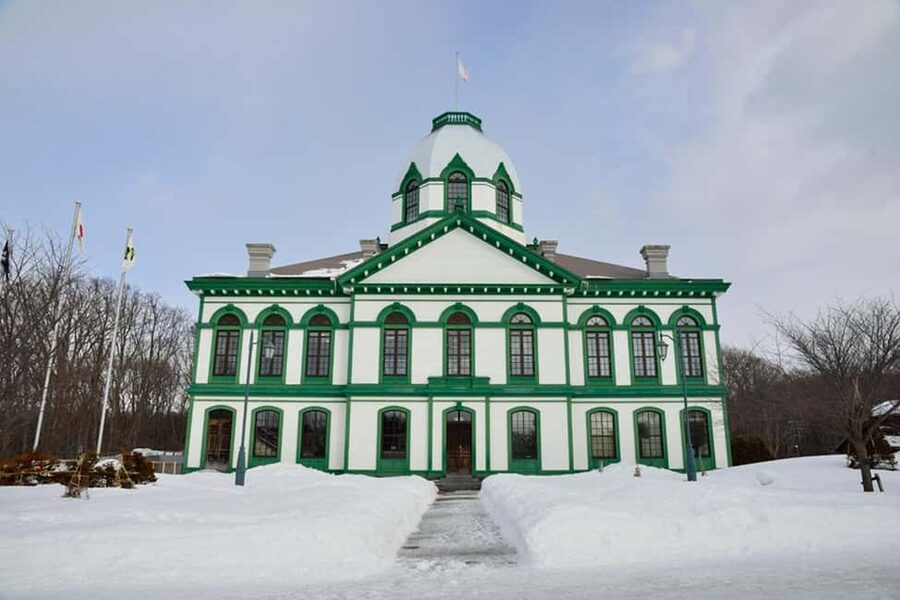
Hokkaido’s Historical Village turns a museum visit into a walk through an earlier Japan. Across 52 relocated and restored buildings, you move from the Meiji period into the Taisho years and the beginning of the Showa period, seeing how people lived and worked rather than simply reading dates on a wall.
In This Article
- Key points to know before you go
- A time capsule for Hokkaido’s early modern years
- Four areas, 52 buildings, one broad story
- What the buildings help you understand
- How much time to allow
- Why the self-guided format works
- Practical restrictions to take seriously
- Who will enjoy this visit most
- Price, cancellation, and planning value
- Should you book the Historical Village of Hokkaido?
- FAQ
- How much does admission to the Historical Village of Hokkaido cost?
- How long is the ticket valid?
- How much time should I allow for the visit?
- Is a personal guide included?
- Can I explore at my own pace?
- Are food and drinks included?
- Is photography allowed?
- Can I cancel for a refund?
I like the open-air layout, which gives you room to set your own pace, and the modest $6 admission, which makes this an easy addition to a Sapporo day. The main drawback is that this is a self-guided visit with no personal guide, and you should allow at least two to three hours for the walking and displays.
Key points to know before you go
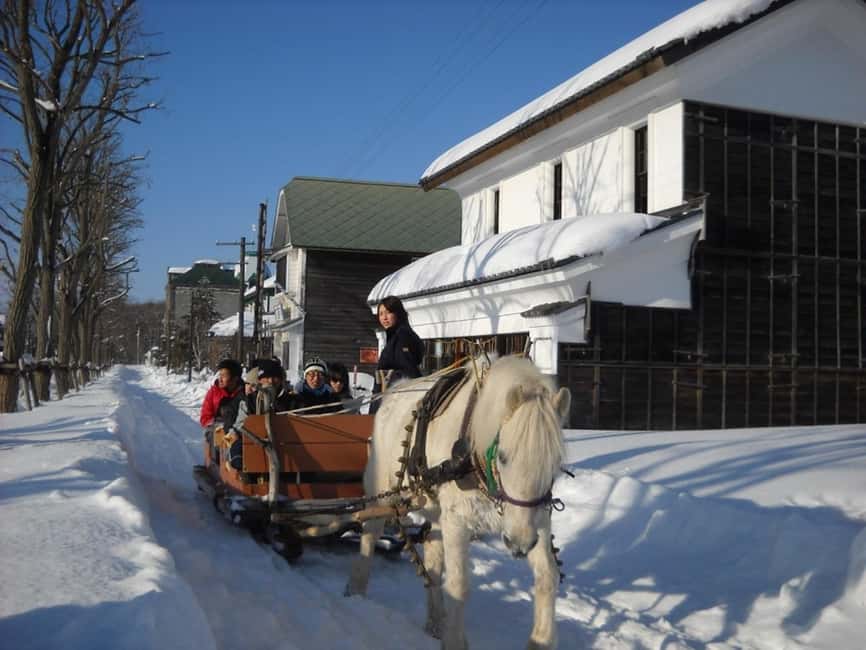
- 52 historic buildings: Relocated and restored structures show homes, workplaces, industries, and daily life from 1868 to the 1920s.
- Four themed groups: The village is arranged into four areas, including the Town and Fishing Village.
- Self-guided freedom: You can linger over the buildings that interest you instead of following a fixed group schedule.
- Strong value at $6: Admission covers entry for one day, while food, drinks, transportation, and guiding cost extra.
- Outdoor visit: Photography is allowed outside, but some interiors may have restricted access.
- Plan for a long walk: Comfortable walking shoes are advised, and weather conditions can affect your enjoyment.
A time capsule for Hokkaido’s early modern years
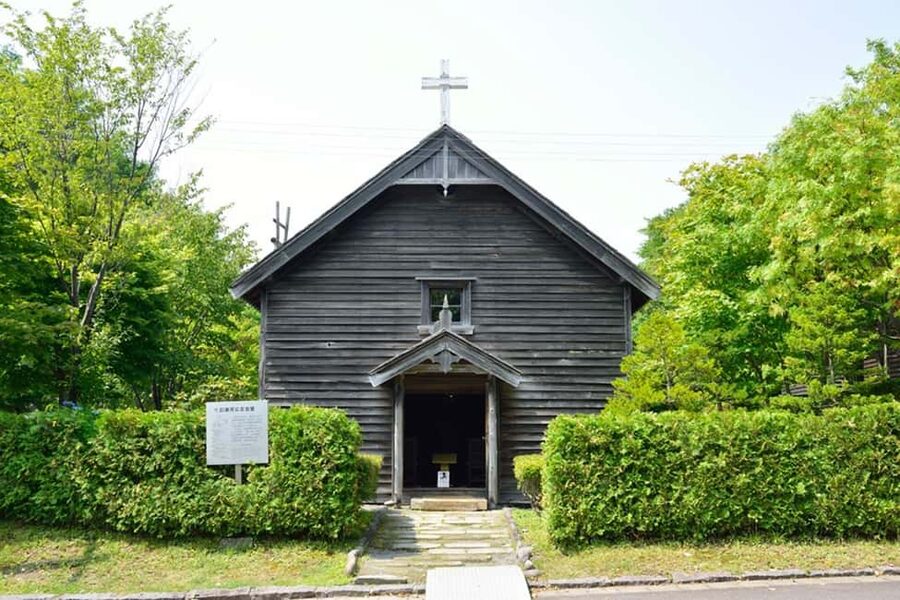
The Historical Village of Hokkaido was opened in 1983 to preserve important cultural assets for future generations. Its focus is the period from 1868 through the 1920s, when Hokkaido was changing quickly and new industries, settlements, and communities were taking shape.
That time span gives the visit a clear purpose. You are not looking at random old buildings collected in one place. You are seeing a picture of Hokkaido during the Meiji and Taisho periods, followed by the early Showa era, with buildings arranged to suggest the different settings in which people lived and worked.
I find this approach more useful than a museum made up only of isolated objects. A building gives scale to the past. You can think about the size of a room, the shape of a workplace, and the way a community might have been organized.
The experience is not presented as a guided tour. You receive admission to the village and explore independently. That makes it a good fit if you prefer to stop often, read at your own speed, or skip displays that are less relevant to your interests.
Our other Sapporo reviews may also help you decide


Four areas, 52 buildings, one broad story
The village contains 52 buildings arranged in four groups. The supplied details name the Town and Fishing Village areas, while the full visit includes two additional groups that help complete the picture of Hokkaido’s early modern communities.
The Town area is the natural place to consider urban life. Here, the buildings and displays help explain the way people lived, worked, and traded in a growing settlement. You can take your time with the structures that interest you instead of rushing through a fixed route.
The Fishing Village group shifts attention toward coastal work and community life. It gives the visit a useful contrast with the Town, showing that Hokkaido’s story was not limited to streets, shops, and city buildings.
The other two groups broaden the setting further. Since the experience is designed around Hokkaido’s lifestyles, cultures, and industries, you can expect the full site to connect domestic life with work and production. The appeal comes from seeing these pieces together, not from treating each building as a separate attraction.
Each building contains displays illustrating the lives and industries of people in the Meiji and Taisho periods. Some structures may have restricted access, so do not assume every room or floor will be open. Even when you cannot enter a building, its exterior still forms part of the larger village arrangement.
What the buildings help you understand
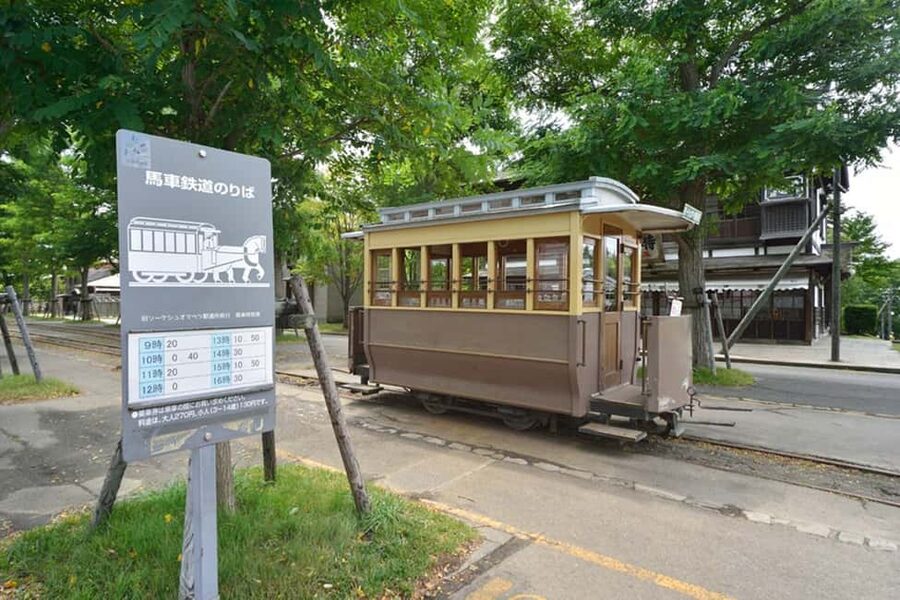
The strongest part of the visit is the link between architecture and ordinary life. A display inside a historic building can explain far more than a date or label. It can show what sort of work took place there, how people used the space, and which part of Hokkaido’s development it represents.
You will encounter material connected with lifestyles, cultures, and industries. That mix matters. A history museum can feel distant when it concentrates only on political events. This village brings the focus back to homes, workplaces, settlements, and the practical routines of earlier residents.
I would plan to read the displays rather than simply walk from building to building. The outdoor setting makes it tempting to hurry, especially if the weather is good, but the indoor material is where much of the explanation lives. Photography is allowed outside, while photography inside the buildings is listed as prohibited.
The four-group arrangement also helps you compare different ways of life. The Town and Fishing Village areas are especially useful as a pair because they suggest different economic and social settings. The visit becomes more than a collection of old structures when you ask how work and community life differed from one group to another.
How much time to allow
The recommended minimum is two to three hours for the full experience. That is enough time to walk among the buildings and read a useful selection of displays, though your exact pace will depend on how carefully you explore.
For a quick visit, choose the buildings and displays that most interest you, then keep moving. For a more complete visit, plan on the full two to three hours and accept that you may not study every label equally closely.
The one-day validity gives you flexibility during your visit. You are not tied to a short entry window or a timed guide. Still, the available information does not provide a detailed schedule of talks or activities, so do not book this expecting a structured performance or an escorted itinerary.
Because this is an outdoor museum, check the weather before setting out. Rain, cold, or strong sun can change how comfortable the visit feels. Bring the practical mindset you would use for any long museum walk, but also check the unusually detailed site restrictions before packing.
Why the self-guided format works
A personal guide is not included, and that is both a strength and a limitation. I like self-guided museums when the site has enough structure to help me get oriented but enough freedom to avoid a forced pace. This village offers that balance through its four themed groups and its displays in each building.
You can spend more time with the Town if urban history interests you, or give extra attention to the Fishing Village if coastal life is your priority. You can also pause outdoors for a change of pace rather than staying inside a conventional gallery.
The trade-off is that you must create your own story. Nobody will point out the most important building, explain the relationship between the groups, or answer questions as you go. If you want a guided explanation, you would need to arrange that separately, since the admission includes no personal guide.
For many visitors, the low price makes this limitation easy to accept. At $6 per person, the ticket costs little compared with a full paid tour, and you get a full day of admission. The value is strongest if you enjoy reading, walking, and making your own discoveries.
Our other Sapporo reviews may also help you decide


Practical restrictions to take seriously
The supplied rules list a very large number of prohibited items and behaviors. They include food and drinks, smoking, vaping, pets, drones, weapons, sharp objects, large bags, backpacks, luggage, handcarts, baby carriages, mobility scooters, walking sticks, and plastic bottles.
The list also prohibits flash photography, video recording, audio recording, indoor photography, touching animals, feeding animals, climbing, making noise, and using electronic devices or cellphones. Some of these restrictions may apply to particular spaces or parts of the visit, but the information provided does not explain the exceptions.
There is also a confusing footwear instruction. The rules list shoes, sandals, flip flops, open-toed shoes, slippers, and bare feet as not allowed, while the practical advice says to wear comfortable walking shoes. Because those instructions conflict, confirm the current footwear policy before your visit rather than guessing.
The same caution applies to clothing. The restrictions list jeans, shorts, sleeveless shirts, sportswear, tight clothing, jewelry, hats, sunglasses, strong fragrances, and see-through clothing. Check the current rules carefully, especially if you are packing for a full day in Sapporo and plan to visit other attractions afterward.
The simplest approach is to travel light, avoid bringing prohibited items, and check the weather. Photography is allowed outside, but keep your camera away inside the buildings unless staff clearly permit it.
Who will enjoy this visit most
I would recommend the Historical Village to you if you like open-air museums, historic architecture, cultural displays, and independent sightseeing. It is also a sensible choice if you want a quieter change from Sapporo’s central attractions and have at least half a day available.
Families may appreciate the freedom to move at different speeds, though the listed restrictions say the experience is not suitable for baby carriages. People who have difficulty walking, back problems, heart problems, respiratory issues, or mobility impairments should be cautious because the visit requires outdoor walking and is specifically listed as unsuitable for several of these conditions.
The experience is also listed as unsuitable for wheelchair users, people with claustrophobia, people afraid of heights, people with vertigo, people with epilepsy, and pregnant women. It is not suitable for people who cannot ride a bike, although the supplied information does not explain how that condition affects the visit.
You should also think about the weather and your energy level. This is not a quick indoor exhibit with every item close together. You are visiting an open-air site, so comfort and stamina matter.
Price, cancellation, and planning value
The $6 price is the clearest selling point. Admission to a full open-air museum with 52 buildings costs less than many short guided activities, and the ticket remains valid for one day. That gives you a low-risk way to add historical context to a Sapporo itinerary.
The price does not include transportation, food, drinks, or a personal guide. You need to budget for getting to the village and for anything you want to eat or drink before or after the visit. Food and drinks are not allowed under the supplied restrictions, so do not assume you can picnic inside the site.
You can cancel up to 24 hours in advance for a full refund. The reserve-now-and-pay-later option also lets you keep plans flexible and pay nothing at the time of booking. Check availability for the starting times shown when you reserve, even though the ticket itself is valid for one day.
The provider, HANATOUR JAPAN CO., LTD., has a rating of 4.4. That gives you a basic indication of a well-established booking option, but the quality of your visit will still depend heavily on weather, walking comfort, and how much independence you want.
Should you book the Historical Village of Hokkaido?
Book it if you want a low-cost, self-guided look at Hokkaido from 1868 to the 1920s, and you are happy to spend two to three hours walking between restored buildings. The 52 structures, four themed groups, and practical displays offer more substance than a quick photo stop.
Skip it if you want a personal guide, a tightly timed itinerary, or an entirely indoor attraction. Also reconsider it if the mobility, health, clothing, footwear, or equipment restrictions create problems for you.
For the right visitor, this is a smart-value ticket. Come prepared for an outdoor museum, travel light, check the rules and weather, and give yourself enough time to read the displays. That is when the village’s buildings begin to show how Hokkaido’s people lived and worked during a decisive period of change.
FAQ
How much does admission to the Historical Village of Hokkaido cost?
The listed price is $6 per person.
How long is the ticket valid?
The ticket is valid for one day.
How much time should I allow for the visit?
Allow at least two to three hours for the full experience.
Is a personal guide included?
No. Admission includes entry to the Historical Village, but not a personal guide.
Can I explore at my own pace?
Yes. The experience is self-guided, so you can explore the four groups and 52 buildings at your own pace.
Are food and drinks included?
No. Food and drinks are not included, and the supplied restrictions list food and drinks as prohibited at the site.
Is photography allowed?
Photography is allowed outside the buildings. Photography inside the buildings is listed as prohibited, and flash photography is not allowed.
Can I cancel for a refund?
Yes. You can cancel up to 24 hours in advance for a full refund.
More Tickets in Sapporo
More Tour Reviews in Sapporo


More Sapporo City Tours in Sapporo


Other Sapporo tours worth your shortlist



Sapporo City Tours, side by side.
 ★ 4.7Sapporo TV Tower Admission TicketFrom $621 reviews
 ★ 4.9Sapporo Walking TourFrom $5817 reviews
 ★ 5.01 Day Tour to Hill of the Buddha, Sapporo and SakeFrom $165.495 reviews
 ★ 4.5Sapporo TV TowerFrom $6.505 reviews
The lists this tour appears in