Jigokudani, or Hell Valley, is the star here: a steaming crater filled with sulfur vents, bubbling water, and strange orange, yellow, gray, and brown earth. You follow a 600-meter boardwalk through this raw geothermal area, then trade hot ground for a forest footbath and a full onsen session.
In This Article
- Key points to know before booking
- Why this Sapporo day trip works
- Entering Noboribetsu’s steaming Hell Valley
- A forest walk to Oyunuma River
- Lunch and free time near the hot spring area
- Dai-ichi Takimotokan and its 35 baths
- Is $249 a fair price?
- The transport and timing trade-off
- Who should book this experience?
- Practical tips for a smoother day
- Should you book the Hell Valley and onsen trip?
- FAQ
- Where does the tour meet in Sapporo?
- What time should I arrive?
- Is lunch included?
- How long is the tour?
- Is transportation included?
- Can I join if I have a tattoo?
- What should I bring for the footbath?
I like the way the day links three very different Noboribetsu experiences: close-up volcanic scenery, a quiet soak in the Oyunuma River, and a generous 1.5 hours at historic Dai-ichi Takimotokan. I also like that transport and bath admission are included, so you do not have to piece together the day yourself.
The main drawback is the long travel time from Sapporo. You will spend about 10 hours away from the city, and lunch is not included. The walk can also be slippery, and Dai-ichi Takimotokan does not admit anyone with visible tattoos, regardless of size.
Key points to know before booking
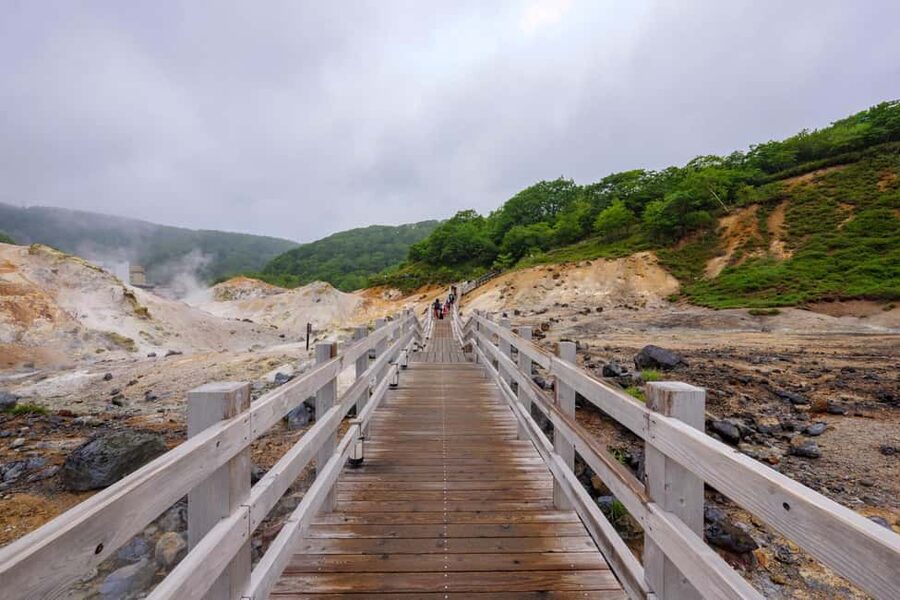
- Hell Valley’s 600-meter boardwalk takes you close to steaming vents, sulfurous streams, and mineral-stained ground.
- Oyunuma River footbath offers a warm forest rest after the walking portion, but you should bring a small towel.
- Dai-ichi Takimotokan includes 35 baths supplied by five types of spring water.
- The small group is limited to 15 people, with an English-speaking guide leading the day.
- The $249 price includes major transport and onsen admission, but you pay separately for lunch, drinks, and snacks.
- Visible tattoos are not permitted in the hotel’s bathing area, and wheelchair users cannot join this experience.
Why this Sapporo day trip works
This is not just a hot spring visit with a quick photo stop. The day gives you a useful introduction to Noboribetsu’s volcanic setting, local bathing culture, and forest trails in one organized outing.
You begin at Myomu, the circular white stone structure near Sapporo Station’s South Exits. Be there by 8 a.m. After meeting the guide with a Snow Monkey Resorts tour tag, you travel by public transport toward Noboribetsu. The trip takes time, but that is the trade-off for reaching one of Hokkaido’s best-known geothermal areas without arranging every connection yourself.
The group limit of 15 is small enough for the guide to keep the day moving and explain what you are seeing. It is not a private tour, so you should expect to share the walking pace, lunch break, and bathing schedule with other members of the group.
Our other Sapporo reviews may also help you decide


Entering Noboribetsu’s steaming Hell Valley
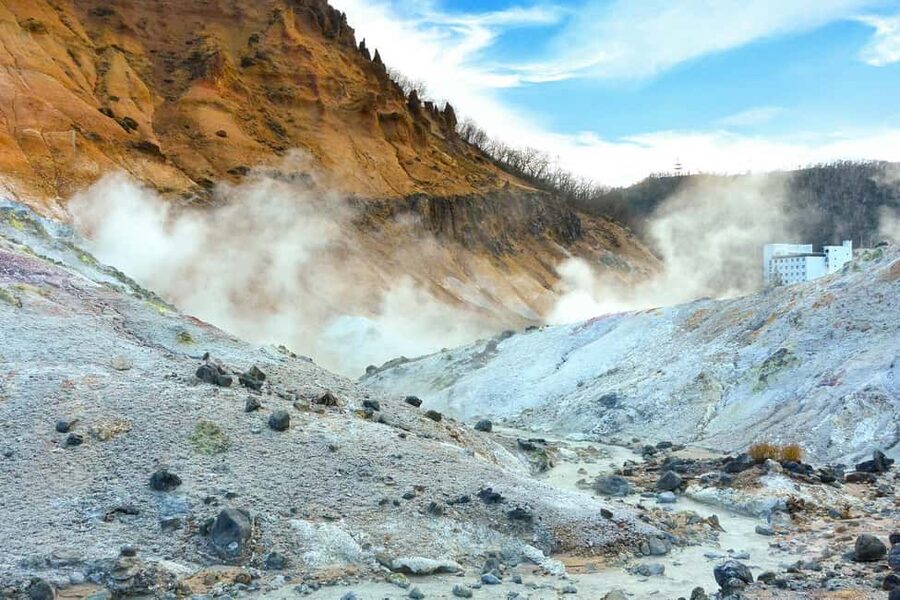
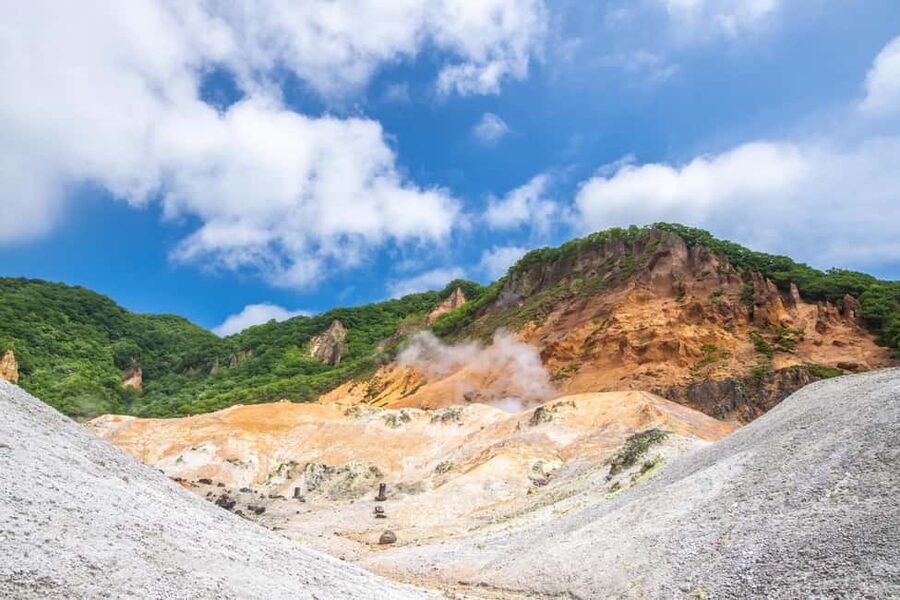
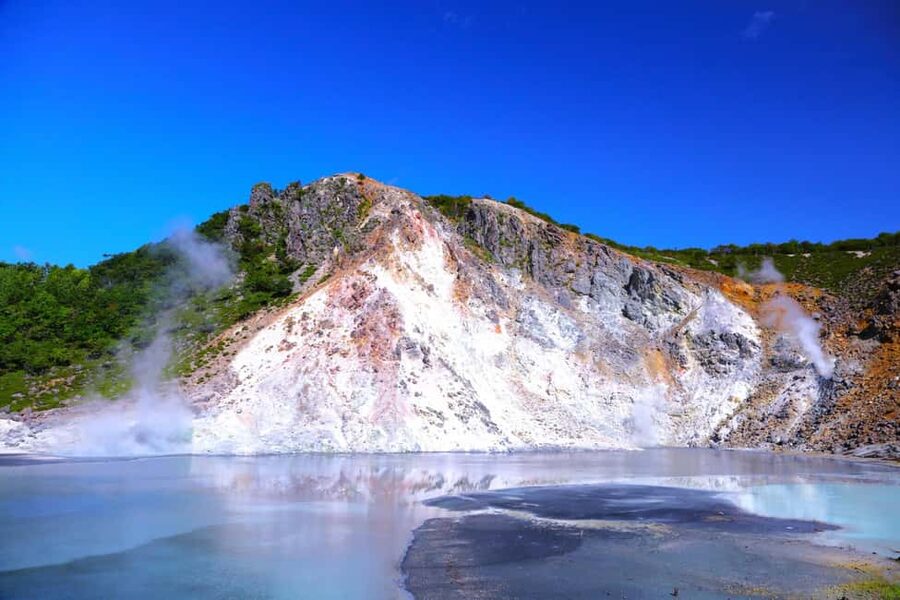
Jigokudani was formed by the crater of Mount Hiyori, now dormant. The name sounds dramatic, and the setting earns it. Steam rises from vents in the ground, hot water bubbles through the earth, and sulfurous streams cut through mineral-stained soil.
The first impression is one of sharp contrast. White steam hangs over a place colored orange, yellow, gray, and brown, while green forest surrounds the hot ground. You get an unusual mix of beauty and warning here. This is not a landscaped park made to look wild. It is an active geothermal area, and the smell, steam, and heat make that clear.
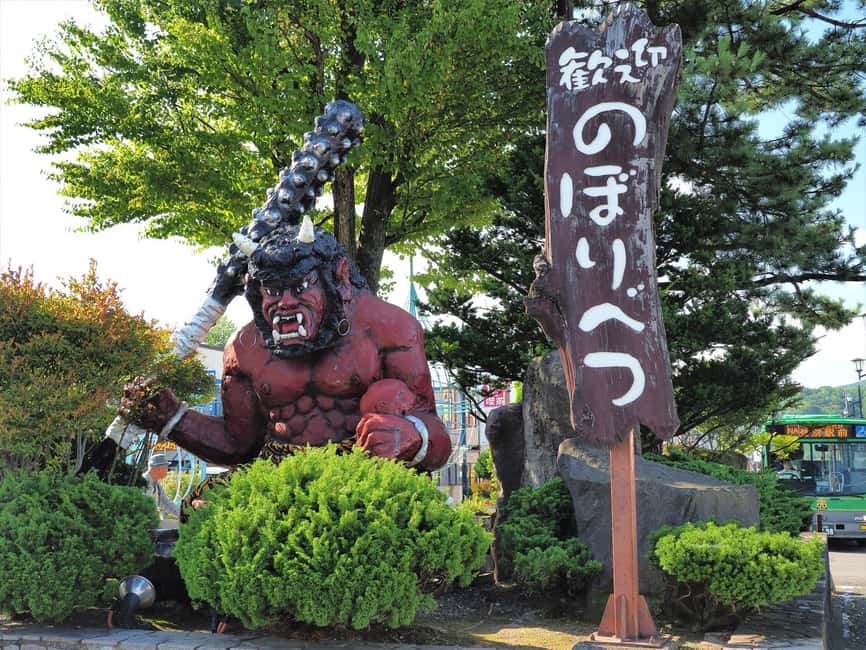
The 600-meter Hell Valley Boardwalk is the main route. A wooden path lets you get fairly close to the fumaroles and hot springs while keeping you on a defined trail. Your guide leads the walk and points out the area’s features, including oni, or demon, statues tied to the valley’s connection with local folklore and the underworld.
Allow about 1.5 hours for the guided visit, sightseeing, and walking. That is enough time to take photographs and look carefully rather than rushing from one viewpoint to the next. The boardwalk is well maintained, but it can be slippery. Wear shoes with good grip, especially if the weather is wet or the path has icy conditions.
You should also dress for the season. Steam and water can make the area feel damp, while the walk itself may feel warmer near the vents. Comfortable hiking shoes are more useful than stylish city footwear.
A forest walk to Oyunuma River
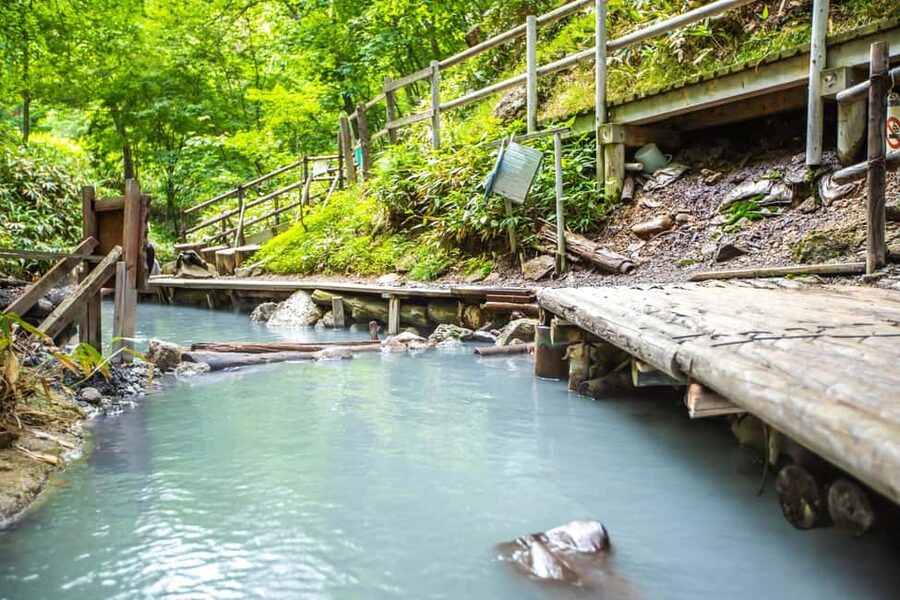
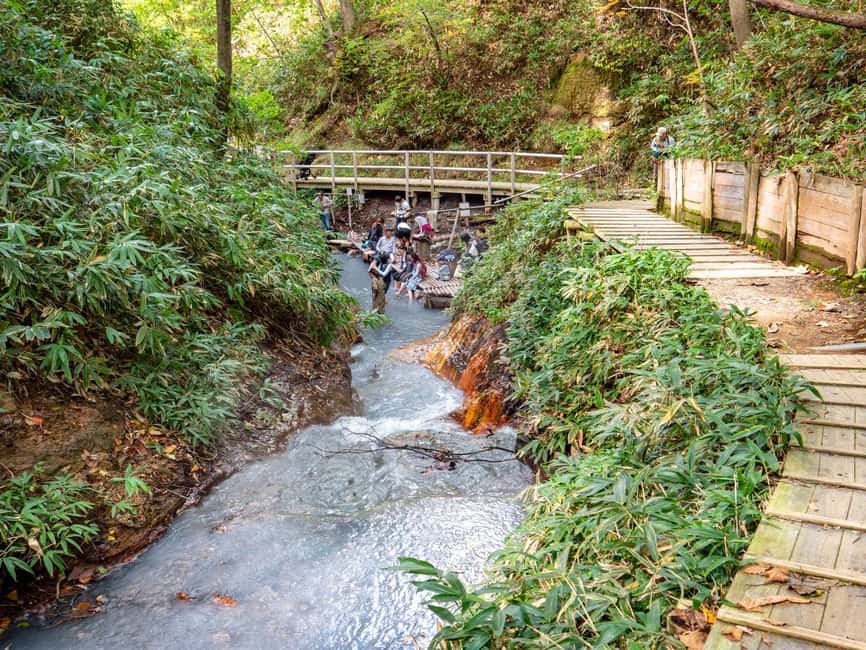
After Hell Valley, you walk for about 30 minutes through the forest to the Oyunuma River Natural Footbath. The route gives you a change of pace. Hell Valley is noisy with steam and geothermal activity, while the footbath stop is meant for sitting still.
The river’s warm, mineral-rich water flows from Lake Oyunuma. A wooden platform with seating makes it possible to sit and soak your feet among the trees. It is a simple experience, but that is part of its appeal. You are not being rushed through another major attraction. You are resting your legs after the boardwalk and forest walk.
Bring a small towel. The tour does not list one as provided, and wet feet are unpleasant inside shoes. It is also sensible to wear footwear that you can remove and put back on easily.
The footbath can be used year-round, but trail conditions change with the season. Snow, rain, or wet ground may make the walk harder. This portion is not suitable for anyone who needs a fully accessible route, and the tour is not suitable for wheelchair users.
Lunch and free time near the hot spring area
The schedule includes a 75-minute break for lunch and free time after the walking portion. Lunch is not included, so budget for your own meal and drinks.
This break matters because the day has an early start, a long ride, and a fair amount of walking before the main bath experience. You can use the time to eat, browse, or simply slow down. The details of the lunch stop are not specified, so do not book this day expecting a supplied meal or a fixed dining experience.
The Noboribetsu hot spring area also includes time for shopping, listed as about 30 minutes later in the day. Keep that time modest. This is not a shopping tour, and the main reason to visit is the geothermal scenery and onsen.
Dai-ichi Takimotokan and its 35 baths
The final major stop is Dai-ichi Takimotokan, a long-running hot spring hotel founded in 1858 by Kinzo Takimoto. The story behind it is unusually personal. Kinzo, a carpenter from Tokyo, came to Noboribetsu seeking relief for his wife Sata, who had a serious skin condition. After seeing her recovery, he established an inn to share the hot springs with others.
Today, the hotel offers 35 baths supplied by five different types of spring water. You have 1.5 hours to use the bathing facilities. That is enough time to try several baths without turning the visit into a frantic checklist.
The range is the key attraction. Instead of visiting one small bath, you can compare different pools and find the temperature or style that suits you. The facilities are also close to Hell Valley, so the stop feels connected to the place you have just explored rather than tacked onto the day.
You must follow standard Japanese onsen rules. Enter the bath area completely naked, shower thoroughly before entering any soaking bath, and obey the hotel’s instructions. Bathing care products beyond what is provided are not included.
The tattoo rule is strict: anyone with a body-sized visible tattoo will not be permitted into the hot bath area. This is not a minor detail. If you have a visible tattoo, contact the provider before booking rather than assuming it can be covered.


Is $249 a fair price?
At $249 per person, this is not a cheap side trip. The value depends on how much help you want with transport and how important the onsen experience is to you.
The price includes transport from Sapporo Station to Noboribetsu Station and back, the local bus between Noboribetsu Station and the Hell Valley hot spring area, an English-speaking guide, and admission to Dai-ichi Takimotokan’s baths. Those inclusions remove several separate costs and decisions.
You still need to pay for lunch, snacks, drinks, and any extra bathing products. The day also uses most of your time in Hokkaido, so you should compare it with the cost of arranging Noboribetsu independently. If you are comfortable handling public transport and visiting the sites without a guide, an independent trip may offer more flexibility.
I see the strongest value for a first visit to Noboribetsu, especially if you want the guide’s structure and do not want to work out the station buses and hot spring admission yourself. The price is harder to justify if you mainly want a short bath visit or dislike fixed schedules.
The transport and timing trade-off
The meeting point is convenient once you know where to look. After leaving the main JR gates at Sapporo Station, turn left and walk toward the South Exits. Myomu is the nearby circular white stone structure. The guide waits there with the tour tag.
Be on time at 8 a.m. The group has a full schedule, and a late start would affect the train or other public transport, the Hell Valley visit, lunch, and the bath reservation. The listed public transport portions add several hours to the day, so carry water and anything you need for a comfortable ride.
The tour returns to the same Myomu meeting point near Sapporo Station. That is useful if you have evening plans, though I would avoid booking anything time-sensitive afterward. A 10-hour day with public transport can be affected by delays, weather, or the pace of the group.
Who should book this experience?
I would choose this tour if you want three things in one day: geothermal scenery, a gentle outdoor walk, and a serious onsen session. It is especially suitable for first-time visitors to Noboribetsu who want an English-speaking guide and included transport.
It also suits people who enjoy a clear plan. You walk the boardwalk, rest at the footbath, eat during the break, and spend 1.5 hours at the hotel baths. There is free time, but this is not a loose, independent day.
Think twice if you need wheelchair access, have a visible tattoo, or do not enjoy communal bathing. You should also reconsider if a 30-minute forest walk, slippery boards, or a long return journey would make the day uncomfortable.
The experience is less suitable for anyone looking only for a quick dip. The best part is the sequence: hot earth first, forest footbath second, and full onsen facilities last. That progression gives the day a natural rhythm.
Practical tips for a smoother day
- Wear comfortable hiking shoes with reliable traction.
- Bring a small towel for the Oyunuma River footbath.
- Dress for the season and expect damp conditions near steam and hot water.
- Bring money or a payment method for lunch, drinks, snacks, and shopping.
- Follow all bathing instructions at Dai-ichi Takimotokan.
- Arrive at Myomu before 8 a.m., not just at the station.
- Check your tattoo eligibility before paying.
- Use the free time sensibly. You still have the major bath visit ahead.
Free cancellation is available up to 24 hours before the experience for a full refund, and you can reserve now and pay later. The tour application deadline is 5 p.m. one day before the tour date.
Should you book the Hell Valley and onsen trip?
Book it if you want an organized, full-day introduction to Noboribetsu and value the combination of scenery and bathing. The 600-meter boardwalk gives you the dramatic photographs, the Oyunuma footbath gives you a quiet break, and Dai-ichi Takimotokan supplies the long, relaxing finish.
Skip it if you want a flexible schedule, a private bath, or a short outing from Sapporo. Also skip it if the tattoo policy or forest walking presents a problem. For the right visitor, the $249 cost buys more than admission: it buys a guided route through one of Hokkaido’s strangest natural areas and a well-planned introduction to its onsen culture.
FAQ
Where does the tour meet in Sapporo?
Meet at Myomu, the circular white stone structure near the South Exits of Sapporo Station. After leaving the main JR gates, turn left and walk toward the South Exits. The guide wears a Snow Monkey Resorts tour tag.
What time should I arrive?
You should arrive at the meeting point by 8 a.m. The tour asks you to be on time so the group can follow the planned schedule without delay.
Is lunch included?
No. Lunch, drinks, snacks, and other food are not included. The schedule provides a 75-minute break for lunch and free time.
How long is the tour?
The experience lasts 10 hours and begins and ends near Sapporo Station.
Is transportation included?
Transportation from Sapporo Station to Noboribetsu Station and back is included. The bus fare from Noboribetsu Station to the Hell Valley and hot spring area is also included. Other transportation costs are not included.
Can I join if I have a tattoo?
No. Anyone with a visible tattoo of any size will not be permitted into the Dai-ichi Takimotokan hot bath area.
What should I bring for the footbath?
Bring a small towel to dry your feet after soaking in the Oyunuma River Natural Footbath. Comfortable hiking shoes are also recommended because some parts of the Hell Valley walk can be slippery.
More Tour Reviews in Sapporo
More Noboribetsu & Lake Toya Tours in Sapporo


Other Sapporo tours worth your shortlist





Noboribetsu & Lake Toya Tours, side by side.
 ★ 4.7Hokkaido Seasonal: Lake Toya & Noboribetsu Jigokudani ValleyFrom $55173 reviews
 ★ 4.1Hokkaido, Noboribetsu and Lake Toya Day TourFrom $6688 reviews
 ★ 5.0[Departure from Sapporo] Noboribetsu Jigokudani, Lake Toya, Cape Chikyu by private carFrom $404.1637 reviews
 ★ 4.5Lake Toya, Bear Ranch and Sapporo Otaru Full Day TourFrom $85.6633 reviews
The lists this tour appears in