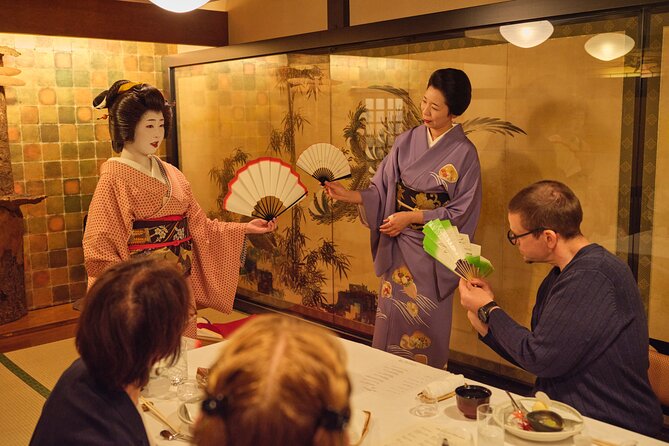
The most unusual part of this Sapporo evening comes after dinner: two geisha take the stage, perform traditional dances, and invite you into Ozashiki-Asobi, a set of traditional party games. An interpreter helps explain what is happening, so you are not left guessing at the customs.
In This Article
- Key details before you book
- A private geisha evening in central Sapporo
- The first hour: Hokkaido dinner before the performance
- Choosing between the four restaurant settings
- Suginome for two to 10 people
- Hokkai Shabu-Shabu for two to 12 people
- Kita No Aji Ohsuke for 20 to 60 people
- Otaru Bettei for 20 to 60 people
- Two geisha, dancing, and Ozashiki-Asobi
- Why the interpreter adds real value
- What the private format changes
- Timing, transport, and practical planning
- Who will get the most from this evening
- Is the $636.16 price worth it?
- Should you book this geisha dinner?
- FAQ
- Where does the experience start?
- Where does the experience end?
- How long does the program last?
- Is dinner included?
- Is an interpreter included?
- How many geisha appear?
- Can I take photographs?
- What restaurants can I choose from?
- How many people can join?
- Are tips included?
- Is the activity private?
- Can I cancel for a refund?
I like the choice of four dinner settings, from an elegant stone building to a restaurant overlooking Susukino. I also like the private format, which keeps your party together rather than placing you at a large public event. The main drawback is the price, $636.16 per person, and the strict no-refund rule.
Key details before you book
- Two geisha after dinner: The performance begins after about an hour of dining and includes dance, commentary, games, and a fan demonstration.
- Four restaurant choices: Pick Suginome, Hokkai Shabu-Shabu, Kita No Aji Ohsuke, or Otaru Bettei according to your party size and preferred setting.
- Private group format: Only your own party takes part, with options for groups from two people up to 60.
- Interpreter included: You receive help understanding the customs and performances, a real advantage for first-time visitors.
- Central Sapporo meeting point: The program starts and ends at COCONOSUSUKINO in the Susukino area.
- A short, focused evening: Plan on roughly two hours and 30 minutes, with about an hour for dinner before the geisha program.
A private geisha evening in central Sapporo
This experience combines two things that are often difficult to arrange independently: a traditional geisha performance and a meal built around Hokkaido food. You meet at COCONOSUSUKINO, at 4-chōme-1-1 Minami 4 Jōnishi in Chuo Ward, then return to the same meeting point at the end.
The setting matters here. You are not simply watching a stage show in isolation. Dinner comes first, followed by an introduction to the entertainment and customs that accompany a traditional Japanese gathering. That order gives you time to settle in before the performance begins.
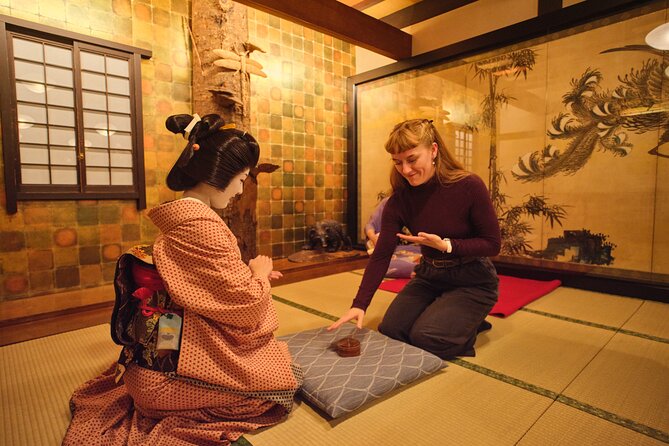
The evening is designed for first-time visitors. An interpreter explains the dances and helps you take part in the seating games. That support makes a difference, since the point is not only to watch the geisha, but also to understand how the social side of the event works.
Because this is a private activity, your party is the only group involved. That offers a quieter, more personal setting than a large public performance. It also means you need to choose your companions carefully. At this price, the experience makes more sense for a special occasion, a family celebration, a company gathering, or a group that specifically wants a private cultural program.
Our other Sapporo reviews may also help you decide


The first hour: Hokkaido dinner before the performance
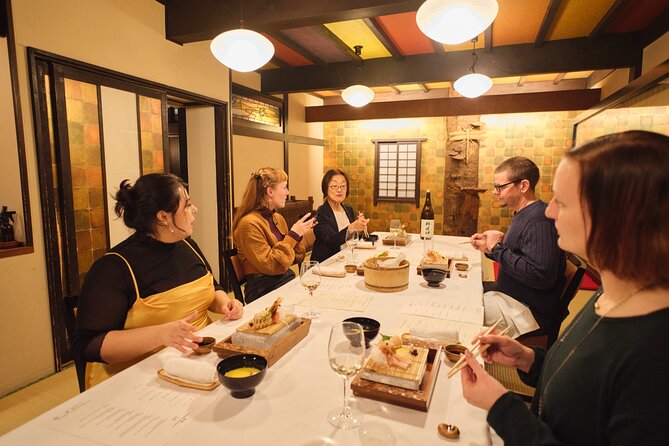
The evening starts with dinner featuring food from Hokkaido. The exact menu depends on the restaurant option you choose, but the choices include kaiseki and sukiyaki.
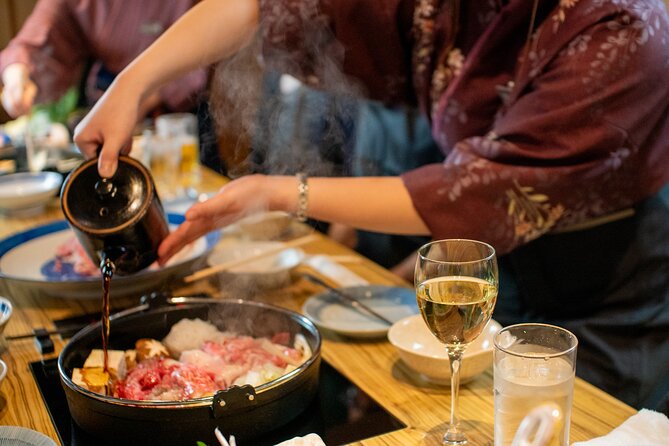
The dinner is not just a waiting period before the main event. It gives you a chance to enjoy a proper meal while the interpreter helps set the stage for the cultural program. One particularly positive account of the evening praised the sukiyaki dinner for its flavor and generous enjoyment of each bite, so Hokkai Shabu-Shabu is worth serious thought if you prefer a warm, hearty meal.
You should expect about an hour of dining before the geisha appear. The timing is useful because it creates a clear break between dinner and the stage performance. You can focus first on the food, then turn your attention to the dancing and games.
The program includes the meal, consumption tax, the geisha fee, and an interpreter. Tips are not included. Since the price is fixed per person, you do not need to budget separately for the dinner itself, though you should allow for any gratuity you choose to give.
Choosing between the four restaurant settings
Your restaurant choice is one of the most important parts of the booking. The four options serve different party sizes and offer noticeably different moods.
Suginome for two to 10 people
Suginome offers an elegant kaiseki dinner in a historic stone building. This is the most natural choice for a couple, small family, or intimate group that wants a more refined setting.
Kaiseki usually means a carefully arranged Japanese meal served in courses, though the exact dishes are not specified here. The stone building gives the dinner a traditional feel before the performance begins. If you want the evening to feel formal and special without filling a large hall, this is the strongest fit.
The capacity is limited to 10 people, so this option is not designed for a big party. That is a benefit if you value privacy and a smaller room, but it will not work for a company group or large family gathering.
Hokkai Shabu-Shabu for two to 12 people
Hokkai Shabu-Shabu serves sukiyaki while overlooking the town of Susukino. It accepts groups of two to 12 people, making it another good choice for a small party.
The view gives this option a different character from Suginome. You get a more urban Sapporo setting, with Susukino outside, while the sukiyaki provides the central dining experience. If you want a meal that feels substantial and social, this may be the easiest pick.
The positive account of the evening specifically singled out the sukiyaki as delicious. The interpreter was also praised for making the traditions easier to understand and for adding to the enjoyment of the performance. Those details point to Hokkai Shabu-Shabu as a sensible option for a first geisha experience.
You can also read our reviews of more private tours in Sapporo


Kita No Aji Ohsuke for 20 to 60 people
Kita No Aji Ohsuke is built for large groups of 20 to 60 people. Dinner is served on a custom-built Japanese cypress stage, which makes the venue closely tied to the performance itself.
This option suits a wedding party, corporate group, organized tour, or large family event. The cypress stage should make the presentation feel more theatrical, but the size also changes the mood. A group of 20 or more will not have the same intimate feel as a dinner for two or six.
Choose this setting when the shared occasion matters more than a quiet private meal. It is also the only option described as having dinner on a custom-built stage, so it may appeal to groups that want the venue to be part of the event.
Otaru Bettei for 20 to 60 people
Otaru Bettei is another large-group option, with a hall for 20 to 60 people. The large room makes it practical for a substantial dinner party.
The information does not specify a particular view, menu style, or architectural detail for this venue, so you should choose it mainly for capacity. It is a useful option when your group is too large for Suginome or Hokkai Shabu-Shabu.
Two geisha, dancing, and Ozashiki-Asobi
After roughly an hour of dinner, two geisha appear on stage. Their program includes traditional dances, commentary, and a selection of seating games known as Ozashiki-Asobi.
The commentary is important. Without context, a short dance or game can be hard to read, especially if you have never attended a traditional Japanese entertainment program. The interpreter helps explain the customs and gives you a clearer sense of what you are seeing.
The games are designed for first-time participants. You do not need previous knowledge of geisha culture to join in, and the format gives the evening a social quality that a simple performance would not have.
You also have a chance to talk with the geisha and take photographs when time allows. That phrase matters: pictures and conversation are permitted as time allows, not guaranteed as a long separate session. Keep your camera ready, but do not assume the entire evening will turn into a photo opportunity.
One distinctive part of the program is the fan demonstration. The geisha show you how to use a fan that is actually used for dancing. This small detail connects the audience with the physical skill behind the performance. You are not only looking at costumes and choreography. You get a brief explanation of how a simple object becomes part of the dance.
Why the interpreter adds real value
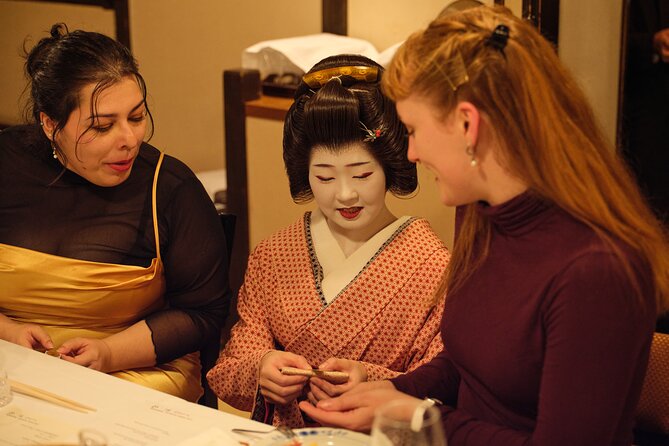
The interpreter is included in the price, and this is one of the most useful parts of the program. A geisha performance carries social rules and traditional references that may not be obvious to someone visiting Japan for the first time.
The interpreter helps you follow the commentary, understand the games, and take part without worrying that you are missing an important cue. This is especially helpful during Ozashiki-Asobi, where the fun depends on knowing what to do.
The interpreter also makes conversation easier. You may have a chance to speak with the geisha and ask questions, though the available time depends on how the program runs. The role is not simply translation of menu items. It connects the dinner, performance, customs, and audience participation.
An interpreter cannot turn the event into a full lecture on geisha culture, and the program lasts only about two hours and 30 minutes. Think of the guidance as practical help for enjoying the evening, not an academic course.
What the private format changes
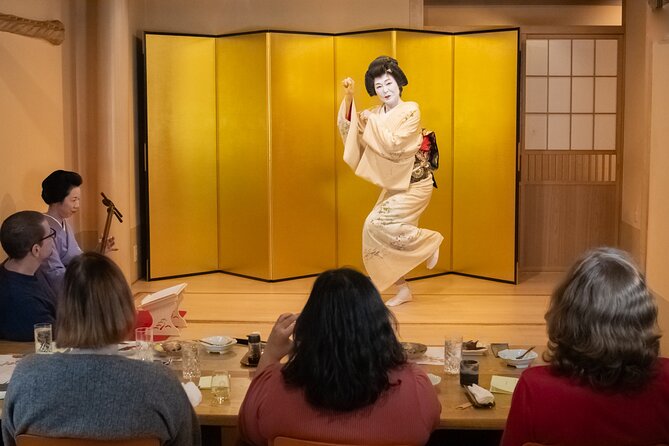
The private arrangement is a major selling point. Only your group participates, so you do not share the program with unrelated people.
That privacy can make the games and conversation feel less awkward. If you are nervous about joining a traditional activity, being with people you know may help. It also makes the experience suitable for a birthday, anniversary, business dinner, or family event.
The tradeoff is cost. At $636.16 per person, this is not a casual night out. The price covers dinner, the geisha experience, an interpreter, and consumption tax, but it remains a premium cultural event.
The value improves when you would otherwise need to arrange several separate pieces yourself. You receive a meal, a performance, cultural explanation, and a private setting in one booking. The value is weaker if you mainly want a standard Hokkaido dinner or a brief glimpse of geisha dancing.
The average booking point is 29 days ahead. That suggests you should not leave this until the last moment, especially if you need a particular restaurant or are planning for a large group. Confirmation arrives within 48 hours, subject to availability.
Timing, transport, and practical planning
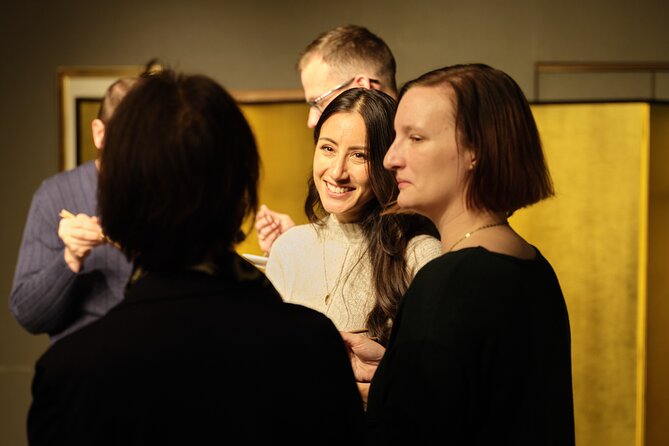
The activity begins at COCONOSUSUKINO, a central Sapporo meeting point near public transportation. The same place is used for the end of the activity.
Pickup is offered, but the supplied details do not explain the pickup area, timing, or whether an extra charge applies. Confirm those details before relying on pickup. If you are meeting at COCONOSUSUKINO, allow enough time to find the exact entrance and arrive before the scheduled start.
The total duration is listed as approximately two hours and 30 minutes, while the program description calls it a two-hour program. The clearest timing detail is that dinner lasts about an hour before the geisha performance begins. Plan your evening around roughly two to two and a half hours, and allow extra time if you have a later reservation.
Most people can participate, and the activity is near public transportation. No special fitness requirement is stated. The event takes place in a restaurant and stage setting, but detailed seating and accessibility information is not provided, so ask ahead if that affects your decision.
The activity is non-refundable and cannot be changed for any reason. This is one of the biggest practical cautions. Do not book until your group, date, and restaurant preference are settled.
Who will get the most from this evening
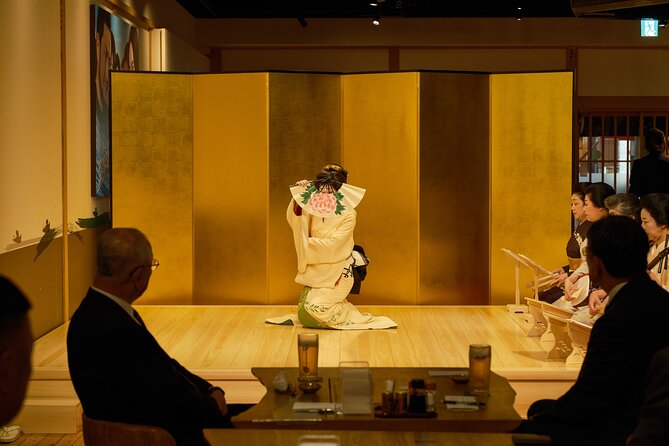
I would recommend this program most strongly to people who want a private cultural event rather than a routine dinner.
It suits:
- Couples marking a special occasion
- Families who want a shared Japanese cultural experience
- Small groups interested in food, performance, and tradition
- Large groups planning a private dinner party
- First-time visitors who want an interpreter and guided participation
- Companies arranging a formal evening in Sapporo
I would be more cautious if you are traveling alone, watching your budget, or mainly interested in nightlife. The price is high for a two-hour to two-and-a-half-hour activity, and the private format is most useful when several people share the experience.
You should also decide how much audience participation you want. The program includes games and a fan demonstration, not just a performance from a distance. That is a strength for curious people, but less appealing if you prefer to sit quietly and watch.
Is the $636.16 price worth it?
The answer depends on what you are buying.
You are paying for more than dinner. The package includes a Hokkaido meal, two geisha, an interpreter, traditional entertainment, private participation, and tax. Arranging all of those elements independently would be difficult, particularly for a visitor unfamiliar with local customs or Japanese-language booking.
The price is easier to justify for a group celebration. A private room and a scheduled cultural program can make the evening feel like an occasion, especially when the group chooses a restaurant that fits its size.
For a couple, the cost demands more thought. Suginome or Hokkai Shabu-Shabu may provide a more intimate setting, but you still pay a substantial amount per person for a relatively short program. You should book because the geisha experience matters to you, not simply because you need dinner in Sapporo.
Should you book this geisha dinner?
Book it if you want a private, interpreter-supported introduction to geisha performance and are comfortable paying a premium for a special evening. The combination of Hokkaido food, live dancing, Ozashiki-Asobi, and the fan demonstration gives the program more substance than a short stage show.
Choose Hokkai Shabu-Shabu if sukiyaki and a Susukino view appeal to you. Choose Suginome for a smaller and more formal kaiseki setting. Large parties should compare Kita No Aji Ohsuke and Otaru Bettei based mainly on capacity.
Skip it if your budget is tight, your schedule may change, or you only want a meal. The no-refund policy is strict, and the cost is too high for a casual decision. For the right group, though, this is a rare way to share dinner, performance, and hands-on tradition in one private Sapporo evening.
FAQ
Where does the experience start?
It starts at COCONOSUSUKINO, 4-chōme-1-1 Minami 4 Jōnishi, Chuo Ward, Sapporo, Hokkaido 064-0804, Japan.
Where does the experience end?
The activity ends back at the meeting point.
How long does the program last?
The duration is approximately two hours and 30 minutes. Dinner takes about one hour before the geisha performance begins.
Is dinner included?
Yes. Dinner is included in the experience price, along with the geisha fee, an interpreter, and consumption tax.
Is an interpreter included?
Yes. An interpreter is included to help explain the performances, traditions, and seating games.
How many geisha appear?
Two geisha appear after dinner to perform on stage.
Can I take photographs?
You can take photographs as time permits. You may also have time to speak with the geisha.
What restaurants can I choose from?
The four options are Suginome, Hokkai Shabu-Shabu, Kita No Aji Ohsuke, and Otaru Bettei.
How many people can join?
Suginome accepts two to 10 people, Hokkai Shabu-Shabu accepts two to 12, and Kita No Aji Ohsuke and Otaru Bettei accept 20 to 60 people.
Are tips included?
No. Tips are not included.
Is the activity private?
Yes. Only your group participates in the private tour or activity.
Can I cancel for a refund?
No. The experience is non-refundable and cannot be changed for any reason.
More Private Tours in Sapporo
More Tour Reviews in Sapporo


More Private Tours in Sapporo
Other Sapporo tours worth your shortlist






Private, side by side.
 ★ 5.0Sapporo Private Tour with a Local – Highlights & Hidden GemsFrom $109.9891 reviews
 ★ 5.0【Private Car】Asahiyama Zoo, Blue Pond, Shirahige Falls, Ningle Terrace (from Sapporo)From $465.1460 reviews
 ★ 5.0Sapporo 6hr Private Tour with Government Licensed GuideFrom $155.2257 reviews
 ★ 5.0[Biei/Furano] One-day sightseeing by private car!From $596.3343 reviews
The lists this tour appears in