Hokkaido sits on one of the most volcanically active zones in Japan, which means hot spring water bubbles up across the entire island. The variety is remarkable: sulphur-rich volcanic waters at Noboribetsu, sodium chloride springs along the coast at Yunokawa, iron-tinged baths in the mountains of Daisetsuzan, brown moor water from ancient peat deposits at Tokachigawa, and simple, soothing alkaline springs in quiet rural towns that rarely appear in tourist guides.
Unlike the crowded onsen towns of Honshu, many of Hokkaido’s hot springs remain relatively uncrowded, particularly those in the eastern and northern regions. For visitors unfamiliar with Japanese bathing culture, Hokkaido is arguably the most welcoming place to try onsen for the first time — the international tourism industry (particularly around Niseko) has made facilities more accommodating to foreign visitors than most other regions.
The experience of sinking into a steaming outdoor bath (rotenburo) while snow falls around you, or while looking across a volcanic crater lake at dusk, is one of those Hokkaido moments that stays with you. It is not a tourist activity you do once and tick off — it becomes part of the rhythm of the trip.
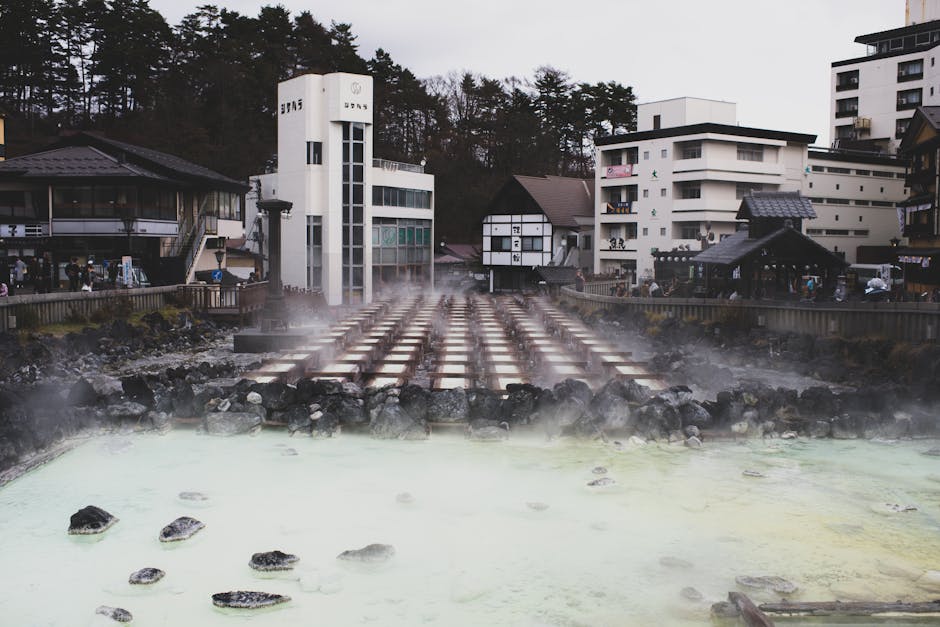
Major Onsen Areas
Noboribetsu Onsen
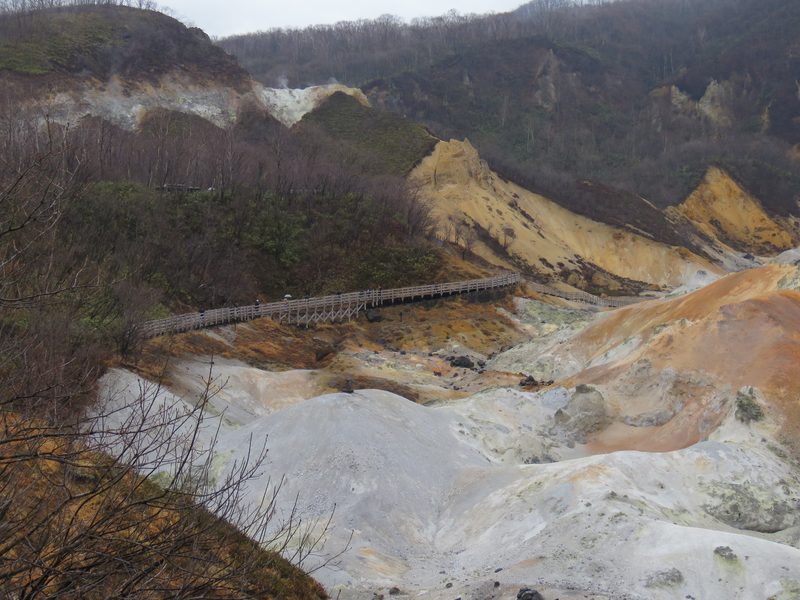
Hokkaido’s most famous hot spring town, fed by Jigokudani (Hell Valley) — a volcanic crater where steam vents and sulphurous gas pour from the earth. Nine distinct mineral water types flow into the town’s baths, creating an unusual diversity of bathing experiences within a single location. The water ranges from acidic sulphur (milky white, strong smell) to iron-rich (reddish-brown) to sodium chloride (clear and saline). No other onsen town in Japan offers this range.
The scale of Dai-ichi Takimotokan’s bath house is extraordinary — over 35 pools of different temperatures, water types, and settings spread across multiple floors. Day-use bathing costs ¥2,250 (~$15) and you could easily spend 2–3 hours working through the pools. For a quieter, more local experience, Sagiriyu public bath (¥480/~$3.30) uses the same volcanic water without the tourist infrastructure — just a simple public bathhouse with excellent water.
The Hell Valley itself is worth walking through independently — a boardwalk trail through the steaming, sulphur-stained crater takes about 30 minutes and is free. The colours and the heat rising from the ground give genuine volcanic drama. See our Noboribetsu guide for full coverage.
Getting there: JR Limited Express from Sapporo to Noboribetsu Station (75 minutes, ~¥4,500), then bus to the onsen town (15 minutes). Day trips from Sapporo available through Klook from approximately ¥5,700.
Jozankei Onsen
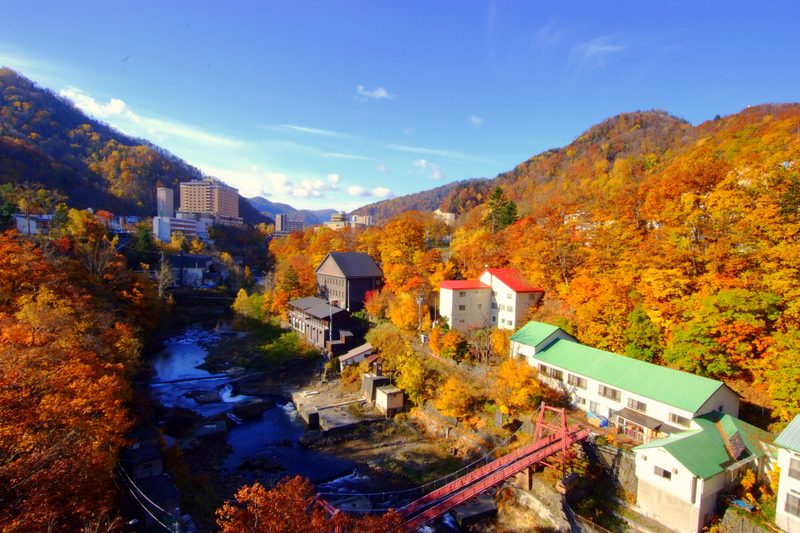
Sapporo’s mountain hot spring — the closest major onsen area to the city, situated in a forested gorge along the Toyohira River about 60 minutes by bus from Sapporo Station (~¥800). Jozankei has operated as a bathing destination since the 1860s and offers a mix of large resort hotels and smaller ryokans. The water is sodium chloride type — clear, mildly saline, and good for warming the body.
The autumn foliage here (typically early to mid-October) is among the most accessible and dramatic in Hokkaido — red and gold leaves framing the gorge with the river running through. Several hotels welcome day visitors for bathing (typically ¥800–1,500/~$5.40–10). Free foot baths (ashiyu) are available along the main street. Hoheikyo Onsen, about 15 minutes further up the valley, has a rustic outdoor bath beside the river in a forest setting — one of the more atmospheric day-use baths near Sapporo (¥1,200/~$8). See our Jozankei guide.
Yunokawa Onsen (Hakodate)
Hokkaido’s oldest hot spring area, on the eastern coast of the Hakodate peninsula. The springs are sodium chloride-based, producing water that helps retain body heat long after bathing — you stay warm for hours. Several hotels offer oceanfront outdoor baths with views across the Tsugaru Strait. In winter, the Hakodate Tropical Botanical Garden within the Yunokawa area is notable for its colony of wild Japanese macaques bathing in hot springs — monkeys soaking in steaming water while snow falls around them, and visitors can watch from close range.
Yunokawa is about 30 minutes by streetcar from Hakodate Station. A good option for an overnight stay combining onsen with Hakodate sightseeing — soak in the evening after the Mt. Hakodate night view.
Lake Toya Onsen
A lakefront hot spring town on the shores of a volcanic caldera lake, approximately two hours from Sapporo. The water is sodium chloride type, good for muscle recovery. Most lakefront hotels have outdoor baths facing the lake and the central island — the combination of hot water, caldera views, and nightly fireworks (April–October, 20:45 every evening) is one of Hokkaido’s defining onsen experiences. Day-use bathing at hotels runs ¥500–1,500. See our Lake Toya guide.
Sounkyo Onsen (Daisetsuzan)
A mountain hot spring at the entrance to Sounkyo Gorge in Daisetsuzan National Park. The setting is dramatic: columnar basalt cliffs, waterfalls (which freeze in winter for the Ice Waterfall Festival), and dense forest. This is one of the most atmospheric onsen locations in Hokkaido, particularly in autumn when the gorge is framed by vivid foliage. The water is simple alkaline — clear and gentle. Several hotels offer day-use bathing; the Kurodake Sounkyo onsen has an outdoor bath with gorge views.
Tokachigawa Onsen
An unusual onsen in the Tokachi region where the spring water is plant-based (moor spring) rather than volcanic. The dark brown water, rich in humic substances from ancient peat deposits, feels different from any other onsen in Hokkaido. It is said to be excellent for skin — the marketing calls it “beauty water” — and the texture is noticeably smoother than mineral springs. About 20 minutes from Obihiro by car. Day-use bathing ¥500–1,500. One of only a few moor springs in Japan.
Lake Shikotsu Onsen
Three small onsen sources at the lakeside village of Shikotsu Kohan. Marukoma Onsen is the standout — an outdoor bath right at the lake’s edge with views across the clear water to the mountains. The water is sodium bicarbonate type, slightly fizzy. Day-use ¥1,000 (~$7). Access by car or boat from the village. See our Lake Shikotsu guide.
Niseko Area Onsen
Several natural hot springs within easy reach of the Niseko ski area. Yukichichibu is a free, no-frills outdoor bath in a forest setting with milky sulphur water — mixed bathing, donation box, no facilities, just hot water and trees. Goshiki Onsen has strongly acidic water (pH 2) in a remote mountain setting. Several resort hotels (Ki Niseko, Hilton Niseko Village, Northern Resort Annupuri) have their own natural onsen baths for guests.
Wild and Remote Onsen
For the adventurous, Hokkaido has wild onsen (notenshi or rotenburo in the wilderness) that require a hike or drive to reach:
- Kamuiwakka Hot Falls (Shiretoko) — a river heated by volcanic activity cascading down rock pools. You wade upstream in warm water to reach the bathing pools. Access restricted in peak season; shuttle bus from Utoro.
- Kotan Onsen (Lake Kussharo) — a free outdoor bath right on the lakeshore, mixed bathing, with views across the caldera lake. Swimwear acceptable. See our eastern Hokkaido guide.
- Sunayu (Lake Kussharo) — dig your own hot spring in the lakeside sand. Free, open to all.
- Tokachidake Onsen — a mountain lodge at 1,280m on the slopes of an active volcano, with an outdoor bath overlooking the Furano plain. Day-use ~¥800. See our Daisetsuzan guide.
Onsen Etiquette
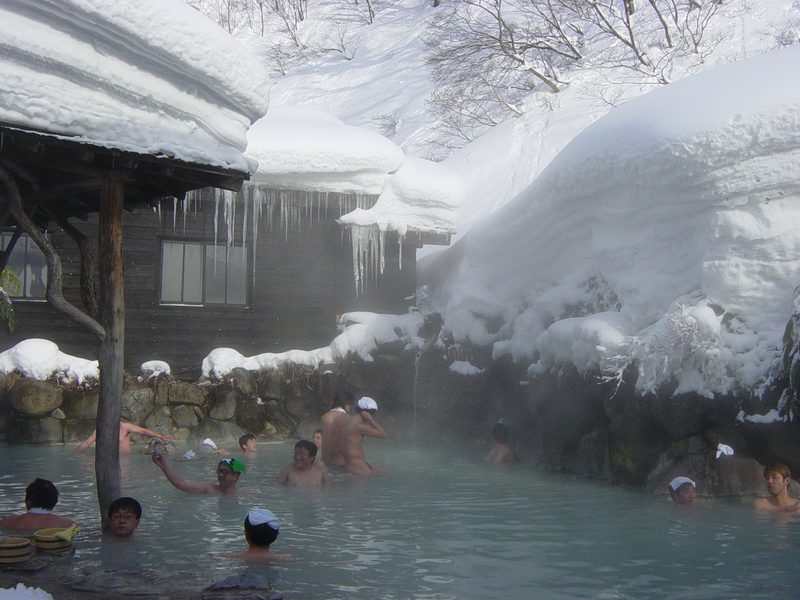
Japanese bathing culture follows specific conventions. Getting them right matters — not because anyone will scold you (they almost certainly won’t), but because following the rules shows respect and makes the experience more comfortable for everyone.
- Wash thoroughly at the shower stations before entering the bath. This is the single most important rule. Entering the shared bath without washing first is the worst etiquette breach you can make.
- No swimsuits. Traditional onsen are entered completely unclothed. This surprises many first-time visitors but is universal in Japan. Swimsuits are only acceptable at specific mixed-bathing facilities that explicitly allow them.
- Small towel on your head. Bring the small modesty towel provided into the bathing area, but do not put it in the water. Most bathers fold it and place it on their head or on the bath edge.
- Keep quiet. Onsen are spaces for relaxation, not conversation. Keep your voice low.
- Don’t submerge your head or hair in the bath water.
- Rinse off at the shower stations when you are finished, before returning to the changing room.
- Stay hydrated. Hot baths dehydrate you. Drink water before and after. Many onsen have water coolers or vending machines in the changing area.
Tattoo Policies
Most traditional onsen in Japan do not permit visible tattoos, a policy rooted in the historical association between tattoos and organised crime (yakuza). This is gradually changing, particularly in Hokkaido’s tourist-oriented areas, but the rule remains common at public baths and ryokan onsen.
Options for tattooed visitors:
- Private baths (kashikiri-buro) — many onsen hotels offer private bathing rooms for rent, typically ¥2,000–5,000 (~$14–34) for 45–60 minutes. No one sees your tattoos. Available at most ryokans and many hotels.
- Tattoo cover patches — waterproof adhesive patches available at drugstores (¥500–1,000/~$3.40–7). Some onsen reception desks sell them too. Effective for small tattoos; less practical for full sleeves.
- Niseko area — generally the most tolerant area in Hokkaido due to the high international visitor ratio. Many facilities here have relaxed or abandoned the tattoo rule.
- Dormy Inn hotels — widely reported as accommodating to tattooed guests at their onsen baths.
- Wild onsen — no rules at all. Kotan Onsen, Sunayu, Yukichichibu, and other wild/free baths have no staff and no policies.
When in doubt, ask at the front desk before entering: “Tatuu wa daijoubu desu ka?” (Are tattoos OK?). Most staff will give you an honest answer, and many will suggest the private bath option.
Types of Bathing Facilities
| Type | Description | Typical Cost | Notes |
|---|---|---|---|
| Rotenburo | Outdoor bath, often scenic | Included in facility entry | The quintessential Hokkaido onsen experience |
| Uchiyu | Indoor bath | Included in facility entry | Always available, regardless of weather |
| Sento | Public bathhouse (may not use natural spring water) | ¥450–¥800 | Found in cities; functional rather than scenic |
| Day-use onsen | Hotel or dedicated facility open to non-guests | ¥500–¥2,500 | Best way to experience onsen without staying overnight |
| Kashikiri-buro | Private bath for rent | ¥2,000–¥5,000/hour | Solves tattoo issues; good for couples and families |
| Ryokan onsen | Inn with bathing facilities for guests | Included in stay | Usually the best baths are at ryokans |
| Ashiyu | Foot bath (outdoor, free, clothed) | Free | Available in most onsen towns along main streets |
| Noten/wild onsen | Natural outdoor hot spring, no facilities | Free or donation | Remote, no rules, bring your own towel |
Best Onsen Experiences by Category
Best rotenburo (outdoor bath): Marukoma Onsen at Lake Shikotsu — bathing at the lake’s edge with mountain views across crystal-clear water.
Best variety of water types: Noboribetsu — nine different mineral water types in a single town. Nowhere else in Japan matches this diversity.
Best for first-timers: Jozankei — close to Sapporo, modern facilities, comfortable setting, free foot baths to ease in.
Best wild onsen: Kotan Onsen at Lake Kussharo — free lakeside bath, swans in winter, volcanic mountains, no facilities and no pretension.
Best combined with scenery: Lake Toya — caldera lake, volcanic views, nightly fireworks from the rotenburo.
Best for unique water: Tokachigawa — the brown moor spring water is unlike anything else in Hokkaido.
Best apres-ski onsen: Niseko area — Yukichichibu (free, wild) or the hotel onsen at Ki Niseko, Hilton, or Northern Resort Annupuri.
Best mountain onsen: Tokachidake Onsen — at 1,280m on an active volcano with views across the Furano plain.
Planning Your Onsen Visit
Most onsen towns are accessible as day trips from Sapporo. Jozankei is 60 minutes by bus. Noboribetsu is 75 minutes by train + bus. Lake Toya is about 2 hours. However, the full onsen experience — evening bath, dinner at the ryokan, morning bath when the facilities are empty — really requires an overnight stay. If you can only fit one onsen night into your Hokkaido trip, make it count: choose a ryokan with a good rotenburo and half-board (dinner and breakfast included).
Ryokan rates with dinner and breakfast typically start around ¥12,000–18,000 (~$80–120) per person at mid-range properties. Higher-end ryokans with kaiseki dinner and premium baths run ¥25,000–50,000+ (~$170–340+) per person.
The rail guide covers train access to all major onsen areas, and our accommodation guide includes onsen hotel recommendations by region. See also our best time to visit guide — winter onsen (snow falling into the rotenburo) and autumn onsen (foliage around the bath) are the two peak atmospheric experiences.
Related Guides
- Noboribetsu Onsen Guide
- Jozankei Onsen Guide
- Lake Toya Guide
- Lake Shikotsu Guide
- Winter Activities
- Language Guide (onsen signs and vocabulary)
- Safety Guide