JR Hokkaido operates the island’s rail network, connecting major cities and towns along several main lines radiating from Sapporo. While the network is less dense than the famously comprehensive rail systems of Honshu, it covers the primary tourist corridor efficiently and offers a comfortable, punctual way to travel between Hokkaido’s main destinations.
The practical reality: trains are the best option for the Sapporo–Hakodate corridor, the Sapporo–Asahikawa run, and the airport connection. For other destinations — Niseko, Furano, Shiretoko, the Shakotan coast — buses or rental cars are more practical. The rail network’s strength is its trunk routes; its limitation is that it doesn’t reach many of the places visitors most want to go. Understanding where rail works and where it doesn’t saves time and money.
Key Routes from Sapporo
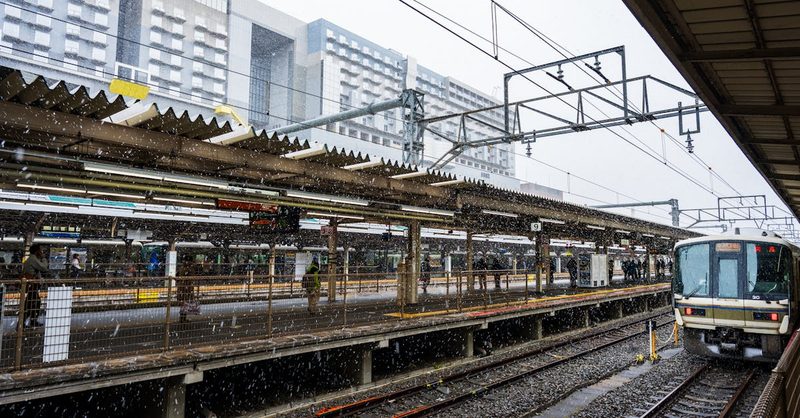
| Destination | Train | Duration | Fare (one-way) | Frequency |
|---|---|---|---|---|
| New Chitose Airport | Rapid Airport | 37 min | ¥1,150 | Every 15 min |
| Otaru | Rapid/Local | 32–45 min | ¥750 | Every 15–20 min |
| Asahikawa | Ltd Exp Kamui/Lilac | 85 min | ¥4,690 | Hourly |
| Hakodate | Ltd Exp Hokuto | 3.5–4 hrs | ¥9,440 | Hourly |
| Kushiro | Ltd Exp Ozora | 4 hrs | ¥9,990 | 4–5 daily |
| Obihiro | Ltd Exp Tokachi | 2.5 hrs | ¥7,790 | 5–6 daily |
| Abashiri | Ltd Exp Okhotsk | 5.5 hrs | ¥10,540 | 2–3 daily |
| Noboribetsu | Ltd Exp Hokuto | 75 min | ¥4,500 | Hourly (on Hakodate line) |
| Furano | Local (via Takikawa) | 2–2.5 hrs | ¥4,000+ | Limited; seasonal direct services |
| Toya (for Lake Toya) | Ltd Exp Hokuto | 1 hr 45 min | ¥5,700 | Hourly (on Hakodate line) |
| Wakkanai | Ltd Exp Soya | 5 hrs (via Asahikawa) | ¥10,450 | 1–2 daily |
All fares are for unreserved ordinary seats. Reserved seat surcharges are typically ¥530 additional.
JR Hokkaido Rail Pass
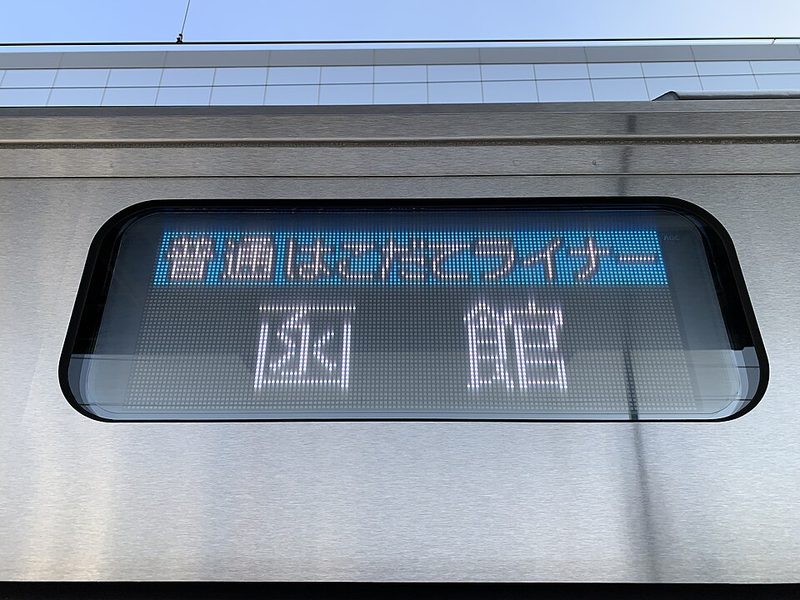
The pass offers unlimited travel on all JR Hokkaido lines, including limited express trains with reserved seats. Three options are available:
| Pass Type | Duration | Price (adult) | Best For |
|---|---|---|---|
| 5-Day Pass | 5 consecutive days | ~¥20,000 | Sapporo + 2–3 day trips |
| 7-Day Pass | 7 consecutive days | ~¥26,000 | Full Hokkaido circuit |
| Flexible 4-Day Pass | 4 days within 10 | ~¥24,000 | Scattered train days with driving between |
Is the Pass Worth It?
Calculate your planned journeys against the pass cost. Some examples:
- Sapporo → Hakodate return: ¥18,880 — nearly covers the entire 5-day pass on one trip
- Sapporo → Asahikawa return: ¥9,380 — half the 5-day pass cost
- Sapporo → Otaru return: ¥1,500 — small but adds up
- Airport Rapid return: ¥2,300
If you are doing Sapporo–Hakodate plus two day trips (Otaru + Asahikawa, for example), the 5-day pass saves roughly ¥12,000 over individual tickets. For visitors making three or more long-distance journeys, the pass almost always saves money. The Flexible 4-Day Pass is particularly useful if you are renting a car for part of your trip and only need trains on specific days.
Beyond the financial calculation, the pass removes the need to purchase individual tickets at each station, simplifying travel logistics — especially at stations where English-language ticket machines are limited.
Purchase: Available through Klook for online booking and collection at Sapporo Station or New Chitose Airport. Also available at JR Hokkaido travel centres (Midori no Madoguchi) at major stations with your passport.
How to Use JR Trains

Buying Tickets
- Ticket machines at stations have an English language option at major stations (Sapporo, New Chitose Airport, Hakodate, Asahikawa). Smaller stations may be Japanese-only.
- Midori no Madoguchi (Green Window) counters at staffed stations — the staff can help with route planning and seat reservations. This is the most helpful option if you’re unsure about connections. Staff at Sapporo Station’s counter speak some English.
- IC cards (Kitaca, Suica, PASMO) work for local and rapid services on the Sapporo area network but NOT for limited express trains. You still need a ticket or pass for intercity travel. See our subway guide for IC card details.
Seat Reservations
Limited express trains have both reserved and unreserved carriages. During normal periods, unreserved seats are generally available — just board and sit in the unreserved cars (typically cars 1–3). During peak periods (Golden Week in late April/early May, Obon in mid-August, New Year, and Snow Festival week), reserving a seat is strongly recommended as trains can fill up. Reservations are free with the rail pass and can be made at any Midori no Madoguchi counter.
Luggage
Overhead racks on limited express trains accommodate standard cabin-sized suitcases. For larger luggage, storage areas at the ends of carriages have space for full-sized bags. There is no formal luggage reservation system like some European trains — it’s first-come on the storage space.
Coin lockers at all major stations come in three sizes: small (¥400, backpacks), medium (¥500, carry-on suitcases), and large (¥700, full-sized suitcases). Use these for day trips when you don’t want to carry everything. Sapporo Station has extensive locker areas. Payment is by coin or IC card.
Luggage forwarding (takkyubin) is an alternative — send your bags from one hotel to the next for about ¥2,000–3,000 per bag. Your hotel front desk handles the paperwork. See our packing guide for details.
The Main Lines
Hakodate Line (Sapporo → Hakodate)
The busiest trunk route, served by the Limited Express Hokuto (and sometimes Super Hokuto). The 3.5–4 hour journey passes through the mountainous interior of Hokkaido via Noboribetsu, Toya, and Oshamanbe. Intermediate stops at Noboribetsu (for the onsen town, 10 minutes by bus from the station) and Toya (for Lake Toya, 20 minutes by bus) make it easy to break the journey.
At Hakodate, connect to the Hokkaido Shinkansen at Shin-Hakodate-Hokuto Station (20 minutes by Hakodate Liner local train) for travel to Honshu and Tokyo.
Sapporo → Asahikawa (Kamui/Lilac)
The fastest and most frequent limited express service in Hokkaido. The 85-minute journey runs roughly hourly through the interior plain. Useful for day trips to Asahikawa (Asahiyama Zoo, Otokoyama sake brewery, ramen) and as a connection to the Daisetsuzan area (bus from Asahikawa to Asahidake Onsen or Sounkyo).
Sapporo → Kushiro/Obihiro (Ozora/Tokachi)
The eastern trunk route, splitting at Minami-Chitose. The Limited Express Ozora continues to Kushiro (4 hours); the Limited Express Tokachi terminates at Obihiro (2.5 hours). Both pass through agricultural plains and forest. The Ozora journey is long but the alternative (driving 4.5 hours or flying) is not much faster when door-to-door travel time is calculated.
Sapporo → Abashiri (Okhotsk)
One of Japan’s great scenic train journeys. The Limited Express Okhotsk takes 5.5 hours via Asahikawa, crossing the Kitami Pass with mountain and forest views. The final section runs along the Sea of Okhotsk coast. Only 2–3 departures daily. In winter, the drift ice along this coast is visible from the train. See our drift ice guide.
Kushiro → Abashiri (Senmo Line)
A local line that traverses the Kushiro Marshland (possible crane sightings from the train) and follows the Sea of Okhotsk coast. Slow (3–4 hours) but scenic. The seasonal Norokko sightseeing train operates on this route with large windows and reduced speed for viewing. Not covered by the JR Pass? Yes it is — all JR Hokkaido lines are included.
Asahikawa → Wakkanai (Soya Line)
Japan’s northernmost railway, running 3 hours 40 minutes from Asahikawa to Wakkanai through increasingly remote landscapes. The final hour runs along the coast with views of the sea and offshore islands. A scenic and characterful journey, though the frequency (1–2 limited express services daily) requires planning. Local trains are slower (5+ hours) but run more frequently.
Sapporo → Otaru (Local/Rapid)
The most practical day-trip route. Rapid trains take 32 minutes, locals about 45 minutes. The final section runs along the coast with views across Ishikari Bay to the mountains — sit on the left side heading to Otaru for the best views. Departures every 15–20 minutes throughout the day. The line continues beyond Otaru through Yoichi (Nikka Whisky Distillery) toward Kutchan (for Niseko), though services thin out significantly past Yoichi.
Scenic Seasonal Trains
JR Hokkaido operates several seasonal sightseeing trains with special rolling stock, large windows, and reduced speeds for viewing:
- Furano-Biei Norokko: Operates in summer (June–October) between Asahikawa, Biei, and Furano. Open-sided carriages with views of the flower fields and patchwork hills.
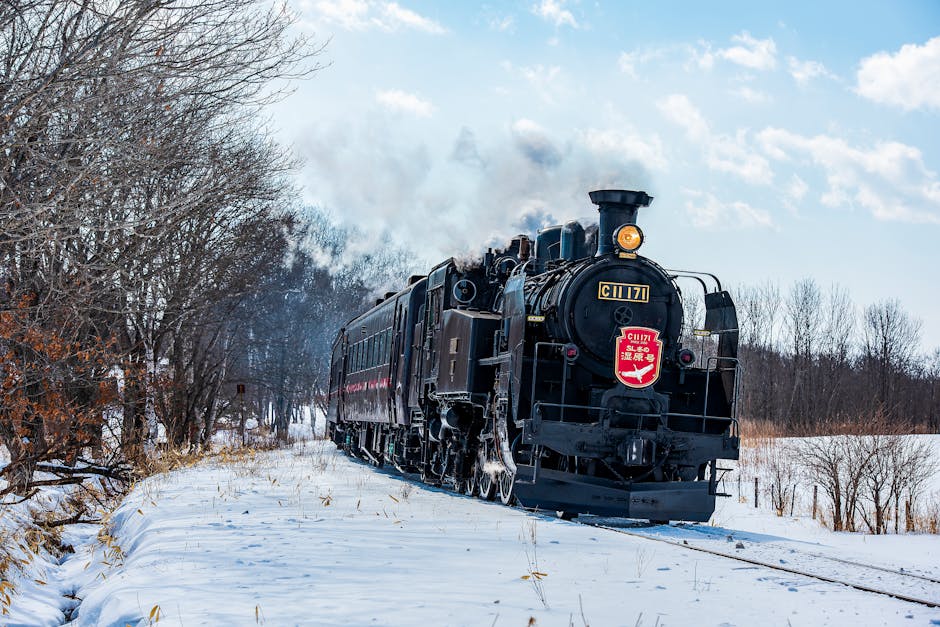
- SL Fuyu no Shitsugen (Winter Wetland SL): A steam locomotive that runs through the Kushiro Marshland in winter (January–March). One of the few operational steam trains in Japan. Reservation required.
- Kushiro Shitsugen Norokko: Slow sightseeing train through the marshland in summer.
Seasonal train schedules change annually — check the JR Hokkaido website or ask at Midori no Madoguchi for current timetables.
Where Rail Doesn’t Reach
The JR network has significant gaps that affect tourist itineraries:
- Niseko: The nearest JR station (Kutchan) is a bus ride from the ski resorts. Direct buses from Sapporo (2.5–3 hours) are far more practical.
- Furano/Biei: Limited direct services from Sapporo. Seasonal trains run in summer; at other times, a transfer at Takikawa or Asahikawa is required. Driving is easier.
- Shiretoko: No rail access. Bus from Shari Station (Senmo Line) or rental car required.
- Shakotan Peninsula: No rail access. Rental car only.
- Lake Shikotsu: No rail access. Bus from New Chitose Airport.
- Lake Toya: JR Toya Station is 20 minutes by bus from the onsen town — the train gets you close but not there.
- Daisetsuzan: No rail access to trailheads. Bus from Asahikawa to Asahidake Onsen or Sounkyo.
For these destinations, see our car rental guide and bus guide.
Winter Rail Travel
JR Hokkaido trains run reliably through winter, but heavy snowfall can cause delays and occasional cancellations, particularly on rural lines. The trunk routes (Sapporo–Hakodate, Sapporo–Asahikawa) are the most resilient. The Soya Line to Wakkanai and the Senmo Line along the Okhotsk coast are more vulnerable to weather disruption.
Build buffer time into winter connections. If you have a flight to catch, don’t plan a same-day long-distance train journey that arrives with only an hour to spare — delays of 30–60 minutes are not uncommon during storm days. The JR Hokkaido website and app provide real-time delay information.
Practical Tips
- Reserved vs unreserved: For routine travel, unreserved is fine. For peak periods, reserve. The rail pass includes free reservations.
- Platform numbers: Posted on departure boards in Japanese and English at major stations. At smaller stations, ask staff or check Google Maps for real-time platform info.
- Food on trains: No trolley service on most Hokkaido limited express trains (unlike Honshu shinkansen). Buy ekiben (station bento boxes) at Sapporo or Hakodate stations before boarding. The Sapporo Station ekiben selection is excellent.
- WiFi: Some limited express trains have onboard WiFi, but it’s inconsistent. Don’t rely on it for navigation — download offline maps before your journey. See our WiFi guide.
- Smoking: All JR Hokkaido trains are non-smoking.
Related Guides
- Getting Around Hokkaido — comparing all transport options
- Bus Travel — for routes trains don’t cover
- Car Rental — for maximum flexibility
- Sapporo Subway — getting around the city
- Getting to Hokkaido — flights, shinkansen, ferries
- Itineraries — how to plan train-based routes