Furano and Biei pack some of Hokkaido’s prettiest sights into one long day: purple lavender at Farm Tomita, rolling flower fields at Shikisai no Oka, and the famous blue water of Shirogane Blue Pond. The private car matters here, since these places are spread across the countryside and public transport takes more planning.
In This Article
- Key points to know before booking
- Why this private Hokkaido day trip works
- Farm Tomita: lavender at the heart of Furano
- Shikisai no Oka: wide views across Biei
- Fifteen minutes with alpacas
- Shirogane Blue Pond: color shaped by weather
- Shirahige Falls adds sound and movement
- What the private car and guide change
- Is the $1,311.60 price fair?
- Food, timing, and physical effort
- Who should book this Furano and Biei tour?
- Final call: a strong choice for a two-person day
- FAQ
- What time does the tour start?
- How long does the tour last?
- Is hotel pickup and drop-off included?
- What is included in the tour price?
- Are the flower displays guaranteed to be in bloom?
- What happens if the tour goes beyond 10.5 hours?
I like the door-to-door service and the chance to set the pace with your own guide. I also like the personal touch reported from guides such as Mari and Kyoko, with drivers including Kameda and Mr. Yoshida. The main drawback is the price: at $1,311.60 for up to two people, this is a premium outing, and the 10.5-hour schedule can feel long on a hot, crowded flower-season day.
Key points to know before booking
- Farm Tomita gives you a full hour among 12 hectares of lavender and seasonal flowers.
- Shikisai no Oka offers broad hilltop flower views, plus an optional alpaca visit.
- Blue Pond and Shirahige Falls add a different side of Biei, with mineral-colored water and a waterfall.
- Private transport removes the need to navigate a large rural area from Sapporo.
- The price covers highway fees, parking, tax, pickup, and drop-off, but not lunch or personal expenses.
- Bring cash for extra charges, and remember that flowers depend heavily on the weather.
Why this private Hokkaido day trip works
The appeal is simple: you can see Furano and Biei in a single day without piecing together trains, buses, taxis, and walking routes. These are not compact towns where you can stroll from one sight to the next. A private car gives you a seat between stops and keeps the day focused on scenery rather than transport connections.
The tour begins at 7:30 am and lasts about 10 hours and 30 minutes. That is a serious day out, but the early start helps fit several major sights into one route. You get round-trip transfers, highway fees, parking, and tax in the price, so the main financial extras are lunch, personal purchases, tips, and any optional or additional charges.
A local guide adds value beyond simply being driven around. Guides named in past bookings include Mari and Kyoko, while Kameda and Mr. Yoshida were praised as drivers. The strongest practical benefit of this arrangement is flexibility. A private group can ask questions, spend more time at a favorite stop, and avoid being tied to the needs of strangers.
Still, you should be clear about the tradeoff. This is not a slow country day with long pauses at each place. It is a full sightseeing circuit. If flowers are in peak bloom, the day can be hot and busy. If your ideal outing involves lingering over lunch or wandering without a timetable, the schedule may feel compressed.
Our other Sapporo reviews may also help you decide


Farm Tomita: lavender at the heart of Furano
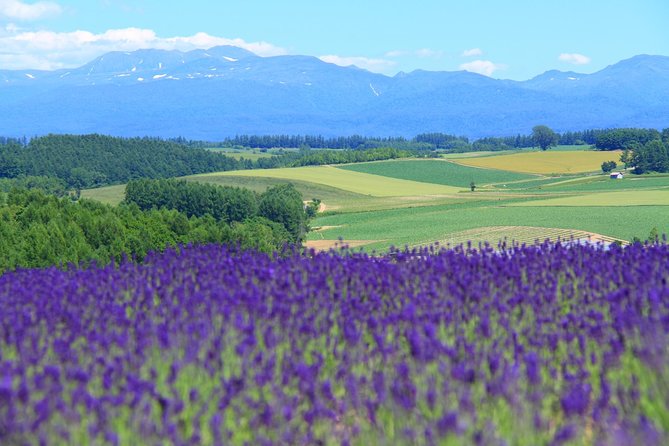
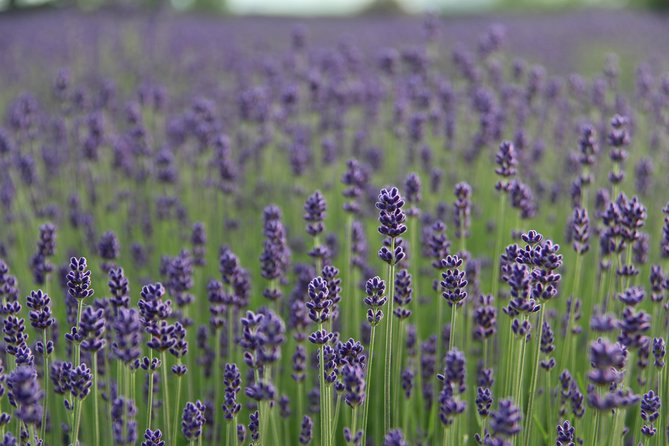
Farm Tomita is the first major stop, with about an hour set aside. The farm is known for its huge lavender fields, which can cover the property in purple when the season is right. The lavender is the star, but it is not the only reason to visit.
From spring through autumn, you may find poppies, baby’s breath, ferns, herbs, and other seasonal plantings. Flower conditions depend completely on the weather, so the same stop can look quite different from one month to another. Peak lavender color is not guaranteed simply because the tour is called a Furano flower tour.
Farm Tomita also works well for a short, organized visit because there is more to do than take photos. The farm sells lavender products such as candles, soaps, perfume, drinks, and dried lavender. If you like small, easy-to-pack souvenirs, this is a useful place to browse.
The one-hour visit gives you enough time to see the main flower areas and shop, but it is not a leisurely half-day stop. You may want to decide in advance if your priority is photographs, the gardens, the shop, or all three. That small bit of planning helps you avoid spending the entire hour at the first viewpoint.
The farm has something to offer outside the main flowering period, too. In winter, lavender can be seen in a heated greenhouse. You should not expect the same broad purple fields as in summer, but the greenhouse means the stop is not entirely dependent on outdoor bloom.
Shikisai no Oka: wide views across Biei
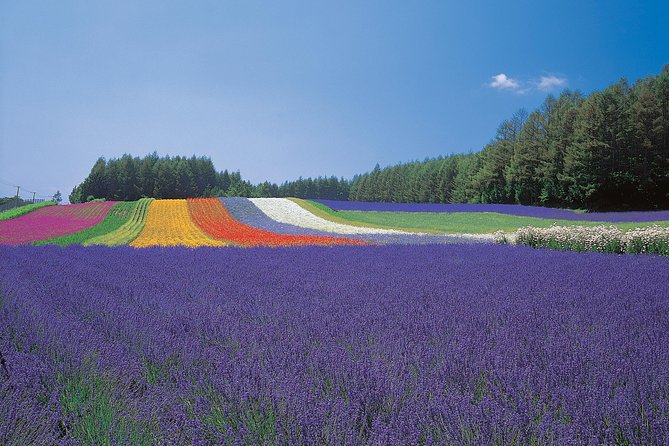
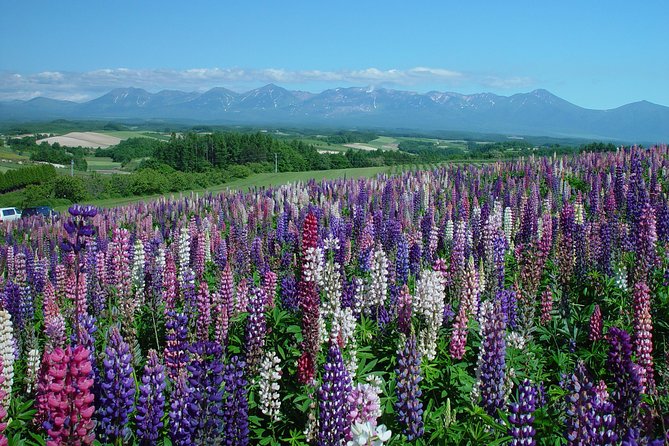
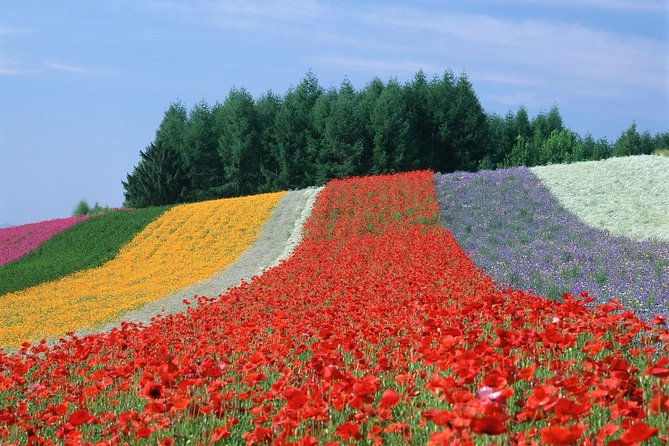
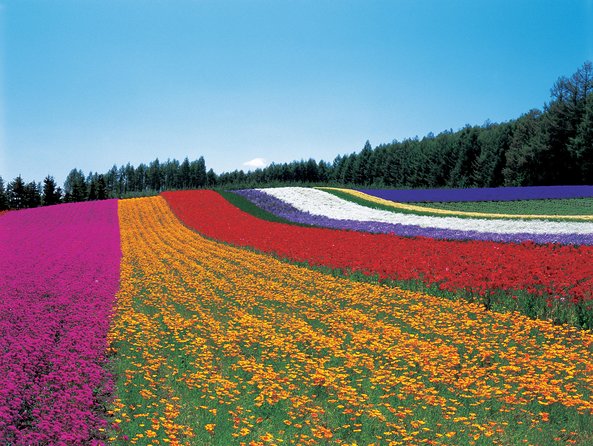
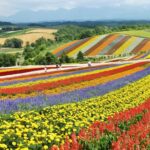
Next comes Shikisai no Oka, a flower garden set on a hill in Biei. The garden covers roughly seven hectares, so the experience feels more open than a small ornamental garden. Rows and bands of flowers spread across the slope, with the colors changing by season.
From April to October, the plantings may include tulips, lupines, lavender, salvia, sunflowers, dahlias, and Japanese anemones. The garden is designed around changing seasonal color, so you should think of it as a broad outdoor view rather than one single must-see flower.
The hill is part of the attraction, but it also affects comfort. The tour description calls for moderate physical fitness, and you should expect some walking on outdoor paths. For anyone who prefers to limit walking, Shikisai no Oka has a tractor bus called Shikisai Norokko that circles the hill. Buggies and carts are also available, though any related fees are not included in the tour price.
I like this stop because it gives you room to look around after the tighter focus of Farm Tomita. You can take in the flower bands, enjoy the hilltop setting, and choose how active you want to be. At the same time, the one-hour allocation means you may need to choose between a full walk and the optional rides.
As at Farm Tomita, weather controls the show. The flowers may be late, early, or less full than expected. The tour remains worthwhile for the open Hokkaido views, but you should book it for the overall countryside and not for one guaranteed color display.
Fifteen minutes with alpacas
The alpaca farm is part of the Shikisai no Oka visit and takes about 15 minutes. You can meet and feed the alpacas, making this a small but appealing stop for families and animal lovers.
The visit is brief, so think of it as an extra rather than a main attraction. The admission fee is not included, and the tour information specifically advises you to pay extra fees in cash. That same cash advice is useful for optional activities elsewhere during the day.
For adults focused on gardens, 15 minutes may be plenty. For children, the alpacas could be one of the day’s most memorable moments. If your group wants a longer animal visit, this tour does not present it as a major standalone farm experience.
Shirogane Blue Pond: color shaped by weather
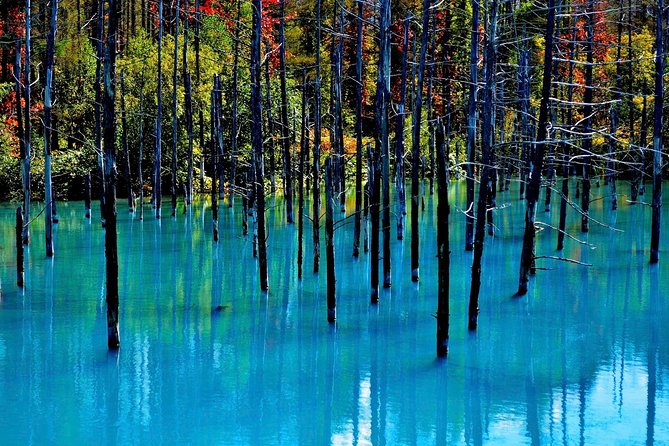
The 45-minute stop at Shirogane Blue Pond brings a change of mood. Instead of flower fields, you get still water with a striking blue tone. The color comes from sunlight interacting with minerals in the water, and it can change with the weather over the previous three days.
That detail is important. A bright blue pond is not guaranteed every day. Rain, cloud, and recent conditions can affect the color, so keep your expectations flexible. The pond is worth seeing for its unusual appearance and setting, but nature is in charge of the final result.
The pond was created about 20 years ago as part of protection for Biei from volcanic eruptions and landslides or flows from Mount Tokachi. It is both a scenic stop and a reminder that Hokkaido’s beauty is tied to active natural forces.
Forty-five minutes is a sensible amount of time here. You have time to walk around the viewing area and take photographs without turning the stop into a long, repetitive pause. The main limitation is that Blue Pond can be crowded during its busiest periods. A private tour gives you a private vehicle, but it does not make a public attraction empty.
Our other Sapporo reviews may also help you decide


Shirahige Falls adds sound and movement
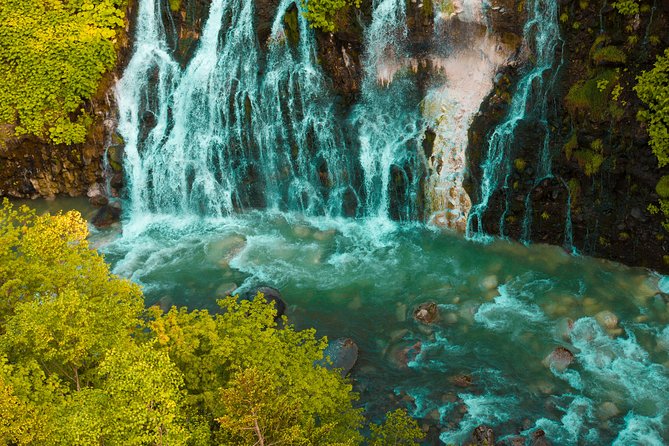
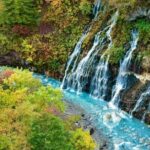
Shirahige Falls is a short 15-minute stop near Blue Pond. The waterfall has blue-colored water, linking it visually with the pond, but the experience is different. Here, flowing water and the sound of the falls replace the quiet surface of the pond.
The visit is quick, so you will not have time for a long walk or extended exploration. That is fine for a stop that works best as a brief final view after Blue Pond. The proximity between the two sights also makes practical sense, since you are already in this part of Biei.
I appreciate the contrast. Farm Tomita and Shikisai no Oka are about cultivated color, while Blue Pond and Shirahige Falls show water shaped by minerals and volcanic surroundings. Together, the stops give you more variety than a flower-only tour.
What the private car and guide change
A private tour is especially useful for this route because the attractions are scattered. You do not need to study rural bus schedules, work out transfers, or worry about getting back to Sapporo after a long day. Pickup and drop-off are included, though the supplied information does not specify every hotel or pickup area, so confirm that your accommodation is covered.
You also have a guide available for commentary and questions during the drive and at the stops. Past guide names include Mari and Kyoko, but you should not assume one particular guide will be assigned to your booking. The provider is Hokkaido Treasure Island Travel Inc., and guide availability is subject to confirmation within 48 hours of booking.
Private touring does not mean you can extend the day without limit. If the tour runs beyond 10.5 hours at your request, or you fail to return at the designated time, an additional fee of 13,000 yen per hour applies. Keep that rule in mind if you plan to add shopping, a long lunch, or an unscheduled sight.
The private format suits couples, families, and small groups who value comfort and control. It is less suitable if your top concern is keeping costs low. The price is $1,311.60 for a group of up to two, which works out to $655.80 per person for two people before lunch and personal spending.
Is the $1,311.60 price fair?
The price looks high beside a standard bus excursion, but it includes several costs that are easy to overlook. You receive round-trip transfers, a private vehicle, highway fees, parking, tax, a guide, and a full day of transport. For two people, you are paying for time, convenience, and a service limited to your own group.
The value improves if you are staying in Sapporo and want to see both Furano and Biei without arranging the route yourself. It also improves if one person in your group dislikes driving, navigating, or managing rural connections.
The value is weaker if you are comfortable using public transport, willing to split the sights over several days, or mainly want one garden. Since lunch is not included, add a meal and personal purchases to your budget. Tips and gratuities are also excluded.
Optional costs can include the alpaca farm, tractor bus, buggy, or cart activities. Credit cards are acceptable for lunch only, so carry cash for extra fees. This is one of the most useful pieces of preparation for the day.
Food, timing, and physical effort
Lunch is not included, and you are asked to provide dietary information in advance. The available details do not specify a particular restaurant or fixed lunch menu, so ask the provider what arrangement applies to your date.
A 7:30 am start and a 10.5-hour duration make this a demanding day. You will spend time in the car, walk through outdoor gardens, and make several short stops. Moderate physical fitness is recommended, though the tractor bus, buggy, and cart options at Shikisai no Oka may help reduce walking there.
Wear practical outdoor clothing and shoes, and plan for changing weather. That advice follows directly from the nature of the stops: flower fields, a hilltop garden, a pond, and a waterfall. The quality of the flowers and the blue water cannot be guaranteed because recent weather plays such a large role.
Who should book this Furano and Biei tour?
I would recommend it most strongly to two people who want to see the major sights in one day and do not want to drive. Families can also benefit from the private setup, especially if children are excited about alpacas or need a little flexibility.
It is a good match for photographers and flower lovers, provided you understand that bloom timing varies. The combination of lavender, seasonal flowers, Blue Pond, and Shirahige Falls gives you several kinds of scenery instead of one repeated view.
I would hesitate to recommend it to budget-minded visitors or anyone who prefers a slow schedule. The cost is substantial, and the route is busy by design. You are buying a full day of access and convenience, not a relaxed stay at each attraction.
Cancellation terms are worth noting before you commit. You can receive a full refund if you cancel at least six full days before the start time. Cancellation two to six days ahead receives a 50 percent refund, while cancellation less than two full days before the start time is not refunded. The cutoff uses local time.
Final call: a strong choice for a two-person day
Book this tour if you want Furano and Biei in one carefully organized day, with a private car, hotel pickup, and a local guide handling the route. The best reasons are the rural coverage, the personal service, and the mix of flower gardens, alpacas, blue water, and a waterfall.
Skip it if $1,311.60 feels too steep, if you want a long lunch and unhurried stops, or if your plans depend on perfect lavender and Blue Pond conditions. For two people who value time and ease, this is a polished way to reach Hokkaido’s famous countryside. Just bring cash, prepare for a long day, and treat the flowers as nature’s schedule rather than a promise.
FAQ
What time does the tour start?
The tour starts at 7:30 am.
How long does the tour last?
The planned duration is approximately 10 hours and 30 minutes.
Is hotel pickup and drop-off included?
Yes. Round-trip transfers, including pickup and drop-off, are included.
What is included in the tour price?
The price includes round-trip transfers, tax, highway fees, and parking fees. Lunch, personal expenses, tips, and gratuities are not included.
Are the flower displays guaranteed to be in bloom?
No. Flower conditions depend on the weather, so the amount and timing of bloom can vary.
What happens if the tour goes beyond 10.5 hours?
An additional fee of 13,000 yen per hour applies if the tour exceeds 10.5 hours at your request or if you do not return at the designated time.
More Private Tours in Sapporo


More Furano & Flower Field Tours in Sapporo
More Blue Pond & Biei Tours in Sapporo


Other Sapporo tours worth your shortlist




Blue Pond & Biei Tours, side by side.
 ★ 5.0【Private Car】Asahiyama Zoo, Blue Pond, Shirahige Falls, Ningle Terrace (from Sapporo)From $465.1460 reviews
 ★ 5.0[Biei/Furano] One-day sightseeing by private car!From $596.3343 reviews
 ★ 4.0Furano Flower Sea & Biei Blue Pond Tour w/ PickupFrom $7740 reviews
 ★ 4.6Furano Lavender & Biei Blue Pond Tour with LunchFrom $9413 reviews
The lists this tour appears in