The real prize here is drift ice on the Sea of Okhotsk. You ride the GARINKO II icebreaker as its Archimedes-style bow presses through floating ice, then pair that cold, wild outing with penguin walks at Asahiyama Zoo and a night at a Sounkyo hot-spring hotel.
In This Article
- Key points to know before booking
- From Sapporo Station into Hokkaido’s winter north
- Asahiyama Zoo and the 11:00 penguin walk
- Sake culture at the Otokoyama Museum
- A Sounkyo hot-spring night between the big outings
- Ryusei Falls and Ginga Falls in Sounkyo
- Okhotsk Tower, including the underwater view
- Riding the GARINKO II through drift ice
- Seals at the Okhotsk Tokkari Center
- Food, comfort, and the real value of $297.85
- Weather, cancellations, and who should book
- FAQ
- Where does the tour start and finish?
- How long is the tour?
- Is admission included?
- Is the penguin walk guaranteed?
- How many people can join the tour?
- Is the tour available year-round?
- What happens if bad weather cancels the tour?
I like the mix of wildlife and local food, especially the zoo visit and the Robatayaki meal with a small seafood donburi. I also like the practical pacing: transport, admission tickets, meals, and the overnight stay are bundled into a single two-day plan. The main drawback is the amount of road time and the fact that drift ice depends on weather and sea conditions, so the biggest attraction is never guaranteed.
Key points to know before booking
- The GARINKO II breaks through real Sea of Okhotsk drift ice: Expect vibration, cracking ice, and wide northern views rather than a quiet sightseeing cruise.
- Asahiyama Zoo includes the 11:00 penguin walk: The activity depends on weather and the zoo’s decision, but the visit also includes seals and the zoo’s active-display approach.
- One night in Sounkyo adds a hot-spring pause: This gives the long route a comfortable overnight break instead of forcing everything into one exhausting day.
- Meals are part of the appeal: Robatayaki, a mini seafood bowl, and Japanese fine dining in Asahikawa make this more than a transport-heavy sightseeing run.
- The group can reach up to 40 people: That keeps the price lower, but you should expect a group-tour rhythm at stops and on the bus.
- The tour costs $297.85 per person: It can be good value if you want transport, tickets, food, and lodging arranged together, but less so if you prefer to set your own pace.
From Sapporo Station into Hokkaido’s winter north
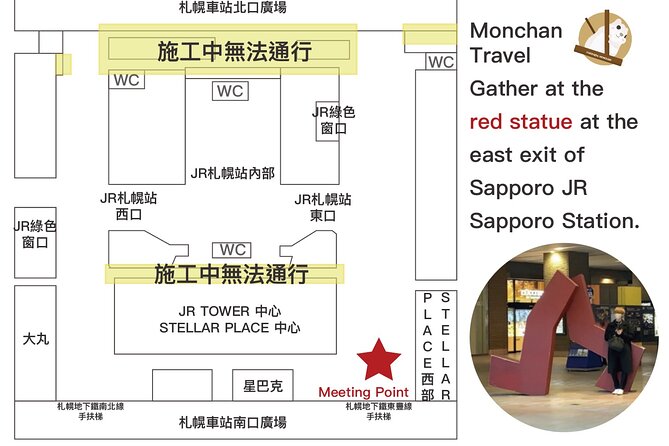
The tour begins at 8:00 am near Sapporo Station, at 3 Chome to 4 Chome Kita 6 Jonishi. Starting here is useful if you are staying in central Sapporo, and the nearby public transportation makes the meeting point fairly easy to reach.
You should think of this as a long regional trip, not a quick city excursion. The route links Sapporo with Asahikawa, Sounkyo, and Mombetsu, so much of the value comes from having someone else handle the roads, timing, admissions, and overnight arrangements.
A group of up to 40 people is possible. That size can mean slower boarding and less freedom at each stop, but it also helps explain how the tour reaches several far-flung places for $297.85. I would choose it if you want a ready-made winter route and do not want to arrange separate buses, zoo tickets, boat tickets, a hotel, and meals.
Our other Sapporo reviews may also help you decide


Asahiyama Zoo and the 11:00 penguin walk
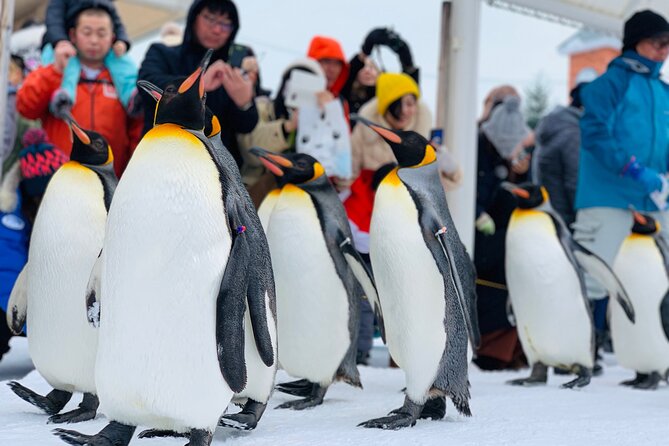
Asahiyama Zoo is not presented as a standard collection of animals behind glass. Its appeal is the active-display concept, which aims to show animals behaving in more natural ways. That makes the visit feel more like watching movement and habits than simply checking animals off a list.
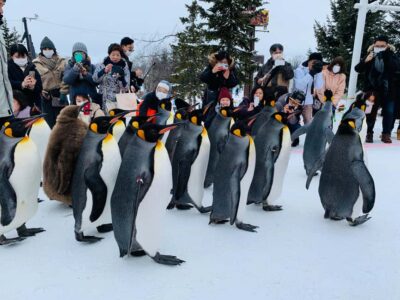
The headline event is the 11:00 penguin walk. The timing matters. You need to arrive at the right place with enough time to get settled, and the walk may be canceled or changed because of weather or a decision by zoo authorities. It is a charming winter activity, but it should not be treated as a fixed guarantee.
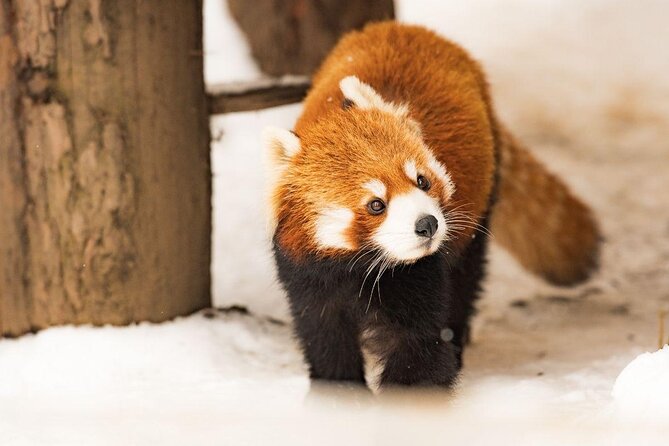
The scheduled visit lasts about two and a half hours, with admission included. That gives you time for the penguins plus other animals, including seals. The guide is also expected to share advice on making the most of the zoo and avoiding crowds, which can be useful during this popular winter stop.
I like that the zoo comes early in the route. It gives you an engaging first major stop before the long northern sections of the trip. The limitation is that two and a half hours may feel short if you want to see every enclosure carefully. You will need to accept a little prioritizing.
Sake culture at the Otokoyama Museum
The Otokoyama Sakezukuri Museum in Asahikawa is a brief, 30-minute stop. It focuses on Menyama sake, made with local water and associated with Asahikawa’s northern setting.
The museum’s strongest point is its award record. The sake received the first Monde Selection Gold Award given to Japanese sake in 1977 and has continued to win gold medals in national and international spirit competitions over many years.
This is not a long brewery tour, so you should see it as a compact cultural stop rather than the main event of the day. It adds local flavor after the zoo and gives you a glimpse into how water, place, and regional production connect. Admission is included at no extra charge.
A Sounkyo hot-spring night between the big outings
The overnight stay at a Sounkyo hot-spring hotel is one of the tour’s smartest choices. This route covers a lot of ground, and the hotel gives you a proper pause rather than returning to Sapporo late or rushing straight through the northern coast.
The accommodation is described as a simple spa hotel. That wording sets a sensible expectation: choose this for a hot bath and rest, not for luxury resort service. A simple property can be exactly right after a cold day outdoors, especially when the next day begins with waterfalls and the Sea of Okhotsk.
The schedule also includes Japanese dining at Hanatsuki Kaikan in Asahikawa. Along with the Robatayaki and seafood donburi, this gives the tour a useful food focus. You are not simply being moved from one attraction to another with convenience-store meals.
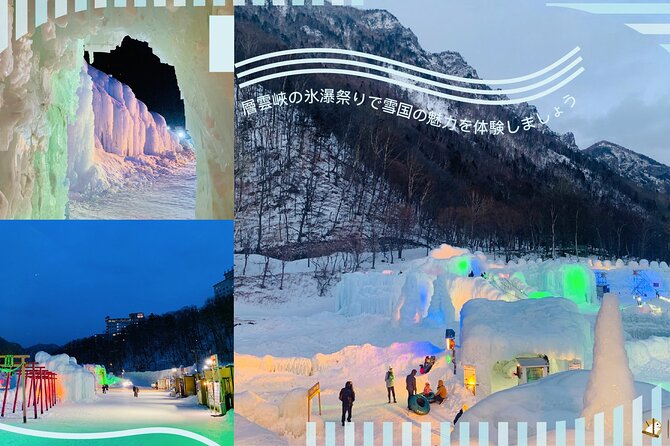
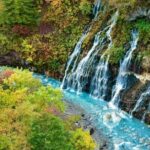
Ryusei Falls and Ginga Falls in Sounkyo
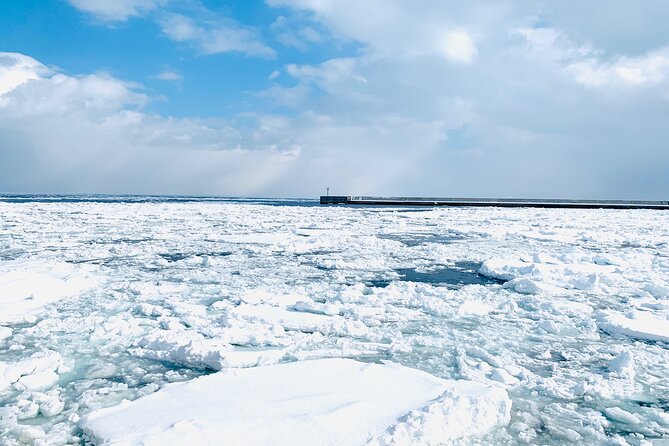
The second day includes a 15-minute stop at Ryusei Falls. The nearby Ginga Falls is also part of the pair, and both are listed among Japan’s Top 100 Waterfalls.
The traditional comparison is easy to remember. Ryusei is called the male waterfall because of its forceful rush, while Ginga is known as the female waterfall for its lighter, silk-like flow. The short stop is meant for a quick look and photographs, not a long walk or extended nature outing.
That 15-minute limit is the key practical detail. You will not have much time to linger, so wear shoes and clothing suited to winter conditions. The falls add a scenic change before the marine attractions, but anyone hoping for a long forest walk will find this portion brief.
Our other Sapporo reviews may also help you decide

Okhotsk Tower, including the underwater view
Okhotsk Tower sits about one kilometer offshore, at a depth of roughly 10 meters. It is described as the world’s first ice-sea underwater observation tower, with four levels above water and one underwater level.
The underwater floor gives this stop its special purpose. In winter, when drift ice covers the sea, you may be able to look beneath the floating ice. At other times of year, the tower provides views of marine life and the underwater ecosystem, including the possibility of nighttime observation.
The visit lasts about 45 minutes, and admission is included. I like this stop because it gives you a view that the icebreaker cannot provide. From the ship, you experience the movement and sound of the ice. From the tower, you get a calmer look at what lies below the surface.
Conditions matter here too. The tower is not a promise of thick ice overhead on every departure. The tour is winter-focused, but the sea controls the show.
Riding the GARINKO II through drift ice
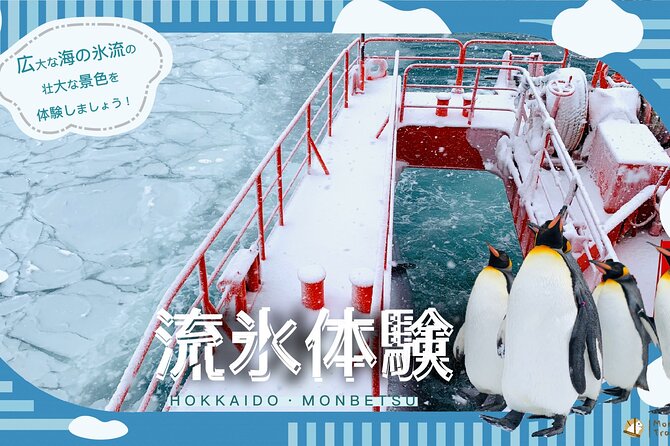
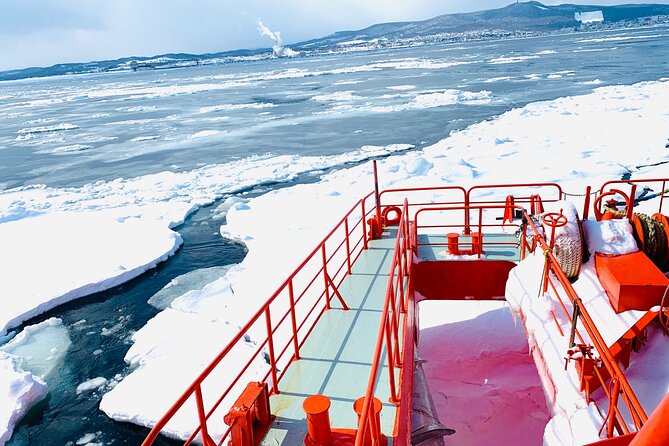
The icebreaker is the trip’s central experience. GARINKO II uses two large propellers at the bow and an Archimedes-style spiral to push through the ice. Instead of gliding quietly around the edge of a frozen field, the boat is built to press into it.
You may feel the ship vibrate as it breaks the ice. The pieces sink beside the vessel and rise again along the sides, giving you a direct sense of how heavy and moving the frozen sea can be. Shortly after leaving the harbor, the view changes from open water to a pale horizon of drift ice.
The boat trip lasts about an hour, with admission included. You might spot seals resting on the ice or see Steller’s sea eagles and white-tailed eagles overhead. Those sightings are possible rather than guaranteed, so the ice itself remains the main attraction.
There is a practical distinction between the GARINKO II boarding area and the Ocean Communication Hall Garinko Station in the schedule. Together, they represent the icebreaker portion of the Mombetsu visit, including the departure facilities and the boat ride. You should follow the guide closely at this point, since ship timing and boarding instructions matter.
February is the peak period for drift-ice sightseeing. It is also the busiest time, and the boat can be lively with visitors from Japan and abroad. That tradeoff is simple: February offers the best chance of seeing the ice, but it can also mean more demand and a less quiet outing.
Seals at the Okhotsk Tokkari Center
The Okhotsk Tokkari Center is a 30-minute stop devoted to seals. It is described as the only domestic marine mammal conservation facility where seals are raised and cared for.
This is a good companion to the boat trip. You first look for seals in the open sea, then visit a facility focused on their care. The short visit will suit you if you want a focused animal stop, though it will not provide the broad range of a zoo.
The stop also helps break up the day. After the tower and icebreaker, half an hour with marine mammals keeps the focus on the Okhotsk coast without adding another long museum visit.
Food, comfort, and the real value of $297.85
At $297.85 per person, this is not a bargain-basement bus outing. But price alone does not tell you much here. You are paying for a two-day route from Sapporo, group transportation, a Sounkyo hotel night, zoo admission, tower admission, boat admission, the seal center, meals, and a guide.
The value improves if you would otherwise need to book each piece separately. Mombetsu is far from Sapporo, and the combination of Asahikawa, Sounkyo, and the Okhotsk coast takes planning. The tour also removes the worry of matching a boat departure with bus connections and hotel check-in.
The value is weaker if you want to spend half a day at the zoo, linger at the waterfalls, or decide independently how long to stay on the coast. A maximum group size of 40 means the schedule must keep moving.
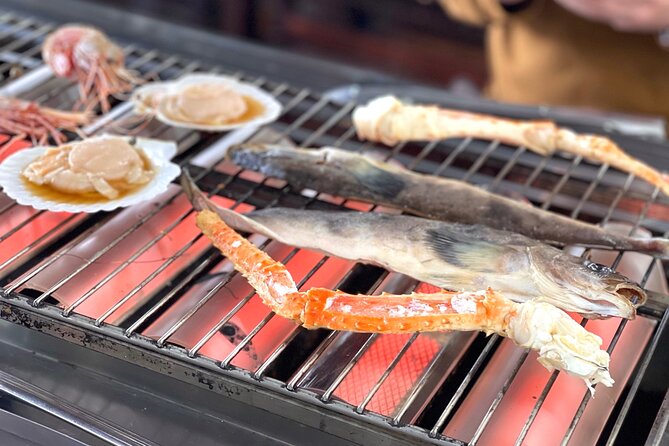
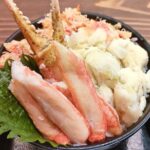
The food helps justify the package. Robatayaki gives you a chance to enjoy seafood cooked over an open grill, while the mini seafood donburi adds a taste of northern waters. The meal at Hanatsuki Kaikan provides a more formal Japanese dining experience. One detailed account of the trip specifically praised both lunch and dinner, which fits the package’s effort to make meals part of the experience rather than an afterthought.
Weather, cancellations, and who should book
This tour requires good weather. If conditions force cancellation, you are offered another date or a full refund. A minimum number of participants is also required, and if that threshold is not met, you are offered another date or experience, or a full refund.
The standard cancellation terms are strict close to departure. Cancel at least six full days before the start for a full refund. Cancellation two to six days before departure receives a 50 percent refund, while cancellation less than two full days before departure is not refunded. The cut-off uses local time.
Most people can participate, and the tour is near public transportation at its Sapporo meeting point. The mobile ticket is convenient, and confirmation normally arrives at booking, though bookings made within seven days may take up to 48 hours to confirm, subject to availability.
I would choose this trip if you want a winter sampler with a strong central attraction, especially the icebreaker and penguin walk. It also suits anyone who prefers a guide and prearranged meals over independent planning.
I would hesitate if you dislike long road journeys, group schedules, or weather-dependent activities. The tour covers a lot in two days, and the ice conditions may not match your hopes. If you do book, keep your expectations focused on the full northern experience: animals, food, hot springs, waterfalls, and the chance to feel a ship break through the frozen sea.
FAQ
Where does the tour start and finish?
It starts at 8:00 am near Sapporo Station, at 3 Chome to 4 Chome Kita 6 Jonishi in Kita Ward. The activity ends back at the same meeting point.
How long is the tour?
The tour lasts approximately two days and includes one overnight stay at a Sounkyo hot-spring hotel.
Is admission included?
Admission is included for Asahiyama Zoo, Okhotsk Tower, the icebreaker experience, and the Okhotsk Tokkari Center. Admission to the Otokoyama Sakezukuri Museum is free.
Is the penguin walk guaranteed?
No. The penguin walk is scheduled for 11:00, but it depends on weather and the decision of the zoo authorities.
How many people can join the tour?
The tour can have a maximum of 40 participants.
Is the tour available year-round?
The package is described as a winter-exclusive tour. The GARINKO II also operates in summer as a sightseeing fishing boat around Mombetsu Port, but this package focuses on winter drift ice.
What happens if bad weather cancels the tour?
You will be offered a different date or a full refund if poor weather causes the experience to be canceled. If the minimum number of participants is not reached, you will be offered a different date or experience, or a full refund.
More Tour Reviews in Sapporo


More Drift Ice Tours in Sapporo
More Asahiyama Zoo Tours in Sapporo


Other Sapporo tours worth your shortlist

Drift Ice Tours, side by side.
 ★ 3.2Icebreaker GARINKO GO III Cruise Explore Ice and Snow TourFrom $1514 reviews
 ★ 4.0Hokkaido Asahiyama Zoo, Icebreaker GARINKO GO Sunset TourFrom $1613 reviews
 ★ 3.52hours Drift ice walk guided tour in Shiretoko National ParkFrom $54.083 reviews
 ★ 3.92 Day Tour to Icebreaker Mombetsu and Asahiyama ZooFrom $354
The lists this tour appears in