The Ainu are the indigenous people of Hokkaido, and their history, language, and relationship with this landscape run far deeper than any modern map suggests. Long before Hokkaido was called Hokkaido, the Ainu called it Ainu Mosir — the Land of Humans. Their presence here stretches back thousands of years, shaped by the forests, rivers, and coastlines that still define the island today.
History
For most of their history, the Ainu lived across a wide territory that included Hokkaido, Sakhalin, the Kuril Islands, and parts of the Russian Far East. They weren’t a single unified nation — they were communities organised around river systems and coastal areas, each with regional variations in dialect, ceremony, and craft tradition. Trade with the Japanese to the south and with peoples to the north shaped their material culture over centuries.
Contact with the Japanese mainland intensified from the 15th century onward through the Matsumae domain, which controlled trade access and gradually restricted Ainu economic independence. Tensions culminated in Shakushain’s War of 1669, in which Ainu communities united against Japanese commercial exploitation. The uprising failed, and Ainu political autonomy declined steadily.
The Meiji era brought the most severe disruption. After the Japanese government formally annexed Hokkaido in 1869, systematic assimilation policies followed. Traditional practices — salmon fishing rights, deer hunting, ceremonial life, and use of the Ainu language — were suppressed or banned. The 1899 Hokkaido Former Aborigines Protection Act allocated poor agricultural land to Ainu communities while dismantling the subsistence economy they depended on. The result was a generation forced to abandon what they knew.
The modern revival began slowly in the late 20th century and gained significant legal ground in 2019, when Japan officially recognised the Ainu as an indigenous people for the first time. The Upopoy National Ainu Museum opened in 2020. Language revitalisation programmes now operate in several communities. It’s a genuine recovery effort, though Ainu communities are candid that there’s a long distance still to travel.
Upopoy National Ainu Museum (Shiraoi)
The most substantial Ainu cultural facility in Japan, located on the shore of Lake Poroto in Shiraoi, about 60km east of Sapporo. The museum building itself is striking — curved forms and natural materials that sit comfortably against the lake.
Six permanent galleries cover Ainu history, lifestyle, language, worldview, living culture, and exchange with neighbouring peoples. The exhibits are bilingual (Japanese and English), with audio, video, and physical artefacts displayed without condescending ethnographic framing. Allow 2–3 hours for the permanent collection alone.
Outside, a reconstructed traditional village (kotan) sits beside the lake. Replica buildings include a cise (family dwelling), storehouse structures, and a sacred space. Traditional dance and music performances run multiple times daily (included in entry). Interactive workshops — embroidery, woodcarving, mukkuri (jaw harp) — are available with advance booking (approximately ¥500–1,500/~$3.40–10). These fill quickly July–August; book several weeks ahead.
Practical: Open 09:00–17:00 (extended to 18:00 late April–October). Closed Mondays. Entry ¥1,200 (~$8) adults, ¥600 (~$4) high school students, free for under-15s.
Getting there: JR Shiraoi Station (10-minute walk). From Sapporo: limited express ~55 minutes. Shiraoi sits between Tomakomai and Noboribetsu — a natural stop on the southern Hokkaido route. By car: ~1 hour from Sapporo via expressway. See our rail guide.
Ainu Kotan (Lake Akan)
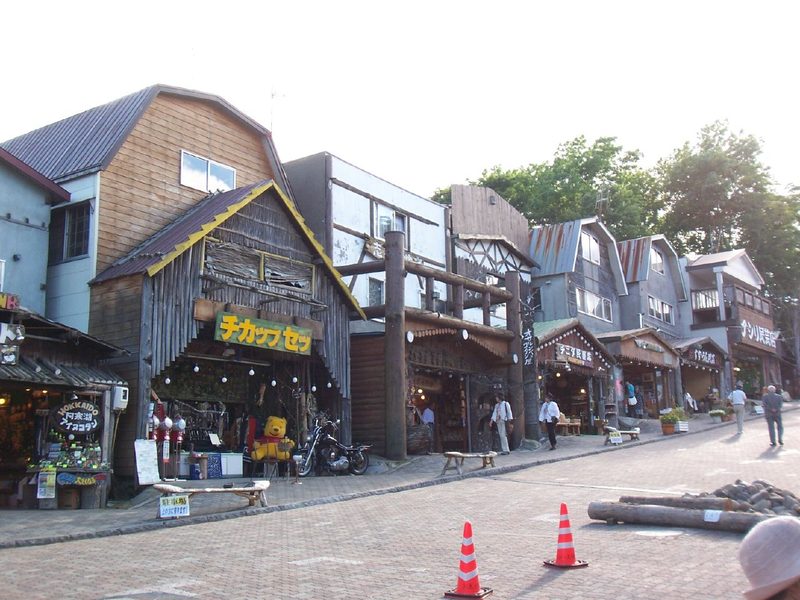
A living village community on the shore of Lake Akan in eastern Hokkaido — distinct from Upopoy in that it isn’t primarily a museum. It’s a working community where Ainu families live and work, with craft shops, restaurants, and a performance space that residents have operated for generations.
A single pedestrian street is lined with craft shops and small restaurants, anchored by the Ikor Theatre. Traditional dances — including the crane dance (sarorunchikap kamuy rimse) and circle dances — are performed several times daily. Evening performances typically at 20:00 with additional afternoon shows in summer. Tickets approximately ¥1,080 (~$7). The live experience is different from reading about Ainu performing arts — the upopoy (group singing) that gives the national museum its name is something you feel rather than just hear.
The craft shops sell woodcarvings, embroidered textiles, and jewellery. Quality varies — look for items where the maker is identified and where the carving shows genuine tool work rather than machine regularity. A quality woodcarving takes many hours; if it’s priced like a souvenir keychain, it probably is one.
Akanko Onsen is a hot spring resort town, so accommodation is plentiful. Staying overnight gives you the evening performance option and time to explore Lake Akan itself.
Nibutani (Biratori)
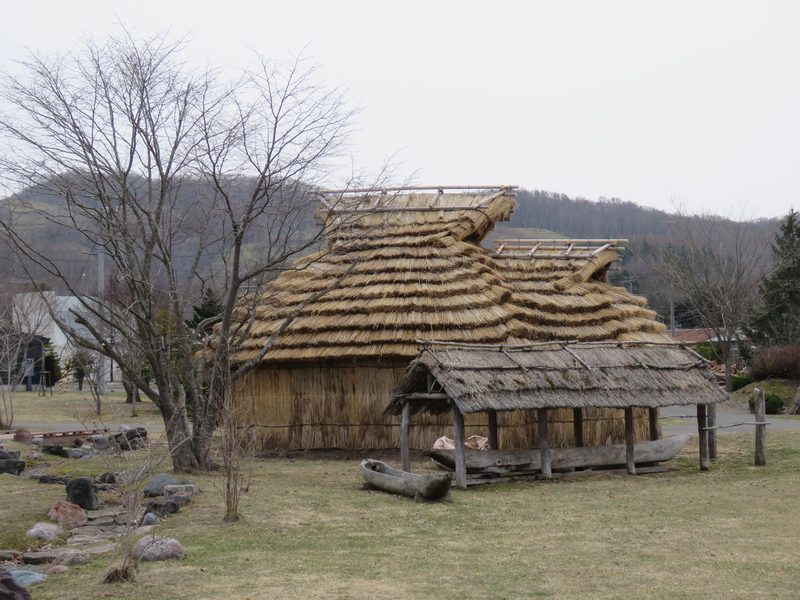
Considered the cultural heartland of the Ainu. The Saru River valley here has been continuously inhabited by Ainu communities for a very long time. Two museums approach the subject from different angles — visiting both is worthwhile.
Nibutani Ainu Culture Museum (¥400/~$2.70) — extensive collection of traditional tools, fishing equipment, ceremonial objects, and textiles. Documents the material culture of river-based Ainu communities with care and detail. Reconstructed Ainu house on the grounds.
Kayano Shigeru Nibutani Ainu Museum (¥400/~$2.70) — built around the personal collection of Kayano Shigeru (1926–2006), the Ainu scholar, author, and activist who became the first Ainu member of the Japanese parliament. Kayano spent his life documenting Ainu language and culture, and the museum reflects that life’s work. Smaller and more personal than the Culture Museum, and affecting in a way that larger institutions sometimes aren’t.
Nibutani is about 2 hours from Sapporo by car. No convenient public transport — driving is the realistic option. The drive through Hidaka is scenic.
Ainu Spiritual Traditions
Ainu spiritual life centres on the concept of kamuy — beings with spiritual power that inhabit natural phenomena: bears, owls, salmon, fire, water, mountains. The relationship isn’t one of distant worship; it’s understood as reciprocal between humans and the natural world. When an animal is hunted, the spirit (kamuy) is believed to be visiting the human world in physical form. Treating that animal with respect — using every part, performing proper ceremonies — ensures the kamuy returns satisfied and will visit again.
The bear ceremony (iyomante) is the most widely known expression of this worldview. A bear cub raised by an Ainu community was treated as a guest and, at the ceremony’s end, ritually sent back to the kamuy world with gifts and prayers. The ceremony is no longer practised in its original form — it was suppressed during the Meiji era — but understanding it is essential to understanding how the Ainu relationship with nature actually worked.
The owl — particularly the Blakiston’s fish owl (kotan kor kamuy, “the god that protects the village”) — holds a particularly important place in Ainu spiritual life. This is why owl imagery appears throughout Ainu craft and art. It’s not decorative in origin; it carries specific meaning.
Ainu Food
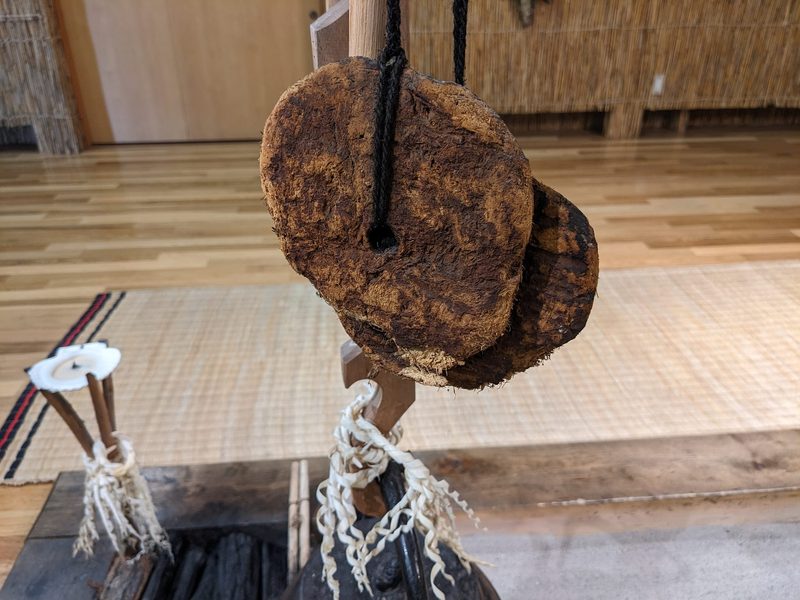
Ainu cuisine developed from Hokkaido’s specific ecology: salmon, deer, bear, and mountain vegetables. The flavours are distinct from mainstream Japanese cooking — earthier, less sweet, with stronger herbal notes.
- Ohaw — clear soup made with salmon or venison, vegetables, and riverbank greens. Warming, simple, and genuinely good. The core of traditional Ainu cooking.
- Kitopiro (Hokkaido wild garlic / gyoja-ninniku) — the defining Ainu ingredient. Intensely flavoured, more complex than cultivated garlic. Appears in soups, pickles, and rice dishes. Widely available in Hokkaido during spring (March–May).
- Ruibe — raw salmon frozen and sliced thin, eaten semi-thawed. The texture is unlike anything in standard Japanese cuisine. Not universally available but appears at Ainu-focused restaurants and Upopoy.
- Cep ohaw — a lighter fish soup, typically salmon.
The Upopoy restaurant is the most reliable place to try a structured Ainu meal. Ainu Kotan has several small restaurants. At Nibutani, options are limited — eat before or after.
Ainu Place Names
One of the most pervasive legacies of Ainu culture is hiding in plain sight: Hokkaido’s place names. The vast majority are Ainu words rendered into Japanese phonetics, often compressed in transliteration. Understanding a few connects the modern map back to what the landscape actually is.
- Sapporo — from “sat poro pet” (the great dry river), referring to the Toyohira River
- Niseko — from “ni-set-ko” (steep cliff terrain)
- Tokachi — from “tokachi-us-i” (a place relating to river conditions)
- Kushiro — from “kus-sir” (a place to pass through)
- Otaru — from “ota or nai” (a river through a sandy beach)
- Noboribetsu — from “nupurupets” (the colour of the river — mineral-tinted volcanic water)
- Shiretoko — from “sir etok” (end of the earth)
- Wakkanai — from “wakka nay” (cold water river)
The patterns “~betsu” and “~petsu” in place names (Noboribetsu, Monbetsu) come from the Ainu word “pet” meaning river. “~nai” (Wakkanai, Iwanai) comes from “nay,” also meaning stream. Once you recognise these patterns, you start seeing Ainu language everywhere on the Hokkaido map.
Ainu Language
The Ainu language is classified as a language isolate — no confirmed relationship to any other language family, including Japanese. It was never a written language; oral transmission through yukar (epic poems), song, and storytelling was how knowledge passed. This made the Meiji-era suppression especially damaging — once speakers stopped speaking, the loss accelerated rapidly.
Today, fluent first-language speakers number in the dozens at most. Revitalisation programmes are active and making real progress, but the situation is genuinely critical. Visitors encounter Ainu language primarily through place names and signage at Upopoy. A few terms come up repeatedly: kamuy (spiritual being), cise (house), kotan (village), yukar (epic poetry), upopoy (group singing).
Buying Authentic Ainu Crafts
- Wood carving — bears, owls, and figures in distinctive Ainu styles. Prices range from ¥500 (~$3.40) for mass-produced tourist pieces to ¥10,000–50,000+ (~$68–340+) for genuine work by named carvers.
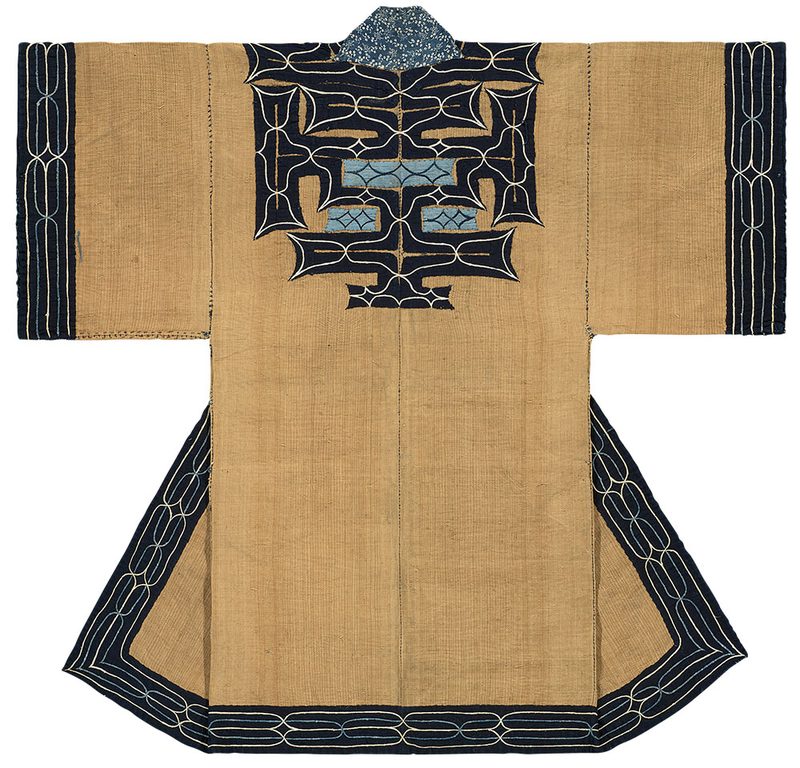
- Embroidery (attush) — geometric curvilinear patterns (aytus or morew) on cloth, traditionally using elm bark fibre. Each pattern carries protective and spiritual significance. Items at Ainu Kotan run ¥2,000–20,000+ (~$14–136+).
- Mukkuri — a jaw harp producing a distinctive buzzing tone. Approximately ¥500–1,000 (~$3.40–7). Light, unique souvenir.
How to buy authentic: Purchase directly from Ainu artisans at Ainu Kotan (Lake Akan), the Upopoy museum shop, or Nibutani community shops. Look for the maker’s name. Ask directly: “Did an Ainu artisan make this?” Reputable sellers answer honestly. Price is a signal — genuine handcraft that took hours won’t be priced at a few hundred yen. Items priced like souvenirs are souvenirs.
Respectful Engagement
Ainu culture is a living culture, not a historical artefact. The people at these sites — performing, crafting, running shops, staffing the museum — are part of communities working to maintain and revive something that was actively suppressed within living memory. Photography follows posted rules. At Ainu Kotan, ask before photographing people. At Nibutani, you’re visiting a working community, not a theme park. A genuine interest and basic courtesy go further than you’d expect.
For broader cultural context, see our Hokkaido culture guide.