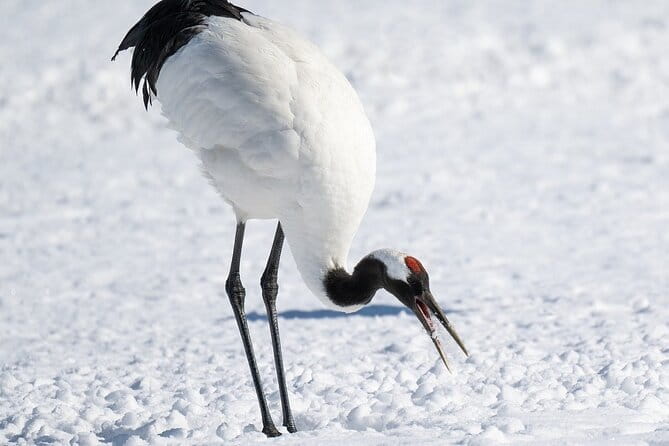
The main event is a winter visit to Tsurui Village, where about 700 red-crowned cranes gather in the snow. These elegant birds are a Special Natural Monument of Japan, and seeing them move through their natural setting gives the experience more weight than a quick stop at a zoo.
In This Article
- Key Points at a Glance
- Why the Cranes Make This Kushiro Trip Special
- Leaving Kushiro Town for the Wetland
- The Broad View from Hosooka Observation Point
- Tsurui Village and the Winter Crane Gathering
- What the Four-Hour Schedule Really Gives You
- Winter Clothing and What Comes With the Price
- Small Groups, Pickup, and Practical Planning
- Is $42.35 a Good Price?
- Who Should Book This Wildlife Experience?
- Should You Book the Crane and Marsh Tour?
- FAQ
- Where does the red-crowned crane tour take place?
- How long does the experience last?
- How many people can join the tour?
- Are binoculars provided?
- Is winter clothing included?
- Is lunch included?
- What wildlife might I see besides red-crowned cranes?
- What happens if bad weather cancels the tour?
I like two things right away. First, the trip combines crane watching with a drive through Kushiro Marsh, so you get more than one wildlife sighting. Second, the small group, limited to eight people, gives guide Makoto, also called Mark, room to provide binoculars and explain what you are seeing. The one drawback is clear: four hours may feel short if you want a full day in the marsh.
Key Points at a Glance
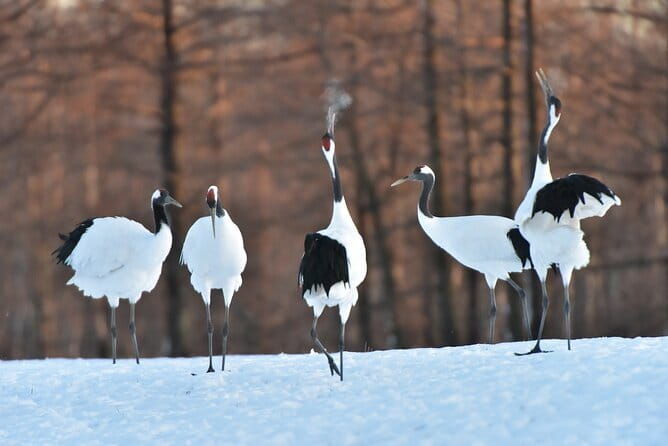
- Around 700 cranes in winter: Tsurui Village is the star of the outing, with red-crowned cranes dancing across snowy ground.
- Wildlife beyond cranes: Keep watch for Steller’s sea eagles, white-tailed eagles, Ezo sika deer, foxes, and other birds.
- A high viewpoint over Kushiro Marsh: Hosooka Observation Point offers broad views toward Mount Oakan and Mount Meakan.
- Small group of up to eight: This is a more personal setup than a large coach outing.
- Winter gear is provided: You can request a ski jacket top, gloves, and hat, and binoculars are included.
- Good value for a half-day: At $42.35 per person, transportation, a guide, gear, and wildlife viewing are bundled into one modest price.
Why the Cranes Make This Kushiro Trip Special
Red-crowned cranes are among Japan’s most recognizable wild birds. Their white bodies, black neck markings, and red crowns show especially well against snow. When they stretch their wings or perform their courtship movements, the scene has a quiet drama that photographs cannot fully capture.
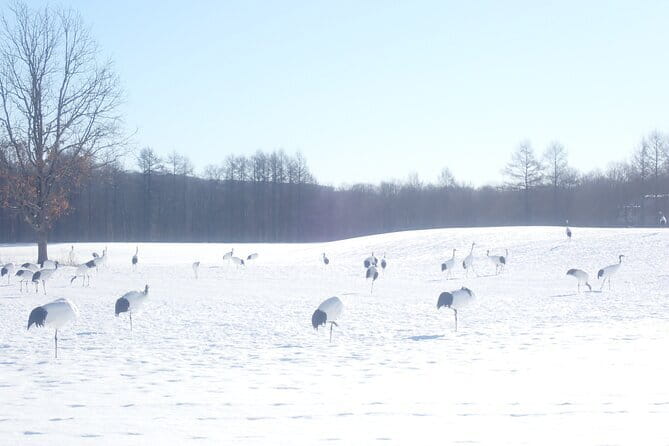
Tsurui Village is one of the best places in eastern Hokkaido to see them. The winter gathering is a major reason to visit Kushiro during the cold season, and the timing matters. Around 700 cranes migrate to the village each winter, giving you a strong chance to see a sizable group rather than one distant bird.
I appreciate that the guide does more than point at the cranes. Makoto can explain their behavior and help you notice details you might miss on your own. The supplied binoculars also matter. Cranes can be spread across open ground, and binoculars let you study them without relying only on a camera zoom.
You should still bring patience. Wildlife does not perform on command, and the exact number of cranes or other animals will vary. The outing promises a search for wildlife, not a guaranteed checklist. That is part of the appeal, but it is also worth understanding before you book.
We have reviewed more tours and experiences across Kushiro; these are worth comparing before you book.


Leaving Kushiro Town for the Wetland
The trip includes transport from Kushiro town to the guiding areas and back. That makes the experience useful if you do not have a rental car or prefer not to manage winter driving yourself. It also keeps the schedule simple: you can focus on watching the roadside and marsh instead of navigating.
The drive takes about an hour as part of the overall outing. You follow the road through Kushiro Wetland, Japan’s largest wetland, while looking for animals along the way. This is not dead time between attractions. The marsh drive is one of the ways the tour builds a broader picture of eastern Hokkaido.
You might spot Ezo sika deer near the road or in open areas. The search also includes Steller’s sea eagles and white-tailed eagles, two large birds that can make even a quiet stretch of marsh feel exciting. Foxes and other birds have also been seen on the outing, but sightings depend on conditions and luck.
This section is best for people who enjoy the search itself. You may spend part of the drive scanning the trees, open wetlands, and distant areas for movement. Makoto’s role is especially useful here, since an experienced guide can help you understand where to look and what shape or flight pattern to watch for.
The Broad View from Hosooka Observation Point
Hosooka Observation Point sits on high ground above Kushiro Marsh. The stop lasts about 45 minutes, giving you time to take in the full sweep of the wetland rather than viewing it from road level.
Winter is a particularly good time for this viewpoint. With fewer leaves on the trees and plants, you get a clearer view across the marsh. Mount Oakan and Mount Meakan rise in the distance, adding a strong mountain backdrop to the flat wetland.
On a clear evening, the viewpoint can also offer a sunset. That possibility depends on the weather and the day’s timing, so you should treat it as a bonus rather than a promise. The main value is the open view and the chance to understand the scale of Kushiro Marsh.
I like this stop because it slows the pace. The crane visit is focused on animals, while Hosooka gives you a broader sense of the area. You can use the pause to take photographs, study the marsh, or simply enjoy a quiet view. If you prefer constant close-up wildlife action, the 45-minute stop may feel less exciting. If you enjoy scenery and open spaces, it is a useful part of the trip.
Tsurui Village and the Winter Crane Gathering

The visit to Tsurui Village lasts about an hour. This is where the tour’s central experience comes together: snow, open ground, and red-crowned cranes moving through the area in groups.
The cranes may stand quietly, feed, call, or perform their striking movements. The sight of them dancing on snow is the image most people hope to see, but the visit has value even when the birds are simply gathered together. Their size and markings are easy to appreciate, especially with the binoculars provided.
A guide’s commentary helps turn a beautiful sight into a more meaningful one. Makoto can introduce the cranes and explain what you are observing, so you are not left guessing why the birds are moving or gathering in a certain way. That guidance is one of the strongest reasons to choose an organized trip instead of trying to find the village on your own.
This stop also gives you a chance to compare the cranes with the other wildlife from earlier in the day. The eagles and deer bring variety, but the cranes provide the emotional focus. They are not just another bird on a list. In Japan, they are protected as a Special Natural Monument, and their presence reflects the importance of the wetland and surrounding habitat.
What the Four-Hour Schedule Really Gives You
Four hours is enough for a well-shaped introduction to Kushiro’s wildlife. You get transport from town, a marsh drive, a high viewpoint, and about an hour with the cranes. The schedule avoids spending an entire day on one viewing area.
The tradeoff is depth. You will not have the time of a full-day expedition through every part of the wetland. One person who enjoyed the experience wished it lasted all day, and I understand why. The marsh is large, wildlife sightings take time, and the crane visit alone could easily hold your attention longer than an hour.
Still, the half-day format has practical advantages. You can fit it around other Kushiro plans, and the $42.35 price is modest for a guided outing that includes transportation and binoculars. Lunch is not included, so plan to eat before or after the tour. Since the trip lasts about four hours, that omission is easy to manage.
The schedule is also a good match for a winter day, when cold weather can make a long outdoor excursion tiring. You get meaningful time outside without committing to a full day in exposed conditions.
Winter Clothing and What Comes With the Price

The tour includes a ski jacket top, gloves, and a hat. You should provide your size in advance if you need those items. This is a practical inclusion for anyone arriving in Kushiro without a complete set of winter clothing.
The jacket is listed as a top only, so do not assume that every cold-weather item is supplied. You should still dress for winter conditions and make sure you have suitable trousers and footwear. The provided gloves and hat help, but they do not replace personal preparation.
Binoculars are included for each participant, which is another genuine benefit. Wildlife watching is much easier when you can see distant birds clearly. You also avoid the need to pack or rent your own pair.
The guide is included too. That matters most during the marsh drive and eagle search, when a casual glance out the window may not be enough to locate an animal. Makoto’s local knowledge can help you make better use of the limited four-hour schedule.
Small Groups, Pickup, and Practical Planning
The group size is capped at eight people. That is small enough to keep the outing personal, while still allowing the cost to remain reasonable. A smaller group can also make it easier to hear the guide and share binoculars or viewing tips without a crowd around you.
Pickup is offered, and the experience is near public transportation. Exact pickup details should be confirmed when your booking is accepted, since confirmation is subject to availability and is sent within 48 hours of booking.
Most people can participate. The tour is not presented as a strenuous hike, and much of it takes place during transport and at viewing areas. Even so, winter conditions can be cold, and the activity requires time outdoors. Dress sensibly and be ready for periods of standing and watching.
The weather policy is worth noting. The experience requires good weather, and if poor conditions force a cancellation, you can choose another date or receive a full refund. You can also cancel for a full refund up to 24 hours before the local start time. Changes or cancellations inside that 24-hour window are not accepted.
Is $42.35 a Good Price?

Yes, this is a strong price for the amount packed into four hours. For $42.35 per person, you receive town transport, a guide, binoculars, winter gear if requested, a drive through Japan’s largest wetland, a viewpoint stop, and a crane visit.
The value is even better if you do not have a car. Renting a vehicle for a short wildlife outing can cost more once you account for fuel, winter driving, and the challenge of finding the right viewing areas. Here, the basic transport and route planning are already handled.
The price does not include lunch, but that is not a major weakness for a half-day experience. The bigger limitation is time. If you want long periods at the crane site or a more extended search through Kushiro Marsh, you may prefer a full-day option, if available.
For a first introduction to the area, the price is easy to justify. You get a focused morning or afternoon without paying for an all-day commitment.
Who Should Book This Wildlife Experience?
I would recommend this outing to anyone staying in Kushiro who wants to see red-crowned cranes without arranging a complicated independent trip. It suits photographers, bird watchers, families, couples, and anyone who enjoys scenic drives with a chance of unexpected wildlife.
It is especially useful for winter visitors. The cranes are the main draw during that season, and the supplied clothing can help if you are not fully equipped for Hokkaido’s cold.
You should choose something longer if your main goal is extended wildlife observation. Four hours offers variety, but not unlimited time. You should also keep your expectations realistic. Eagles, deer, foxes, and other birds are possible sightings, not guaranteed stops.
The strongest part of the experience is its balance. You are not spending the whole trip in a vehicle, but you are also not standing in one viewing area for hours. The marsh drive, Hosooka viewpoint, and Tsurui crane stop each show a different side of Kushiro.
Should You Book the Crane and Marsh Tour?
Book it if you want an affordable, compact way to see the red-crowned cranes and get a taste of Kushiro Marsh. The combination of small-group transport, binoculars, winter gear, and guide Makoto makes the outing practical, especially if you are visiting without a car.
Skip it only if you already have a full-day wildlife plan or want to spend many hours at the crane site. For everyone else, this is a sensible half-day choice with a clear highlight, good supporting stops, and a price that leaves room in your budget for the rest of Hokkaido.
FAQ
Where does the red-crowned crane tour take place?
The experience begins with transportation from Kushiro town and includes Kushiro Wetland, Hosooka Observation Point, and Tsurui Village.
How long does the experience last?
The tour lasts approximately four hours.
How many people can join the tour?
The maximum group size is eight people.
Are binoculars provided?
Yes. Binoculars are included for the experience.
Is winter clothing included?
A ski jacket top, gloves, and a hat are included. You should provide your size in advance if needed.
Is lunch included?
No. Lunch is not included.
What wildlife might I see besides red-crowned cranes?
The outing looks for Steller’s sea eagles, white-tailed eagles, Ezo sika deer, foxes, and other birds. Sightings depend on conditions.
What happens if bad weather cancels the tour?
If poor weather causes cancellation, you will be offered another date or a full refund.