Japan has made significant progress on accessibility in recent years, particularly in urban areas and public transport. Hokkaido presents a mixed picture: Sapporo is relatively accessible with a modern subway system, barrier-free hotels, and flat terrain in the city centre, but rural areas and older tourist facilities can be challenging for wheelchair users and those with mobility limitations. The honest assessment is that Hokkaido is easier than much of rural Japan, harder than Tokyo, and improving steadily.
Planning ahead makes the biggest difference. Most barriers in Hokkaido are not insurmountable — they just need advance arrangement rather than turning up and hoping. Station staff deploy ramps, hotels hold accessible rooms, and attractions increasingly have barrier-free routes. But you need to ask, book, and confirm in advance rather than assuming it will work on arrival.
Transport
Trains (JR Hokkaido)
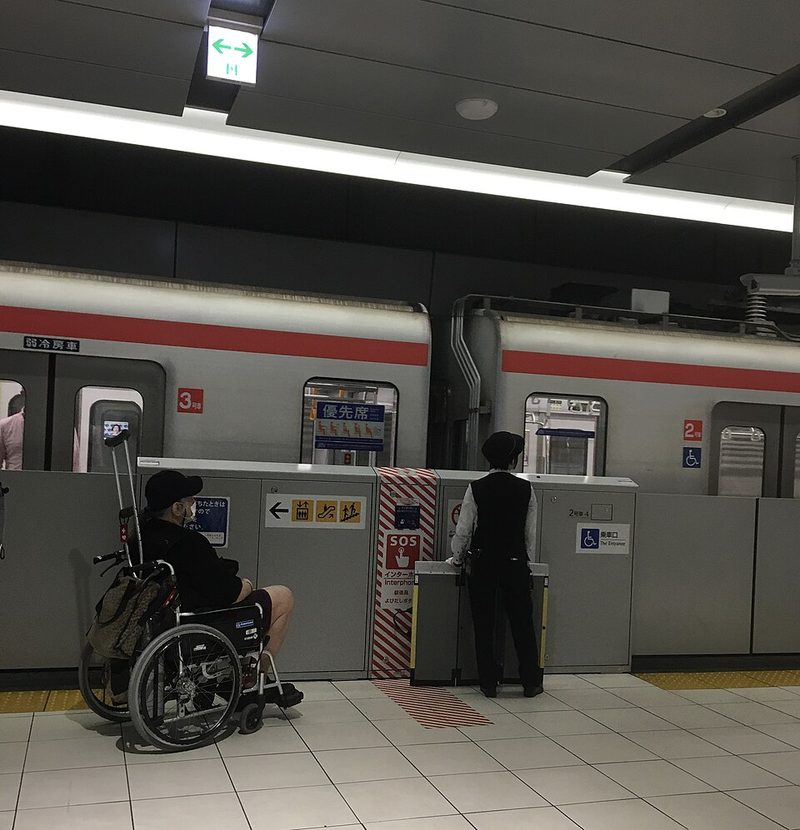
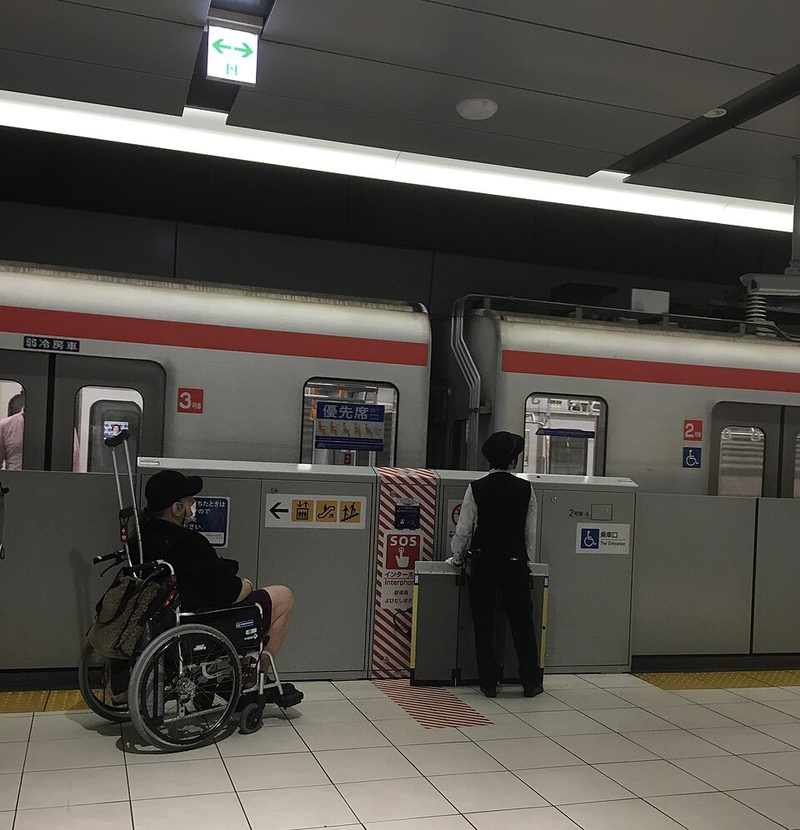
Major JR stations in Sapporo, Hakodate, Asahikawa, Otaru, and Kushiro have elevators and accessible platforms. Limited express trains (Super Hokuto, Okhotsk, Super Ozora) have designated wheelchair spaces that can be reserved at ticket counters or through the JR accessibility desk. Staff will deploy portable ramps for boarding assistance — request this when buying your ticket, ideally at least one day in advance. Same-day assistance is possible at staffed stations but advance notice ensures smooth handling.
The JR Hokkaido wheelchair reservation desk can be reached by phone (011-222-7111) or at any staffed JR ticket window. Specify your train, your station, and whether you need platform-to-carriage ramp assistance.
Smaller rural stations may lack elevators entirely. Stations on the Soya Line (to Wakkanai) and the Senmo Line (Kushiro to Abashiri) are often unstaffed platforms with no barrier-free access. Check station accessibility through JR Hokkaido’s website or at a staffed station before planning your route. The rail guide covers the main routes.
Sapporo Subway
All 49 Sapporo subway stations have elevators connecting street level to platform level. Platform-to-train gaps are minimal and manageable for most wheelchair users. The three lines (Namboku, Tozai, Toho) are all modern enough to be consistently accessible. The underground walkway (Chikaho) connecting Sapporo Station to Odori is flat, wide, heated in winter, and fully accessible — it is one of the most comfortable ways to move through central Sapporo in any season.
Sapporo’s streetcar (tram) loop line has some low-floor vehicles but not all. Check before boarding if step-free access is needed. See our subway guide.
Buses
City buses in Sapporo are increasingly low-floor accessible, but not universally. Highway and intercity buses vary by operator — check with the company before booking. The Sapporo-New Chitose Airport shuttle buses accommodate wheelchairs with advance notice (at least 2 days). The free Niseko United shuttle buses between ski villages are not consistently accessible — contact the Niseko tourism office for current information.
See our bus guide for route details.
Rental Cars
Hand-controlled vehicles are available from some rental companies with advance booking (at least one week recommended). Toyota Rent-a-Car is the most reliable for accessible vehicles in Hokkaido and has offices at New Chitose Airport. Nippon Rent-a-Car also offers hand-controlled cars at select locations. Specify your requirements exactly when booking — vehicle availability is limited and they cannot guarantee specific adaptations without notice.
For wheelchair-accessible vans (with ramp or lift), specialist operators exist but are fewer. Contact the Sapporo Barrier-Free Tourism Centre for current provider lists.
Taxis
Standard taxis in Sapporo can accommodate folding wheelchairs in the boot. Universal Design (UD) taxis with ramp access are available in Sapporo — request through the taxi company dispatcher rather than hailing on the street. JPN Taxi (Toyota’s accessible taxi model) is increasingly common. In smaller cities, UD taxis are rare; arrange through your hotel.
Accommodation
Hotels
Major international chains (Hilton Niseko Village, JR Tower Hotel Nikko Sapporo, Cross Hotel Sapporo) offer accessible rooms with roll-in showers, grab bars, wider doorways, and lowered fixtures. These rooms are limited in number — book early and confirm your accessibility requirements in writing.
Business hotel chains (Dormy Inn, Route Inn, Toyoko Inn) have some accessible rooms, typically one or two per property. Dormy Inn is worth noting specifically: their natural hot spring baths usually have at least some barrier-free features, and the accessible rooms are well-designed for the price point. Request accessible rooms at booking time — standard online booking forms may not show them, so calling or emailing the property directly is more reliable.
Ryokans
Traditional ryokans are generally NOT wheelchair accessible. Futon-on-floor sleeping, narrow corridors, stepped entrances, and shared bathing facilities with high bath edges are standard design. Some modern ryokans have been retrofitted with accessible rooms — Jozankei’s Tsuruga Resort Spa Mori no Uta and a few Noboribetsu properties have made notable efforts. Always ask specifically before booking, and ask detailed questions about room layout, bathroom design, and path from entrance to room.
Onsen Accessibility
Traditional public onsen require stepping over high bath edges (typically 30-50cm), walking on wet and slippery tile or stone floors without mobility aids, and sitting/standing without handrails. This is the biggest accessibility challenge in Hokkaido tourism, and there is no way to sugar-coat it — most public onsen facilities are difficult to impossible for wheelchair users or those with significant mobility limitations.
Options that work:
- Private baths (kashikiri): Many ryokans and hotels offer private rental baths (typically ¥2,000-5,000/~$14-34 for 45-60 minutes) where you can bring a companion to assist. The bath edges are still high, but privacy allows for whatever assistance arrangement works for you.
- In-room onsen: Some higher-end ryokans and hotels have private onsen baths in the room. This is the most comfortable option for those with mobility needs. Properties with in-room baths include some rooms at Jozankei Tsuruga Resort Spa and select Lake Toya hotels.
- Barrier-free bath facilities: A few newer onsen facilities have been specifically designed with accessibility in mind. Toyako Manseikaku Hotel Lakeside Terrace and some Noboribetsu hotels have barrier-free bathing options. Call ahead to confirm current facilities.
- Foot baths (ashiyu): Free foot baths are available throughout Hokkaido’s onsen towns — along the Toyako lakefront, in Noboribetsu town, at Jozankei, and elsewhere. These are seated and accessible for most visitors. Not the same as a full soak, but they give you the hot spring experience with no barriers.
See our onsen guide for general bathing information and etiquette.
Accessible Attractions
Fully Accessible
- Odori Park (Sapporo) — flat, paved paths throughout, accessible restrooms
- Sapporo Beer Museum — elevator access to all floors, accessible restrooms
- Otaru Canal walkway — flat paved path along the canal, no steps
- Mt. Hakodate Ropeway — wheelchair accessible to summit observation deck with elevator
- Goryokaku Tower (Hakodate) — elevator to observation deck
- Mt. Moiwa Ropeway (Sapporo) — wheelchair accessible throughout
- Upopoy (Shiraoi) — modern facility built with full barrier-free access
- Shiroi Koibito Park (Sapporo) — elevator access, barrier-free ground floor
Partially Accessible
- Asahiyama Zoo (Asahikawa) — hilly terrain but paved paths throughout. Some enclosures require slope navigation. Wheelchair rental available at entrance (¥100).
- Noboribetsu Hell Valley — main boardwalk is accessible but some trails have steps. The viewpoint at the car park is barrier-free.
- Farm Tomita (Furano) — main paths between lavender fields are flat gravel, manageable for most wheelchairs. Upper fields are steeper.
- Shiretoko Five Lakes — elevated boardwalk (800m) is fully wheelchair accessible with ramps. Ground-level trail is not.
Difficult Access
- Daisetsuzan hiking trails — mountain terrain, not accessible
- Most rural onsen — steps, narrow passages, no ramps
- Drift ice boats (Abashiri) — steep gangways, narrow aisles; contact operator to discuss
Useful Resources
- Accessible Japan (accessible-japan.com) — the most comprehensive English-language resource for accessible travel across Japan, with specific Hokkaido content
- Sapporo Barrier-Free Map — available at the Sapporo Tourism Information Centre in Sapporo Station, showing accessible routes, restrooms, and elevators throughout the city centre
- JR Hokkaido Accessibility Desk — phone 011-222-7111 for station and train accessibility queries and wheelchair space reservations
- JNTO Accessible Travel — Japan National Tourism Organization accessibility pages, including an accessible facility search
Wheelchair Rental
If you don’t need to travel with your own wheelchair, rental is available in Sapporo. The Sapporo Tourism Information Centre can direct you to providers. Some larger attractions (Asahiyama Zoo, Upopoy, Shiroi Koibito Park) offer wheelchair rental at their entrances. Power wheelchair rental is less common and typically needs advance booking through specialist providers.